AP Syllabus focus: ‘Europe was politically fragmented and characterized by decentralized monarchies, feudalism, and the manorial system.’
Medieval European politics (c. 1200–1450) were shaped by weak central states and strong local elites. Landholding, personal loyalty, and rural economic organization linked power to property, producing fragmented authority.
Why Europe Was Politically Fragmented
Political fragmentation meant that kings often competed with nobles, bishops, and towns for control of land, law, and taxation. Limits on royal power came from:
Poor transportation and communication, making direct rule difficult
Frequent warfare and succession disputes, encouraging local self-defense
Privileged jurisdictions (lordly courts, church lands, chartered towns) that reduced uniform royal authority
Decentralized Monarchies
Medieval monarchs were “monarchs,” but their reach was uneven. A king’s effective power depended on:
Personal domains (lands the king controlled directly)
Noble cooperation for armies and revenue
Negotiated authority, including concessions to nobles or representative bodies in exchange for support
Feudalism: Politics and Military Service Through Land
Feudalism organized political and military relationships through land grants and personal obligations.
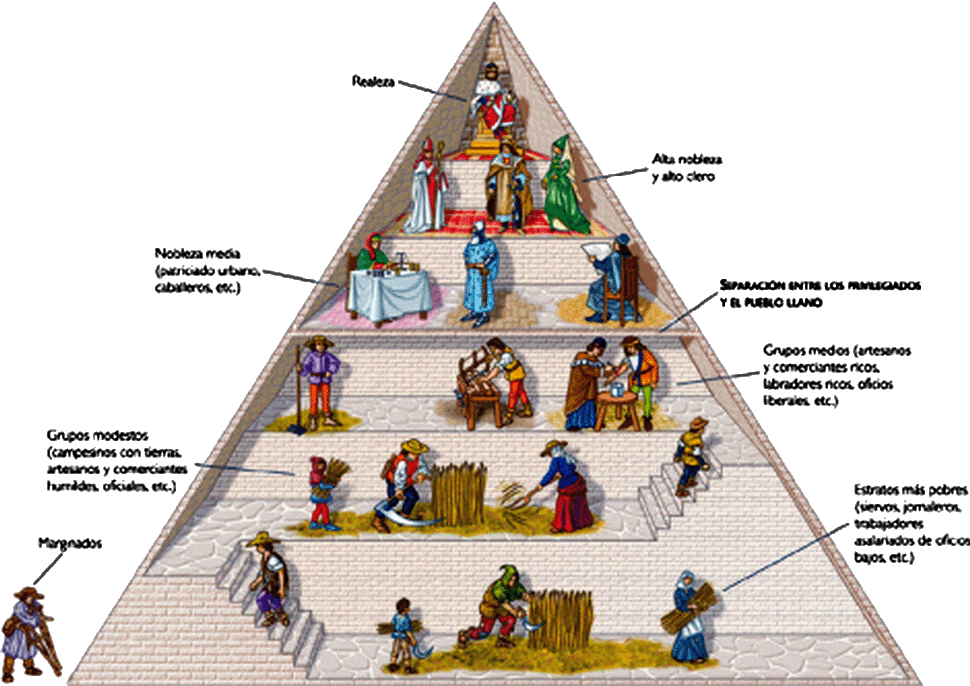
A simplified “feudal pyramid” showing how authority and obligations were layered from monarchs down through nobles and knights to peasants/serfs. The visual structure reinforces how landholding and service created a chain of dependent relationships rather than a single centralized state. Source
Feudalism: A political-military system in which landholding elites exchanged land rights for loyalty and service, creating layered ties between lords and vassals.
Feudal relationships tended to multiply loyalties and weaken central authority because local lords commanded armed followers and controlled resources needed for war.
Lords, Vassals, and Fiefs
Core components included:
Lords who offered protection and land
Vassals who swore loyalty and provided service (often military)
Fiefs (land grants) that supported a warrior elite
Vassal: A person who entered a binding relationship with a lord, promising loyalty and service in return for protection and usually a fief.
These relationships were reinforced through ritual and custom, but enforcement was often local, leading to private warfare, shifting alliances, and contested authority.
Fief: A grant of land or revenue rights given by a lord to a vassal to support the vassal’s obligations, especially military service.
The Manorial System: Local Economic Power
Feudal politics rested on a rural economic base in which lords extracted agricultural surplus from peasants.
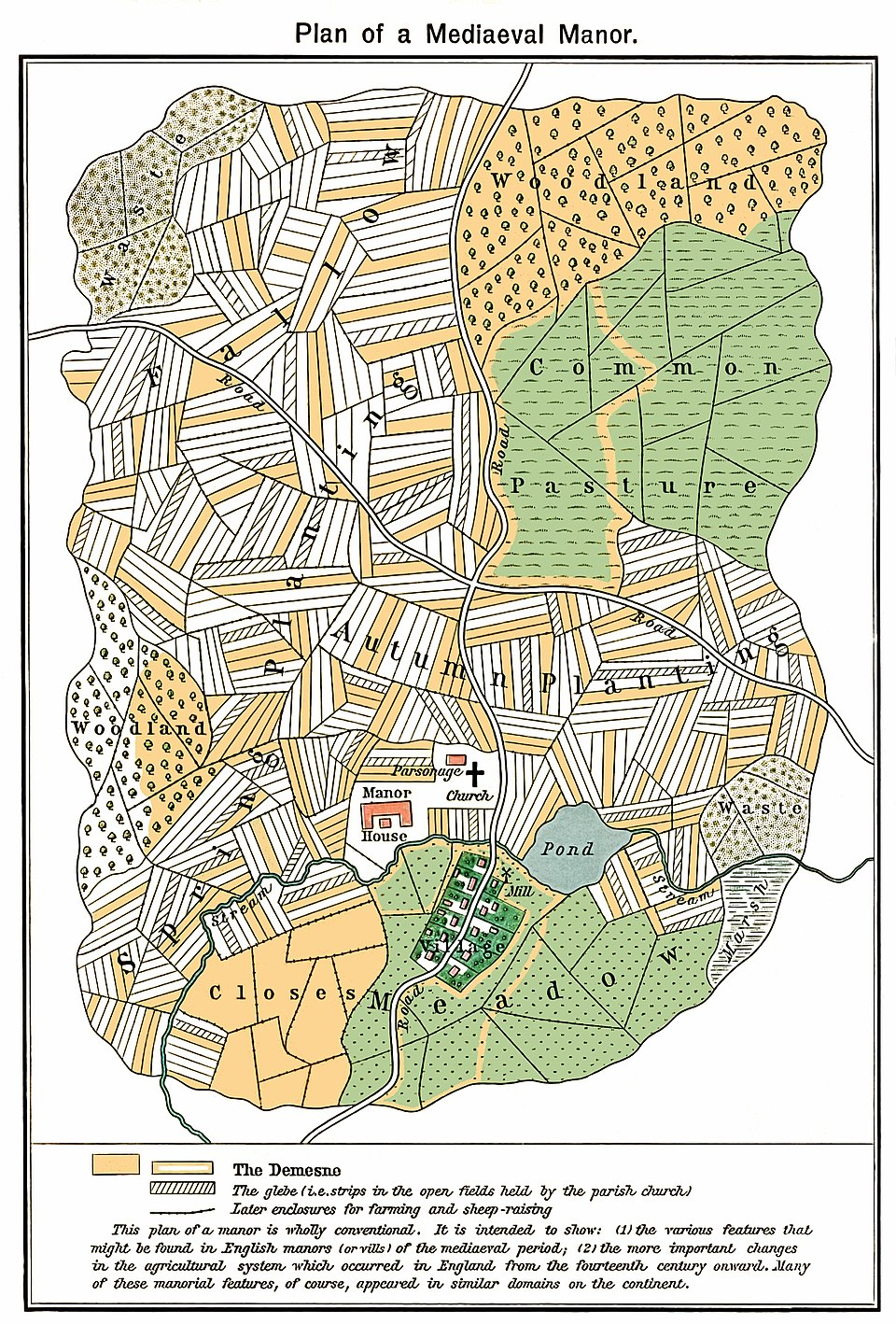
An annotated plan of a (conventional) medieval manor, labeling features such as the lord’s demesne, peasant strips in open fields, village center, commons, and woodland. It visually explains how manorialism concentrated economic life locally, enabling lords to extract rents and labor while exercising authority through estate management. Source
Manorial system (manorialism): A local economic arrangement where a lord’s estate (manor) functioned as a unit of production, with peasants owing rent, labour services, or dues to the lord.
How Manorialism Reinforced Decentralization
Manorialism strengthened fragmentation because it gave lords:
Direct control over land and labour on their estates
Local courts and customary dues, increasing lordly independence
Resources to equip retainers, supporting private armies and castles
How These Systems Fit Together (AP-Level Causation)
Europe’s political order was not a single centralized state model; it was a patchwork.
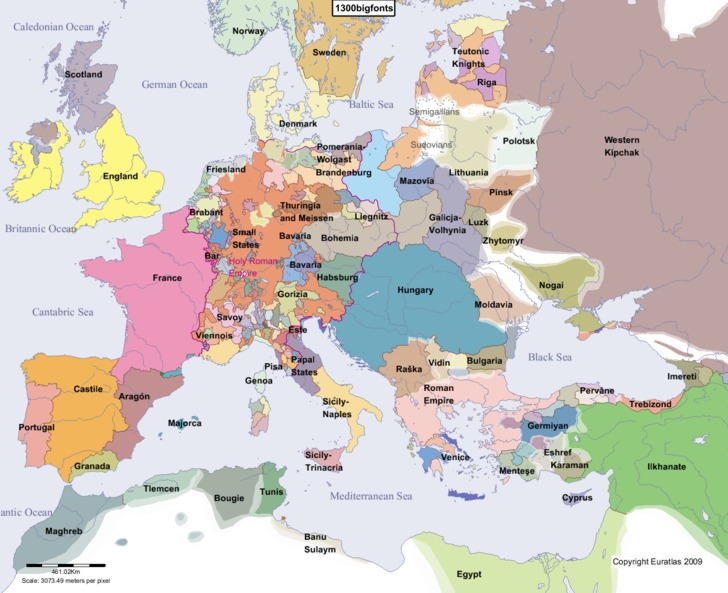
A political map of Europe in 1300 that highlights the continent’s dense mosaic of kingdoms, principalities, city-states, and other territorial units. This helps students see why governance often relied on negotiation and local powerholders rather than uniform royal administration. Source
Together:
Decentralized monarchies relied on negotiation more than bureaucracy
Feudalism tied military power to local landholding elites
Manorialism provided the economic foundation for lordly autonomy
Practice Questions
Explain one way the feudal system contributed to political fragmentation in Europe c. 1200–1450. (2 marks)
1 mark: Identifies a correct mechanism (e.g., land-for-service ties empowering nobles, multiple loyalties, private warfare).
1 mark: Explains how it weakened central royal authority (e.g., nobles controlling armies/taxes/law locally).
Answer both parts: (6 marks) a) Describe one feature of a decentralised monarchy in medieval Europe. (2 marks)
b) Explain one way the manorial system supported feudal relationships. (2 marks)
c) Explain one reason political authority was often local rather than royal in this period. (2 marks)
(a) 1 mark for a valid feature (limited royal taxation/administration; reliance on nobles; negotiated power), +1 mark for accurate description.
(b) 1 mark for linking manor surplus to elite support (rent/labour funding knights/retainers), +1 mark for clear explanation.
(c) 1 mark for a valid reason (transport/communication limits; competing jurisdictions; warfare), +1 mark for linking it to local control.
FAQ
They were public rituals confirming a vassal’s submission and promise of service.
Typically included symbolic gestures, witnesses, and oath-taking, which made obligations socially enforceable even without strong state courts.
No. Service could include payment (scutage in some places), advisory duties, or administrative roles.
What mattered was the agreed obligation tied to holding land rights.
Inheritance rules could divide estates or concentrate them, reshaping power.
Fragmentation increased when lands were split among heirs; consolidation increased when titles and lands passed intact to one heir.
Castles were fortified bases for enforcing local authority.
They allowed lords to resist rivals, control surrounding countryside, and project power independently of a king’s immediate presence.
Rulers and lords often granted charters to towns to raise revenue and secure loyalty.
In return, towns gained rights such as self-government, courts, and tax privileges, further complicating centralized control.