

Edexcel Syllabus focus:
'Investigate membrane structure, including how alcohol concentration or temperature affects membrane permeability in Core Practical 3.'
This practical uses plant tissue to show how environmental changes alter membrane permeability. It links membrane structure to measurable pigment leakage and helps develop careful experimental technique and data interpretation.
Purpose of the practical
Core Practical 3 investigates how changing conditions alter the permeability of cell membranes. Beetroot tissue is commonly used because it contains a red-purple pigment called betalain, which leaks out when membranes are damaged and is easy to detect.
The key idea is membrane permeability.
Membrane permeability: The ease with which substances can pass through a membrane.
In intact beetroot cells, betalain is stored inside the vacuole.
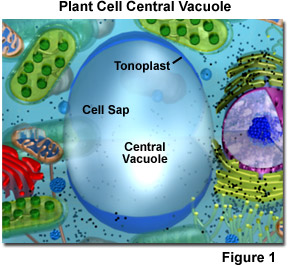
Labeled plant-cell diagram highlighting the central vacuole and the tonoplast (the vacuolar membrane). This supports the idea that pigment leakage increases when either the tonoplast or the cell surface membrane is disrupted, allowing vacuolar contents to escape. Source
It is separated from the outside by the tonoplast around the vacuole and the cell surface membrane. If either membrane is disrupted, more pigment leaves the cell, so the surrounding liquid becomes more strongly colored. This makes pigment leakage a useful indirect measure of membrane damage.
Why beetroot is used
Beetroot is useful because its pigment is already present inside the cells, so no extra indicator is needed. The tissue is also easy to cut into similar pieces. Since the pigment is enclosed by internal and external membranes, the method is sensitive to changes that increase leakage.
Method overview
A typical method uses beetroot cylinders or discs of equal size. These are cut using a cork borer or scalpel, washed thoroughly to remove pigment released from damaged surface cells, and then blotted dry so excess liquid does not affect the treatment concentration. Each piece is placed into a known volume of liquid for the same length of time.
The investigation changes one independent variable:
temperature, usually by placing samples in water baths at different temperatures
alcohol concentration, usually by using ethanol solutions of different percentages
The dependent variable is the amount of pigment released.
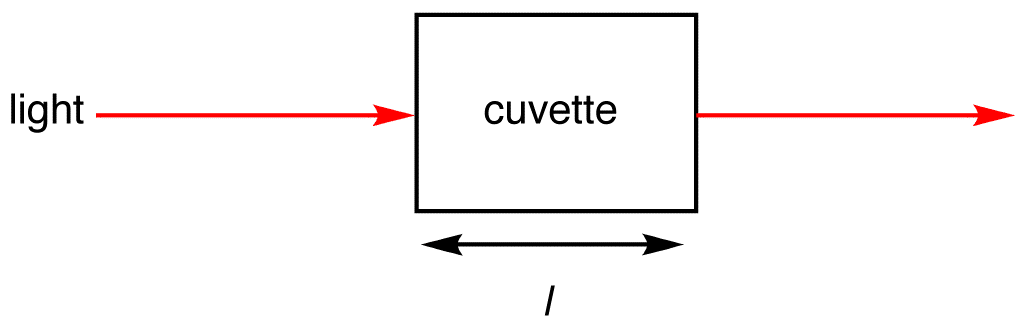
Schematic showing a light beam passing through a sample held in a cuvette, with incident intensity and transmitted intensity . This visual links the practical’s pigment-leakage method to absorbance measurements: darker (more pigmented) solutions transmit less light and therefore give higher absorbance. Source
This can be measured by:
observing color intensity
using a colorimeter to measure absorbance, which gives more objective and quantitative data
Because the pigment is already inside the cells, darker liquid indicates that the membranes have become more permeable.
Variables to control
To make the results valid, important control variables include:
size, thickness, and surface area of the beetroot pieces
volume of solution in each tube
time each sample remains in the solution
starting condition and source of the beetroot tissue
the method used for washing and blotting the samples
pH, if different solutions are being prepared
the time between removing samples and measuring the liquid
If these factors are not controlled, differences in pigment leakage may be caused by the method rather than by temperature or alcohol concentration.
In many methods, the beetroot is removed before the liquid is measured. This is important because fragments of tissue or bubbles can scatter light and make colorimeter readings less reliable.
Interpreting the results
More leaked pigment means greater membrane disruption and therefore higher permeability. In both temperature and alcohol investigations, the general expectation is that a stronger treatment causes more leakage.
Results are usually presented as absorbance or relative color intensity against the independent variable. Repeats at each condition are important so that a mean can be calculated and anomalous results can be identified. If a colorimeter is used, it should be zeroed with an appropriate blank before readings are taken.
A control sample is also important. For alcohol, a 0% ethanol sample shows the level of leakage that occurs without alcohol. For temperature, a low or room-temperature sample provides a baseline for comparison.
Effect of temperature
At low temperatures, membrane components have less kinetic energy, so the membrane remains relatively stable and little pigment leaks out. As temperature increases, phospholipids move more, making the membrane more fluid and allowing some substances to pass through more easily.
At higher temperatures, membrane proteins can be permanently altered. This creates larger disruptions in membrane structure, so permeability rises much more sharply. In beetroot cells, damage to both the tonoplast and the cell surface membrane allows betalain to escape from the vacuole into the surrounding liquid.
A common pattern is:
little leakage at low temperatures
a gradual rise as temperature increases
a rapid rise once membranes and proteins are severely disrupted
Effect of alcohol concentration
Alcohol also increases membrane permeability. Ethanol can interact with and disrupt phospholipids in the bilayer, reducing the membrane's ability to act as an effective barrier. As ethanol concentration increases, more pigment usually leaks out.
Alcohol may also affect membrane proteins, adding to the loss of structure. This is why higher ethanol concentrations generally produce deeper color or higher absorbance values than low-concentration ethanol or a water control. If concentrations are prepared accurately, the trend is often very clear.
Evaluating the investigation
This practical is useful because it links membrane structure to visible evidence. However, careful technique is essential because beetroot is biological material and is not perfectly uniform.
Common sources of error include:
beetroot pieces not being identical in size
extra damage caused during cutting
incomplete washing, so surface pigment remains before the test starts
water-bath temperatures not staying constant
evaporation changing ethanol concentration
subjective judgment if color is assessed by eye
Reliability can be improved by:
using the same cork borer for all samples
cutting samples to the same length
using thermostatically controlled water baths
preparing ethanol concentrations carefully
carrying out repeats and calculating a mean
using a colorimeter instead of visual comparison
Students should also be able to explain unexpected results. A sample may give unusually high leakage if it was cut unevenly, damaged more than the others, or left too long before measurement. The practical does not show the membrane directly, but it gives strong evidence that membrane integrity depends on an intact arrangement of phospholipids and proteins. When that structure is disturbed by heat or alcohol, substances previously retained inside the cell escape more easily.
Practice Questions
Explain why beetroot pieces are washed after cutting before they are placed into the test solutions. (2 marks)
Cutting damages some cells or membranes at the surface. (1)
Washing removes leaked pigment from these damaged cells so later color change is due to the treatment being tested. (1)
(6 marks)
A student investigates the effect of temperature on membrane permeability using identical beetroot cylinders. The cylinders are placed in water baths at different temperatures, and the absorbance of the surrounding liquid is measured after 10 minutes.
Explain how increasing temperature affects the results and describe two precautions the student should take to make the investigation valid and reliable.
As temperature increases, phospholipids gain kinetic energy or move more. (1)
The membrane becomes more fluid or less stable. (1)
At higher temperatures, membrane proteins are altered or denatured. (1)
More pigment leaks out of the cells. (1)
Higher temperatures therefore give higher absorbance or darker solutions. (1)
One mark for each of two valid precautions, max 2:
use beetroot pieces of equal size or surface area
keep the time in the water bath the same
use the same volume of liquid
wash samples before use
repeat each temperature and calculate a mean
keep water-bath temperatures constant
FAQ
Beetroot pigment is red-purple, so a green filter is often most effective because it is close to the complementary color. This increases the difference in light absorbed between pale and dark samples.
Using a poor filter choice can reduce sensitivity, making small differences between treatments harder to detect.
Older beetroot may already have partly damaged membranes, bruising, or lower pigment content. That can increase background leakage before the experiment even starts.
For more consistent data, use fresh tissue, store it carefully, and try to take all samples from the same beetroot.
There is a limit to how much pigment is available to leak out. Once most of the pigment has already escaped, extra membrane damage cannot produce a much bigger increase.
Very dark samples can also approach the useful measuring range of the colorimeter, so dilution may be needed.
Bubbles and solid fragments scatter light. This changes the amount of light reaching the detector and can make the reading look higher or lower than it should.
The reading should reflect dissolved pigment only, so the liquid should be as clear and consistent as possible.
Pigment can begin leaking as soon as the beetroot touches the ethanol. If one tube is left even a little longer than another, the difference may affect the final result.
Accurate timing helps ensure that differences between samples are caused by ethanol concentration, not by unequal exposure time.
