

Edexcel Syllabus focus:
'Understand the implications of prenatal genetic screening for individuals, families and healthcare decisions.'
Prenatal genetic screening can provide useful information during pregnancy, but results may also create uncertainty and difficult choices. Its implications extend beyond test results to emotional wellbeing, family relationships, and decisions about care.
What prenatal genetic screening means
Prenatal genetic screening gives information about whether a fetus may have a genetic condition before birth.
Prenatal genetic screening: Testing during pregnancy used to estimate the likelihood that a fetus has a genetic condition or to identify a possible genetic abnormality before birth.
The main implication is that screening produces information that may change what happens next. A result may be reassuring, may suggest an increased chance of a condition, or may lead to further investigation. Because screening is not always completely certain, results can create both relief and uncertainty at the same time.
A result suggesting a condition does not automatically predict exactly how severely a child would be affected. Some genetic conditions show variable expression, so the same condition can have different effects in different individuals. This makes prenatal decisions especially challenging.
Implications for individuals
For the pregnant individual, prenatal screening can have major emotional and practical effects.
A low-risk or normal result may reduce anxiety.
A result showing increased risk may cause stress, shock, or prolonged uncertainty.
Some people may feel pressured to make decisions quickly, especially if more testing is offered during pregnancy.
Screening may influence decisions about whether to continue the pregnancy, prepare for the birth of an affected child, or seek more information first.
Results can also affect a person's sense of control. For some, screening is empowering because it allows planning. For others, it may feel overwhelming because the information arrives before they feel ready to act on it.
Personal beliefs, previous family experience, religious views, and understanding of the condition all influence how an individual responds. There is no single "correct" response, because the implications depend on both the medical findings and the person's circumstances.
Implications for families
Prenatal genetic screening rarely affects only one person. It can influence the wider family unit.
Parents may need to make major decisions together.
Family members may respond differently to the same result, leading to disagreement or tension.
Relatives may become involved in practical support, emotional support, or decision-making.
A result may raise questions about genetic risk in other family members, especially if the condition could be inherited.
Screening can also change expectations about the future. Families may need to think about long-term care, financial pressures, housing, or support needs if a child is likely to be born with significant medical problems. Even when no condition is confirmed, the period of waiting for further results can affect relationships and mental wellbeing.
In some families, screening results may produce feelings of guilt or blame, even though genetic inheritance is not under personal control. Good communication and accurate information are important to reduce misunderstanding and unnecessary conflict.
Implications for healthcare decisions
Prenatal genetic screening can directly influence healthcare planning before birth and after delivery.
If a screening result suggests a possible condition, healthcare professionals may recommend:
further testing
referral to specialist teams
additional monitoring during pregnancy
planning delivery in a hospital with appropriate neonatal or surgical care
early discussions about treatment, support, or palliative care after birth
This means screening is not only about diagnosis; it can guide management. Earlier knowledge may allow families and professionals to prepare more effectively for birth and immediate postnatal care.
Healthcare decisions should be based on informed consent.
Informed consent: Agreement to a test or procedure given after a person understands its purpose, possible outcomes, benefits, risks, and limitations.
This matters because people should understand that screening may lead to difficult choices, not just information. They need clear explanations of what a result can and cannot show. Healthcare professionals should provide balanced information and support decision-making without pressuring the individual toward a particular choice.
Uncertainty and limitations
An important implication of prenatal genetic screening is that results may be uncertain.
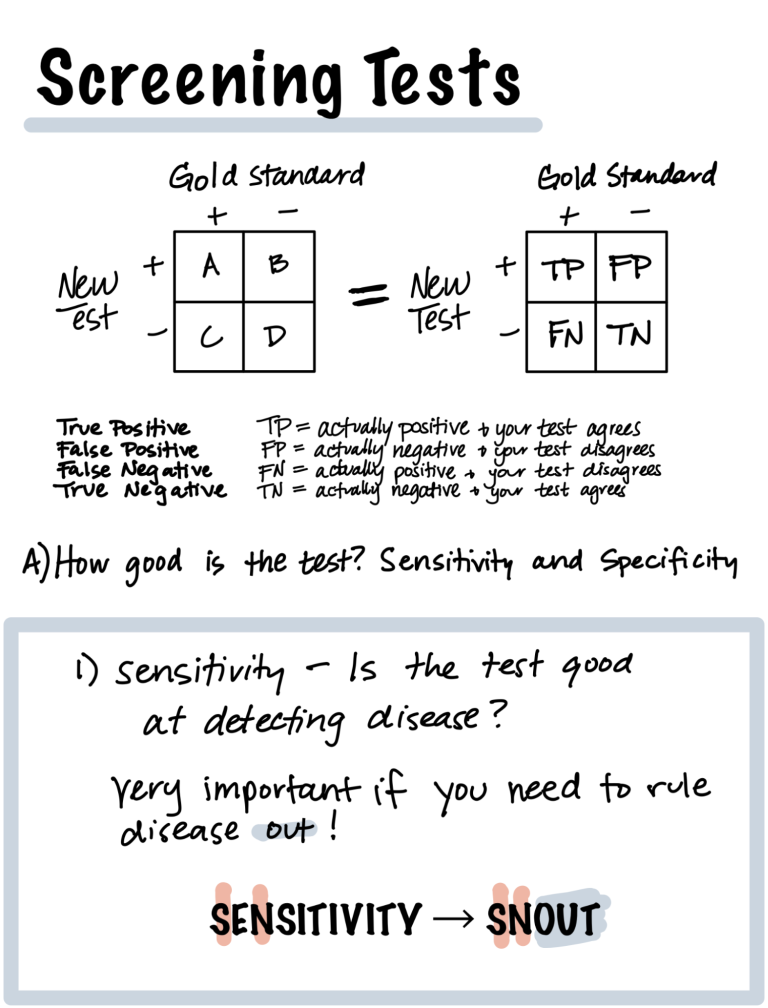
A standard 2×2 outcome table for a screening test, showing true positives, false positives, false negatives, and true negatives relative to the gold-standard diagnosis. This diagram helps you connect the terms “false positive” and “false negative” to what actually happened in the real world versus what the screening result suggested. Source
Screening can sometimes produce:
false positives, where the result suggests a problem that is not actually present
false negatives, where a condition is missed
findings of unclear significance, where the exact effect on the fetus is not known
Because of this, decisions should not be based on the assumption that screening is perfect.
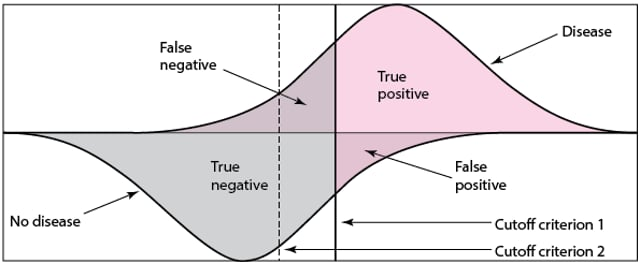
Two overlapping distributions of test results (affected vs unaffected) with a vertical cutoff line, illustrating where false positives and false negatives come from. Moving the cutoff changes the balance between sensitivity and specificity, which is why screening results can be “reassuring” yet still imperfect. Source
The possibility of uncertainty may increase anxiety and can make decision-making more difficult for both families and healthcare teams.
Screening also does not test for every possible condition. A normal result reduces concern for the conditions screened for, but it does not guarantee that the fetus has no health problems at all. This is another reason why clear communication is essential.
Support after screening
The implications of prenatal genetic screening are often managed through genetic counseling, follow-up appointments, and access to reliable information. Support should address more than the biology of a condition. It should also help with:
understanding risk and uncertainty
considering possible next steps
coping with emotional responses
discussing decisions within the family
planning future care
Support should be tailored to the medical result, the stage of pregnancy, and the needs of the individual and family.
Practice Questions
State two implications of prenatal genetic screening for an individual. (2 marks)
Any two from:
may reduce anxiety if the result is reassuring
may cause stress, shock, or uncertainty
may influence decisions about further testing
may affect decisions about continuing the pregnancy
may allow practical preparation for the birth of an affected child
Explain how a prenatal genetic screening result suggesting a genetic condition can affect both families and healthcare decisions. (6 marks)
may cause anxiety or emotional strain within the family
parents or relatives may disagree about what action to take
family members may need to prepare for long-term care or support
result may lead to further tests or specialist referral
pregnancy may be monitored more closely
delivery may be planned in a hospital with specialist care
healthcare professionals may discuss treatment or support needed after birth
clear information is needed because screening results may be uncertain
FAQ
Timing affects how much time people have to process information, ask questions, and consider options.
A result received earlier in pregnancy may leave more time for follow-up testing and planning, but it can also create a longer period of uncertainty. A later result may shorten the time available for decisions, which can increase pressure and distress.
Yes. For some people, reassuring results increase confidence and attachment.
For others, an uncertain or high-risk result may lead to emotional distance while they wait for more information. This does not mean they care less. It is often a protective response to stress and uncertainty during pregnancy.
Disagreement is not unusual, especially if the result is unexpected.
Healthcare teams usually respond by:
giving both parents clear information
allowing time for discussion
offering counseling or specialist support
making sure decisions are informed and not rushed
Support focuses on communication and understanding, rather than forcing a quick agreement.
Regret can happen when the information creates choices the person did not feel emotionally prepared to face.
Some people feel they were not fully aware of how uncertain or stressful the result might be. Others may struggle with the emotional burden of knowing risk information during pregnancy. Good pre-test counseling reduces this by making possible outcomes clearer before screening happens.
A normal result does not always remove all concern.
Some people may still worry because:
screening does not detect every condition
they may have had a stressful wait for results
previous pregnancy experiences may continue to affect confidence
Reassurance, clear explanation, and follow-up can still be valuable, especially if anxiety remains high.
