

CIE Syllabus focus:
'Explain how nuclear charge, electron shielding and the subshell from which an electron is removed affect the magnitude of ionisation energy.'
Ionization energy is controlled by the attraction between the nucleus and the electron removed. Three closely linked factors explain why some electrons are easier to remove than others.
What controls ionization energy?
The size of an ionization energy depends on how strongly a particular electron is attracted to the nucleus. A stronger attraction means more energy is needed to remove the electron. A weaker attraction means less energy is needed.
When explaining the magnitude of an ionization energy, always consider:
nuclear charge
electron shielding
the subshell from which the electron is removed
These factors do not act separately. They combine to determine the overall attraction between the nucleus and the electron.
Nuclear charge
Nuclear charge is one of the main factors affecting ionization energy.
Nuclear charge: The total positive charge of the nucleus, determined by the number of protons.
A higher nuclear charge means there are more protons in the nucleus. Since electrons are negatively charged, a more positively charged nucleus attracts them more strongly.
If two electrons are being removed from similar positions in different atoms, and shielding is similar, then:
higher nuclear charge gives stronger attraction
stronger attraction gives higher ionization energy
This is why ionization energy often increases when proton number increases, provided the electron removed is in the same type of subshell and experiences similar shielding.
It is important to link the idea clearly: more protons do not directly “cause” higher ionization energy on their own. They increase the electrostatic attraction between the nucleus and the electron being removed.
Electron shielding
However, outer electrons are not attracted only by the nucleus. They are also affected by the presence of other electrons.
Electron shielding: The reduction in attraction between the nucleus and an outer electron caused by repulsion from inner-shell electrons.
Inner electrons lie between the nucleus and the outer electron.
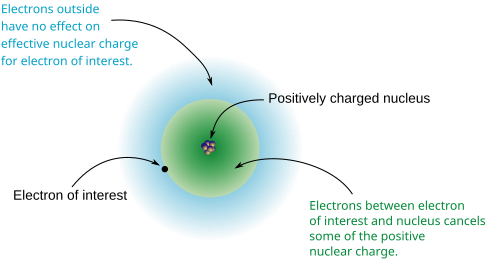
This diagram illustrates the idea of effective nuclear charge: inner-shell electrons partially screen the nucleus so an outer electron experiences a reduced attractive pull. It visually links shielding to a smaller net attraction, helping explain why greater shielding generally lowers ionization energy. Source
They reduce the full effect of the nuclear charge felt by that outer electron.
As shielding increases:
the attraction between nucleus and outer electron decreases
less energy is needed to remove the electron
ionization energy decreases
This means an electron can be easier to remove even if the atom has more protons, because some of the increased nuclear charge is offset by extra shielding.
Inner-shell electrons are especially important in shielding because they are closer to the nucleus and more effectively block the attraction felt by outer electrons. Electrons in the same shell do not shield each other as effectively as electrons in inner shells.
A common exam point is that shielding does not reduce the actual number of protons. The nuclear charge stays the same. Shielding only reduces the effective attraction experienced by the electron being removed.
The subshell from which the electron is removed
Ionization energy is also affected by the subshell containing the electron removed.
Electrons in different subshells do not all experience the same attraction to the nucleus, even when they are in the same main shell. This is because subshells have different energies and different average distances from the nucleus.
For A-Level Chemistry, the key comparison is usually between and electrons:
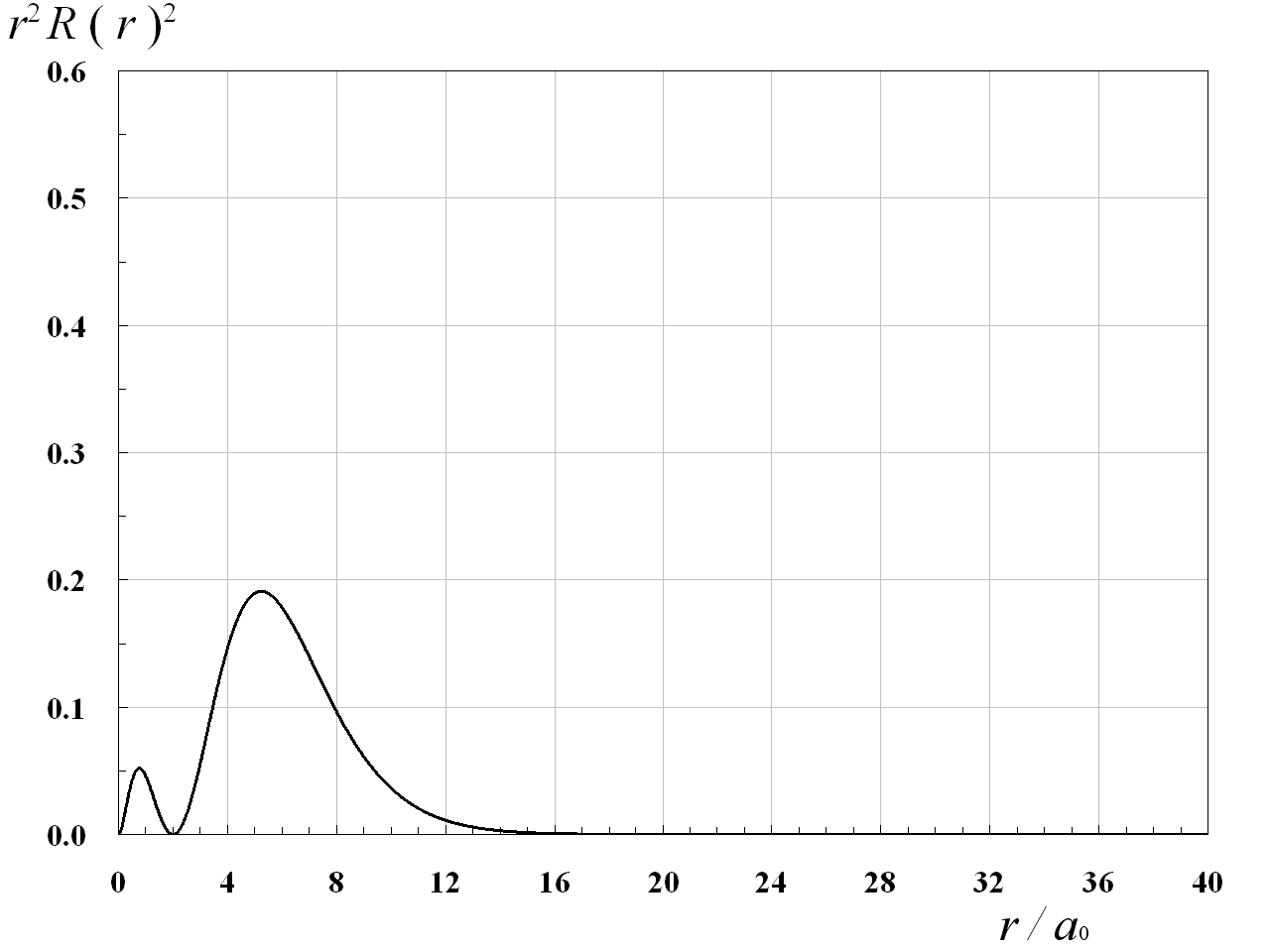
This radial distribution plot for a 2s orbital shows how electron probability varies with distance from the nucleus, including significant density closer in (penetration) and a radial node. The key takeaway is that orbitals can place electron density nearer the nucleus than higher- subshells, supporting why electrons tend to be held more strongly and have higher ionization energies. Source
an electron is, on average, closer to the nucleus
it experiences stronger attraction
it is harder to remove
it therefore has a higher ionization energy
By contrast:
a electron is, on average, slightly farther from the nucleus
it is more shielded
it experiences weaker attraction
it is easier to remove
So, if the electron removed comes from a subshell rather than an subshell, the ionization energy may be lower even when nuclear charge has increased.
This explains why ionization energy does not always follow a perfectly smooth pattern.
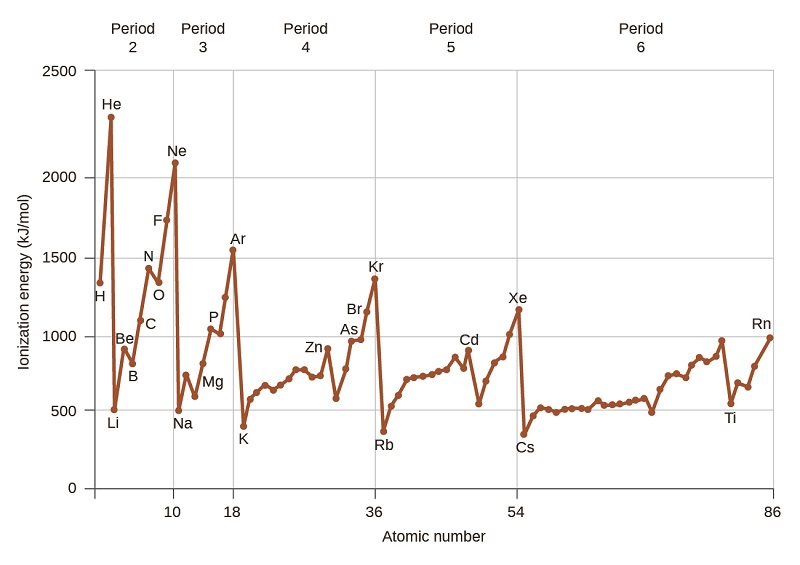
This graph plots first ionization energy against atomic number, showing the repeating pattern across periods (peaks at noble gases and minima at alkali metals). The small deviations from a smooth increase within a period are where subshell/repulsion effects matter, motivating explanations that reference shielding and whether the electron removed is from an or subshell. Source
A rise in nuclear charge can be outweighed by the fact that the electron removed is now in a higher-energy subshell that is less strongly attracted to the nucleus.
How the factors combine
In real comparisons, all three factors must be considered together.
If nuclear charge increases
Ionization energy tends to increase, because the electron is more strongly attracted.
If shielding increases
Ionization energy tends to decrease, because the outer electron feels less attraction to the nucleus.
If the electron removed comes from a higher-energy subshell
Ionization energy may decrease, because that electron is easier to remove.
The best explanations always connect the factor to the attraction between the nucleus and the electron removed. Phrases such as “stronger attraction”, “more shielding”, and “electron removed from a subshell rather than an subshell” are often needed for full credit.
Building a strong exam explanation
When comparing ionization energies, use a clear order:
identify the electron being removed
compare nuclear charge
compare shielding
compare the subshell
state whether attraction is stronger or weaker
link this to whether ionization energy is higher or lower
A high-quality answer is specific. For example, saying “the atom is bigger” is usually too vague on its own. A better explanation links size to shielding, distance, and weaker attraction.
The core idea is simple: ionization energy depends on how strongly the nucleus attracts the electron being removed. Nuclear charge increases that attraction, shielding reduces it, and the subshell determines how strongly the electron is held.
Practice Questions
Explain why increased electron shielding lowers ionization energy. (2 marks)
Inner electrons shield or repel the outer electron from the nucleus. (1)
The attraction between the nucleus and the electron removed is weaker, so less energy is needed to remove it. (1)
Explain why the first ionization energy increases from sodium to magnesium, but decreases from magnesium to aluminum. (6 marks)
From sodium to magnesium, nuclear charge increases / magnesium has more protons. (1)
The electron removed is from the same main shell / shielding is similar. (1)
Therefore there is a stronger attraction between the nucleus and the outer electron. (1)
So more energy is needed to remove the electron / ionization energy increases. (1)
From magnesium to aluminum, the electron removed from aluminum is in a subshell, while in magnesium it is in a subshell. (1)
A electron is higher in energy / more shielded / farther from the nucleus, so it is easier to remove despite the higher nuclear charge. (1)
FAQ
Effective nuclear charge is the overall attractive force felt by an electron after shielding has been taken into account.
It is useful because an outer electron does not feel the full positive charge of the nucleus. Inner electrons reduce that attraction, so the electron experiences a smaller net pull.
Thinking in terms of effective nuclear charge helps explain why:
some outer electrons are removed more easily than others
shielding can offset an increase in proton number
ionization energy depends on more than just nuclear charge alone
An $s$ electron has a greater probability of being found closer to the nucleus than a $p$ electron in the same main shell.
Because of this:
the $s$ electron experiences stronger attraction
it is less effectively shielded
it usually requires more energy to remove
This idea is sometimes described as penetration. A more penetrating orbital allows the electron to spend more time closer to the nucleus.
No. Electrons in the same shell provide only partial shielding.
Inner-shell electrons are much better at shielding because they are located between the nucleus and the outer electron more consistently.
Same-shell shielding is weaker because electrons in that shell occupy roughly similar regions of space. As a result, they reduce attraction somewhat, but not nearly as effectively as electrons in lower shells.
The gas phase is used so that the energy measured refers only to removing an electron from an isolated atom or ion.
In a solid or liquid, extra energy changes would also be involved, such as:
breaking intermolecular forces
overcoming parts of a lattice structure
separating particles from neighbors
Using gaseous species makes the measurement precise and allows fair comparison between different elements.
A subshell change can matter a lot because the electron may move from a region of stronger attraction to one of weaker attraction.
Even if proton number increases, a new electron in a higher-energy subshell can be:
slightly farther from the nucleus
less penetrating
more shielded
That combination can make the electron easier to remove, so ionization energy falls instead of rising. This is why small electronic structure changes can produce visible dips in ionization energy data.


