

IB Syllabus focus: 'The body has acute and possible long-term responses to environments such as temperature, humidity and altitude. Performance impact depends on activity type, and strategies can support performance and acclimatization.'
Environmental conditions can quickly challenge homeostasis during exercise. Understanding immediate responses, likely acclimatization changes, and sport-specific effects helps athletes prepare safely and protect performance.
Environmental stress and acute responses
Environmental stress changes the balance between heat production, heat loss, oxygen availability, and fluid balance. During exercise, these factors can reduce the body’s ability to maintain stable internal conditions. The response is acute when it happens immediately or within hours of exposure. The main environmental stressors emphasized here are temperature, humidity, and altitude. Each can alter cardiovascular strain, oxygen delivery, and the athlete’s sense of effort.
Hot and humid conditions
In hot environments, the body sends more blood to the skin and increases sweating to support heat loss. When humidity is also high, sweat evaporates less effectively, so cooling becomes less efficient even if sweat rate is high.
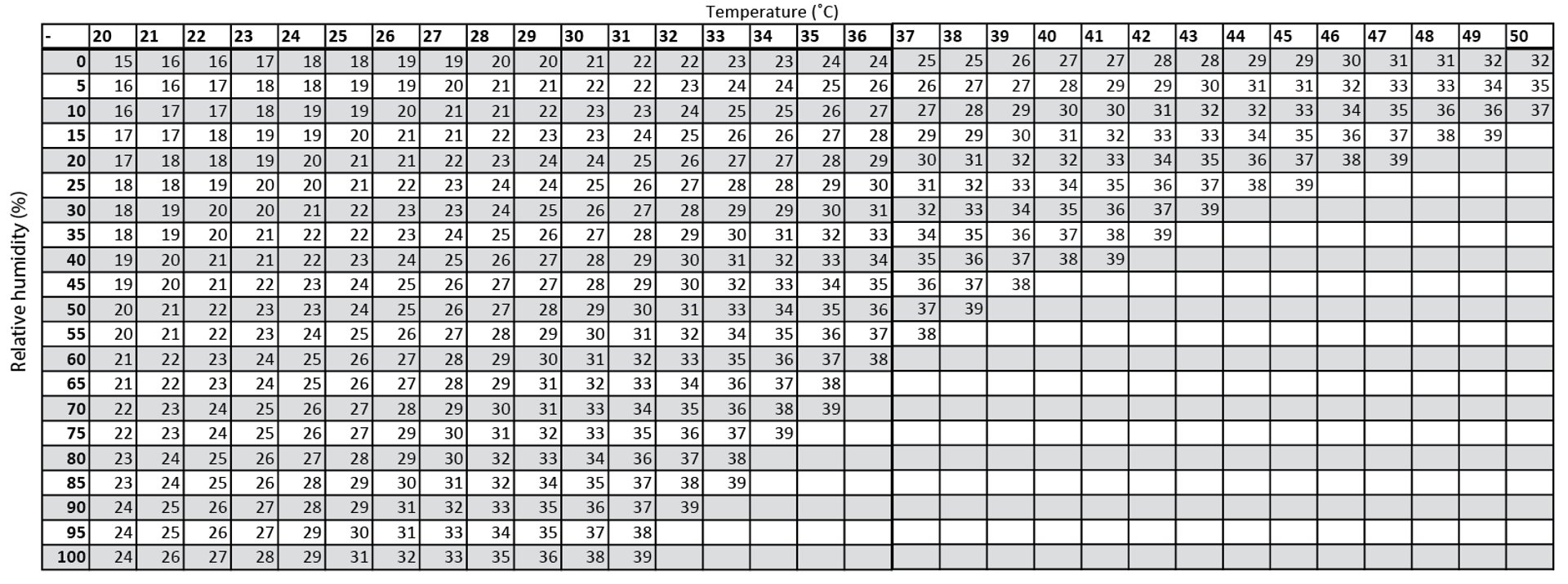
This wet-bulb globe temperature (WBGT) chart shows how environmental heat stress increases as air temperature rises and as relative humidity increases. It helps explain why humid conditions feel disproportionately harder: higher humidity limits evaporation, so the body’s main cooling mechanism (sweat evaporation) becomes less effective. Practically, the same temperature can impose very different physiological strain depending on humidity. Source
Core temperature rises more quickly.
Heart rate tends to be higher at the same exercise intensity because cardiovascular strain increases.
Dehydration risk rises as fluid losses increase.
Reduced plasma volume can make prolonged exercise feel harder and can lower performance.
Skill execution, concentration, and pacing may worsen when thermal strain becomes severe.
Altitude
At altitude, the air has a lower oxygen pressure, so less oxygen moves from the lungs into the blood.
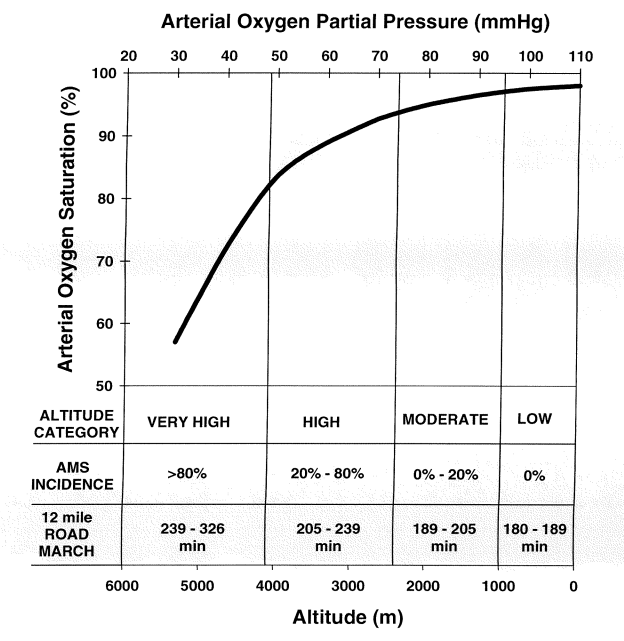
This figure plots how increasing altitude is associated with lower arterial oxygen partial pressure and a corresponding drop in arterial oxygen saturation in unacclimatized individuals. The curve makes the mechanism of altitude stress visible: reduced inspired oxygen pressure leads to reduced blood oxygenation, increasing the strain on aerobic metabolism. This helps connect the environmental condition (altitude) to acute symptoms like breathlessness and reduced endurance capacity. Source
This creates a lower-oxygen environment for working muscles, especially during aerobic exercise.
Ventilation increases to bring more oxygen into the lungs.
Heart rate is often higher during submaximal exercise at first.
Endurance performance usually declines because aerobic energy production is limited.
Recovery between repeated high-intensity efforts may also be reduced.
Athletes may feel breathless, fatigued, or unable to sustain usual training intensities.
Acclimatization
Acclimatization refers to beneficial adjustments that develop after repeated exposure to a natural environment. It does not remove all environmental stress, but it can reduce its impact on the body and improve the ability to train or compete.
Acclimatization: A gradual set of physiological adjustments that improves tolerance and performance in a specific natural environment, such as heat or altitude.
The value of acclimatization depends partly on the demands of the activity being performed.
Performance impact by activity type
Endurance activities
Long-duration events are usually most affected by heat, humidity, and altitude because performance depends heavily on sustained aerobic metabolism and stable internal conditions.
In heat and humidity, rising body temperature and fluid loss increase fatigue and can force slower pacing.
At altitude, reduced oxygen availability lowers the ability to maintain high aerobic workloads.
Marathons, road cycling, triathlon, and other prolonged activities are therefore especially vulnerable.
Sprint, power, skill, and intermittent activities
Short explosive efforts depend less on prolonged oxygen delivery, so some activities are affected differently.
Pure sprint or jump events may be less impaired at altitude than endurance events, and reduced air resistance can sometimes assist speed-based performances.
However, repeated-sprint and team sports can still suffer because recovery between efforts becomes harder.
In hot or humid conditions, brief events may be less limited by dehydration than endurance events, but concentration, decision-making, and technical execution can still decline.
Activity type therefore changes both the size and the nature of the performance effect.
Heat acclimatization
Heat acclimatization usually develops over several days to about two weeks of repeated exposure. The athlete should train progressively rather than begin with normal workloads immediately in the heat.
Sweating starts earlier, which improves cooling.
Sweat can become more dilute, helping conserve electrolytes.
Plasma volume can increase, supporting circulation during exercise.
Heart rate at a given workload may decrease after acclimatization.
Core temperature and perceived effort may be lower during the same exercise task.
Tolerance for training and competition in the heat generally improves.
These changes support performance, but they do not make the athlete immune to heat illness. Severe heat stress can still occur, especially if hydration, recovery, or pacing is poor.
Altitude acclimatization
Altitude acclimatization may take longer and is often less complete than heat acclimatization. Early exposure is marked by reduced exercise capacity, so training intensity usually has to be lowered at first.
Ventilation remains elevated as the body tries to improve oxygen uptake.
Over time, there may be increases in the oxygen-carrying capacity of the blood.
Athletes may become more efficient at tolerating lower oxygen availability during training and competition.
Even after acclimatization, maximal endurance performance at altitude may still remain below sea-level values.
Responses vary among individuals. Some athletes adapt relatively well, while others experience persistent fatigue, headaches, disturbed sleep, or poor training quality.
Strategies to support performance and acclimatization
In heat and humidity
Practical planning reduces stress on the body and allows acclimatization to occur more safely.
Increase exposure gradually across days.
Lower training intensity or duration at the start of exposure.
Use planned hydration before, during, and after exercise.
Choose lighter, breathable clothing when possible.
Schedule training or competition during cooler parts of the day.
Use cooling strategies, such as shade, fans, or cold towels, when available.
At altitude
Performance support depends on allowing time for adjustment and avoiding excessive early strain.
Arrive with enough time for partial acclimatization when possible.
Reduce training load initially, then build up progressively.
Monitor symptoms such as unusual fatigue, headache, or dizziness.
Emphasize recovery, sleep, and appropriate pacing.
Match expectations to the event: endurance events are usually affected more than very short power events.
Practice Questions
Identify two acute physiological responses to exercise in hot and humid conditions.
1 mark for each valid response, up to 2 marks.
Accept:
increased sweating
increased skin blood flow
higher heart rate at the same workload
increased dehydration or fluid loss
rise in core temperature
Explain how environmental conditions can affect performance differently in endurance activities and intermittent team sports, and outline strategies that support acclimatization.
Award up to 6 marks total.
1 mark for explaining that endurance performance is strongly reduced in heat or humidity because thermal strain, dehydration, or pacing difficulty increases.
1 mark for explaining that endurance performance is reduced at altitude because lower oxygen availability limits aerobic performance.
1 mark for explaining that intermittent team sports may be affected by poorer recovery between repeated efforts.
1 mark for explaining that heat can also impair concentration, decision-making, or skill execution in intermittent sports.
1 mark for outlining gradual exposure or progressive training load as an acclimatization strategy.
1 mark for outlining a relevant support strategy such as hydration, cooling, reduced initial training intensity, or allowing time to adjust at altitude.
FAQ
Yes. Clothing and equipment can alter how easily heat escapes from the body.
Items that are heavy, dark, padded, or poorly ventilated can:
trap heat
reduce sweat evaporation
increase discomfort and fatigue
This is especially important in sports with protective gear, where environmental heat and equipment heat load combine to raise thermal strain.
Acclimatization usually refers to adjustments made in a natural environment, such as training in real heat or at real altitude.
Acclimation usually refers to similar adjustments produced in an artificial or controlled setting, such as a heat chamber or altitude tent.
Both aim to improve tolerance to environmental stress, but the setting is different.
Heat acclimatization can begin to fade within several days and may decline substantially after about 1 to 2 weeks without heat exposure.
Altitude-related benefits may last for different lengths of time depending on the change. Breathing-related adjustments can fade fairly quickly, while some blood-related changes may persist longer.
Short maintenance exposures can help preserve some benefits.
Altitude can disturb sleep because lower oxygen levels may cause more frequent waking and unstable breathing patterns during the night.
Dry air, headache, and unfamiliar breathing effort can also make sleep feel less restful.
Poor sleep matters because it slows recovery, increases perceived fatigue, and can make the first few days of training feel much harder.
Yes. Timing can affect how the athlete feels on race day.
Common approaches include:
arriving very close to the event, before symptoms worsen
arriving early enough to allow partial acclimatization
The best option depends on the sport, the altitude, travel fatigue, and how much preparation time is available.
