
Causality: core idea
· Causality = investigating whether one variable causes a change in another variable.
· In psychology, causality is difficult because human behaviour is complex and often results from the interaction of several variables, not one simple cause.
· A direct causal relationship may exist when a change in Variable A produces a change in Variable B.
· Strong exam answers should avoid overclaiming: say “may influence”, “is associated with”, or “interacts with” unless the study design supports cause-and-effect.
· Causality links closely to research methodology, especially experiments, controls, validity, and statistical significance.
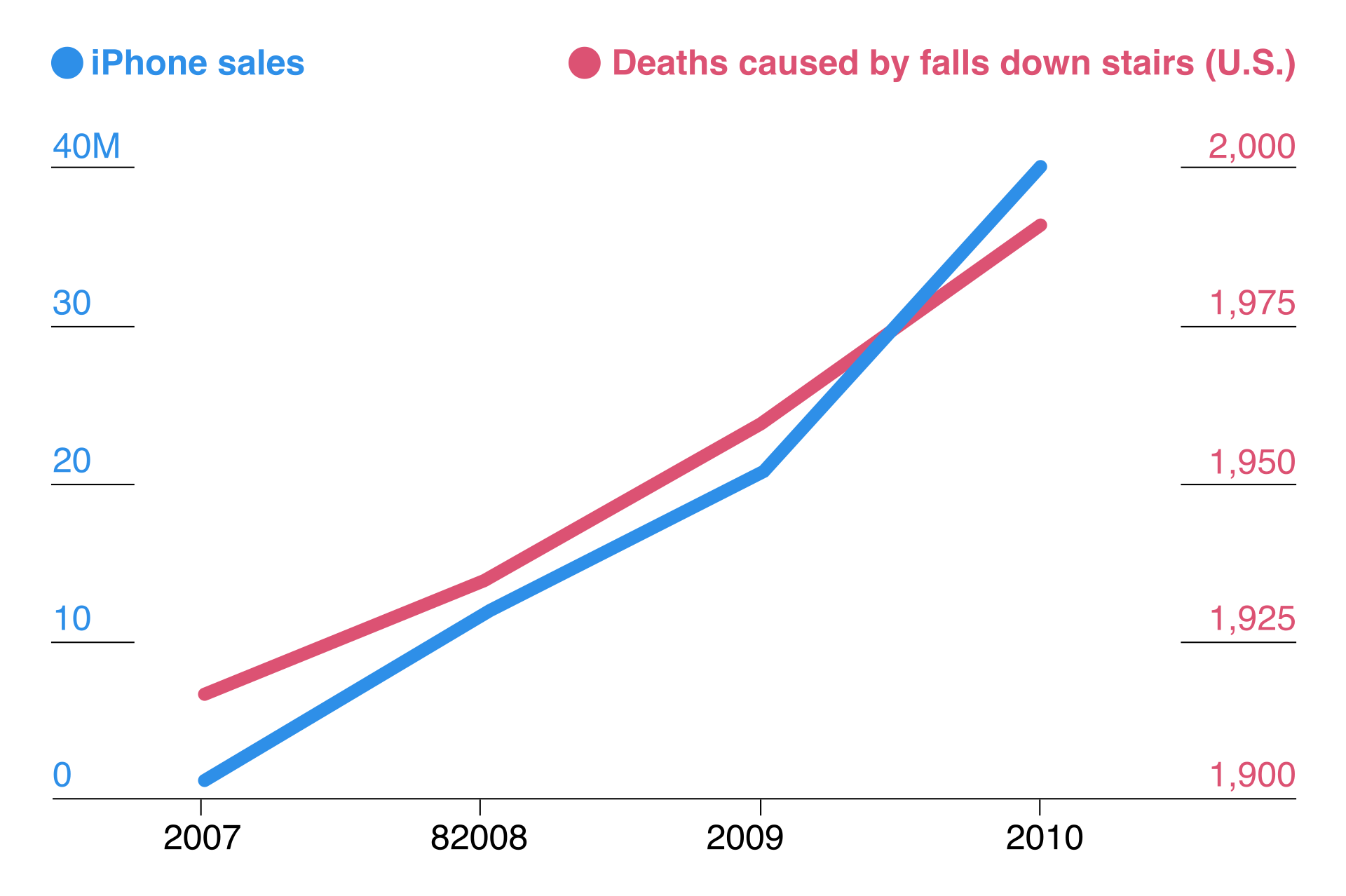
This image helps students see that two variables can be associated without one directly causing the other. Use it when revising why psychologists must be careful before making causal claims. It is especially useful for distinguishing correlation from causal explanation. Source
Correlation vs causation
· Correlation = two variables are related or co-vary; it does not prove that one causes the other.
· Causation = one variable directly or indirectly produces a change in another variable.
· Correlation vs causation is a key exam distinction: correlational studies can show relationships, but usually cannot establish cause-and-effect.
· Bidirectional ambiguity = when it is unclear whether A causes B or B causes A.
· A third variable may explain the relationship between two variables, creating a misleading causal interpretation.
· In evaluation, write: “The study demonstrates an association, but causality cannot be confirmed because…”
Experiments and causal claims
· Experiments are the strongest method for testing causality because researchers manipulate an independent variable (IV) and measure its effect on a dependent variable (DV).
· IV = the variable manipulated by the researcher.
· DV = the outcome measured after the manipulation.
· Experimental group = receives the manipulation or treatment.
· Control group = does not receive the manipulation, or receives a comparison condition.
· Random allocation helps reduce participant differences between conditions and supports stronger causal conclusions.
· A causal claim is stronger when the study uses standardized procedures, controlled conditions, and clear operationalization of variables.
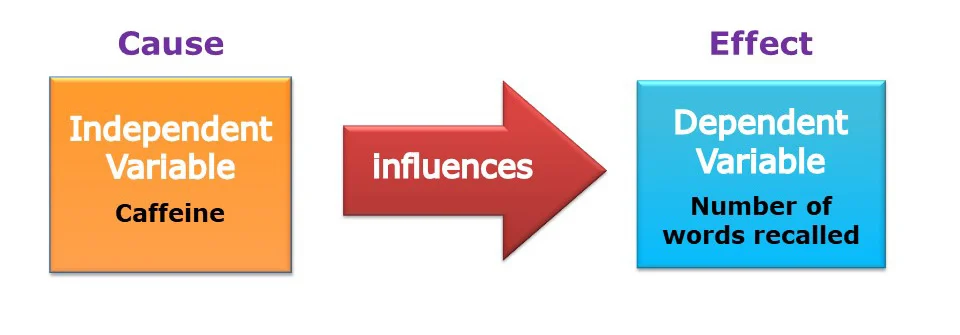
This diagram clearly shows the causal logic of an experiment: the IV is manipulated and the DV is measured. It is useful for remembering the basic structure of experimental research. Students can use it to explain why experiments are better suited to causal claims than correlations. Source
Controls and alternative explanations
· Controls reduce the influence of extraneous variables that could affect the DV.
· Extraneous variables = unwanted variables that may influence results.
· Confounding variables = variables that systematically affect the DV and make it unclear whether the IV caused the outcome.
· Placebo controls help test whether improvement is due to the treatment itself or participants’ expectations.
· Double-blind procedures reduce researcher bias and participant expectations because neither researchers nor participants know key condition details during data collection.
· Wait-list controls can be used in treatment research, where some participants receive the intervention later for ethical reasons.
· In exams, link controls to internal validity: better control = stronger confidence that the IV caused changes in the DV.

This diagram shows why causal conclusions depend on controlling variables other than the IV. It is useful for explaining how confounds weaken internal validity. Use it when revising evaluation points for experiments. Source
Validity and causality
· Internal validity = the extent to which changes in the DV can confidently be attributed to the IV.
· High internal validity strengthens causal conclusions.
· Low internal validity means alternative explanations, such as confounding variables, may explain the findings.
· External validity = the extent to which findings can be generalized beyond the study setting, sample, or procedure.
· High control may improve internal validity but reduce external validity if the study becomes too artificial.
· A top-band evaluation balances both: “The experiment supports causality due to control of extraneous variables, but generalizability may be limited by…”
Complexity, interaction and reductionism
· Reductionism = explaining behaviour using one narrow cause or level of analysis.
· Causality in psychology is rarely simple because behaviour may involve biological, cognitive, sociocultural, and environmental factors.
· Influence = one factor contributes to behaviour, but may not be the sole cause.
· Interaction = two or more factors work together to affect behaviour.
· Agency and motivation matter because humans can make choices, resist influences, or change behaviour intentionally.
· Strong essays avoid simplistic claims such as “X causes behaviour” and instead explain how factors interact.
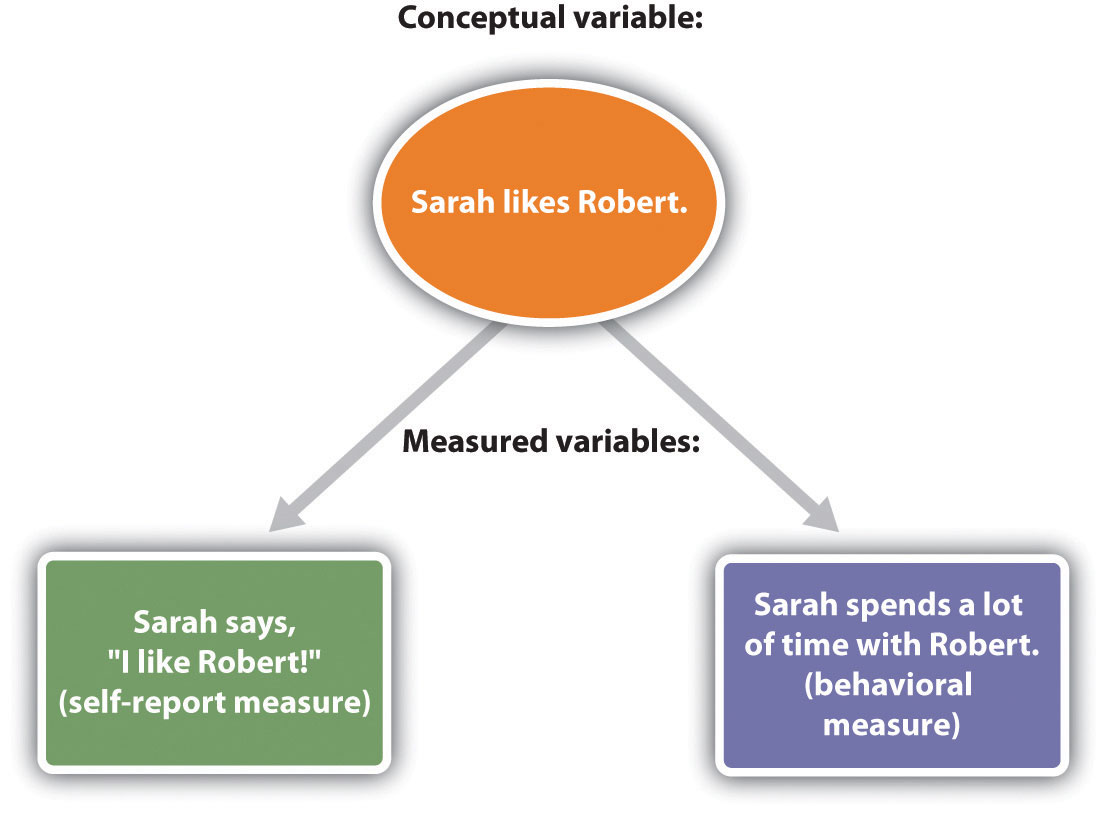
This diagram shows how a third variable can create an apparent relationship between two variables. It is useful for explaining why correlations are vulnerable to alternative explanations. Students can apply it when evaluating claims about causes of behaviour. Source
Statistical significance and causal interpretation
· Statistical significance helps judge whether results are unlikely to be due to chance.
· A statistically significant result does not automatically prove causality; the research design must also support causal interpretation.
· In an experiment, significance can support the claim that the IV affected the DV, but only if controls, validity, and procedures are strong.
· In correlational research, significance may show a reliable relationship, but still does not solve bidirectional ambiguity or third-variable problems.
· For high marks, combine statistics with methodology: “Although the result was statistically significant, causal claims are limited because…”
Exam evaluation sentence starters
· “This supports causality because the researcher manipulated the IV and measured its effect on the DV.”
· “However, causality is limited by possible extraneous variables such as…”
· “The study shows correlation rather than causation because no variable was manipulated.”
· “Bidirectional ambiguity means it is unclear whether…”
· “A reductionist explanation may oversimplify behaviour because…”
· “Internal validity is strengthened by…, but external validity may be weakened by…”
Checklist: can you do this?
· Identify the IV, DV, experimental group, and control group in a study.
· Explain why correlation does not prove causation.
· Evaluate whether a study has strong internal validity and controls.
· Interpret whether findings show causation, influence, interaction, or only association.
· Write a balanced exam point about complexity, reductionism, and alternative explanations.
High-scoring takeaway
· The best IB answers treat causality as a research-methods issue and a conceptual issue.
· To claim causality, look for manipulation of variables, control of extraneous variables, valid measurement, and statistical support.
· To evaluate causality, discuss correlation vs causation, bidirectional ambiguity, confounds, internal/external validity, and the complexity of human behaviour.
· Final exam phrase to remember: “Psychological causality is rarely simple; behaviour is usually shaped by interacting biological, cognitive, sociocultural and motivational factors.”