
Responsibility
· Responsibility = psychologists have a duty to make reasoned, ethical and socially responsible decisions when researching, treating, advising, publishing or applying psychology.
· Central exam idea: psychologists often hold positions of power over participants, clients, animals, communities and the public, so they must maximize benefits and minimize costs/harms.
· Use this concept to evaluate ethical standards, research methods, socially sensitive research, animal research, and real-world applications of findings.
Researcher–participant relationship
· Psychological research relies on human participants; the relationship should be based on respect, dignity, trust and fair treatment.
· Researchers must protect participants’ autonomy: participation should be voluntary, informed and free from pressure.
· Key ethical responsibility: participants should not be treated as a “means to an end” for data collection.
· In exam answers, link responsibility to how ethical decisions shape the procedure, not just whether a study is “ethical” or “unethical”.
Core ethical standards in human research
· Informed consent = participants are told enough about the aim, procedure, risks, rights and use of data to decide whether to participate.
· Right to withdraw = participants can leave the study and/or withdraw their data, especially after debriefing if deception was used.
· Protection from harm = researchers must avoid physical or psychological harm beyond normal daily risk; class practicals must not create anxiety, stress, pain or discomfort.
· Anonymity/confidentiality = identities and data must be protected; anonymity can improve the validity of self-reported data.
· Debriefing = after participation, researchers explain the true aim/procedure, especially if deception or incomplete disclosure occurred.
· Deception may be used only when justified by the study’s aims, when harm is minimized, and when participants are fully debriefed afterwards.
· Cost–benefit analysis = ethical decisions should balance the potential value of knowledge against possible costs to participants or groups.
Ethical standards can affect research findings
· Ethics are not only “rules”; they can influence sampling, validity, participant behaviour and interpretation.
· Informed consent can introduce participant variables because people who consent may differ from those who refuse.
· Right to withdraw can create sampling bias if only certain types of participants remain in the study.
· Anonymity may increase the validity of self-report data, especially for sensitive topics, because participants may answer more honestly.
· Deception restrictions can reduce demand characteristics in some studies, but overuse may damage trust and require careful debriefing.
· Strong exam evaluation: explain both sides — ethical controls protect participants but may also affect ecological validity, internal validity or generalizability.
Responsibility in roles beyond research
· Psychologists may act as researchers, therapists, educators, government advisers, consultants or public communicators.
· Because psychologists can influence policy, diagnosis, treatment and public opinion, they should act with social responsibility.
· Responsible application includes making sure the public understands the level of uncertainty in findings, rather than overstating conclusions.
· Psychologists should avoid promoting deterministic or stigmatizing explanations that could harm individuals or groups.
· Exam phrase: responsibility includes both conducting research ethically and applying research ethically.
Socially sensitive issues, stigma and marginalised groups
· Socially sensitive research investigates topics that may affect individuals, communities or social groups, such as mental health, culture, gender, development, crime, relationships or health behaviour.
· Psychologists are responsible for protecting marginalized groups from stigma, stereotyping or harmful misuse of findings.
· Responsible reporting should avoid implying that findings are universal when they may be limited by sample, context, culture or method.
· Psychologists should consider who may benefit from research and who may be harmed by publication or public interpretation.
· Strong evaluation point: a study can be methodologically strong but still socially irresponsible if findings are communicated or applied carelessly.
Animal research and the 3Rs
· In animal research, psychologists must try to Replace, Reduce and Refine animal use.
· Replace = use alternatives to animal participants whenever possible.
· Reduce = use the minimum number of animals needed to achieve reliable results.
· Refine = improve procedures and conditions to minimize pain, distress or lasting harm.
· Ethical responsibility applies even when animal research may have scientific value; the benefits must still be justified against welfare costs.
· In IB class practicals, animals must not be used.
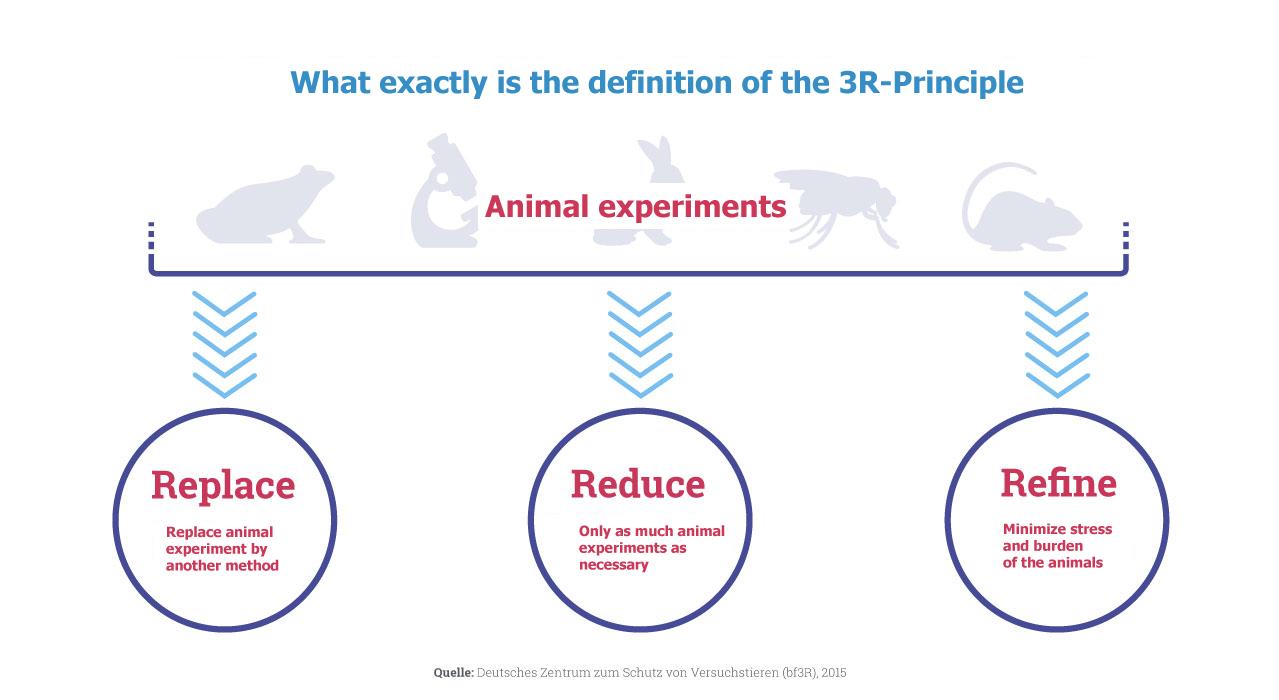
This diagram summarizes the 3Rs framework for ethical animal research. It helps students remember that responsibility in animal studies is not only about avoiding harm, but also about replacing animals where possible, reducing numbers and refining conditions. Source
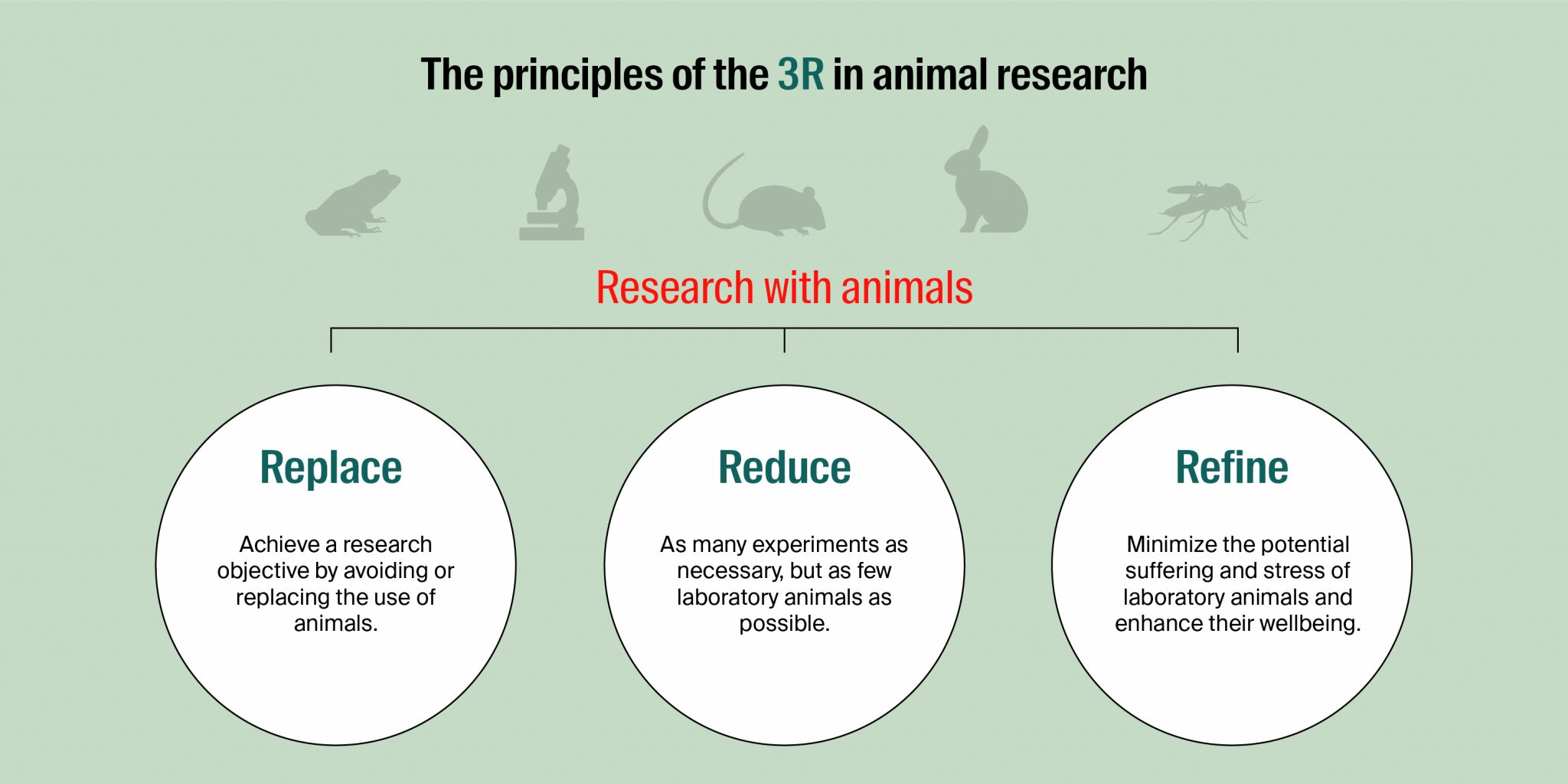
This infographic gives a clean visual summary of the same 3Rs principles in an applied research setting. It is useful for linking ethical responsibility to real institutions that must justify animal use while minimizing harm. Source
Class practical ethics: exam-relevant applications
· All class practicals must follow ethical guidelines and be supervised/approved by the teacher.
· Explicit informed consent is required; implied consent is not acceptable for IB class practicals.
· Participants must be told the aims/objectives, their right to withdraw, and how data will be used.
· Class practicals must not cause anxiety, stress, pain or discomfort.
· Conformity or obedience studies are not permitted under any circumstances.
· Partial deception may be allowed only if full knowledge would affect the outcome, no harm is caused, and participants are fully debriefed.
· For interviews, avoid sensitive topics such as mental health diagnosis, bullying or self-harm; safer topics include stress reduction, lifestyle habits or media consumption.
· Data protection: data must be stored confidentially, anonymity must be guaranteed, and online data must be deleted when the practical is complete.
· For participants under 16, written parent/guardian consent is required; participants aged 16+ do not require parental consent.
· Naturalistic observations may be acceptable in public settings where people expect to be observed, but the teacher must judge what is ethical.
Responsibility as an evaluation tool in exam answers
· When evaluating a study, ask: Were participants treated respectfully? Were risks minimized? Was consent/debriefing handled responsibly?
· When evaluating findings, ask: Could the results stigmatize a group? Could findings be misapplied by the public, media, schools, clinicians or governments?
· When evaluating methodology, link ethics to validity, bias, sampling, demand characteristics, ecological validity and generalizability.
· When writing ERQs/SAQs, use responsibility to build nuanced evaluation: “This increases ethical protection, but may reduce…” or “This improves validity because…”
· Avoid vague statements like “the study was unethical”; instead name the issue: deception, lack of consent, harm, confidentiality, withdrawal, social sensitivity or animal welfare.
Checklist: can you do this?
· Explain how responsibility applies to human participants, animal research, socially sensitive findings and real-world applications.
· Apply key ethical terms: informed consent, debriefing, right to withdraw, protection from harm, anonymity/confidentiality, deception, cost–benefit analysis.
· Interpret how ethical standards may influence research results, especially through participant variables, sampling bias and self-report validity.
· Evaluate class practicals by identifying what is permitted, restricted or prohibited under IB ethical guidelines.
· Use responsibility as a concept in exam answers to discuss power, uncertainty, stigma, advocacy and responsible communication of findings.