
Change: core idea
· Change = a key concept in psychology focused on how behaviour develops, shifts, adapts, or is deliberately modified.
· Psychological research often aims to apply theories and findings to change individual behaviour, group behaviour, or health-related outcomes.
· Change can be gradual: e.g. human development, maturation, long-term learning, changing prevalence of health problems.
· Change can be sudden: e.g. mood changes, unexpected shifts in behaviour, biological changes in the body or mind.
· Change can be planned: e.g. education, health treatments, prevention programmes, intervention strategies, adapting to environmental or technological change.
· Change can be unplanned: e.g. unexpected biological changes, social disruption, environmental pressures, new technology.
· Exam angle: always explain what changes, why it changes, how psychologists study it, and how effectively it can be changed.
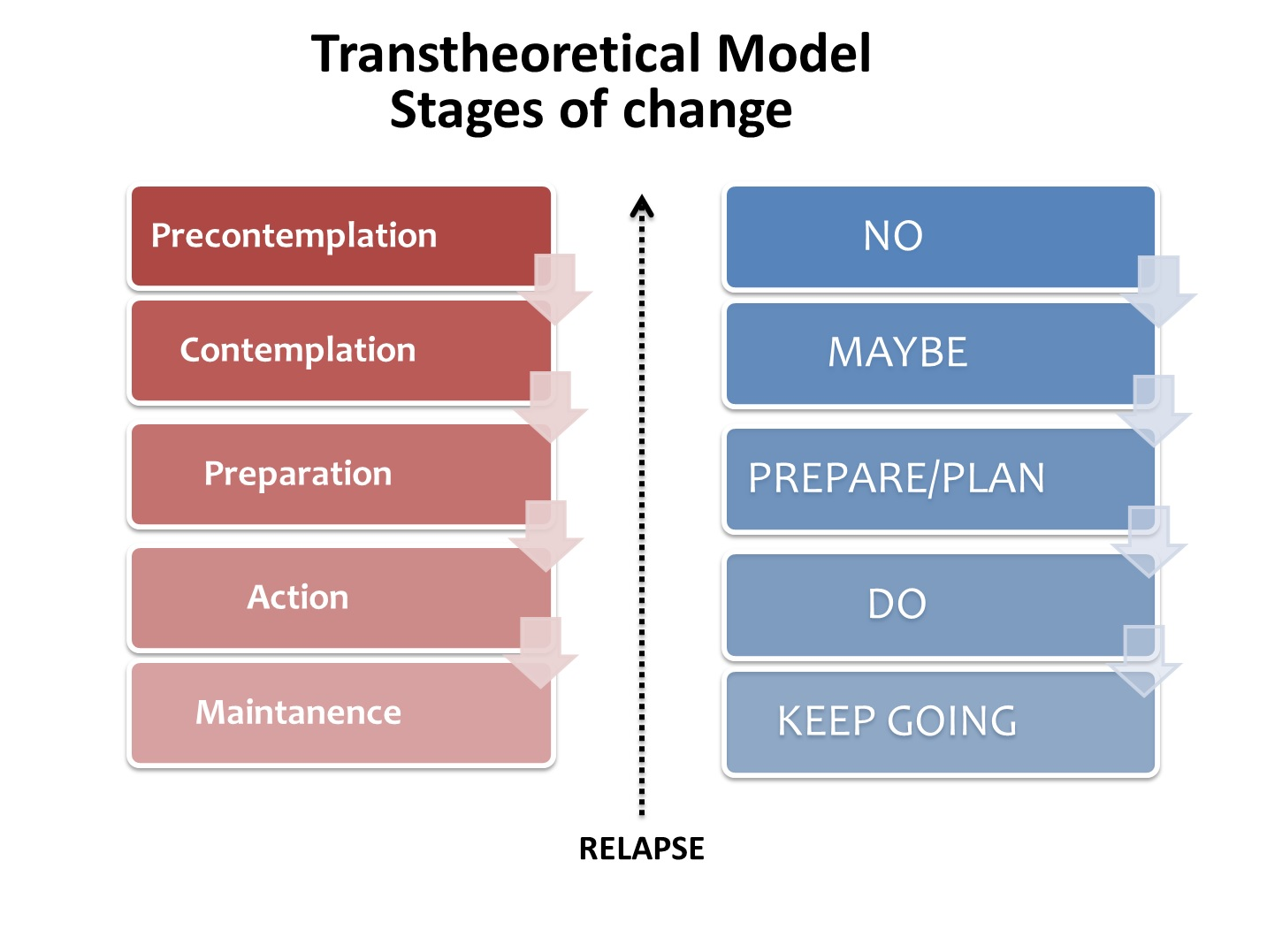
This diagram is useful for understanding behaviour change as a staged, non-linear process. It supports exam discussion of why interventions may need to match an individual’s readiness to change. Source
Free will, determinism and agency
· Free will vs determinism = major debate linked to change: can people choose to change, or are behaviours shaped by biological, environmental, and social causes?
· Biological determinism: behaviour may be influenced by genes, brain structures, neurotransmitters, hormones or maturation.
· Environmental determinism: behaviour may be shaped by learning, reinforcement, social norms, culture, stressors or technology.
· Agency = the individual’s capacity to make choices and intentionally change behaviour.
· Motivation is central to deliberate change: intrinsic motivation may support longer-lasting change, while extrinsic motivators may produce behaviour change through rewards or punishments.
· Strong exam answers avoid extremes: behaviour change is often best explained through interaction between personal choice, biology, cognition and environment.
Applying change to behaviour
· Psychologists use theory and evidence to design interventions, prevention strategies and promotion strategies.
· Intervention = action taken to reduce, manage or treat an existing problem or behaviour.
· Prevention = strategy designed to stop a problem developing or reduce risk before it occurs.
· Promotion = strategy designed to encourage healthy, adaptive or socially beneficial behaviour.
· Examples of change targets include stress management, healthy eating, stopping unhealthy behaviour, improving relationships, changing group behaviour, or improving learning outcomes.
· In essays, link the strategy to a clear psychological mechanism, such as operant conditioning, social learning, cognitive restructuring, motivation, education, or social identity.
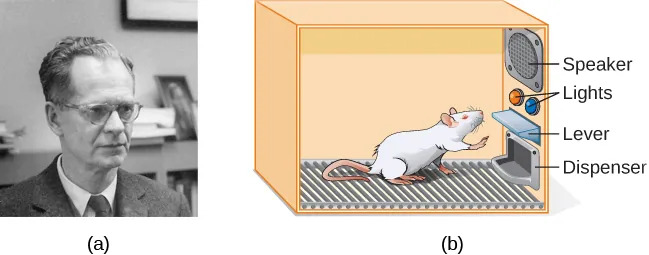
This resource helps clarify how behaviour can be changed through consequences. It is especially useful when applying change to learning, health behaviour, classroom behaviour or habit formation. Source
Barriers and resistance to change
· Resistance to change = difficulty starting, maintaining or accepting behaviour change.
· Barriers may be biological: genetic predisposition, brain maturation, addiction, hormones, neurotransmission or physical illness.
· Barriers may be cognitive: low self-efficacy, cognitive biases, schemas, low perceived risk, poor motivation or inaccurate beliefs.
· Barriers may be sociocultural: peer pressure, social norms, conformity, cultural values, stigma, poverty, isolation or lack of support.
· Barriers may be methodological/practical: limited access to treatment, cost, attrition in longitudinal studies, poor adherence, or interventions not matching the target population.
· Top-band evaluation: explain why a strategy may work for some people but not others due to individual differences, culture, context, motivation, and validity of supporting evidence.
Studying change in research
· Longitudinal design = follows the same participants over time; useful for studying development, maturation, prevalence changes and long-term treatment effects.
· Repeated measures design = the same participants are measured in different conditions or at different times; useful for detecting within-person change.
· Strength: these designs can show patterns of change over time and reduce some individual-difference issues.
· Limitation: they may suffer from attrition, practice effects, fatigue, participant reactivity, and difficulty controlling external variables.
· Prevalence = how common a behaviour, disorder or health problem is in a population; changes in prevalence can show shifts across time, groups or cultures.
· Exam skill: distinguish correlation from causation when interpreting change; observed change does not automatically prove what caused it.
Change in development and maturation
· Development = systematic changes in behaviour, cognition or social functioning across the lifespan.
· Maturation = biologically driven development, such as brain maturation or physical changes that influence behaviour.
· Change may be continuous: gradual improvement or accumulation of skills.
· Change may be stage-like: qualitatively different phases of development.
· Neuroplasticity = the brain’s ability to change in response to experience, learning, injury or environmental demands.
· Exam link: development is a strong example of gradual change, while neuroplasticity shows interaction between biology and environment.
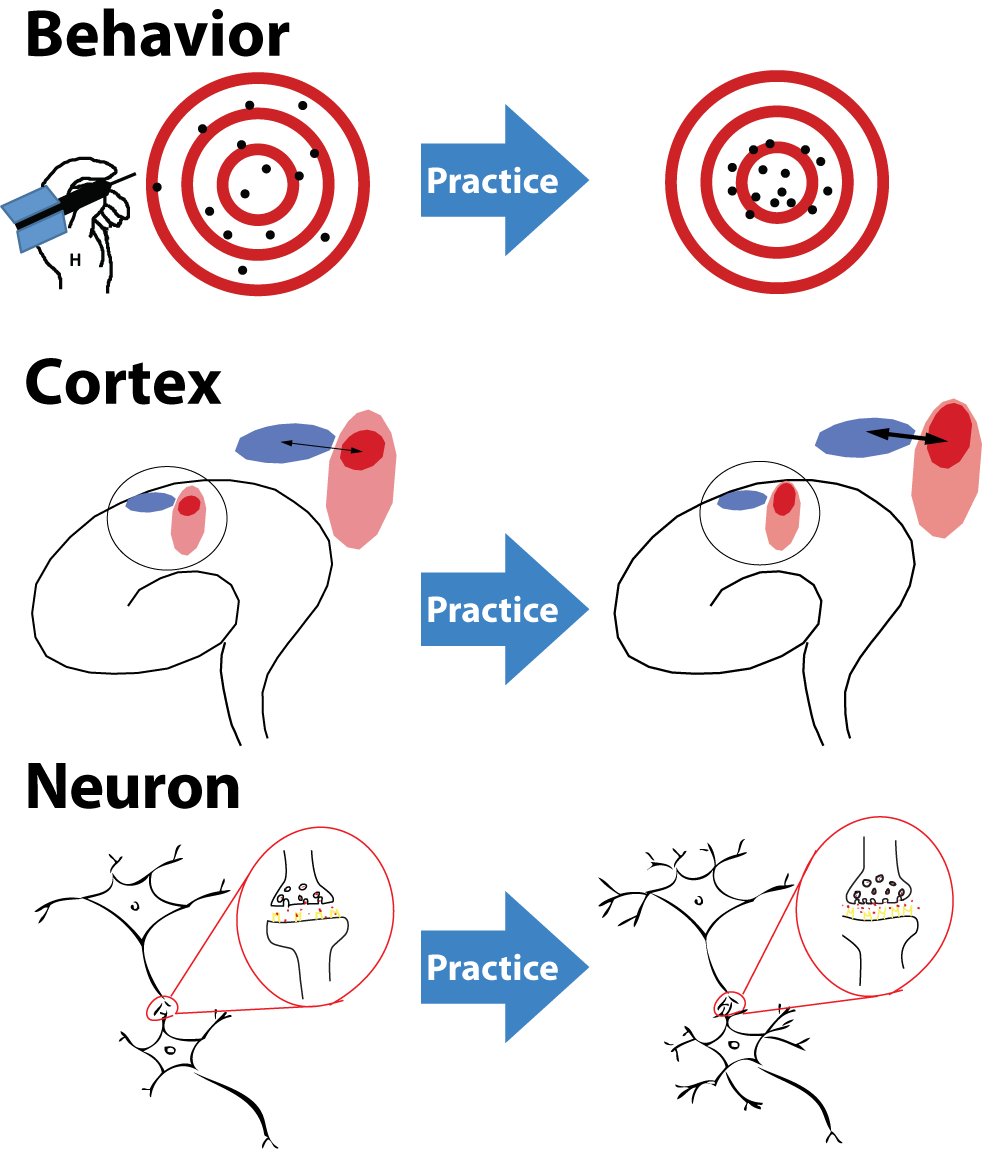
This image illustrates how repeated experience or practice can alter brain organization. It supports exam links between change, development, learning and biological adaptation. Source
Change in health, treatment and prevention
· Health psychology often investigates how to change behaviours linked to stress, healthy eating, substance misuse, obesity, social media addiction, or mental health.
· Effectiveness of treatment = whether a treatment or prevention strategy produces meaningful, reliable and lasting improvement.
· Evaluate effectiveness using outcome measures, comparison groups, follow-up data, relapse rates, validity, and generalizability.
· Treatment change may occur through biological mechanisms, psychological mechanisms or sociocultural support.
· Prevention and promotion strategies should be evaluated at individual, local and global levels.
· Strong exam evaluation asks: is the change statistically significant, practically meaningful, ethical, long-lasting, and applicable across cultures or populations?
Change in social and group behaviour
· Group behaviour can be changed through compliance techniques, conformity, social learning, social identity, and changes to social norms.
· Social learning theory explains change through observation, modelling, imitation, vicarious reinforcement, and identification with role models.
· Social identity theory can explain how group membership influences behaviour and how changing group norms may change individual behaviour.
· Compliance techniques are deliberate strategies used to change behaviour, often by influencing commitment, reciprocity, consistency or perceived social pressure.
· Exam link: social change is rarely purely individual; it often depends on group norms, culture, status of models, and social reinforcement.
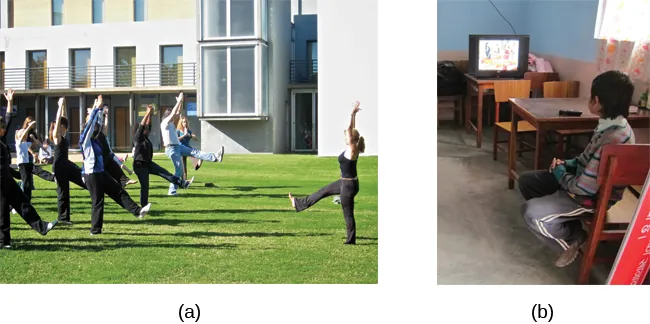
This image supports the idea that behaviour can change by observing others rather than through direct reinforcement. It is especially relevant to social learning theory, modelling, prevention campaigns and group behaviour change. Source
Using change in exam answers
· Define change clearly and link it to the question’s behaviour, context or study.
· Use the command term carefully: explain mechanisms of change; evaluate evidence for whether change occurred and how effectively it was achieved.
· Include at least one relevant study or theory, then connect it to planned/unplanned, gradual/sudden, or individual/group change.
· For research methods, discuss whether the design can validly measure change: longitudinal, repeated measures, follow-up testing, prevalence data or treatment outcomes.
· For evaluation, consider barriers to change, resistance, agency vs determinism, effectiveness, ethics, generalizability, and cultural relevance.
Checklist: can you do this?
· Can you explain change as gradual/sudden, planned/unplanned, and individual/group-level?
· Can you apply change to interventions, prevention, promotion strategies, and treatment effectiveness?
· Can you interpret longitudinal, repeated measures, and prevalence evidence as ways of studying change?
· Can you evaluate barriers to change using biological, cognitive and sociocultural factors?
· Can you link change to the debate between free will, determinism, agency, and motivation?
Key terms to memorise
· Change = modification or development of behaviour, cognition, emotion or social functioning over time.
· Barriers to change = factors that prevent or reduce successful behaviour change.
· Prevalence = proportion of a population with a behaviour, disorder or health problem at a given time.
· Longitudinal design = research design following participants over time to study development or change.
· Repeated measures design = research design measuring the same participants across conditions or time points.
· Intervention = strategy designed to change an existing behaviour or problem.
· Prevention = strategy designed to stop a problem before it occurs or reduce risk.
· Promotion strategy = strategy designed to encourage positive behaviour or well-being.
· Effectiveness of treatment = extent to which treatment produces valid, meaningful and lasting improvement.
· Development = change in behaviour or cognition across time.
· Maturation = biologically driven developmental change.
· Determinism = view that behaviour is caused by factors outside full conscious control.
· Agency = capacity to act intentionally and make choices.
· Motivation = internal or external drive that gives direction to behaviour.
One-line exam formula
· Best answers on change: define the type of change → explain the psychological mechanism → use evidence/research design → evaluate effectiveness, barriers, ethics and generalizability.