

AP Syllabus focus:
‘A keystone species has a disproportionately large effect on community structure because its activities strongly shape the ecosystem.’
Keystone species help determine which organisms can live in an area and in what numbers. Understanding them clarifies why small changes—like losing one predator—can reorganize food webs, habitats, and ecosystem stability.
Keystone species and why they matter
A keystone species can be rare or abundant, but its influence on community structure is unusually large compared with its biomass or population size.
Keystone species: A species whose impact on community structure and ecosystem function is disproportionately large relative to its abundance.
Community structure includes:
Species composition (which species are present)
Relative abundance (how many of each)
Trophic structure (feeding relationships)
Physical habitat features that affect living space and resources
“Disproportionately large effect” in practice
A species is considered keystone when removing it causes major, cascading changes such as:
Rapid shifts in species richness and dominance patterns
Simplification or re-routing of food webs
Loss or gain of habitat features that many species depend on
Reduced ecosystem resistance to disturbance (easier to “flip” into a different state)
Mechanisms: how keystone species shape community structure
Keystone effects typically occur through a few high-impact mechanisms.
Keystone predation and trophic cascades
Many classic keystone species are predators that regulate dominant prey, preventing competitive exclusion and maintaining diversity.
Predators can suppress a strong competitor (often a prolific herbivore or mid-level consumer)
This allows multiple species to coexist, increasing evenness and often richness
The effects can cascade downward, altering plant communities and habitat complexity
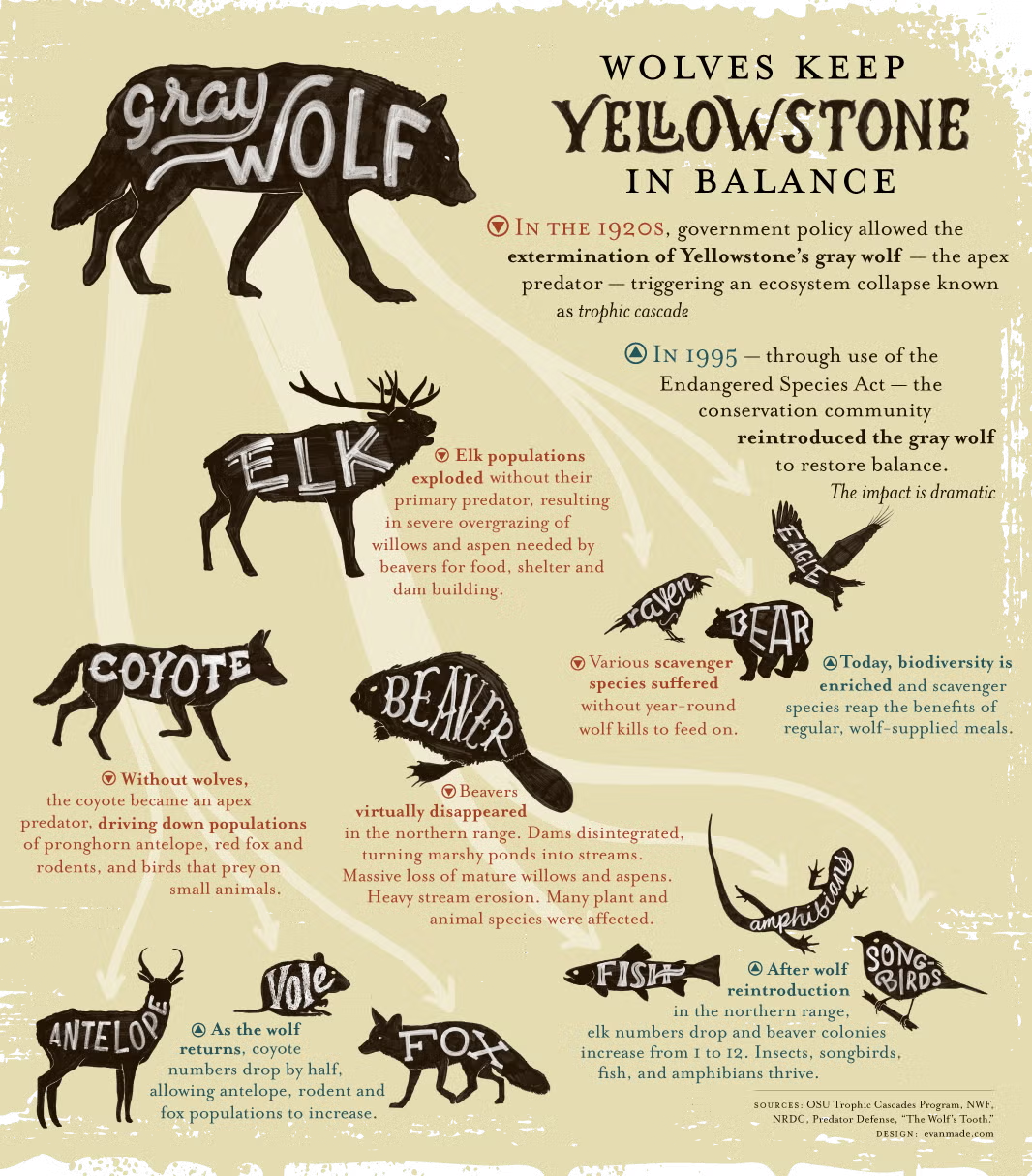
This infographic illustrates a classic trophic cascade in Yellowstone in which gray wolves (top predator) indirectly affect vegetation and downstream habitat-dependent species by changing elk abundance/behavior. It emphasizes how predator loss can simplify habitats (reduced willows/aspen, fewer beavers) and how reintroduction can restore ecosystem structure across multiple trophic levels. Source
Key outcomes to recognise:
Predator present → herbivores controlled → vegetation structure maintained → more niches available
Predator removed → herbivore release → overconsumption → habitat simplification → fewer niches
Keystone mutualists and resource providers
Some keystone species create essential links in reproduction, nutrition, or shelter.
Pollinators or seed dispersers may be keystone when many plants rely heavily on them
A single resource provider (e.g., a dominant fruiting species during scarce seasons) can stabilise food availability for many consumers
Loss can trigger secondary declines, especially in specialists tightly linked to that service
Keystone ecosystem engineers
Some species physically modify the environment in ways that create habitat for many others.
Building structures (dams, reefs, burrows) can change water flow, sediment, and microclimate
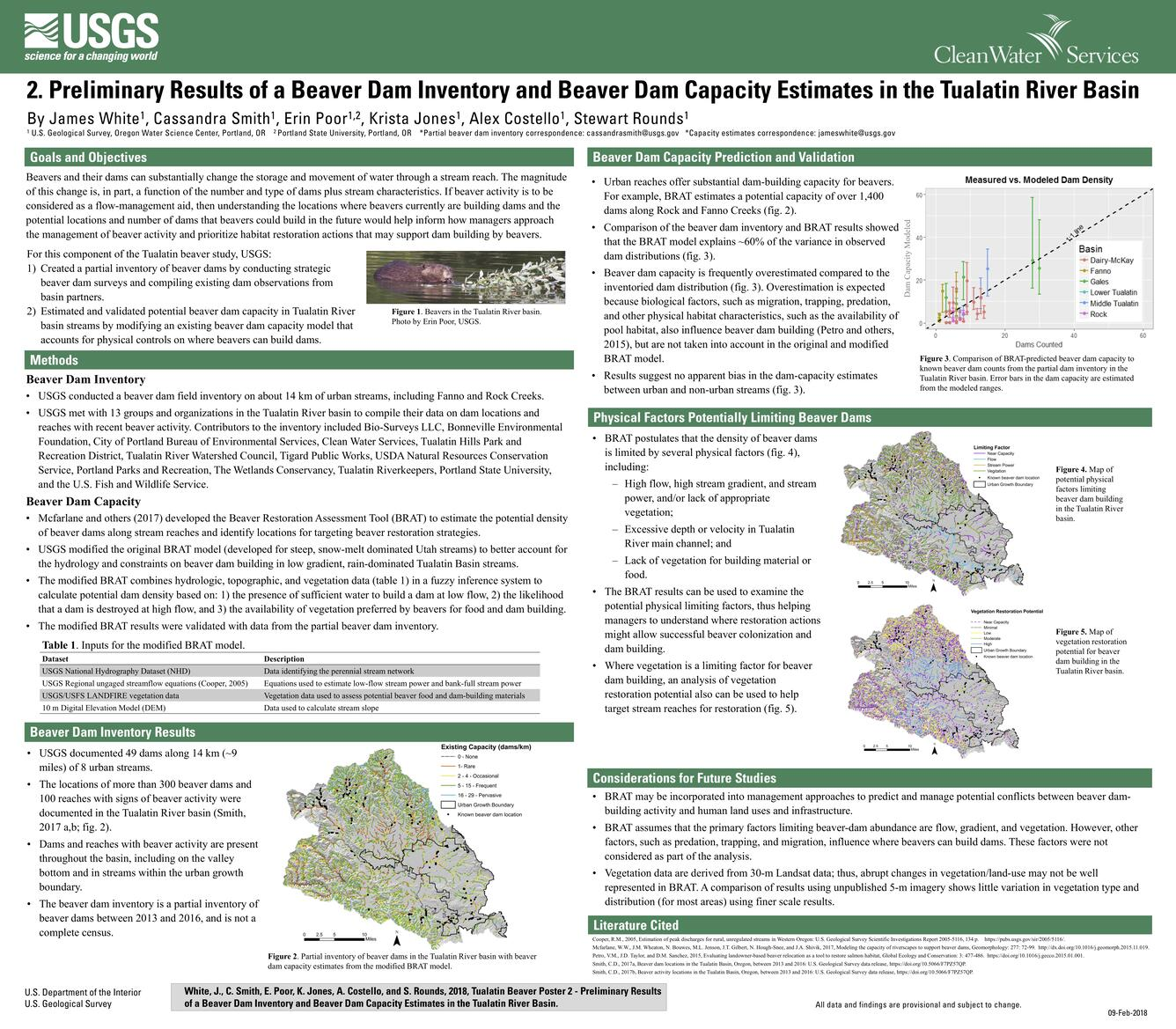
This USGS poster summarizes how beaver dams reshape stream systems by changing water storage and movement, and it connects those physical changes to where dams can occur across a watershed. The included plot and maps model/predict beaver-dam capacity, highlighting how engineering species can drive measurable, landscape-scale habitat change. Source
These changes can increase habitat diversity and create refuges that improve survival for other species
Engineering can also shift which species are competitively dominant by altering conditions (oxygen levels, moisture, light)
Identifying keystone species: evidence and cautions
Because “keystone” is about impact, identification focuses on community response.
Typical lines of evidence
Removal or exclusion leads to large, measurable community reorganization
Reintroduction restores prior community patterns (often with time lags)
Strong interaction strength: one species strongly influences multiple others directly or indirectly
Common pitfalls
Not every important species is keystone: some are influential mainly because they are abundant (dominant/foundation species), not because their per-capita effect is unusually high.
Effects depend on context: a species may be keystone in one ecosystem or season but not another.
Time scale matters: short-term changes (immediate population booms) can differ from long-term restructuring (vegetation shifts, erosion, altered recruitment).
Community structure consequences of keystone loss or decline
When a keystone species declines (disease, harvesting, habitat change), community structure can change through:
Trophic imbalance (consumer/resource mismatch)
Competitive release (one species becomes overly dominant)
Habitat loss (fewer nesting/breeding/refuge sites)
Biodiversity decline, sometimes with local extinctions and reduced functional diversity
These changes can be difficult to reverse because feedbacks may lock in a new structure (for example, altered vegetation leading to different soil moisture or fire behavior that favors the new community).
Why keystone species are emphasised in environmental management
Keystone species are high-leverage targets for conservation because:
Protecting them can indirectly protect many dependent species and interactions
Monitoring them can provide early warning of impending community reorganization
Their management can help maintain desired ecosystem states (e.g., diverse communities and stable habitat structure)
Practice Questions
Explain what is meant by a keystone species. (2 marks)
States that it has a disproportionately large effect on the ecosystem/community compared with its abundance/biomass. (1)
Links this effect to shaping community structure (e.g., species composition/abundance/trophic structure). (1)
A coastal ecosystem loses a top predator due to overharvesting. Describe how this could alter community structure, giving two linked ecological changes. (5 marks)
Identifies predator removal reduces top-down control. (1)
Describes increase in prey/consumer population (ecological release). (1)
Links increased consumers to reduced vegetation or a lower trophic level (greater grazing/consumption). (1)
Links habitat/food-web change to shifts in species composition and/or reduced diversity/evenness. (1)
Describes a cascade/knock-on effect affecting multiple trophic levels or niches. (1)
FAQ
They compare community change after manipulating one species versus the change expected from its abundance/biomass.
Measures often include:
Change in richness/evenness
Network interaction strength (per-capita effect)
Magnitude of indirect effects across trophic levels
Yes. An introduced species can become keystone if it strongly restructures community interactions (e.g., creating new refuges or imposing intense predation).
This may increase some species while driving others locally extinct, so “keystone” does not imply beneficial outcomes.
No. They can be:
Mutualists (pollinators/seed dispersers)
Resource providers (critical food at bottleneck seasons)
Ecosystem engineers (habitat builders)
The defining feature is outsized impact on community structure.
Time lags occur when:
Long-lived plants take time to decline or recover
Soil, sediment, or hydrology slowly adjusts to changed engineering
Recruitment failure accumulates across generations
These delays can mask causation in short studies.
They may reduce the pressures that remove its ecological role, for example:
Limit harvesting/bycatch
Protect breeding/denning sites
Maintain corridors that allow its movement
Reduce pollutants or disease vectors affecting survival
