

AP Syllabus focus:
'New monarchies strengthened the modern state through taxation, military force, justice, and control over the religion of subjects.'
Between the late fifteenth and seventeenth centuries, rulers in several European kingdoms expanded royal authority. By gaining stronger control over revenue, armies, courts, and religion, they helped create the foundations of the modern state.
What centralization involved
The rise of new monarchies marked a shift away from older medieval patterns in which nobles, towns, and church institutions exercised large independent powers. Rulers aimed to gather more authority at the center, making the crown the main source of political command.
Centralized state: A political system in which key powers such as taxation, military command, law enforcement, and administration are concentrated in the hands of the monarch and central government.
A centralized state did not erase local customs overnight. Instead, it meant that monarchs increasingly claimed the right to make final decisions, collect revenue across wider territories, and enforce policies through royal officials. This development was gradual and uneven, but it created the institutional basis of the modern state.
Taxation and royal revenue
Why taxes mattered
To rule effectively, monarchs needed reliable income. Medieval rulers had often depended on feudal dues or temporary grants, which limited their independence. Centralizing monarchs therefore built more regular systems of taxation.
Permanent or recurring taxes gave the crown steadier revenue.
Customs duties on trade brought money directly to the monarchy.
More systematic collection reached subjects beyond the ruler’s personal lands.
Regular taxation strengthened rulers in several ways. It reduced dependence on great nobles, who had often been able to bargain with weak kings. It also funded other tools of centralization, especially armies, courts, and administrative offices. A monarchy that could tax regularly was far more capable of acting independently and imposing its will across a larger territory.
Administrative effects of taxation
Tax collection also expanded the practical reach of government. Raising revenue required officials, records, and channels of communication between the center and the provinces. In this way, taxation was not just about money; it helped create a more permanent governing structure.
Military force and the crown
From feudal levies to royal troops
Control of military force was another essential step in state building. In the medieval period, kings frequently relied on vassals and feudal levies. Centralizing rulers increasingly preferred paid troops, more permanent forces, and officers loyal to the crown.
This change mattered because military power determined whether a monarch could actually enforce commands. A ruler who could field troops and suppress rebellion had far greater authority than one who merely issued decrees. Royal control of force also weakened rival centers of power, especially nobles with private armies or fortified strongholds.
Military expansion was expensive, which linked it closely to taxation. Stronger revenue supported stronger armies, and stronger armies protected tax collection and royal authority. Together, these developments made the crown less dependent on traditional feudal relationships and more able to govern directly.
Justice as a tool of central authority
Royal courts and appeals
Monarchs also expanded power through justice. In a more centralized system, the crown sought to become the highest source of law and legal judgment. Royal courts, judges, and appeals allowed kings to extend their reach into matters once dominated by local lords, towns, or customary courts.
Royal justice strengthened the state in several ways:
It encouraged subjects to look to the crown rather than local powers for protection and dispute settlement.
It undercut the independence of nobles who had exercised judicial authority on their own lands.
It increased the prestige of monarchy by presenting the ruler as guardian of peace and order.
As royal justice spread, the state gained a stronger claim that only the government had the rightful authority to punish and use force. This did not eliminate local law, but it made the crown more central to everyday governance.
Control over the religion of subjects
Religious uniformity and obedience
Religion was deeply tied to political loyalty in early modern Europe.
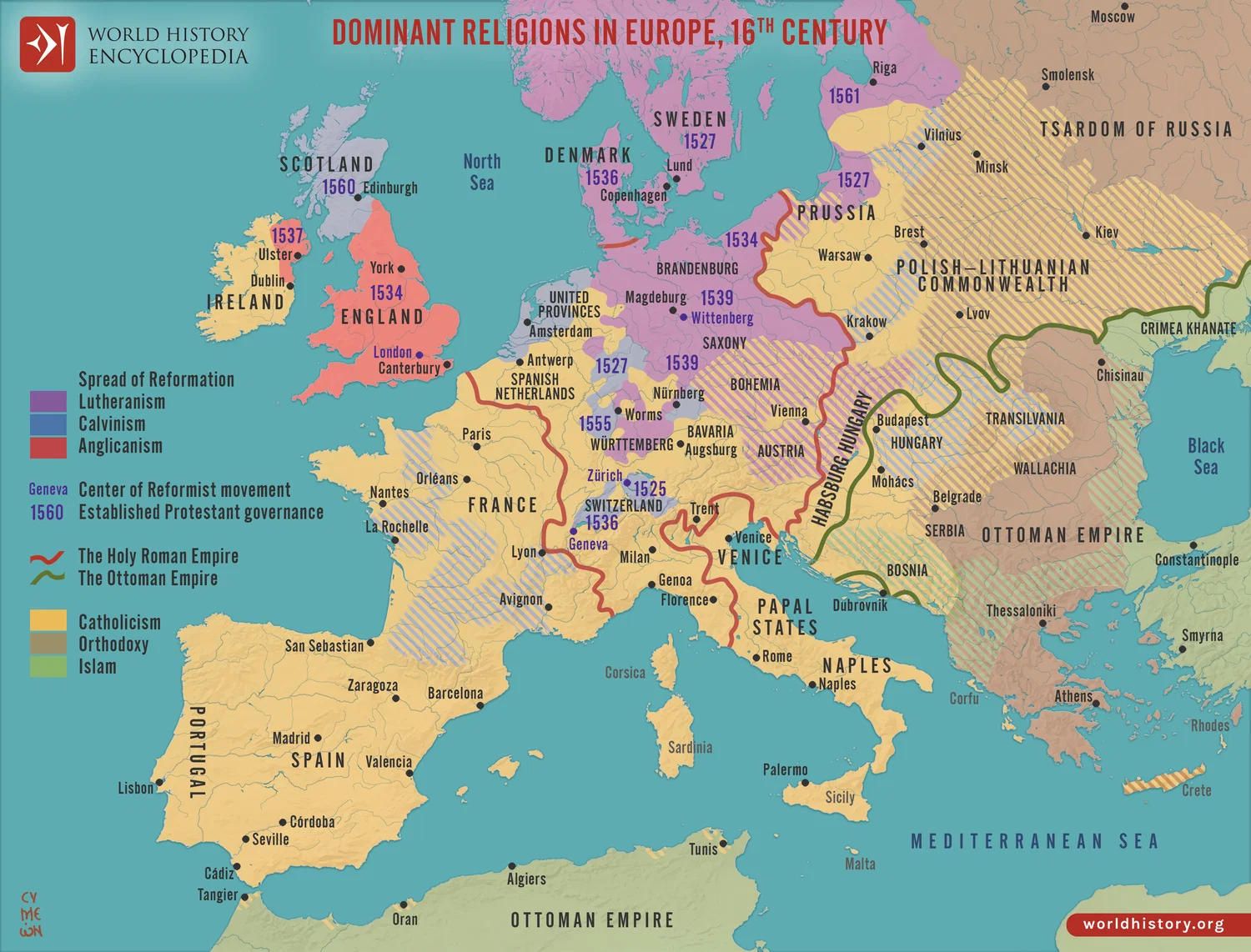
Map of Europe’s dominant religions during the Reformation era, showing where Catholic, Protestant, Orthodox, and Muslim majorities (and mixed zones) were concentrated. It visually demonstrates why confessional differences could translate into political instability, border tensions, and doubts about loyalty to a ruler. The map also highlights how religion functioned as a public, territorial issue rather than a purely private belief. Source
Because religious belief shaped moral life, education, community identity, and obedience, monarchs tried to control the religion of subjects as part of state building.
Confessional uniformity: The effort by rulers to promote or enforce a single approved form of religion within their territories.
Many rulers believed that religious division threatened political stability. If subjects followed religious authorities outside the kingdom, or if competing confessions divided the population, royal authority could weaken. By asserting influence over clergy, church organization, and religious practice, monarchs could strengthen obedience to the state.
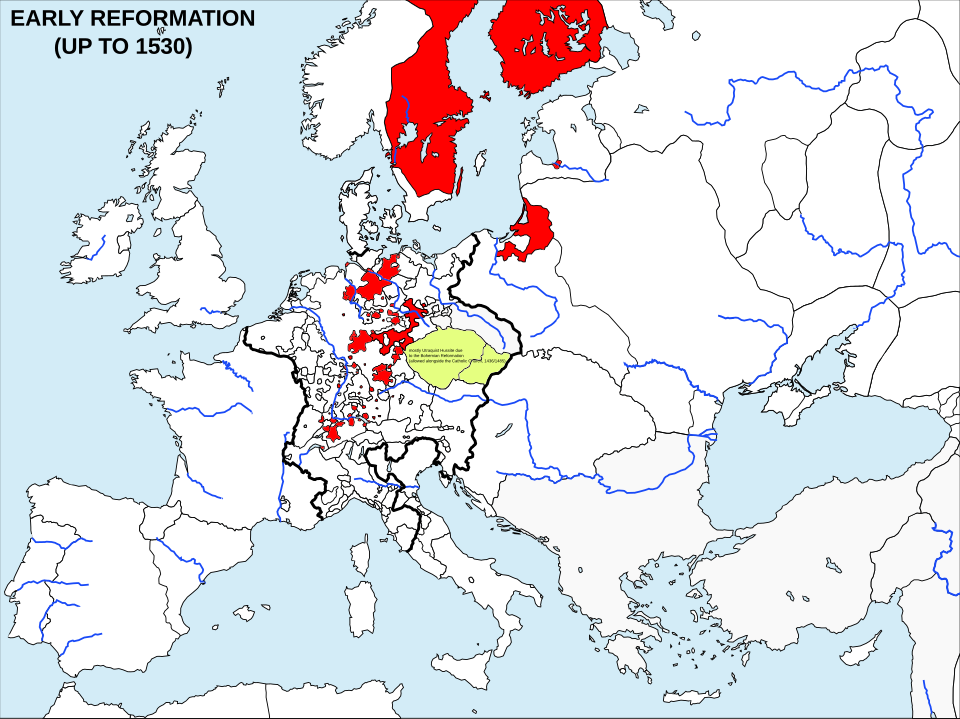
A political map identifying the earliest territories to officially introduce Protestant reforms (1525–1530), using a clear color key to distinguish early adopters from areas that remained under different religious-legal arrangements. It underscores that religious change often happened through government and princely decisions, not only through popular belief. In that sense, it illustrates how confessional policy could become an instrument of centralized authority. Source
This control took different forms:
supervising church appointments
limiting the independence of church courts
directing religious policy within the kingdom
linking political loyalty to religious conformity
Religion therefore became not only a matter of faith but also a matter of governance. A monarch who shaped the religious life of subjects extended state power into one of the most influential areas of daily life.
Limits and uneven results
Centralization was negotiated
State centralization was significant, but it was not complete. Even strong monarchs faced regional privileges, entrenched local elites, and practical limits on administration. Many subjects still experienced government through local intermediaries rather than through direct contact with the crown.
Centralization also created tensions. Heavier taxation could provoke resistance. Larger armies could strain royal finances. Greater judicial reach could anger traditional authorities. Religious control could deepen conflict rather than resolve it. In many kingdoms, central power rested on continual negotiation with local elites, church leaders, and officeholders. The centralized state therefore emerged through compromise as much as command.
Practice Questions
Explain ONE way regular taxation strengthened centralized monarchy in early modern Europe. (3 marks)
1 mark for identifying a valid method, such as permanent taxes, customs duties, or more systematic collection.
1 mark for explaining that reliable revenue reduced royal dependence on feudal dues or noble support.
1 mark for explaining that revenue funded armies, courts, or administrators that expanded royal power.
Evaluate the extent to which new monarchies built centralized states through control of military force, justice, and religion in the period c.1450–c.1648. (6 marks)
1 mark for a defensible thesis that makes a clear argument about the extent of centralization.
1 mark for contextualization describing the shift from medieval decentralization to stronger royal authority.
1 mark for specific evidence about military force, such as paid troops, standing forces, or the decline of feudal levies.
1 mark for specific evidence about justice or religion, such as royal courts, legal appeals, church appointments, or confessional control.
1 mark for explaining how the evidence supports the argument about centralization.
1 mark for complexity, such as showing limits, uneven results, or tensions caused by taxes, armies, or religious control.
FAQ
Centralising rulers often still needed assemblies to approve taxation, confirm laws, and lend legitimacy to royal decisions.
These bodies could also provide local knowledge and elite cooperation. In practice, centralisation often meant managing representative institutions more effectively rather than abolishing them outright.
A composite monarchy ruled several territories that kept different laws, customs, and privileges under one crown.
This made centralisation difficult because a ruler could not always govern every region in exactly the same way. State building therefore often advanced unevenly, with stronger royal control in some territories than in others.
Selling offices gave monarchs immediate cash and helped expand administration without creating all posts from scratch.
However, it also created problems. Officeholders often treated positions as property, passed them to heirs, and defended their privileges. That could make government less flexible and limit the crown’s ability to reform administration later.
Rulers increasingly relied on:
councils
secretaries
legal specialists
financial officials
record-keepers
These people helped turn royal commands into routine administration. Growth was usually gradual, but written records, archives, and trained officials made government more continuous and less dependent on the ruler’s personal presence.
Not entirely. Many nobles lost some independent military or judicial power, but they often remained important within the new system.
Some served as royal officers, military commanders, judges, or courtiers. Rather than disappearing, noble influence was often redirected into service to the crown, where monarchs could supervise it more closely.

.svg)