AP Syllabus focus:
'Commercial and professional groups gained influence and played a larger role in political affairs across Europe.'
In early modern Europe, merchants, bankers, lawyers, and officials increasingly converted economic importance and specialized skills into political influence, reshaping urban government, royal administration, and the balance between rulers and society.
Who These Groups Were
Commercial groups included long-distance merchants, bankers, financiers, major artisans, and wealthy guild leaders. Professional groups included lawyers, notaries, royal secretaries, tax collectors, and educated officeholders. They did not form a single unified class, but they shared two important advantages: money and expertise.
The rising bourgeoisie increasingly mattered in politics because urban wealth and literacy were becoming more valuable to governments.
Bourgeoisie: The urban social groups made up of merchants, financiers, shopkeepers, and professionals whose wealth and education gave them growing influence in society and politics.
Unlike the traditional feudal nobility, these groups often gained status through trade, education, law, or service rather than inherited military power. That difference mattered because early modern rulers needed skills that nobles alone could not always provide.
Why Their Political Role Grew
Commercial and professional groups gained influence as European politics became more dependent on cash, record-keeping, and administration. Rulers increasingly needed people who could:
raise loans
collect taxes efficiently
keep written accounts
manage legal disputes
negotiate contracts and privileges
Merchants and bankers were useful because states required ready money.
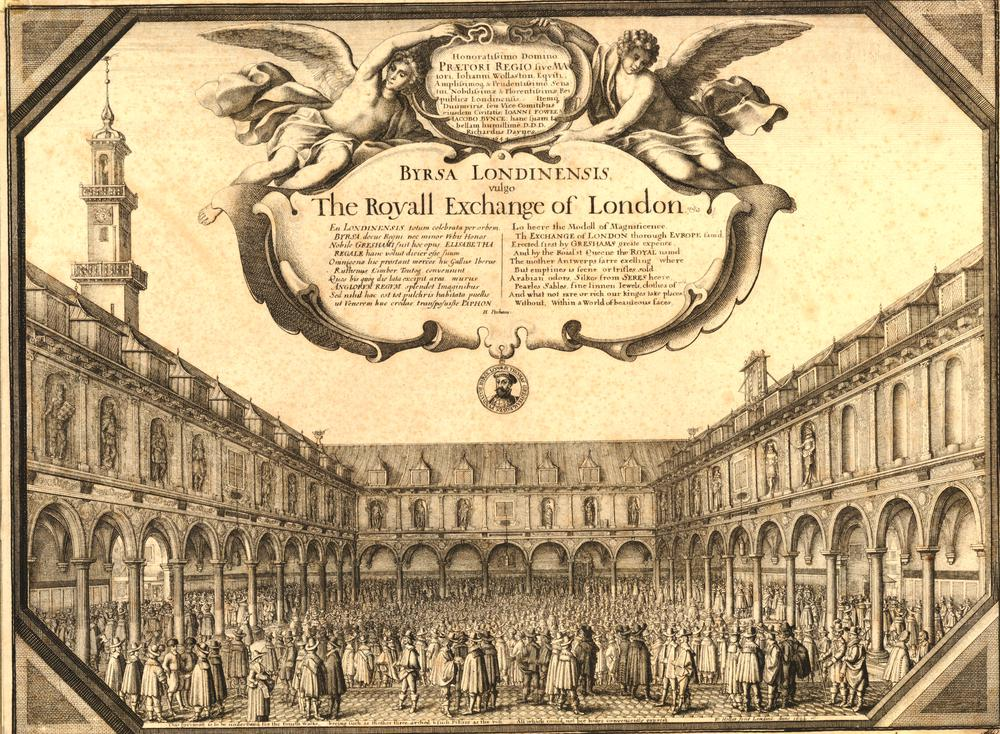
Wenceslaus Hollar’s 1644 etching depicts Gresham’s Royal Exchange in London, showing a dense crowd of merchants inside a purpose-built trading space. The scene highlights how early modern states and cities depended on organized marketplaces where credit, contracts, and commercial information flowed. Such institutions helped give merchant communities collective influence that rulers could not easily ignore. Source
A ruler with access to urban credit could govern more effectively than one who relied only on traditional feudal revenues.
Professionals were also essential. Lawyers and trained officials could interpret laws, draft decrees, and strengthen government procedures. As politics became more bureaucratic, educated men from towns found new openings in public affairs.
This process did not mean that nobles disappeared from politics. Instead, political systems in many parts of Europe began to include a stronger partnership between rulers and urban elites.
How They Exercised Political Influence
Commercial and professional groups entered politics through several channels.
Urban Government
In many towns and cities, wealthy merchants and guild leaders dominated councils, magistracies, and local offices. Control of urban government gave them influence over:
taxation
regulation of trade
defense and militia organization
poor relief
relations with princes or kings
Because cities were major centers of wealth, urban office could translate into wider political importance.
Royal Administration
Kings and princes increasingly employed lawyers, secretaries, financiers, and tax officials. These men helped turn government into a more regular and predictable system. In return, service to the crown could bring salaries, patronage, honors, and sometimes noble status.
Professional service also gave rulers a counterweight to older aristocratic power. A monarch often preferred administrators whose position depended on royal favor, because they were more likely to support central policies.
Representative Institutions
Commercial groups also appeared in representative bodies, especially where towns had recognized political rights. Merchants, lawyers, and other educated urban men could shape debates over taxation, privileges, and law. Their growing presence meant that political bargaining increasingly involved people whose power rested on commerce or officeholding rather than land alone.
Effects on Political Affairs
The rise of commercial and professional groups had important political consequences.
First, it encouraged the growth of more centralized government.
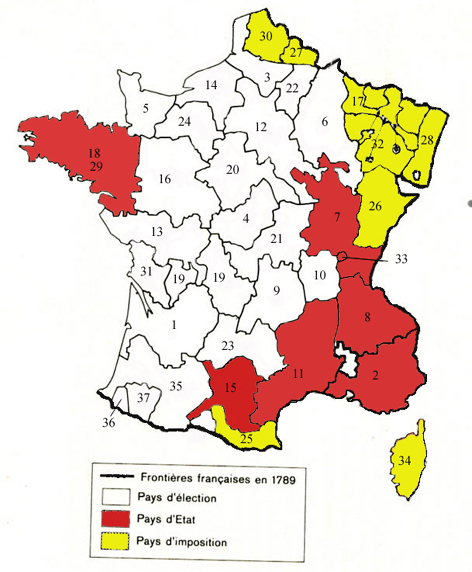
This map locates the French généralités in 1789, the administrative framework through which royal governance and taxation were organized across the kingdom. By visualizing these districts, the image makes clear that early modern centralization was not only a political idea but also a territorial system that required continuous oversight, paperwork, and trained officials. It helps explain why professional administrators became indispensable partners of the monarchy. Source
Rulers could draw on officials, financiers, and urban leaders to extend control more effectively. Political authority therefore became less dependent on personal feudal ties and more dependent on administration.
Second, it increased the importance of towns and cities in political life. Urban centers were no longer only places of trade; they were also hubs of decision-making, negotiation, and taxation.
Third, it helped connect economic power to political power. Merchants and financiers understood that influence in government could protect trade, secure monopolies, defend charters, and open opportunities for investment. Political participation was therefore often tied to material interests.
Fourth, these developments contributed to social mobility. Wealthy non-nobles could gain office, status, and access to rulers in ways that had been more difficult in a purely aristocratic order. In some regions, commercial wealth became a path into the political elite.
Examples Across Europe
The pattern appeared in different forms across Europe:
In France, legal professionals and officeholders gained influence through royal service and administrative posts.
In England, merchants and lawyers had an important voice in local government and in institutions that discussed taxation and law.
In the Low Countries, prosperous urban elites were especially powerful because trade and city life were highly developed.
In parts of Italy and the Holy Roman Empire, merchant families and urban patricians had long participated in civic politics and continued to do so.
These examples show that the trend was broad, but not identical everywhere. The influence of commercial groups was usually strongest where urban wealth, literacy, and market activity were already well established.
Limits and Tensions
The rising political role of these groups had clear limits. Most commercial and professional elites did not seek political equality for all people. They generally wanted:
influence for themselves
protection of property
favorable taxation
legal privileges
access to office
In many cases, they tried to join the existing elite rather than replace it. Wealthy families often bought land, sought titles, or married into noble circles. Their ambitions could therefore reinforce hierarchy even as they changed who held power.
Their rise also created tensions. Traditional nobles could resent the influence of financiers or lawyers. Urban workers and poorer townspeople often remained excluded from political power even when wealthy townsmen were gaining it. As a result, the political advance of commercial groups expanded participation for some, but not for society as a whole.
Practice Questions
Identify ONE reason commercial and professional groups gained political influence in Europe during the early modern period, and briefly explain how that reason increased their role in politics. (2 marks)
1 mark for identifying a valid reason, such as the growth of urban wealth, rulers’ need for loans, the expansion of taxation, or the need for educated administrators.
1 mark for briefly explaining how that reason increased political influence, such as merchants gaining leverage by financing rulers or lawyers gaining office through administrative service.
Evaluate the extent to which the growing importance of commercial and professional groups changed political affairs across Europe from c. 1450 to c. 1600. (6 marks)
1 mark for a defensible thesis that makes a clear argument about change, extent, and/or limits.
1 mark for explaining how merchants, bankers, or financiers gained political influence through credit, taxation, or urban leadership.
1 mark for explaining how lawyers or other professionals gained influence through administration, law, or officeholding.
1 mark for providing at least one specific regional example, such as France, England, the Low Countries, Italy, or the Holy Roman Empire.
1 mark for analyzing a political effect, such as stronger administration, greater urban influence, or closer ties between wealth and government.
1 mark for addressing a limitation or continuity, such as the continuing strength of the nobility or the exclusion of poorer people from political power.
FAQ
No. Political influence usually concentrated in the hands of the wealthiest urban families, not the whole town population.
In many cities:
large merchants had more power than small retailers
master guild members had more rights than journeymen
property requirements kept poorer residents out of office
So the shift often produced urban oligarchies rather than broad political participation.
In some states, rulers sold offices to raise revenue. Wealthy families could use money from trade or finance to buy positions that carried authority, status, and legal privileges.
This mattered because officeholding could:
give a family a recognised political role
create long-term ties to the crown
provide a route to social advancement
It was a way of turning economic capital into political power.
Usually not through formal office, but they could still matter politically in indirect ways.
For example, women might:
manage businesses as widows
arrange marriages that linked powerful families
handle correspondence and credit networks
submit petitions or use patronage ties
Their influence was often informal, but in merchant households it could still shape local alliances and decisions.
A noble title brought prestige, legal advantages, and social security that pure wealth could not always guarantee.
Land and title could offer:
greater honour
stronger acceptance at court
better marriage opportunities
protection against the risks of trade
This helps explain why many successful commercial families tried to enter the nobility instead of forming a completely separate ruling class.
Port cities concentrated trade, customs revenue, information, and foreign contacts. That made them unusually valuable to rulers.
Because of this, leading families in port cities often gained leverage through:
tax farming
shipping contracts
naval supply
diplomacy with overseas merchants
Ports were not just economic centres; they were political gateways where wealth and government met very directly.