

AP Syllabus focus:
'France, England, and the Netherlands built colonies and trading networks to challenge Portuguese and Spanish dominance.'
As Iberian empires dominated early overseas expansion, other Atlantic powers increasingly used colonies, chartered companies, and maritime commerce to break Spanish and Portuguese control and redirect wealth toward themselves.
Iberian Dominance and Its Weaknesses
During the fifteenth and early sixteenth centuries, Spain and Portugal gained an early lead in overseas expansion. They claimed valuable routes, seized strategic territories, and tried to control commerce across the Atlantic and beyond. Yet their dominance was never permanent or total.
Why Other Atlantic States Entered the Contest
By the late sixteenth century, England, France, and the Dutch Republic had stronger commercial interests and greater naval ambitions. Their rulers and merchants wanted access to the wealth of overseas trade rather than allowing the Iberian monarchies to monopolize it.
Several conditions helped these rivals challenge Iberian power:
growing merchant capital in port cities
expanding navies and shipbuilding capacity
governments willing to back risky commercial ventures
weakening Iberian ability to defend vast empires at sea
Open oceans were difficult to police. Spanish treasure fleets and Portuguese trade routes stretched over enormous distances, making them vulnerable to interception, smuggling, and competition.
Tools of Atlantic Competition
Colonies as Bases of Power
Atlantic rivals did not challenge Iberian control only by attacking ships. They also founded their own colonies, which provided harbors, markets, land, and claims to sovereignty. Permanent settlements helped rival states prove that Spain and Portugal could not exclude others from the Atlantic world.
English colonies in North America and the Caribbean, French settlements in Canada and the Caribbean, and Dutch footholds in the Americas all created alternatives to Iberian imperial systems.
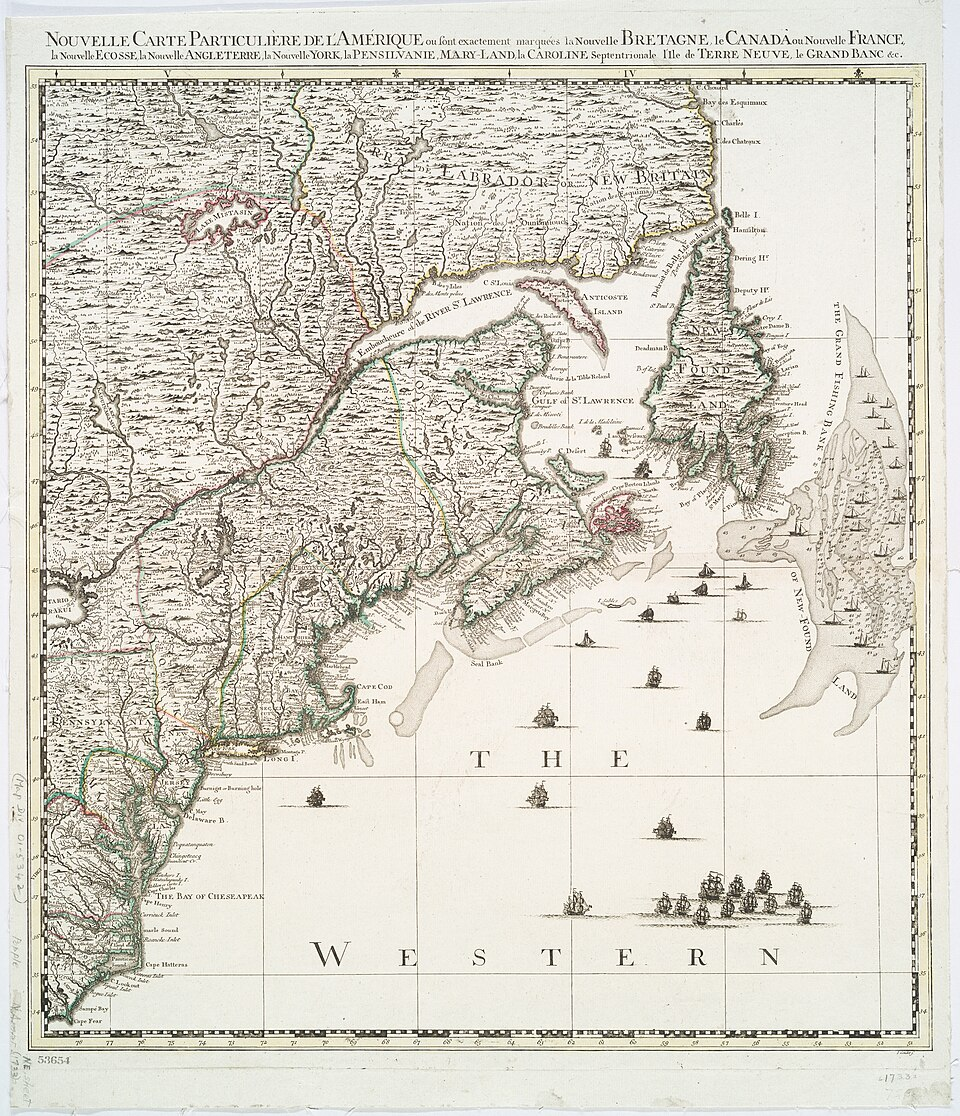
This mid-18th-century map shows the spatial overlap of British, French, Spanish, and Dutch settlements in North America. It helps explain how competing colonies functioned as durable bases for sovereignty, trade, and military access—undermining Iberian claims to exclusive control. Use it to connect settlement geography to the broader shift toward multi-imperial Atlantic competition. Source
One major instrument was the chartered company.
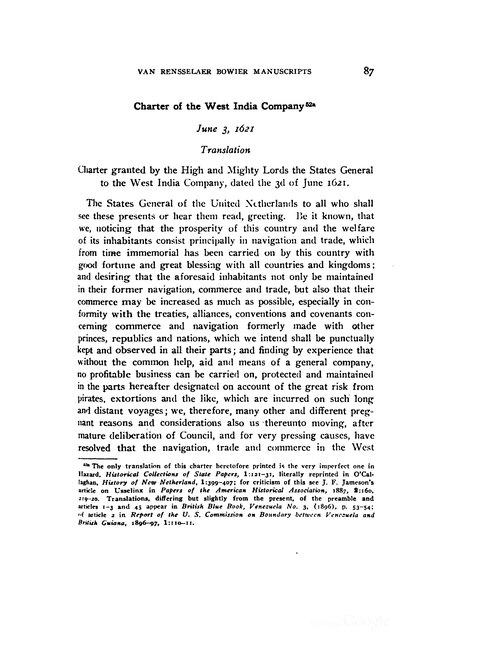
This is a scanned, multi-page charter for the Dutch West India Company (dated June 3, 1621), illustrating how early modern states granted corporate bodies monopoly rights and quasi-governmental authority overseas. Seeing the charter as a document reinforces that “chartered companies” were not just business ventures but legal-political instruments linking private capital to imperial power. It pairs well with your definition by showing the mechanism through which monopoly and governance claims were formalized. Source
Chartered company: A private business organization that received a government charter granting rights to trade, settle, or govern in specific overseas regions.
These companies reduced the financial burden on the state while linking private investment to imperial expansion. They were especially useful to the Dutch and English, whose overseas efforts often blended government support with commercial enterprise.
Trading Networks and Maritime Competition
Rivals also built trading networks instead of relying only on large territorial conquests. This strategy could be cheaper and more flexible than the Spanish model of empire. Merchants, ports, and shipping lanes mattered as much as formal conquest.
In many places, influence depended on repeated exchange, control of key ports, and access to profitable commodities. Atlantic challengers aimed to insert themselves into existing routes and redirect commerce toward their own merchants and states.
England also used privateering against Iberian shipping.
Privateering: State-authorized raiding by private ship captains against enemy commerce during wartime.
Privateering weakened Spanish sea power, enriched English investors, and showed that Iberian claims to monopoly could be broken by force as well as by settlement and trade.
The Main Atlantic Rivals
England
England challenged Spain most visibly in the Atlantic. English expansion combined settlement colonies, maritime raiding, and commercial ambition. Colonies along the Atlantic coast of North America gave England a growing base for trade and migration, while Caribbean colonies became valuable centers of imperial wealth.
English efforts undermined Iberian dominance in two ways:
they established a long-term English presence in regions Spain claimed to dominate
they created commercial systems not controlled by Spanish or Portuguese authorities
English merchants and seafarers increasingly treated the Atlantic as open to competition. Over time, this position helped England become a major imperial rival.
France
France built a different kind of overseas challenge. Rather than emphasizing dense settlement at first, the French often developed trade-oriented colonies and regional networks. In New France, French influence grew through exchange and alliances that supported the fur trade and extended France’s presence deep into North America.
French Caribbean colonies also challenged Iberian control by creating profitable non-Iberian plantation zones. Even when French colonies were smaller than Spanish possessions, they mattered because they eroded the idea that Spain alone could dominate the western Atlantic.
French imperial competition showed that challengers could use selective settlement, commerce, and diplomacy to gain influence without copying Spanish methods exactly.
The Dutch Republic
The Dutch Republic posed perhaps the most effective commercial challenge to Iberian power in the seventeenth century. Dutch merchants had major advantages in shipping, finance, and commercial organization. Their goal was not simply to settle land but to control profitable exchange.
Dutch overseas expansion relied heavily on companies, especially the Dutch West India Company, and on powerful merchant networks. The Dutch attacked Iberian shipping, established colonies and trading posts, and captured or displaced some Iberian positions. Their commercial methods were efficient and aggressively profit-driven.
The Dutch challenge was especially significant because it targeted both Spanish and Portuguese interests. By building a broad maritime network, the Dutch demonstrated that Iberian supremacy could be replaced by a more flexible, trade-centered model of empire.
Patterns of Challenge
Although England, France, and the Netherlands used different methods, all three weakened Iberian dominance by refusing to accept exclusive Spanish and Portuguese claims. Their expansion shared several features:
use of overseas colonies to secure territory and markets
development of long-distance trade networks
cooperation between state power and private investment
reliance on naval strength to protect commerce and challenge rivals
By the seventeenth century, overseas competition involved multiple Atlantic states. Spanish and Portuguese claims were increasingly contested by rival colonies, merchant networks, and naval forces built by England, France, and the Dutch Republic.
Practice Questions
Identify ONE method used by either England, France, or the Dutch Republic to challenge Portuguese and Spanish dominance, and explain how that method weakened Iberian power. (2 marks)
1 mark for identifying one accurate method, such as founding colonies, creating trading networks, using chartered companies, or privateering.
1 mark for explaining how that method weakened Iberian power, such as by breaking monopoly claims, redirecting trade, challenging control of sea routes, or establishing non-Iberian territorial footholds.
Evaluate the extent to which commercial goals, rather than territorial conquest, shaped how France, England, and the Netherlands challenged Iberian power in the late sixteenth and seventeenth centuries. (6 marks)
1 mark for a defensible thesis that makes a clear argument about the relative importance of commercial goals.
1 mark for broader historical context, such as early Iberian leadership in overseas expansion or the growth of Atlantic trade.
1 mark for specific evidence about one rival power, for example English colonies or privateering.
1 mark for specific evidence about at least one additional rival power, for example French trade in New France or Dutch commercial companies.
1 mark for using historical reasoning to explain similarity or difference among the rivals’ methods.
1 mark for a more complex argument, such as showing that commercial aims were central but were often tied to state power, naval rivalry, and territorial claims.
FAQ
The treaty was an agreement between Spain and Portugal, backed by papal authority, not by all European states.
England, France, and the Dutch did not accept that the pope could permanently divide the non-European world between two crowns. Once they had stronger navies and merchants willing to invest, they simply ignored Iberian claims and acted on the belief that overseas trade was open to competition.
From 1580 to 1640, Portugal and Spain shared the same monarch. That meant the Dutch, who were already fighting Spain, increasingly treated Portuguese imperial possessions as legitimate targets as well.
This mattered because Portuguese trade had previously been a separate system. Under the union, Dutch attacks could damage both Iberian monarchies at once, especially in shipping and overseas commerce.
The Caribbean offered several advantages:
it sat close to major Spanish routes
islands could serve as naval and trading bases
plantation agriculture could become highly profitable
smaller territories were often easier to seize or settle than mainland empires
For rival powers, Caribbean colonies were useful not only for wealth but also for strategic pressure on Spanish America.
A major example was Hugo Grotius’s idea of freedom of the seas. He argued that the sea could not legally belong to one power alone and that commerce should not be closed off by exclusive claims.
This did not settle disputes in practice, but it gave Dutch merchants and rulers a powerful legal and moral language for opposing Portuguese and Spanish monopolies.
More advanced financial systems reduced the risks of long-distance trade. Investors could spread risk across multiple voyages, and merchants could raise larger sums more quickly.
Key advantages included:
stronger credit networks
marine insurance
stock investment in overseas companies
close links between merchants and governments
These tools helped rivals recover from losses and keep expanding, even when overseas ventures were dangerous or expensive.

.jpg)