AP Syllabus focus:
'European powers built overseas empires and trade networks through both coercion and negotiation.'
Early modern European expansion rested on more than battlefield victories. Overseas empires and commercial systems developed through changing combinations of intimidation, warfare, alliances, treaties, and bargaining with local rulers and merchants.
Core idea
European empires overseas were rarely built in a single way. In many regions, Europeans lacked the manpower to conquer large populations directly. As a result, they often mixed coercion with negotiation, seeking profit, access, and strategic advantage rather than immediate total control. This meant that expansion could involve a naval attack in one place and a treaty or trading privilege in another.
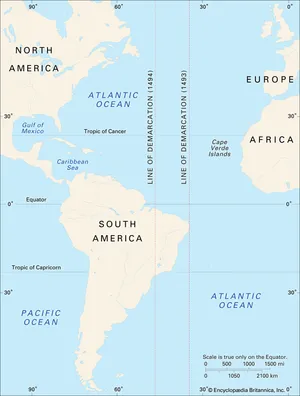
Map of the “line of demarcation” associated with the Treaty of Tordesillas (1494), showing how Spain and Portugal attempted to divide overseas spheres of influence by diplomatic agreement. It illustrates how European imperial competition could be managed through negotiated legal boundaries, even as enforcement ultimately depended on naval power and settlement. Source
Empire building therefore included both political control and the creation of trade networks. A state or trading company might secure a harbor, fort, or island, then use it to regulate shipping, pressure competitors, and bargain with nearby rulers.
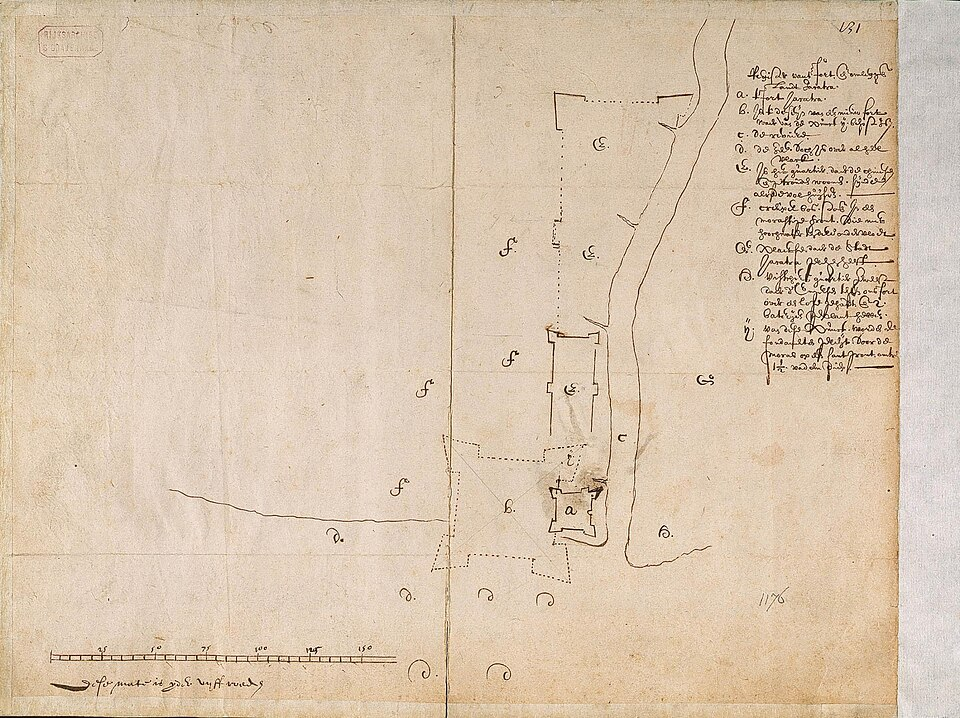
A 1619 map depicting Fort Jacatra and the new plan for Batavia Castle (VOC), a classic example of a European fortified outpost designed to secure a strategic harbor and protect commercial operations. The diagram helps students see how military architecture and urban planning served trading-company governance and coercive leverage in early modern Asia. Source
In practice, overseas power often rested on selective control of key points rather than full territorial domination. This made European expansion flexible, but also unstable, since it depended on local conditions and continuing cooperation or submission.
Coercion in empire building
Coercion was central when Europeans used violence or the threat of violence to force access to land, labor, markets, or trade routes.
Coercion: The use or threat of force to compel submission, obedience, or economic cooperation.
Forms of coercion
Coercion took several forms:
Military conquest, especially where Europeans believed rapid seizure was possible
Naval intimidation, including armed ships that could attack ports or merchant traffic
Fortified outposts, which projected force and protected commercial interests
Compulsory labor systems or tribute demands imposed on subject peoples
Monopoly enforcement, using arms to block rivals from profitable trade
Force mattered because European states and merchants wanted secure access to wealth. Armed power could open a route, seize a port, or punish resistance. It also helped Europeans dominate exchange by setting terms favorable to themselves. Even when Europeans were focused on commerce rather than full conquest, the background presence of guns, forts, and ships gave them leverage.
Limits of force
Coercion also shaped relationships with indigenous peoples and established states. Violence could destroy resistance, but it could also provoke rebellions, undermine trust, and make rule expensive. For that reason, coercion was often used selectively. Europeans frequently chose key chokepoints, islands, or coastal cities where force could produce outsized results.
Negotiation in trade and empire
Yet military power alone rarely created durable overseas systems. Europeans also depended on negotiation with rulers, merchants, and local communities that already controlled trade, labor, and political authority.
Negotiation: The process of reaching agreements through discussion, diplomacy, bargaining, or mutual concessions.
Why negotiation was necessary
Negotiation allowed Europeans to gain:
Trading rights in existing ports
Permission to establish warehouses, missions, or forts
Alliances against rival states or rival European powers
Commercial partnerships with local merchant groups
Political legitimacy through treaties, charters, or recognition by local authorities
This was especially important because Europeans entered regions with long-established political systems and commercial networks. In many areas, local rulers decided who could trade, where foreigners could settle, and what taxes or customs duties would be paid. Europeans therefore had strong incentives to bargain rather than attempt constant war.
Mutual advantage and unequal power
Negotiation could also be strategic for non-European rulers. Agreements with Europeans might bring weapons, access to new goods, naval support, or opportunities to strengthen position against local enemies. These arrangements were not simply signs of European superiority. They reflected mutual calculation, though the balance of advantage often shifted over time.
Why both methods were used together
Mixed strategies
Coercion and negotiation were not opposites in practice. They were often combined. A naval victory might pressure a ruler into granting commercial privileges. A treaty might later be enforced by soldiers or cannons. A trading relationship could begin peacefully, then become coercive if Europeans tried to turn limited access into monopoly control.
This combination reflected the realities of early modern expansion:
Distance made direct rule difficult
Limited manpower prevented immediate conquest in many regions
Existing states and markets could not simply be ignored
Competition among European powers encouraged fast, flexible methods
Profit often depended more on access to trade than on full territorial occupation
Because of these limits, Europeans often pursued layered authority. They might not govern entire regions, but they could still exercise real power by controlling sea lanes, collecting customs, influencing succession disputes, or backing favored groups. Overseas empire could therefore mean a spectrum of power, from direct conquest to negotiated commercial privilege backed by latent force.
Historical significance
Understanding this mixed pattern is essential to understanding how European overseas influence expanded. It prevents the mistaken view that empire was built only by military conquest or only by peaceful trade. Instead, violence and diplomacy worked together. Trade networks could serve imperial goals, while imperial ambition could reshape trade.
This also helps explain why European empires developed unevenly. In some places, conquest moved rapidly; in others, European power remained dependent on fragile alliances and negotiated access. Local rulers, merchants, and communities were therefore not just passive victims or spectators. They shaped the terms on which Europeans operated, even when those relationships were unequal and increasingly coercive.
The result was a form of empire building that was adaptive, opportunistic, and often unstable. Europeans built overseas systems not simply by arriving with superior force, but by learning when to threaten, when to bargain, and how to turn commercial footholds into wider political influence.
Practice Questions
Identify ONE method of coercion used by European powers in overseas expansion and ONE method of negotiation, and briefly explain how either method helped build empire. (3 marks)
1 mark for correctly identifying a coercive method, such as military conquest, naval intimidation, fortified outposts, tribute, or monopoly enforcement.
1 mark for correctly identifying a negotiated method, such as treaties, alliances, trading rights, or commercial partnerships.
1 mark for explaining how one identified method helped Europeans gain control, secure trade, or expand influence.
Evaluate the extent to which European overseas empire building in the early modern period depended on a combination of coercion and negotiation. (6 marks)
1 mark for a clear argument that directly addresses the extent of dependence on both coercion and negotiation.
1 mark for specific evidence of coercion, such as conquest, armed shipping, or the use of forts.
1 mark for explanation of how coercion helped secure trade routes, labor, ports, or political obedience.
1 mark for specific evidence of negotiation, such as treaties, alliances, or agreements with local rulers and merchants.
1 mark for explanation of how negotiation gave Europeans access, legitimacy, or commercial opportunity.
1 mark for analysis showing that the two methods often worked together rather than separately.
FAQ
Chartered companies allowed rulers to expand overseas without paying all the costs directly.
They could:
raise private capital
maintain ships and soldiers
negotiate treaties
build forts
administer trade on behalf of the state
This made them flexible tools for both bargaining and coercion. They also blurred the line between commerce and government, since profit-seeking organisations could exercise powers that looked almost sovereign.
Cultural brokers were people who could move between different societies and make communication possible.
They included:
interpreters
local merchants
missionaries
converts
mixed-heritage families
officials familiar with both legal systems
They mattered because negotiations often failed without reliable translation and knowledge of protocol. A broker could explain titles, customs, prices, and diplomatic expectations, reducing misunderstandings that might otherwise lead to conflict.
Ceremony was often politically important, not just decorative.
Gift exchange, formal audiences, seating arrangements, titles, and dress could signal:
respect
equality
hierarchy
alliance
submission
If Europeans ignored local diplomatic customs, rulers might see them as rude or illegitimate. If local rulers refused expected honours, Europeans might interpret that as resistance. Ceremonial details could therefore influence whether a meeting produced a treaty, a trading agreement, or a breakdown in relations.
Written documents gave European rulers and merchants something they could cite later as proof of rights.
These might include:
charters
treaties
licences
monopoly grants
port privileges
Once recorded, they could be used in courts, diplomacy, or state policy to justify stronger claims. The problem was that both sides did not always interpret the same document in the same way. Europeans might treat an agreement as permanent and exclusive, while local rulers saw it as limited, conditional, or temporary.
Several pressures could turn cooperation into confrontation:
rising European military strength
disputes over prices or customs dues
demands for monopoly rights
local succession struggles
rivalry with other European powers
An agreement that began as a practical trade deal could later be reinterpreted as a political entitlement. Once Europeans believed they had a right to permanent privileges, they were more likely to use force when those privileges were challenged.