AP Syllabus focus:
'The Jesuit Order strengthened Catholic education, missionary work, and discipline as part of the church’s revival.'
In the sixteenth century, the Jesuits became one of the most dynamic forces in Catholic renewal, combining strict discipline, advanced education, and energetic missionary outreach to defend and expand Catholic influence.
Origins of the Order
Ignatius of Loyola and the founding of the Jesuits
The Jesuits, formally the Society of Jesus, emerged during the early Catholic revival.
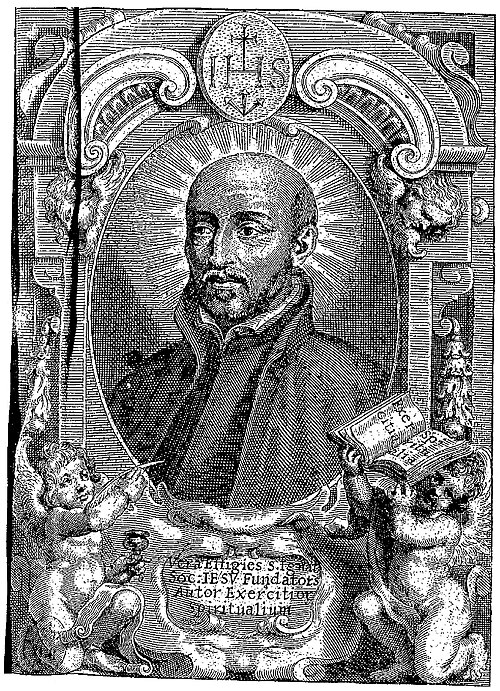
Engraved portrait of Ignatius of Loyola, founder of the Society of Jesus. Images like this were used to circulate an authoritative public image of Ignatius and to connect Jesuit identity to disciplined piety and service. The visual emphasis on a composed, intellectual founder matches the order’s stress on education and obedience. Sourece
Their founder, Ignatius of Loyola, was a Spanish nobleman and former soldier whose religious conversion convinced him that the church needed disciplined, educated, and active servants. Rather than withdrawing from the world, Jesuits would work directly within it, especially where Catholicism faced its greatest challenges.
Society of Jesus: A Catholic religious order founded in 1540, known for education, missionary work, and strict obedience in service of the papacy.
Pope Paul III officially approved the order in 1540. This papal approval was important because it gave the Jesuits authority and a direct place within the church’s revival efforts. From the beginning, the order was designed for mobility. Jesuits could be sent to universities, royal courts, troubled cities, or distant mission fields wherever the church believed they were most needed.
Spiritual formation and organization
Ignatius shaped Jesuit life through the Spiritual Exercises, a structured program of meditation, self-examination, and disciplined prayer. The purpose was not only personal devotion but also the training of willpower, obedience, and readiness for service. Jesuits took vows of poverty, chastity, and obedience, and they also stressed special loyalty to the pope in missionary assignments.
This structure made the order highly centralized. Under a superior general, Jesuits followed a chain of command that allowed quick decisions and coordinated action across many regions. In an age of religious division, that level of organization gave the Catholic Church a more disciplined and effective instrument for renewal.
Education and Catholic Renewal
Schools, colleges, and intellectual training
Education became one of the Jesuits’ most powerful tools. They founded schools and colleges across Catholic Europe and turned teaching into a central part of the church’s revival.
Their curriculum emphasized Latin, rhetoric, philosophy, theology, and classical literature, but education was also moral and religious. Students were expected to develop disciplined habits, strong reasoning skills, and commitment to Catholic teaching.
Jesuit schools mattered because they trained both clergy and laymen. Priests needed better education if Catholic preaching was to be more persuasive and if church leaders were to answer Protestant criticism effectively. At the same time, sons of nobles, officials, and merchants attended Jesuit colleges, which meant the order could influence future political and social elites.
The methods used in Jesuit schools were demanding and systematic. Students practiced memorization, debate, and public speaking, all of which were useful in a period shaped by religious controversy. Their classrooms produced educated Catholics able to defend doctrine, serve in government, and support the broader revival of the church.
Why Jesuit education was so influential
Jesuit education helped revive Catholicism because it restored prestige to the church. A well-run school system showed that Catholicism could compete intellectually as well as spiritually. In many cities, Jesuit colleges became respected institutions supported by local elites. Because some schools charged little or no tuition, the Jesuits attracted wide support and extended Catholic influence beyond monasteries and episcopal offices into urban society.
Missionary Work
Missions within Europe and beyond it
The Jesuits were equally important for missionary work. Within Europe, they preached sermons, heard confessions, taught catechism, and tried to strengthen Catholic practice in areas affected by Protestant reform. Their missions often focused on winning back commitment to Catholic worship and belief through persuasion, education, and personal discipline rather than through force alone.
Beyond Europe, Jesuits carried Catholicism to new regions in Asia and the Americas. Francis Xavier became famous for missionary work in India and Japan, while later Jesuits such as Matteo Ricci studied local languages and customs in order to present Christianity more effectively.
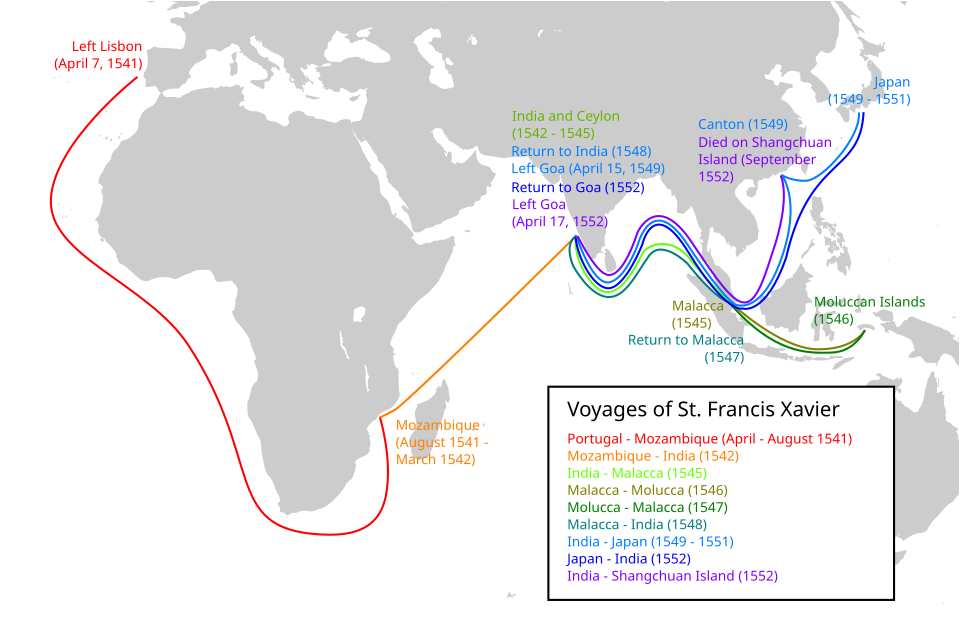
Map tracing Francis Xavier’s major travel routes across the Portuguese maritime world in Asia. By plotting voyages and destinations, it shows how Jesuit missionary work depended on early modern trade networks and imperial sea-lanes. The image helps connect individual missionaries to the larger global reach of Catholic renewal. Source
This willingness to learn from the societies they entered made Jesuit missionary efforts especially notable.
Jesuit missions demonstrated that the Catholic Church was not simply defending old ground. It was expanding, adapting, and acting with new confidence. Missionary success also strengthened the image of Catholicism as a universal faith at a time when Protestant divisions were weakening the idea of a single Christian Europe.
Discipline, Society, and Influence
Moral reform and service to church and state
Jesuit importance also rested on their strict internal discipline. Members underwent long training and were expected to unite learning with obedience. This made them useful in a period when the church wanted clergy who were both intellectually capable and morally serious. Jesuits became known for reliability, organization, and energy.
They encouraged disciplined religious life among ordinary believers as well. Through confession, preaching, retreats, and spiritual direction, they promoted self-control, regular worship, and stronger attachment to Catholic teaching. In this way, Jesuits helped turn Catholic revival into everyday practice rather than leaving it as an abstract program of reform.
Jesuits also gained influence at court. Some served as confessors or advisers to monarchs and nobles, which gave them access to political decision-making. Their work connected education, religion, and government, especially in states that wanted stronger Catholic identity. In many Catholic territories, Jesuit colleges, court connections, and missionary networks made the order one of the most visible and active forces in the church’s revival.
Practice Questions
Identify one way the Jesuit Order strengthened the Catholic Church during the Catholic Revival. (2 marks)
1 mark for identifying one valid way, such as founding schools, educating clergy, missionary work, or promoting discipline.
1 mark for a specific supporting detail, such as Jesuit colleges training elites, preaching in contested regions, or missions led by figures like Francis Xavier.
Explain how Jesuit education and discipline contributed to Catholic revival in the sixteenth century. (6 marks)
1 mark for a clear thesis or claim that links Jesuit education and discipline to Catholic revival.
Up to 2 marks for explaining education, such as founding colleges, improving clerical learning, shaping lay elites, or defending Catholic doctrine against Protestant criticism.
Up to 2 marks for explaining discipline, such as obedience, the Spiritual Exercises, long training, moral reform, or organized missionary work.
1 mark for explaining the broader result, such as stronger Catholic identity, more effective clergy, or renewed church influence in society and politics.
FAQ
Not exactly. The Jesuits were a religious order, but they were not monks in the traditional sense because they did not live a cloistered life centred on a monastery.
They are better described as clerks regular:
they lived under religious vows
they were active in the world
they focused on preaching, teaching, confession, and missions
This active structure made them especially suited to the needs of the Catholic revival.
The Spiritual Exercises were a structured programme of prayer and meditation created by Ignatius of Loyola. They were meant to train a person to examine conscience carefully, resist temptation, and choose a life of service to God.
In practice, they encouraged:
silence and reflection
meditation on sin, Christ’s life, and duty
disciplined decision-making, often called discernment
They shaped Jesuit spirituality by making inner self-control just as important as outward activity.
The Ratio Studiorum was the Jesuits’ official plan for education, published in 1599. It did not create Jesuit schooling from nothing, but it standardised it.
It set out:
what subjects should be taught
how classes should be organised
the duties of teachers and administrators
methods for review, repetition, and student competition
Its importance lay in consistency. A Jesuit college in one city could resemble a Jesuit college in another, helping the order build an international educational reputation.
Some rulers admired the Jesuits, but others worried about their influence. Because the order was international and closely tied to the pope, critics feared that Jesuits might put papal interests above those of the state.
Suspicion grew for several reasons:
Jesuits taught elites and advised rulers
they could influence court politics through confession
their schools shaped opinion over the long term
This did not always lead to conflict, but it did make the order politically sensitive.
The Chinese Rites controversy grew out of Jesuit missionary methods in China. Some Jesuits believed that certain Confucian ceremonies were cultural rather than religious, so Chinese converts might continue them.
Supporters argued this made Christianity easier to accept locally. Opponents thought it compromised Catholic purity.
The dispute mattered because it raised a larger question: how far should missionaries adapt Christianity to local customs? It showed both the creativity and the risks of Jesuit missionary strategy.