AP Syllabus focus:
'The Council of Trent clarified Catholic doctrine, reformed church practice, and reinforced clerical discipline.'
Meeting intermittently from 1545 to 1563, the Council of Trent became the Catholic Church’s central response to religious division, combining doctrinal definition with institutional reform and stricter expectations for clergy.
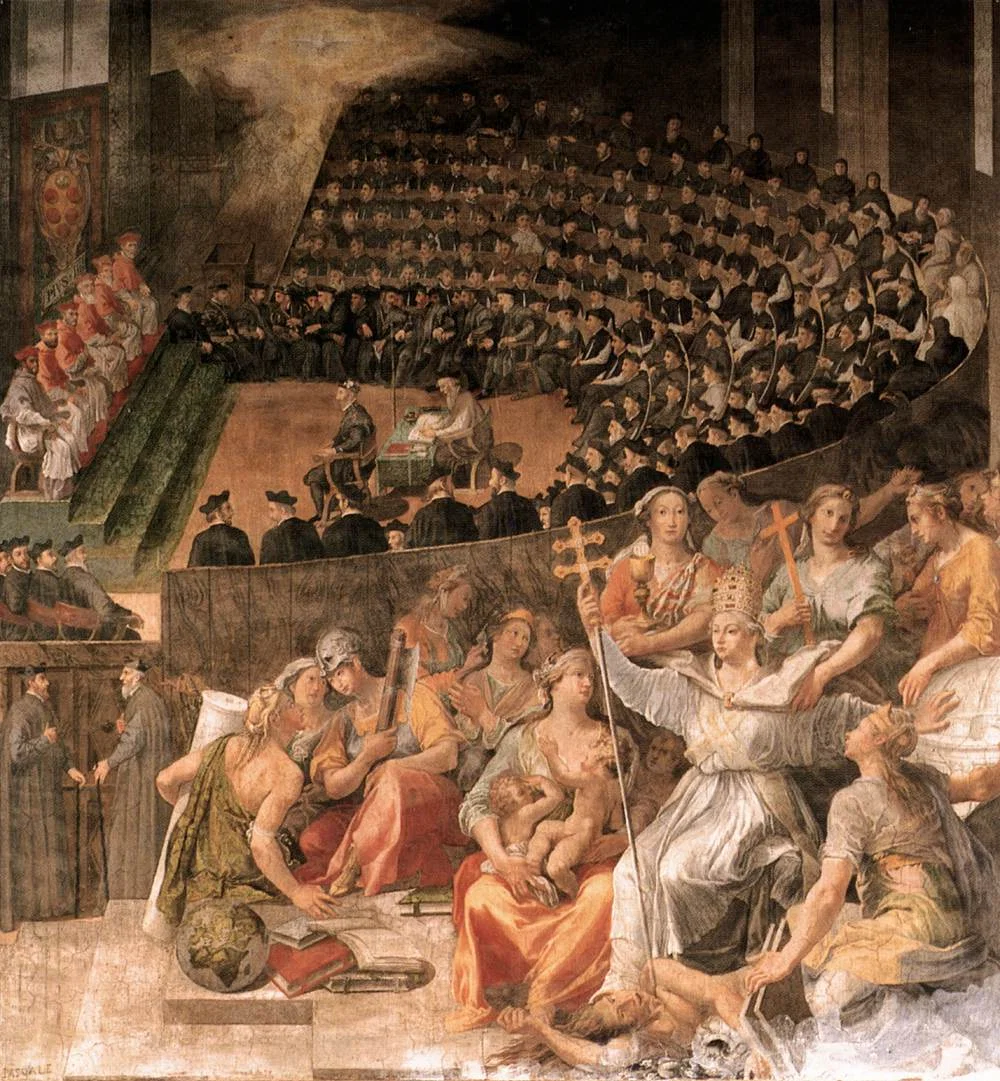
Pasquale Cati’s 1588 fresco presents the Council of Trent as a formal, hierarchical assembly of church leaders gathered to deliberate and proclaim authoritative decisions. The image emphasizes the institutional power of the Catholic Church and the public, council-based process through which doctrine and reform were asserted during the Counter-Reformation. Source
Historical Setting
The Council of Trent met in the city of Trent in three main sessions between 1545 and 1563.
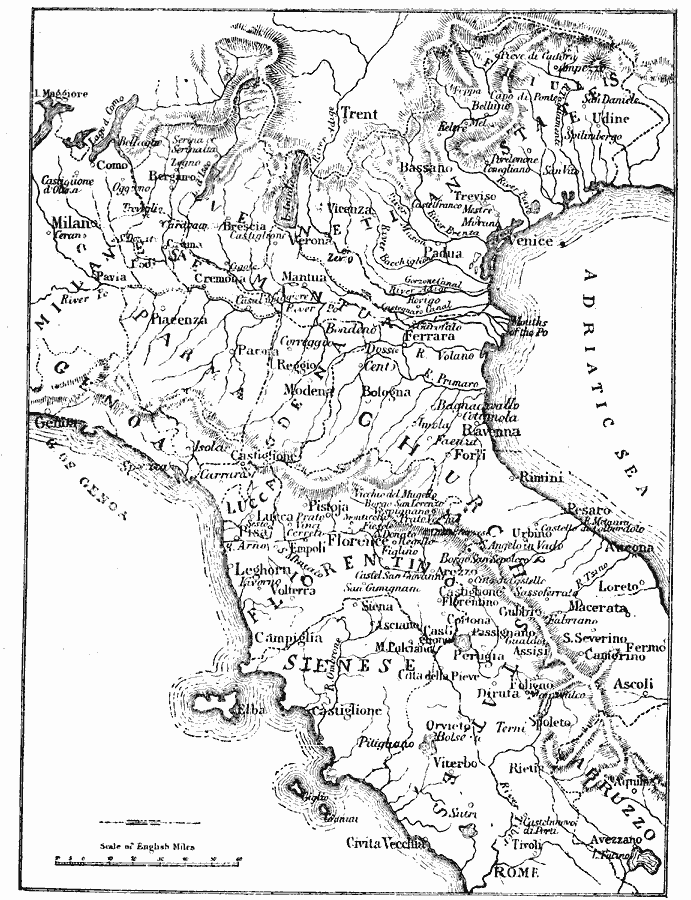
This map of northern and central Italy situates Trent within the wider political and geographic landscape of the sixteenth century. By placing Trent alongside major cities and routes, it helps explain how an ecumenical council could be affected by warfare, shifting alliances, and competition among rulers operating across the Italian peninsula. Source
Its purpose was not to create a new church, but to defend and renew the Catholic Church during a period of deep religious conflict. Church leaders wanted to answer theological challenges while also correcting internal weaknesses that had damaged Catholic authority.
The council did not proceed smoothly. War, rivalry among rulers, and disputes over papal authority delayed its work. Even so, its final decrees gave Catholicism a clearer structure and a more unified program of reform.
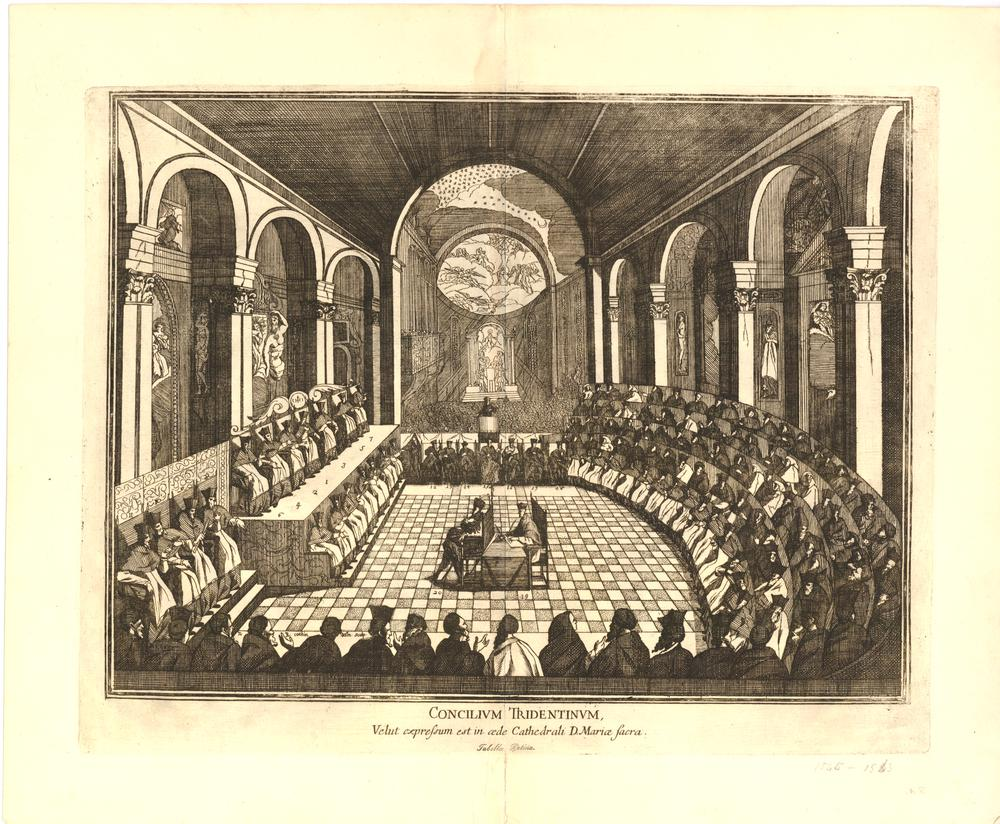
This engraving (catalogued by the British Museum) depicts the Council of Trent convened in full session, with delegates arranged to reflect rank and procedure. It underscores how Catholic reform was pursued through formal deliberation and the issuance of binding decrees meant to standardize belief and discipline across the Church. Source
Trent became the most important official statement of Catholic belief and practice in the sixteenth century.
Clarifying Catholic Doctrine
One of Trent’s most significant achievements was to define what Catholics were expected to believe. The council rejected the claim that Christian truth rested on scripture alone. Instead, it declared that authority came from both scripture and tradition, and that the Church had the right to interpret them.
Trent also addressed the issue of salvation. It taught that salvation came through God’s grace, but that human beings had to cooperate with grace through faith and good works. This teaching drew a firm line between Catholic doctrine and Protestant positions that stressed faith alone.
The council also reaffirmed the seven sacraments as essential channels of divine grace. It upheld Catholic teaching on the Eucharist, including the real presence of Christ, and defended the Mass as a true sacrifice. It supported traditional devotional practices such as the veneration of saints, relics, and images, while insisting that these practices be properly supervised.
By issuing formal decrees, Trent reduced uncertainty. Catholic doctrine became more precise, more uniform, and easier for clergy to teach consistently.
Reforming Church Practice
The council did not focus only on belief. It also tried to improve the Church’s daily functioning. Many Catholic leaders understood that poor administration and visible abuses had weakened trust in the clergy.
Trent therefore targeted several practical problems:
It condemned the abuses associated with indulgences, even though indulgences themselves were not abolished.
It acted against simony, the buying and selling of church offices.
It opposed pluralism, the holding of several church offices by one person.
It demanded more serious preaching, stronger parish supervision, and better pastoral care.
These reforms aimed to make the Church appear less corrupt and more spiritually responsible. Rather than changing doctrine to satisfy critics, the council tried to restore respect for the Church through discipline and correction.
Reinforcing Clerical Discipline
A major concern at Trent was the quality and behavior of the clergy. Reformers within the Church believed that absent bishops, poorly trained priests, and lax standards had contributed to religious confusion.
When the council strengthened clerical discipline, it set clearer rules for how church officials were supposed to live and serve.
Clerical discipline: The rules and standards governing the education, conduct, residence, and duties of members of the clergy.
The council required bishops to reside in their dioceses instead of treating church office mainly as a source of income. Bishops were expected to supervise local religious life actively, visit parishes, and enforce reform at the regional level.
Trent also ordered the establishment of seminaries, institutions for the formal education of priests. This was one of its most important long-term reforms. Better-trained priests could preach more effectively, explain doctrine more accurately, and administer the sacraments more consistently.
The council also reaffirmed high expectations for priestly conduct. Clergy were expected to perform their duties seriously, maintain moral standards, and present themselves as reliable spiritual leaders. This helped create a more disciplined and professional Catholic clergy.
Effects on Catholic Authority
The decrees of Trent shaped Catholic life for centuries. They encouraged a Church that was more centralized, more clearly defined, and more carefully regulated. Instead of seeking compromise on disputed beliefs, the council drew firm boundaries around Catholic doctrine and worship.
Its impact can be seen in several areas:
Teaching: priests and bishops had clearer doctrinal standards.
Worship: the Mass and sacraments were formally defended and regulated.
Administration: bishops were held more accountable for local oversight.
Education: seminaries improved the intellectual and moral preparation of clergy.
Trent therefore helped produce a stronger Catholic identity. It corrected abuses, clarified beliefs, and reinforced discipline, giving the Catholic Church a renewed sense of order and authority in an age of religious division.
Practice Questions
Identify TWO ways the Council of Trent reformed church practice. (2 marks)
1 mark for identifying any one valid reform, such as condemning abuses linked to indulgences.
1 mark for identifying a second valid reform, such as opposing simony, opposing pluralism, requiring bishops to reside in their dioceses, or improving pastoral supervision.
Explain how the Council of Trent responded to religious division through both doctrine and institutional reform. (5 marks)
1 mark for explaining that the council clarified Catholic doctrine.
1 mark for specific doctrinal evidence, such as affirming scripture and tradition, defending faith and good works, or reaffirming the seven sacraments.
1 mark for explaining that the council reformed church institutions or practice.
1 mark for specific reform evidence, such as seminary training, bishops’ residency requirements, or action against simony and pluralism.
1 mark for explaining how these measures strengthened Catholic authority or created a more unified Catholic Church.
FAQ
Trent was selected partly because it lay near the boundary between the Italian and German worlds. That made it a politically useful compromise site.
It was:
close enough for the papacy to influence events
accessible to German bishops and princes
part of the Holy Roman Empire, which gave it broader legitimacy
Its location symbolised an attempt to gather the wider Latin Church, even though politics continued to shape attendance and debate.
The council was interrupted by war, disease, and political disagreement. Popes and rulers often disagreed over control, timing, and agenda.
The three main periods were separated because:
military conflict made meetings difficult
outbreaks of illness disrupted travel and assembly
papal and imperial interests did not always align
These interruptions slowed reform, but they also meant that later sessions could build on earlier debates rather than starting from nothing each time.
Yes. After the council, church authorities issued texts designed to put Trent’s decisions into everyday use.
Important post-Tridentine publications included:
the Roman Catechism for teaching clergy and laity
the Roman Breviary for standardised daily prayer
the Roman Missal for the celebration of Mass
These works helped translate council decrees into routine religious practice across Catholic Europe.
Enforcement depended on bishops, papal officials, and Catholic rulers. The council itself issued decrees, but local authorities had to carry them out.
Implementation usually involved:
diocesan synods to apply reforms regionally
bishop-led visitations of parishes
seminary foundations
closer monitoring of clergy conduct
Enforcement varied by region. Some dioceses adopted reforms quickly, while others moved more slowly because of money, resistance, or local political conditions.
No. Catholic rulers often supported Trent’s goals, but they did not always welcome every aspect of papal influence.
Some monarchs accepted the decrees fully, while others tried to control how they would apply within their own territories. Rulers were especially sensitive about:
appointments to church offices
legal authority over clergy
the balance between royal power and papal power
So, although Trent helped unify Catholic doctrine, its political implementation could still differ from one state to another.