

AP Syllabus focus:
'The Catholic Reformation revived the church through internal reform while responding to the Protestant challenge.'
Catholic reform in the sixteenth century was both defensive and constructive: church leaders sought to answer Protestant criticism while also renewing religious life, discipline, and pastoral care from within.
The Character of Catholic Reform
The Catholic Reformation was not simply a sudden reaction to Luther and other Protestants. Many Catholics had long complained about clerical corruption, weak pastoral leadership, and uneven religious instruction. Reform therefore had two linked dimensions:
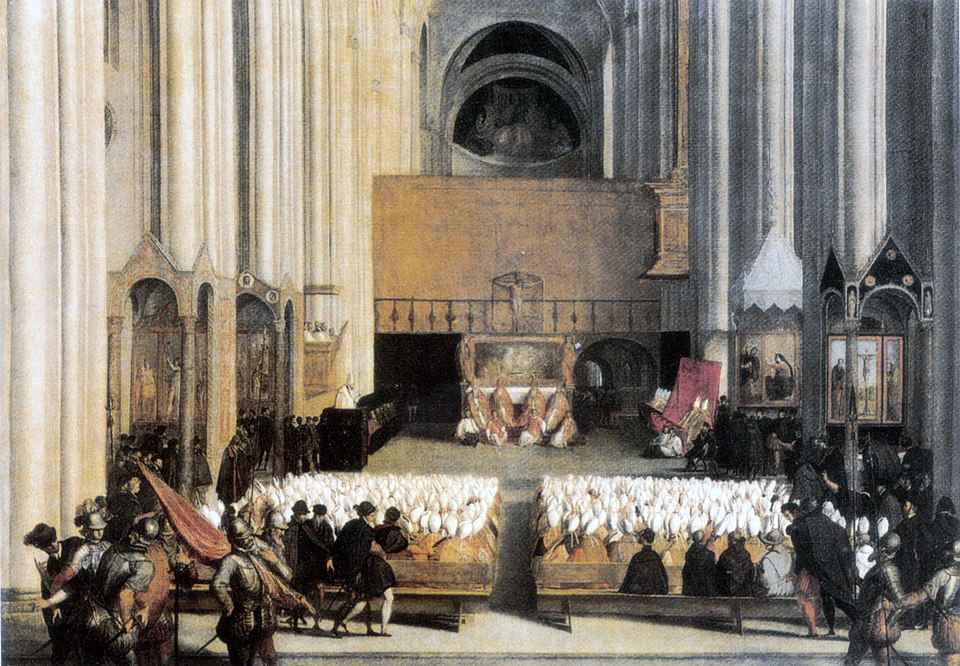
This painting depicts a session of the Council of Trent (1545–1563), the major Catholic council associated with the era of Catholic Reform. It visually reinforces how reform was pursued through formal church governance—bishops and theologians meeting to clarify doctrine and tighten discipline. The scene helps contextualize why Catholic renewal was both institutional (rules, oversight) and confessional (defining Catholic teaching against Protestant alternatives). Source
internal renewal of the church’s spiritual and institutional life
a response to Protestant expansion, which exposed Catholic weaknesses and forced more decisive action
Catholic leaders wanted to restore the church’s credibility, improve the conduct of clergy, and deepen the religious life of ordinary believers. The movement aimed not to invent a new Christianity, but to strengthen and purify the existing church. Reformers within Catholicism believed abuses had damaged the church, yet they also believed the church remained the true guardian of Christian truth.
Why Reform Became Urgent
By the early sixteenth century, many church offices suffered from absenteeism, pluralism, and poor supervision. Some clergy were poorly educated, and some bishops neglected their dioceses. These conditions weakened respect for the church at the very moment Protestant ideas were spreading quickly. As Protestantism gained followers, Catholic authorities recognized that moral reform and better leadership were essential if the church was to regain trust and preserve its influence.
Internal Reform of Church Life
Reforming Clergy and Bishops
A major aim of Catholic renewal was to create a more disciplined and responsible clergy. Bishops were increasingly expected to reside in their dioceses, supervise local priests, and take pastoral duties seriously. Priests were expected to preach more effectively, administer the sacraments carefully, and serve as moral examples within their communities.
Reform also stressed better education and training for clergy. A church that wanted to defend its teachings needed priests who could explain doctrine clearly and guide parishioners consistently. Internal reform therefore addressed both personal morality and administrative effectiveness.
Reviving Religious Life
Catholic renewal also worked through the reform of older religious communities and the creation of new ones.
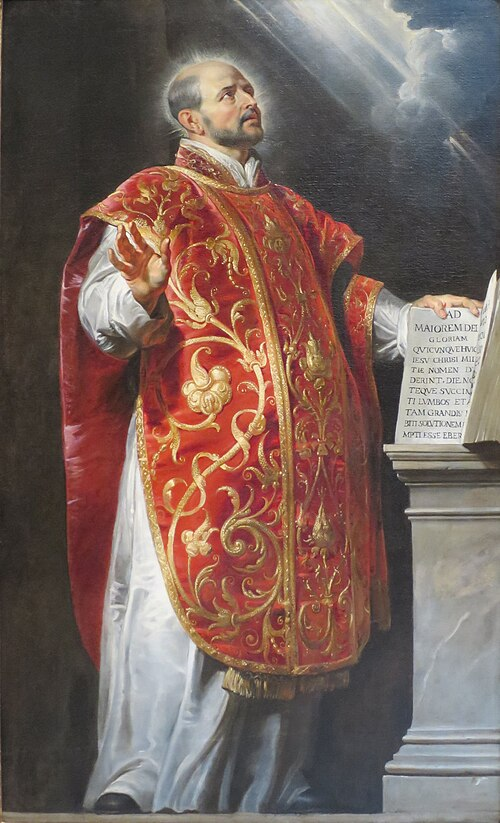
This portrait of Ignatius of Loyola, founder of the Society of Jesus (Jesuits), represents the new religious orders that became key agents of Catholic renewal. The Jesuits are closely associated with disciplined spiritual practice, education, and renewed pastoral outreach—exactly the activities emphasized in Catholic reform. Using an identifiable individual helps anchor the broader institutional changes in lived religious leadership. Source
These groups emphasized stricter discipline, preaching, teaching, charity, and the care of souls. Their work helped reconnect the church to everyday religious life. Instead of allowing criticism to define Catholicism, reformers tried to show that the church could still inspire devotion, learning, and service.
Spiritual Renewal Among the Faithful
The Catholic Reformation was not limited to church officials. It also sought to reshape the religious lives of laypeople. Reformers promoted more regular participation in the sacraments, closer attention to sermons and instruction, and a more serious commitment to prayer and moral behavior. The goal was to produce believers who were not only obedient, but also more deeply engaged in Catholic worship and teaching.
This renewed emphasis on religious practice gave Catholicism greater coherence at the parish level. Instead of a loosely supervised Christian population, reformers wanted communities shaped by regular worship, clearer instruction, and stronger habits of devotion. In this sense, renewal was both spiritual and social: it aimed to form more disciplined Christian communities.
Responding to the Protestant Challenge
Defending Catholic Authority and Belief
The Protestant Reformation challenged Catholic authority by denying or reshaping central teachings and practices. Catholic reformers responded by defending the authority of the church, the importance of tradition, the value of the sacraments, and the role of clergy in guiding Christian life. Renewal thus had a strongly confessional character: Catholicism became more clearly defined against Protestant alternatives.
The response was not only argumentative. Catholic leaders understood that doctrine would be more persuasive if church life itself became more effective. Better bishops, better priests, and better pastoral care made Catholic claims seem more credible. In this way, internal reform and anti-Protestant response reinforced one another.
Competition for Loyalty
The spread of Protestantism meant that Europe was no longer a religiously unified society.
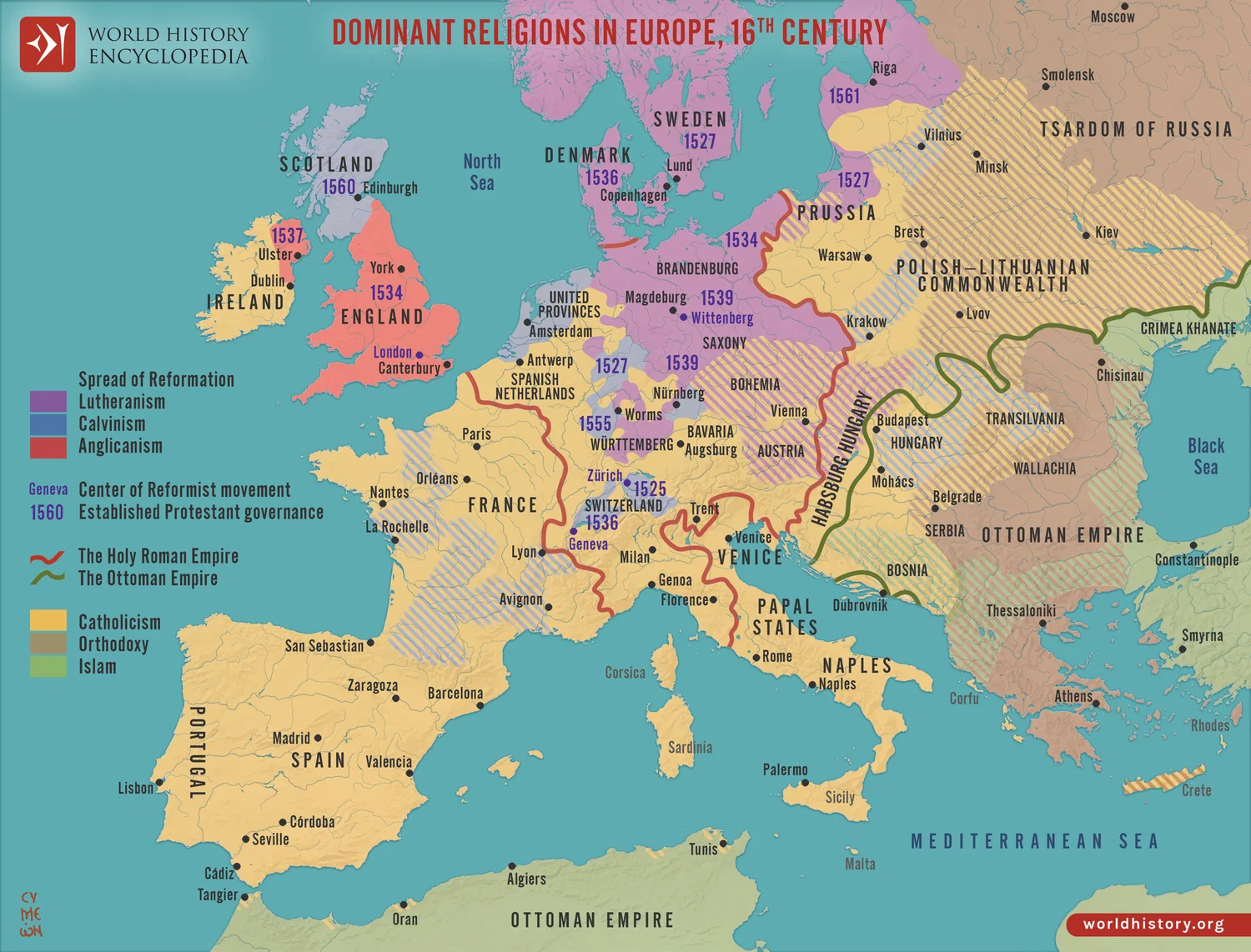
This map shows the major confessional divisions in 16th-century Europe, highlighting where Catholicism, Lutheranism, Calvinism, and Anglicanism became dominant. It supports the idea that Catholic reform unfolded in a competitive religious landscape shaped by borders, rulers, and urban centers. Seeing these patterns helps explain why Catholic renewal often focused on consolidating loyalty and preventing further Protestant expansion. Source
Catholic reform therefore involved competition for the loyalty of rulers, towns, and ordinary believers. Where Catholic renewal succeeded, it often restored confidence in the church and prevented further Protestant gains. This success depended not just on condemning Protestantism, but on offering a more vigorous and disciplined Catholic alternative.
Historical Importance
The Catholic Reformation helped transform the Roman Church into a more self-conscious, better organized, and more active institution. It strengthened clerical discipline, improved pastoral oversight, and deepened Catholic identity in many regions. At the same time, it showed that sixteenth-century Catholicism was capable of self-correction as well as resistance.
This renewal mattered because it ensured that Protestantism did not simply replace Catholicism across Europe. Instead, the church survived, adapted, and regained strength through reform from within. By the seventeenth century, Catholic life in many areas centered on stricter discipline, stronger leadership, and a more committed religious culture.
Practice Questions
Identify one way the Catholic Reformation renewed the church internally and one way it responded to the Protestant challenge. (2 marks)
1 mark for identifying one internal reform, such as improving clerical discipline, requiring bishops to reside in their dioceses, or strengthening priestly education.
1 mark for identifying one response to Protestantism, such as defending church authority, reaffirming the sacraments, or improving religious instruction.
Evaluate the extent to which the Catholic Reformation was primarily a movement of internal renewal rather than a response to Protestantism. (5 marks)
1 mark for a clear, defensible thesis that makes a judgment.
1 mark for one specific piece of evidence showing internal renewal, such as reform of clergy or bishops.
1 mark for a second specific piece of evidence showing internal renewal, such as revived religious life or stronger pastoral care.
1 mark for specific evidence showing response to Protestantism, such as defense of Catholic authority, tradition, or sacraments.
1 mark for analysis explaining the relationship between the two, such as arguing that Protestantism accelerated reforms already desired within the church.
FAQ
“Counter-Reformation” suggests that the movement was only a reaction against Protestantism. Many historians prefer “Catholic Reformation” because it highlights reform efforts that had roots before Luther’s challenge.
That said, “Counter-Reformation” is still useful when discussing specifically anti-Protestant measures. The choice of term depends on whether the emphasis is on internal renewal or confessional conflict.
As archbishop of Milan, Carlo Borromeo became famous for applying reform at the local level. He carried out visitations, improved clerical standards, supported seminaries, and promoted catechism teaching.
His importance lies in showing that Catholic renewal was not only discussed at high levels of the Church; it also depended on energetic bishops who reshaped everyday parish life.
Women’s communities contributed through education, charity, prayer, and moral example. Some orders focused on teaching girls, while others stressed stricter spiritual discipline within convent life.
Their role mattered because Catholic renewal was not only driven by male clergy. Women helped spread devotional practices, support the poor, and strengthen Catholic identity in towns and families.
Confraternities were lay religious associations. They organised charity, processions, devotional activity, burial support, and mutual aid.
They mattered because they brought reform into ordinary urban life. Instead of renewal remaining an official Church project, confraternities allowed laypeople to participate actively in shaping a more disciplined and visible Catholic culture.
Several factors could encourage a return to Catholicism:
strong support from rulers or bishops
better preaching and education
missions aimed at persuading local populations
tighter parish organisation
Results varied by region. In some places, people were won back gradually through pastoral work; in others, political pressure played a much larger part.


_Founder_of_the_Jesuits.jpg)