AP Syllabus focus:
'Baroque artists employed drama, movement, and illusion to create emotional and persuasive visual effects.'
Baroque art turned painting, sculpture, and architecture into a sensory experience. Its dramatic forms, intense movement, and visual tricks were meant to seize attention and direct viewers toward awe, devotion, or admiration.
Baroque: An artistic style associated with the seventeenth century that emphasized drama, movement, emotional intensity, and striking visual effects.
Defining Baroque Style
The Baroque style emerged in the late sixteenth century and flourished across the seventeenth century. Instead of calm balance and restrained order, Baroque artists favored energy, theatricality, and strong emotional appeal. Their works often seem to capture a single charged moment: a saint receiving a vision, a body twisting in motion, or light suddenly breaking into darkness. The goal was not simply to represent a scene but to make the viewer feel present within it.
Baroque art often blurred the boundaries between the artwork and the space of the observer. Figures might lean outward, gestures might extend toward the viewer, and painted ceilings might appear to open into the sky. This active relationship between artwork and audience helped make Baroque art especially memorable and emotionally powerful.
Building Visual Intensity
Creating Drama
Drama in Baroque art came from careful control of composition, gesture, and light. Artists frequently rejected static symmetry in favor of diagonal lines, crowded arrangements, and moments of peak tension. A biblical or mythological scene might be shown at the instant before a blow lands or just as a miracle occurs. This gave the image urgency and suspense.
Painters such as Caravaggio intensified drama through sharp contrasts of light and shadow.
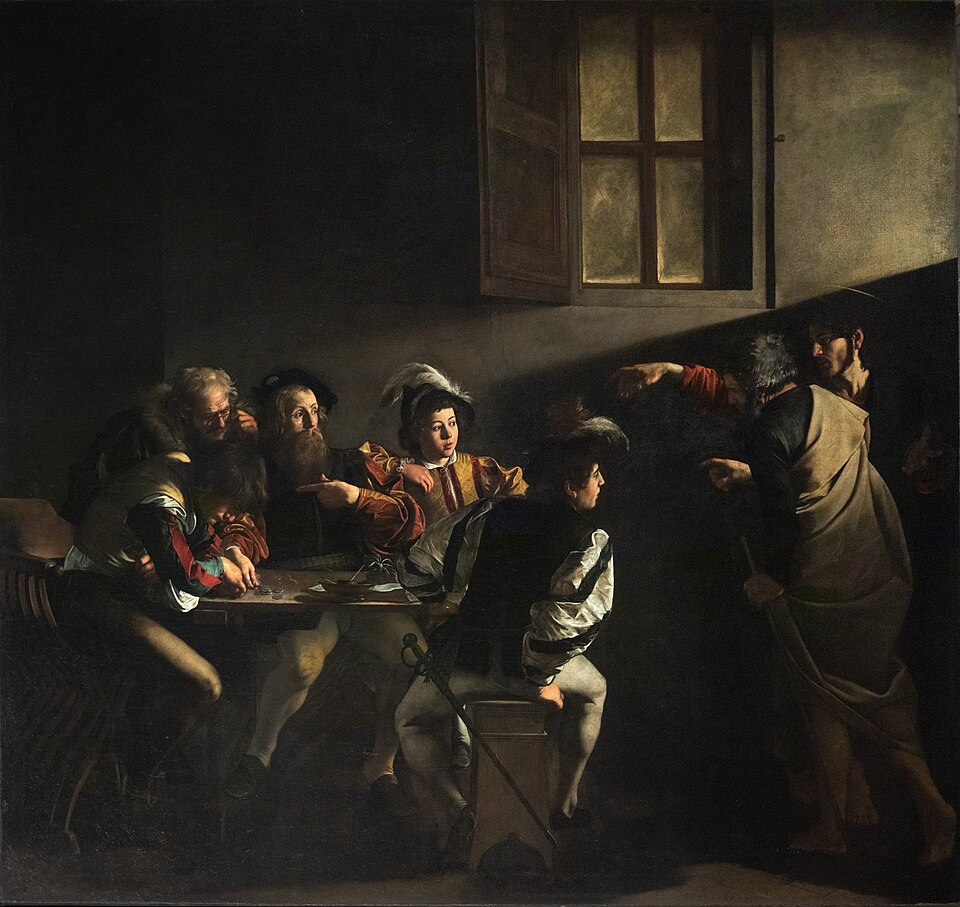
Caravaggio’s The Calling of Saint Matthew (c. 1599–1600) demonstrates Baroque drama through chiaroscuro: a strong beam of light isolates faces and hands, turning a quiet interior into a charged, decisive moment. The diagonal light functions like a visual “spotlight,” directing the viewer’s eye to the instant of spiritual choice. Source
Bright illumination could isolate a face, hand, or sacred object, forcing the viewer to focus on what mattered most. Darkness did not simply fill the background; it heightened the emotional charge of the scene. These lighting effects made spiritual and human experiences appear immediate rather than distant.
Suggesting Movement
Baroque artists worked hard to create the impression that forms were moving rather than standing still. In painting, this often appeared through swirling drapery, turning bodies, unstable poses, and compositions that seem to continue beyond the frame. In sculpture, artists carved figures in twisting, open forms that invite the viewer to walk around them and experience multiple viewpoints.
Gian Lorenzo Bernini is a key example. His sculptures do not look frozen in a timeless ideal pose; they appear caught in the middle of action or emotional transformation.
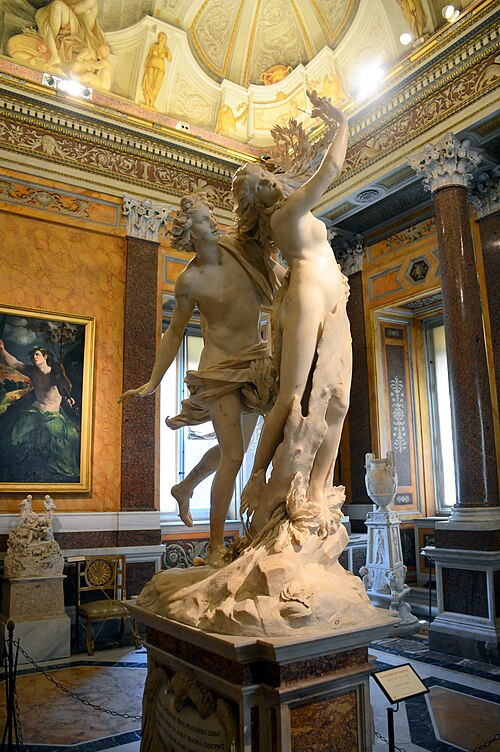
Bernini’s marble group Apollo and Daphne (1622–1625) captures movement at the exact instant of metamorphosis, with Apollo lunging forward as Daphne’s fingers and hair become leaves and bark. The spiraling forms and varied textures are designed to be experienced from multiple angles, reinforcing the Baroque goal of making sculpture feel like unfolding action. Source
Hair, fabric, and flesh seem animated by force. This sense of motion made Baroque art feel alive and immediate, as if the scene were unfolding in real time before the audience.
Using Illusion
A central feature of Baroque art was illusion: the effort to make viewers believe they were seeing more space, more depth, or more life than actually existed on the surface.
Illusionism: The artistic technique of making painted or sculpted forms seem more real, spatial, or immediate than the surface or material actually allows.
Artists used several methods to achieve this effect:
Foreshortening, in which forms are angled sharply toward or away from the viewer
Perspective, which creates convincing depth
Trompe-l'oeil details that trick the eye into mistaking painted forms for real objects
Ceiling frescoes that seem to dissolve stone ceilings into open heavens
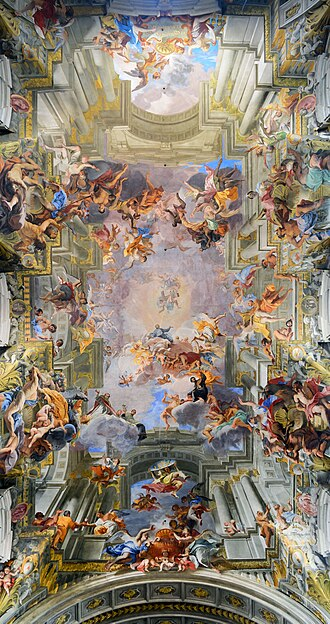
Andrea Pozzo’s ceiling fresco in Sant’Ignazio (Rome), often titled The Triumph/Apotheosis of St. Ignatius (1694), exemplifies Baroque illusionism by using perspective and foreshortening to extend the church’s architecture into a seemingly infinite heavenly space. From the intended viewing position, painted columns and openings appear structurally “real,” dissolving the boundary between the actual ceiling and the imagined vision above. Source
These techniques were especially effective in large interiors. A church ceiling might appear to rise infinitely upward, filled with clouds, saints, and light. The building itself became part of the visual experience. Baroque architecture and decoration often worked together so that walls, sculpture, painting, and natural light combined into one immersive effect.
Shaping the Viewer’s Response
Emotional and Persuasive Power
Baroque art was not dramatic for its own sake. Its visual intensity had a persuasive purpose. By appealing directly to the senses and emotions, artists could make religious scenes more convincing, heroic figures more admirable, and sacred experiences more immediate. Viewers were meant to respond inwardly as well as intellectually.
This helps explain why Baroque works often show extreme facial expressions, sweeping gestures, and highly tactile details. Tears, glowing skin, rough cloth, polished armor, and bursting clouds all increased the sense of reality. Instead of inviting detached contemplation, Baroque art encouraged a strong response: wonder, pity, fear, devotion, or exaltation. It turned viewing into an emotional encounter.
Major Artistic Effects Across Media
Baroque painting, sculpture, and architecture all pursued similar goals, even though they used different materials.
In painting, artists used light, color, and composition to create immediacy and tension.
In sculpture, they exploited texture, deep carving, and complex poses to suggest motion and emotion.
In architecture, they used curved forms, rich decoration, and spatial effects to shape how people moved through and experienced a building.
What united these media was their effort to draw the viewer in. A Baroque work rarely feels distant or self-contained. It reaches outward, organizes attention, and shapes feeling. That combination of drama, movement, and illusion is what gave Baroque art its distinctive power in early modern Europe.
Practice Questions
Identify one technique Baroque artists used to create drama, and explain one effect it had on viewers. [2 marks]
1 mark for identifying one valid technique, such as dramatic lighting, diagonal composition, twisting figures, or illusionistic ceiling painting.
1 mark for explaining a valid effect, such as directing attention, increasing tension, making the scene feel immediate, or inspiring awe or devotion.
Explain how Baroque artists used drama, movement, and illusion to create persuasive visual effects in seventeenth-century Europe. [5 marks]
1 mark for presenting a clear argument that Baroque art aimed to shape the viewer’s emotions.
1 mark for explaining drama through composition, gesture, or strong contrasts of light and shadow.
1 mark for explaining movement through diagonal lines, swirling drapery, twisting poses, or active sculpture.
1 mark for explaining illusion through perspective, foreshortening, trompe-l'oeil, or ceiling frescoes that extend space.
1 mark for linking at least two of these techniques to persuasive effects such as awe, devotion, admiration, or emotional involvement, with a relevant example.
FAQ
Quadratura was a form of illusionistic painting in which artists extended real architecture with painted columns, arches, cornices, and openings.
It mattered because it:
made ceilings seem higher or open to the sky
connected painting with architecture into a single visual programme
increased the feeling that viewers were entering a transformed, almost theatrical space
The oval shape felt more dynamic than a simple rectangle or circle. It encouraged movement and shifting viewpoints as a person walked through the building.
It also helped focus attention:
the curve could guide the eye towards the altar
side chapels and light sources could be arranged more dramatically
the whole interior felt less static and more emotionally charged
Baroque designers often thought carefully about where daylight entered a room. Hidden windows, side lighting, and candlelight could make painted or sculpted forms seem to glow.
This worked especially well because:
highlights appeared more intense against shadow
gold, marble, and polished surfaces reflected light unevenly
flickering candlelight added motion to already dramatic compositions
Marble allowed sculptors to achieve both precision and sensual surface effects. A skilled artist could make it look soft, weightless, or animated.
Baroque sculptors valued it because they could carve:
sharp folds in drapery
smooth skin and delicate facial features
deep shadows that increased contrast and drama
Different finishes on the same block could make flesh, cloth, and hair appear strikingly distinct.
Baroque art shared much with stage design. Both aimed to direct attention, organise emotion, and create the sense that spectators were part of an event.
The connection is clear in:
dramatic entrances and staged viewpoints
painted scenery using perspective tricks
carefully managed light and spectacle
This is why many historians describe Baroque visual culture as deeply theatrical, even when it appears in painting, sculpture, or architecture rather than on a stage.