

AP Syllabus focus:
'Monarchies, city-states, and the church commissioned Mannerist and Baroque works to project prestige, authority, and power.'
In early modern Europe, art was not merely decorative. Rulers and institutions used visual culture to legitimize rule, impress viewers, and make political or religious authority appear grand, stable, and unavoidable.
Art as a Language of Power
In the sixteenth and seventeenth centuries, painting, sculpture, architecture, and urban decoration became major tools of government and institutional control. Powerful patrons wanted art that could be seen in court spaces, churches, plazas, and ceremonial settings. These works communicated messages even to viewers who could not read: the ruler is glorious, the state is orderly, and the church is majestic.
Art operated through patronage, the financial and political support that powerful institutions gave to artists, builders, and workshops.
Patronage: The support, funding, and protection given by rulers or institutions to artists in order to shape cultural production and public image.
Because patrons controlled subject matter, size, placement, and funding, commissioned art often reflected political goals more than private taste. Public display mattered especially. A palace façade, a chapel interior, or a civic monument could constantly remind viewers who possessed wealth and command. Power could therefore be staged visually before subjects, rivals, and foreign ambassadors.
Monarchies and Dynastic Prestige
Monarchies used Mannerist and Baroque art to elevate rulers above ordinary society. Court commissions linked kings and queens with heroic history, classical imagery, military victory, and divine favor. A ruler shown in monumental scale or surrounded by rich decoration appeared not just wealthy but naturally entitled to obedience.
Palaces were especially important.
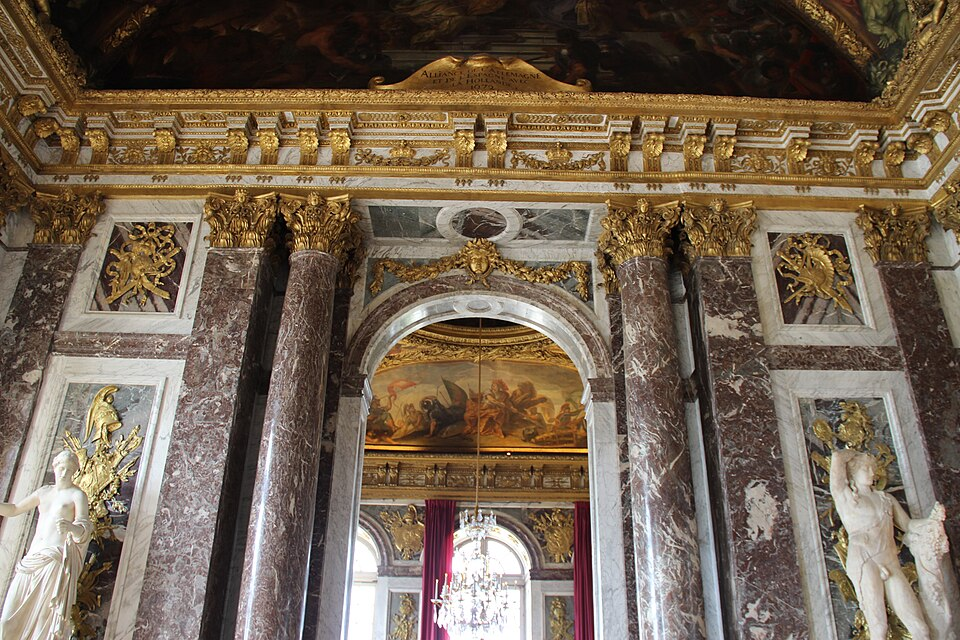
The Hall of Mirrors (Galerie des Glaces) at the Palace of Versailles, a showcase space for royal ceremony and diplomatic display under Louis XIV. Its length, repeated arches, and mirrored walls multiply light and ornament to create a controlled experience of awe—turning architecture into a persuasive image of absolutist power. Source
Their scale, symmetry, gardens, staircases, and reception rooms transformed royal residence into political theater. Visitors moved through carefully designed spaces that displayed order, hierarchy, and magnificence. This was a visual argument for strong monarchy.
In painting and sculpture, dynastic portraits emphasized regalia, lineage, and controlled gestures.
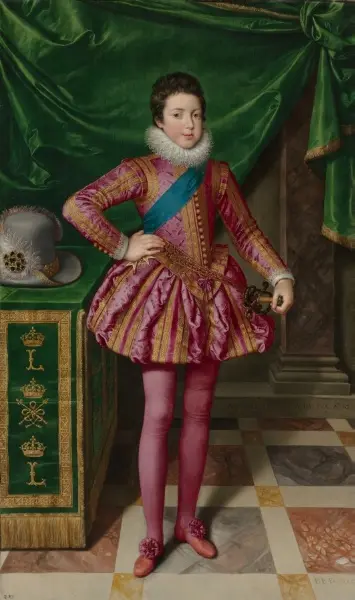
Frans Pourbus the Younger’s full-length portrait of Louis XIII (1611), an image of monarchy built from costume, symbols, and choreography. The sash, sword, formal stance, and richly staged interior present royal status as natural and disciplined, helping train viewers to associate political authority with order and magnificence. Source
In architecture, large building programs demonstrated that the crown could mobilize labor, resources, and artistic talent on an extraordinary level. For monarchies, art did not simply reflect power; it helped create the image of power on which obedience depended.
City-States and Civic Authority
City-states also commissioned art to express political identity. In Italian urban centers, civic elites used public buildings, fountains, statues, and ceremonial spaces to display wealth and collective pride. Art decorated councils, squares, and government buildings so that the city itself appeared disciplined, prosperous, and worthy of loyalty.
These commissions were especially useful in competitive environments. A city-state could use artistic splendor to rival neighboring powers and to advertise commercial strength. Monumental decoration also linked local government to ancient Rome or biblical history, giving civic rule a sense of dignity and legitimacy.
Unlike purely private luxury, civic art worked in shared urban space. It shaped how inhabitants and visitors experienced the city, turning political authority into something visible in everyday life.
The Church and Institutional Power
The church likewise used art to communicate prestige and authority. Grand churches, chapels, altarpieces, and sculptures projected the dignity of the institution itself. Scale, ornament, light, and rich materials suggested permanence, sacred order, and access to divine truth.
Baroque religious commissions were particularly effective because they could overwhelm the senses.
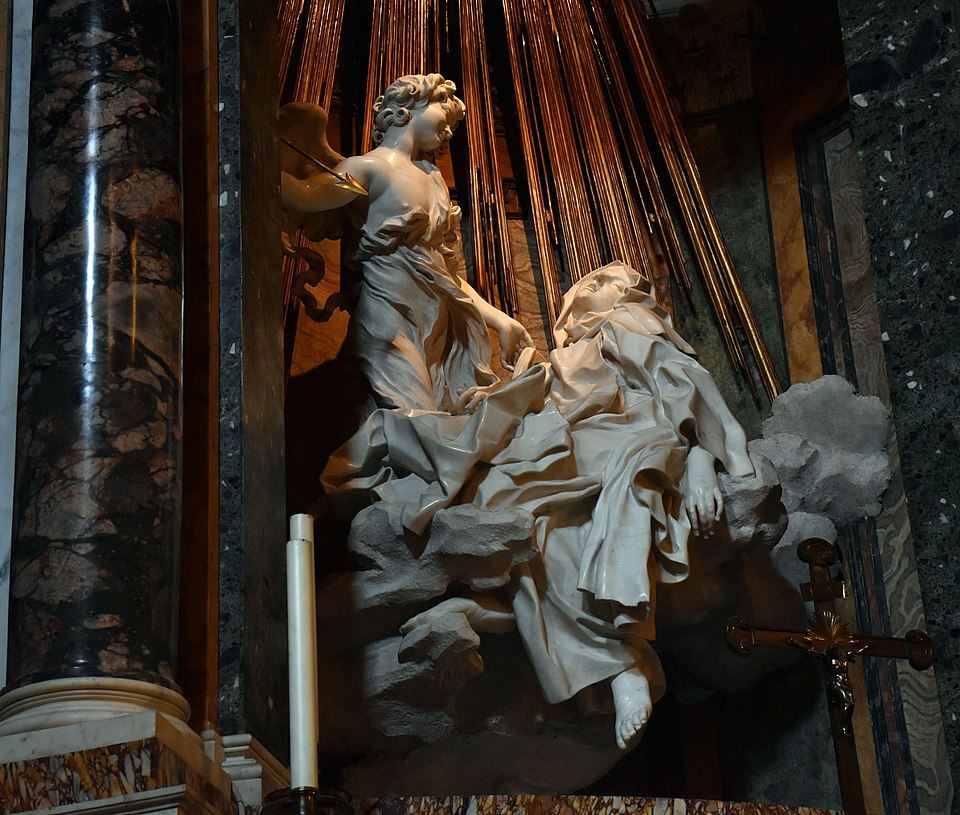
Gian Lorenzo Bernini’s Ecstasy of Saint Teresa (Cornaro Chapel, Santa Maria della Vittoria, Rome), a Baroque sculptural ensemble staged like theater. The intense expressions, swirling drapery, and carefully directed light heighten emotional impact, modeling how the Catholic Church used art to shape devotion and reinforce institutional authority. Source
Dramatic movement, emotional intensity, and illusionistic effects made sacred spaces feel powerful and immediate. This was valuable in a Europe where religious authority was contested. Art allowed church leaders to present the church as triumphant, organized, and spiritually commanding.
Architecture mattered as much as imagery. Domes, façades, long naves, and carefully arranged interiors directed attention and movement. Viewers did not just look at power; they physically entered it. In this sense, church commissions made authority experiential. The building, image, and ritual environment combined to reinforce institutional control and prestige.
Why Mannerist and Baroque Styles Worked
The two major styles of the period served power in different but related ways. Mannerism often featured complexity, artificiality, elongated forms, and intellectual sophistication. Such qualities could signal refinement and elite taste, making patrons appear cultured and elevated above common life.
Baroque art was even more useful for public persuasion. Its movement, scale, strong contrasts, and theatrical composition created emotional impact. Baroque spaces often guided the eye toward a central figure, altar, throne, or emblem of rule. The style was therefore well suited to ceremonies, state entries, worship, and diplomatic display.
Both styles turned artistic commission into political communication. The patron chose not only what was represented but how viewers would feel when confronting it: awe, reverence, admiration, or submission.
How to Analyze Art in the Service of Power
When interpreting a commissioned work, focus on the relationship between style, location, and message.
Ask who paid for it: a monarch, a city government, or the church.
Ask where it was seen: a court, public square, council chamber, or sacred interior.
Ask what it tried to communicate: legitimacy, victory, continuity, magnificence, or divine approval.
Ask how the style supports the message: Mannerist elegance suggested elite sophistication, while Baroque drama created emotional submission and wonder.
Ask who the audience was: subjects, urban citizens, foreign visitors, or worshippers.
This approach keeps the focus on art as an instrument of prestige, authority, and power rather than as decoration alone.
Practice Questions
Answer all parts.
a) Identify one type of patron in early modern Europe that commissioned Mannerist or Baroque art to project power. (1 mark)
b) Describe one feature of Mannerist or Baroque art that could communicate authority. (1 mark
c) Explain one reason that feature was effective in strengthening prestige or power. (1 mark)
(3 marks)
a) 1 mark for correctly identifying a patron such as a monarchy, a city-state, or the church.
b) 1 mark for describing a relevant feature such as monumental scale, dramatic movement, rich ornament, illusionistic space, elite complexity, or ceremonial placement.
c) 1 mark for explaining how the feature impressed audiences, legitimized rule, reinforced hierarchy, displayed wealth, or made authority seem sacred or natural.
Evaluate the extent to which commissioned Mannerist and Baroque art functioned as a tool of power for monarchies, city-states, and the church in the sixteenth and seventeenth centuries. (6 marks)
1 mark for a historically defensible thesis that makes a clear argument about art as a tool of power.
1 mark for addressing at least two different patron groups named in the question.
2 marks for specific historical evidence relevant to commissioned art and power, such as palaces, civic monuments, court portraiture, church interiors, or ceremonial spaces. Award 1 mark per well-explained piece of evidence.
1 mark for analysis explaining how style or location helped project prestige, authority, or control.
1 mark for complexity, such as comparing how different patrons used art differently or explaining why Mannerism and Baroque were especially effective for political or religious messaging.
FAQ
Ambassadors and visiting nobles judged a ruler partly through what they saw at court. A grand palace, impressive staircase, or richly decorated audience chamber suggested wealth, stability, and control.
These spaces also helped shape negotiations. If a monarch appeared magnificently powerful, foreign visitors might treat that ruler with greater caution or respect.
They were short-lived structures and displays used for entries, weddings, victories, and major celebrations. They could include painted arches, banners, sculptures, stage sets, and fireworks.
Although temporary, they mattered because they turned an entire city into a political spectacle. They allowed rulers or governments to present a carefully controlled public image without needing a permanent building programme.
Allegorical figures such as Justice, Peace, Victory, or Fame let patrons make broader claims about their rule. A portrait shows a person; an allegory suggests that the person embodies a virtue or historic mission.
This made the message more flexible and flattering. It also appealed to educated viewers familiar with classical and humanist symbolism.
Yes. Although Baroque is often strongly associated with Catholic commissions, its dramatic visual language could serve secular or Protestant power too.
What mattered was not the confession alone, but the effect:
splendour
order
emotional impact
public visibility
A Protestant ruler could still use monumental architecture or court decoration to display authority, prestige, and dynastic ambition.
Some works were preserved because of their artistic value, but others were altered, moved, or reinterpreted. Portraits could be removed, symbols replaced, and inscriptions rewritten.
In some cases, later rulers kept earlier commissions but gave them new meanings. This shows that art in the service of power was never completely fixed; its message could shift when politics changed.

.jpg)
