AP Syllabus focus:
'Artists such as El Greco, Artemisia Gentileschi, Bernini, and Rubens produced works shaped by patronage and public display.'
Between churches, courts, and cities, early modern artists worked for paying sponsors whose priorities influenced subject matter, scale, style, and setting, turning art into a visible expression of devotion, prestige, and authority.
Patronage and Public Display
In 16th- and 17th-century Europe, major artworks were usually created through patronage rather than for an open market. Artists depended on commissions from popes, bishops, monarchs, nobles, city governments, confraternities, and wealthy families. Because these patrons paid for the work, they often shaped its content, materials, size, deadline, and intended audience.
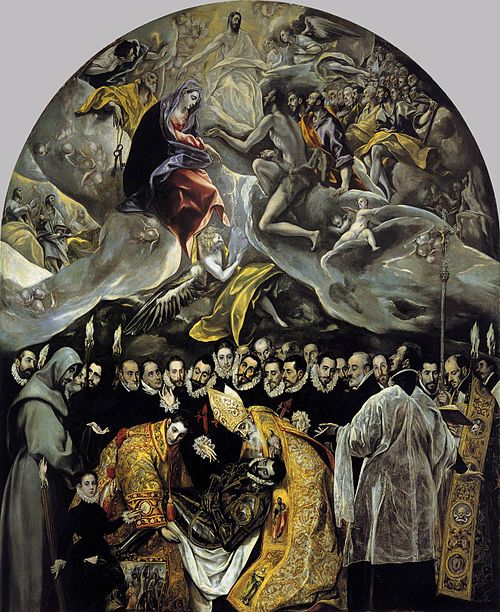
El Greco’s The Burial of the Count of Orgaz (1586–88) was commissioned for the church of Santo Tomé in Toledo, making it a strong example of Counter-Reformation religious patronage. The composition visually separates the earthly funeral rite below from the heavenly realm above, showing how a public altarpiece could teach doctrine while also displaying prestige and orthodoxy. Source
Patronage: The financial and social support given by an individual or institution to an artist in exchange for works that served religious, political, dynastic, or personal purposes.
Patronage did not eliminate creativity. Instead, artists worked within limits set by patrons and used those constraints to display skill, originality, and cultural importance. Success often depended on balancing artistic ambition with the expectations of powerful sponsors.
Public display was equally important. Many works were designed for churches, chapels, palace halls, civic buildings, and urban spaces where large groups could see them. Art in these settings did more than decorate a room. It communicated messages about faith, family honor, legitimacy, and social rank.
Public display shaped artworks in several ways:
They needed to be striking from a distance.
They were often tied to the function of a building or institution.
They aimed to move viewers emotionally or morally.
They helped patrons present themselves to a wider public.
How Commissions Worked
A commission was usually a formal arrangement, not a casual purchase. Patrons might specify the subject, iconography, materials, and exact location of the piece. Payment could be made in stages, and artists were expected to meet deadlines and satisfy visible public expectations. A successful commission could lead to more work because a painting or sculpture placed in a prominent location acted as a form of advertisement. For that reason, artistic careers were shaped by reputation, personal contacts, and the ability to navigate elite networks as much as by talent alone.
Artists and Public Patronage
El Greco
El Greco worked mainly in Spain, especially in Toledo, where religious institutions and church officials commissioned many of his best-known works. Because these paintings often served as altarpieces or devotional images, they had to function in sacred spaces and address the concerns of clergy and worshippers. His elongated figures, dramatic poses, and spiritual intensity made his art highly effective in settings meant to inspire religious reflection.
His career shows how patronage influenced style and opportunity. Working for religious patrons meant producing images suited to Catholic devotion and the visual needs of church interiors. Even a distinctive artist like El Greco had to respond to the expectations of local institutions if he wanted major public commissions.
Artemisia Gentileschi
Artemisia Gentileschi built her career through elite and courtly patronage in a world that was heavily dominated by men. Support from rulers, aristocrats, and prominent households gave her access to commissions, income, and artistic visibility. This matters historically because it shows how patronage networks could sometimes create openings for exceptionally talented women artists.
Her paintings often featured powerful female figures from biblical or classical history. Such subjects appealed to educated patrons who wanted works that were dramatic, sophisticated, and memorable. Public visibility mattered greatly for Gentileschi’s reputation: when her works appeared in prominent collections or courts, they made her talent harder to ignore and strengthened her standing across different regions.
Bernini
Gian Lorenzo Bernini was closely tied to papal patronage in Rome. Popes and high church officials commissioned him to create sculptures, architectural projects, and decorative programs that linked artistic splendor with Catholic authority. Because many of these works stood in major Roman churches or public spaces, they were designed to impress large audiences.
Bernini’s art was especially suited to public display.
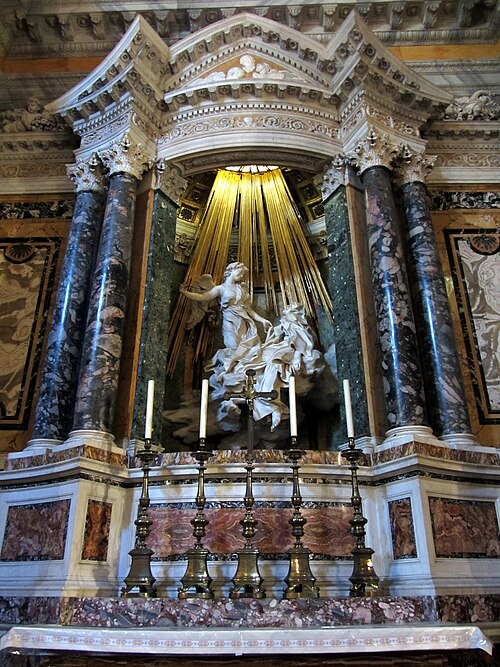
Bernini’s Ecstasy of Saint Teresa (Cornaro Chapel, Santa Maria della Vittoria, Rome) exemplifies Baroque art designed for maximum public impact inside a church. The dramatic diagonals, intense facial expressions, and carefully staged setting work together like a theatrical scene, making the viewer feel like a witness—an approach closely tied to Catholic renewal and elite sponsorship. Source
Its movement, theatricality, and emotional intensity made viewers feel involved in the scene before them. His career demonstrates that patronage could shape not only individual objects but entire environments. In Rome, art became part of a larger visual program through which patrons projected spiritual and institutional power.
Rubens
Peter Paul Rubens worked in the world of princely courts, aristocratic households, and international diplomacy. His patrons wanted art that celebrated lineage, authority, and political ambition. Rubens responded with large, energetic compositions that conveyed confidence and magnificence.
His commissions often had a public or semi-public function. Paintings displayed in palaces, ceremonial rooms, and churches sent messages to courtiers, ambassadors, and urban viewers.
Rubens also shows that patronage could be international: reputation moved across borders, and an artist’s success depended on access to influential networks. In that sense, art became part of diplomacy as well as display.
What AP Students Should Notice
For AP European History, the key idea is that these artists were not isolated geniuses working outside society. Their paintings and sculptures were shaped by the institutions and audiences that supported them. Patronage influenced:
Subject matter, such as sacred scenes or dynastic imagery
Style, especially dramatic or monumental effects
Scale and medium, including altarpieces, sculpture, and decorative cycles
Location, from chapels to courts to civic settings
Purpose, including devotion, prestige, persuasion, and memory
Studying El Greco, Gentileschi, Bernini, and Rubens reveals that early modern artistic achievement depended on more than talent. It also required access to commissions, influential supporters, and public spaces where art could be seen and where patrons could display power, piety, or status.
Practice Questions
Identify ONE way patronage shaped the work of ONE of the following artists: El Greco, Artemisia Gentileschi, Bernini, or Rubens. (2 marks)
1 mark for identifying a relevant patron or patron type, such as church officials, popes, courts, nobles, or wealthy households.
1 mark for explaining a specific effect on the artist’s work, such as subject matter, scale, style, setting, or intended audience.
Analyze how public display influenced the purpose of art in the careers of TWO of the following: El Greco, Artemisia Gentileschi, Bernini, Rubens. (5 marks)
1 mark for a clear argument that public display made art serve religious, political, social, or reputational purposes.
1 mark for specific evidence about the first artist.
1 mark for explaining how the display setting shaped the function or impact of the first artist’s work.
1 mark for specific evidence about the second artist.
1 mark for explaining how the display setting shaped the function or impact of the second artist’s work.
FAQ
Artists often relied on personal introductions rather than anonymous sales.
Common routes included:
family or workshop connections
recommendations from clergy or court officials
earlier successful commissions
letters of dedication or gift works sent to powerful figures
travel between artistic centres
A strong reputation could spread through diplomatic circles, merchants, and collectors, helping artists secure work in new cities.
Placement affected meaning as well as visibility.
In a church, a work near the altar could seem more sacred or authoritative. In a palace, a painting in an audience chamber might impress visitors and reinforce status. In a public square or chapel, lighting, distance, and viewing angle shaped how dramatic the work appeared.
Patrons therefore cared about where a piece stood because location influenced how viewers interpreted it.
Not always. Many leading artists ran workshops.
Assistants might:
prepare canvases or panels
paint secondary details
carve less important sections
copy approved designs
The master usually designed the composition and completed the most important passages, especially faces, hands, or key symbolic elements. Patrons often accepted this system, provided the final work met the expected quality and carried the prestige of the master’s name.
Yes. Patrons often paid for short-lived works made for entries, weddings, funerals, canonisations, and civic celebrations.
These could include:
triumphal arches
painted decorations
festival sculptures
stage machinery
illuminated settings
Although many no longer survive, they mattered because they offered artists public exposure and allowed patrons to project power quickly and dramatically. Temporary art could be politically useful even when it was physically short-lived.
Female patrons could be extremely important, especially queens, regents, noblewomen, and widows controlling household wealth.
They might:
commission devotional works for chapels
sponsor portraits or dynastic imagery
support artists at court
promote themes connected to female virtue, learning, or authority
For artists such as Artemisia Gentileschi, support from influential women could provide not only income but also legitimacy within elite circles. Female patronage did not overturn male dominance, but it could shape careers in meaningful ways.