AP Syllabus focus:
‘Elite democracy emphasizes limited participation in politics and civil society, with a smaller set of politically engaged actors shaping policy outcomes and leadership selection.’
Elite democracy is a model of representative government that highlights how political influence is often concentrated. It helps explain why participation gaps, resource inequality, and institutional gatekeeping can shape who governs and whose preferences become policy.
Core Idea: Limited Participation, Concentrated Influence
Elite democracy: A model of democracy in which a relatively small, politically active, and resource-rich group exerts disproportionate influence over policy outcomes and leadership selection, while most citizens participate less directly or less effectively.
Elite democracy does not claim elections are meaningless; instead, it argues that elections often function as a mechanism for choosing among competing elites rather than as continuous, broad-based popular rule.
What “limited participation” means in practice
Limited participation refers to patterns such as:
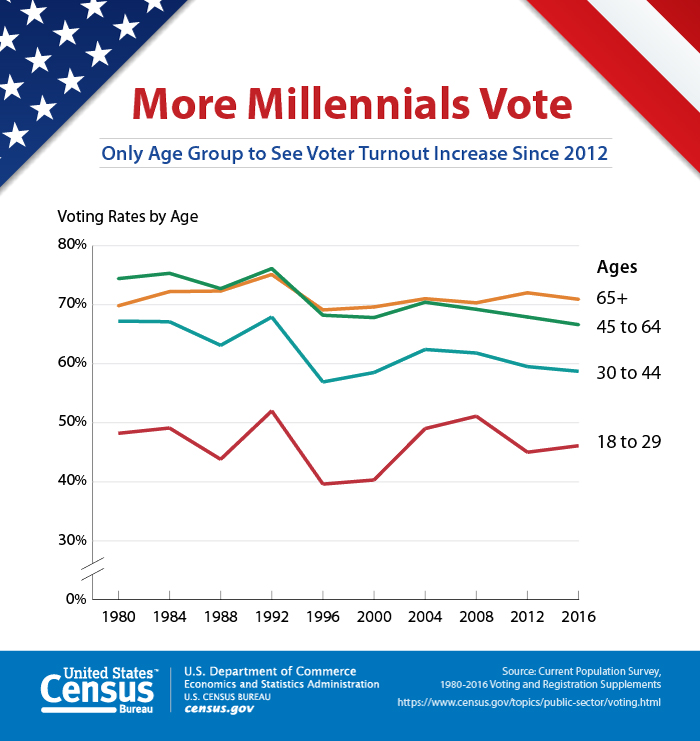
This Census Bureau chart compares reported voting rates across age groups, making the participation gap visually explicit. Because older Americans vote at higher rates than younger adults in many elections, the “active electorate” can skew older than the eligible population. That skew helps explain why policy responsiveness may tilt toward groups that participate more consistently. Source
Lower or uneven voter turnout across groups and elections
Low rates of attending meetings, contacting officials, or sustained activism
Reliance on intermediaries (party leaders, donors, consultants, interest networks) to set agendas and frame choices
Who counts as “elites” in this model
Elites are not a single unified group; they are typically overlapping sets of actors with advantages in time, money, organisation, and access, including:
Major donors and fundraising networks
Party leaders and political professionals (strategists, consultants)
Well-resourced advocacy organisations and industry representatives
High-information, high-participation voters who dominate primaries and local contests
Influential media figures and policy experts who shape issue framing
How Elites Shape Policy Outcomes
Elite democracy emphasises that political resources are unevenly distributed, so influence tends to follow resources.

This diagram summarizes the four-stage policy process—agenda setting, enactment, implementation, and evaluation—highlighting multiple points where organized actors can shape outcomes. In elite-democracy terms, influence is often greatest upstream (agenda setting and drafting) where expertise and access are concentrated. The figure helps students connect “who participates” to “which policies make it onto the agenda” and how they are carried out. Source
Common mechanisms include:
Agenda setting: Elites prioritise which issues reach decision-makers and which are sidelined.
Policy expertise and drafting: Professional staff and organised interests often supply data, model bills, or technical language that becomes the basis of legislation.
Campaign finance leverage: Candidates may be more responsive to organised funders because campaigns require sustained funding.
Access and relationships: Regular interaction with officials (meetings, calls, events) creates repeated opportunities to persuade.
Why policy can diverge from broad public preferences
In elite democracy, divergence can occur when:
Benefits are concentrated for a small group while costs are diffuse for the public
Issues are complex and low-salience, reducing mass attention and accountability
The most engaged participants hold preferences that differ from less-active citizens
Leadership Selection: How Elites Help Determine “Who Runs”
Elite democracy also stresses that leadership selection is filtered through institutions and political gatekeepers. Even in competitive elections, elites can shape the candidate pool by:
Recruiting candidates and discouraging challengers
Providing endorsements, staff support, and donor connections
Funding early advertising and name recognition
Influencing party rules, debate access, and primary strategies
Participation gaps and their consequences
Because participation is unequal, the electorate that selects leaders can be unrepresentative:
Primary electorates are often smaller and more ideologically intense than general electorates.
Local elections may be dominated by consistent voters, increasing responsiveness to narrow interests.
Time and cost barriers can reduce participation for lower-income citizens, shifting influence toward those with flexible schedules and resources.
Evaluating Elite Democracy as a Model
Elite democracy is primarily an explanatory lens for understanding power. It highlights:
The persistent role of political inequality (resources and access)
Why policy debates often occur among organised, professionalised actors
How “consent” can be real but still filtered through elite competition
At the same time, elite influence is not absolute: elites can disagree, fail to anticipate public backlash, or be constrained by elections, law, and institutional rules. The model’s key claim remains that participation is often limited in effect, and outcomes frequently reflect the preferences of a smaller set of politically engaged actors.
Practice Questions
(2 marks) Define elite democracy and identify one way limited participation can affect policy outcomes.
1 mark: Accurate definition linking democracy to disproportionate influence by a small, politically engaged group.
1 mark: One valid effect (e.g., agenda setting by donors/party leaders; low-salience issues reflecting organised interests; unequal turnout shifting responsiveness).
(6 marks) Explain two mechanisms through which elites can shape (a) policy outcomes and (b) leadership selection in the United States.
1 mark: Identifies a first mechanism affecting policy outcomes (e.g., agenda setting, expertise/drafting, access, campaign finance).
2 marks: Explains how that mechanism produces influence (linking resources/access to decisions).
1 mark: Identifies a second mechanism affecting leadership selection (e.g., endorsements, candidate recruitment, early funding, gatekeeping rules).
2 marks: Explains how that mechanism filters candidate choice and affects who wins.
FAQ
Consultants can shape strategy, messaging, targeting, and issue framing.
They also professionalise campaigns, making success more dependent on specialised knowledge and data tools that are costly to access.
When most citizens are not paying attention, officials face fewer electoral penalties.
Organised actors with strong incentives can then dominate information and access, especially on technical regulations.
Yes. The model assumes elections occur but argues competition often happens among elite-backed candidates.
Voters choose, but the menu of options and campaign signals may be structured by elite resources.
Personal connections can open doors to meetings, invitations, and informal persuasion that average citizens rarely get.
Networks also speed coordination among donors, officials, and policy experts.
Gaps can arise from non-legal barriers:
Time off work and childcare constraints
Unequal political information
Costs of donating, travelling, or sustained engagement