AP Syllabus focus:
‘In Spanish North America, labor systems shaped long-term social and economic structures by supporting plantation agriculture and mining.’
Spanish colonial plantation and mining systems relied on coerced Indigenous and African labor, fueling expanding imperial wealth while reshaping social hierarchies, land distribution, and long-term economic structures across Spanish North America.
Plantation Agriculture in the Spanish Colonial World
Plantation agriculture became a cornerstone of colonial economies as Spanish settlers sought profitable exports for Atlantic markets.
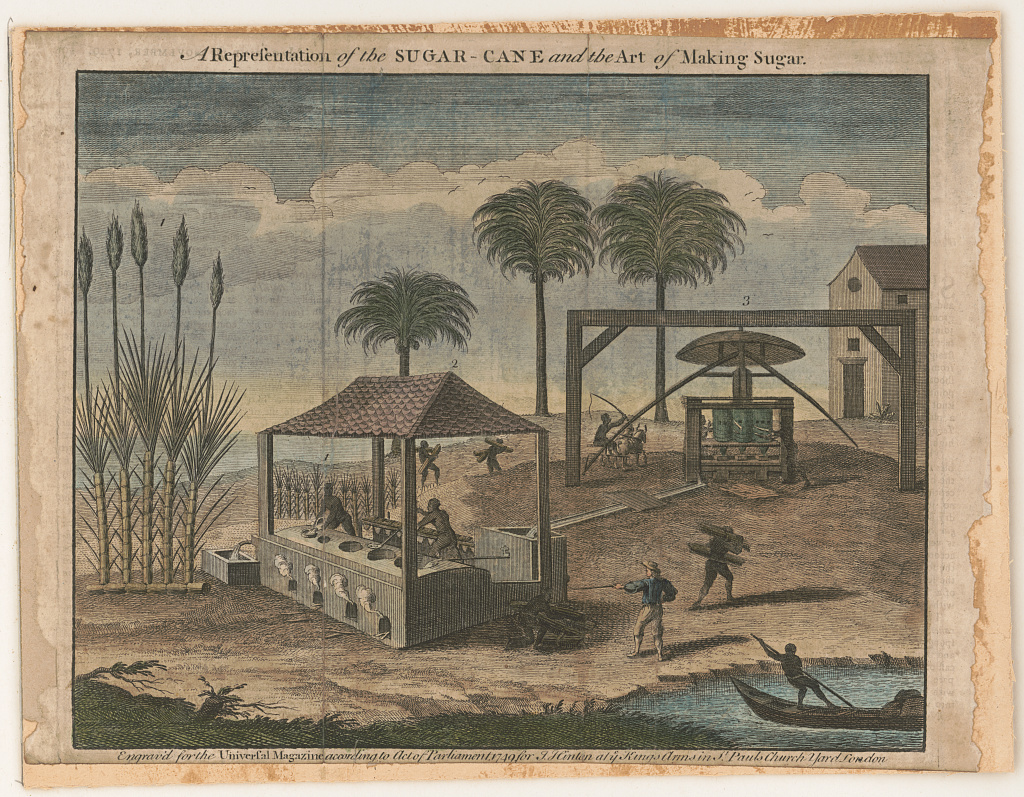
This 1749 engraving depicts a Caribbean sugar plantation with cane cutting, crushing, and boiling operations under coerced labor. Although the image reflects a British West Indian setting, its spatial layout and production stages closely resemble Spanish colonial sugar estates. It includes extra detail—such as machinery stages—not required by the syllabus but still valuable for illustrating plantation systems. Source.
The Structure and Purpose of Plantations
Plantations in Spanish North America were designed to maximize production of commodities demanded in Europe.
Sugar, tobacco, and tropical fruits were major export crops.
Large estates concentrated land in the hands of Spanish elites, reinforcing an emerging colonial aristocracy.
Plantation profits were intended to finance the Spanish Empire’s expanding ambitions in Europe and the Americas.
The plantation system also intensified the Spanish crown’s desire to control labor, encouraging policies that tied workers—Indigenous and later African—to fields for long periods.
Labor Systems Supporting Plantation Agriculture
The Spanish employed several systems to secure an adequate labor force. Initially, the encomienda system granted settlers authority over Indigenous communities. Over time, reforms shifted settlers toward the repartimiento, in which Indigenous laborers performed rotational work under colonial supervision.
Repartimiento: A Spanish colonial labor system requiring Indigenous people to perform limited, rotational labor for colonial authorities, often in agriculture or mining.
While the repartimiento theoretically imposed limits on hours and conditions, enforcement was inconsistent. Settlers frequently exploited laborers, leading to population declines and social disruption.
To meet rising labor demands, the Spanish increasingly imported enslaved Africans, who became essential to plantations in the Caribbean and parts of mainland North America.
Environmental and Agricultural Impact
Plantations transformed ecosystems by:
Clearing forests for monoculture fields
Introducing Old World livestock such as cattle, pigs, and horses
Shifting Indigenous land-use practices toward European-style agriculture
These changes not only altered the environment but also reinforced Spanish dominance by reshaping how land was organized, claimed, and utilized.
Mining as the Engine of Colonial Wealth
Mining—especially of silver—was the most profitable sector of the Spanish colonial economy.
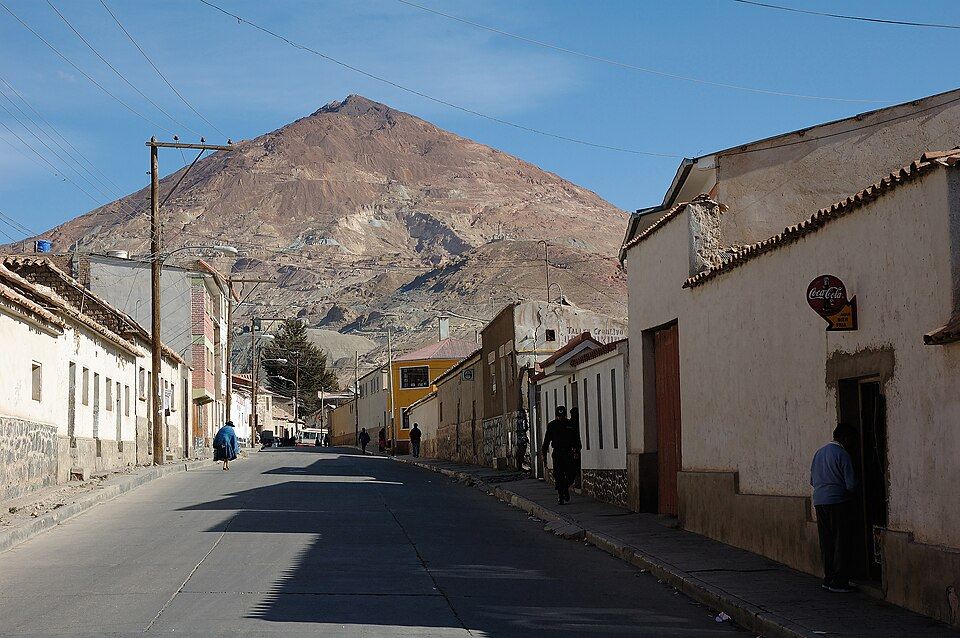
This modern photograph shows Cerro Rico, whose immense silver deposits made mining central to Spanish imperial wealth. Sites like this depended on coerced Indigenous labor drafts such as the mita, paralleling labor demands found in Spanish North American mining regions. Extra details, including modern city structures, appear in the image but do not distract from illustrating the scale of colonial mining landscapes. Source.
The Centrality of Silver to the Spanish Empire
Silver extraction funded imperial wars, government administration, and the Catholic Church’s missionary efforts. Spanish North America became integrated into a worldwide system in which American silver flowed to Europe and Asia via Atlantic and Pacific routes.
Mining settlements grew rapidly, creating new urban centers and attracting both Spanish migrants and Indigenous laborers. These settlements brought:
Expanding markets for food and goods
Increased demand for transportation and artisanal labor
Opportunities for some Indigenous people to become wage earners, though often under harsh conditions
Labor in the Mines: Systems and Realities
Mining required immense labor, and Spanish authorities adapted the mita, an Inca labor draft, for use in Andean mines.
Mita: A forced labor draft applied by Spanish officials to Indigenous Andean communities, requiring men to work in mines for set periods each year.
Between definition blocks we include a normal sentence to maintain clarity and readability consistent with academic expectations.
The mines also relied on advanced European technologies such as mercury amalgamation, which allowed the extraction of silver from low-grade ore. This process increased output but contaminated water sources and damaged local ecologies, demonstrating how economic goals often overshadowed environmental concerns.
Infrastructure and Economic Integration
Mining required substantial investment in transportation networks to move ore, finished silver, and supplies. Colonial authorities constructed:
Roads linking mines to coastal ports
Mule train routes to carry silver across rugged terrain
Storage depots and fortified waystations
These networks facilitated trade and encouraged broader economic integration. Regions specializing in agriculture or livestock production supplied mining towns, connecting diverse parts of Spanish North America into a mutually dependent system.
Long-Term Social and Economic Structures
Plantation and mining economies shaped colonial society in enduring ways. Wealth concentrated among peninsulares (Spaniards born in Spain) and criollos (Spaniards born in the Americas), who dominated landholding and government positions.
Indigenous and African peoples were pushed into lower social strata, forming the base of coercive labor systems that persisted for generations.
Effects on Indigenous Communities
Indigenous societies experienced profound upheaval.
Labor drafts and displacement undermined traditional governance.
Population decline from disease and harsh working conditions weakened communities.
Spanish land seizures restricted access to ancestral territories, forcing dependency on colonial wages or labor obligations.
Economic Foundations of Colonial Hierarchies
The wealth produced by plantations and mines reinforced a rigid class structure that later shaped independence-era conflicts. Colonial elites protected their economic interests, while laboring populations resisted through flight, negotiation, or rebellion.
Plantation agriculture and mining thus became defining elements of Spanish North America, creating interconnected systems of land use, labor, and governance that structured colonial life and influenced long-term regional development.
FAQ
Spanish authorities granted large landholdings to settlers, religious orders, and colonial elites, creating concentrated estates that shaped both agriculture and resource extraction.
These estates allowed owners to control labour, water sources, and transport routes, making it easier to organise coerced Indigenous and African labour for plantations and mining support industries.
In mining regions, surrounding lands were often used for supplying food, pack animals, and fuel, linking agricultural production directly to the needs of mining towns.
Indigenous leaders sometimes acted as intermediaries, negotiating work quotas, seasonal arrangements, and exemptions for vulnerable members of their communities.
Their authority could soften some demands by ensuring labourers served in rotation, not continuously.
However, leaders were often pressured by colonial officials, limiting their ability to protect communities from exploitation, especially in mining zones where labour drafts were more rigidly enforced.
Mining towns grew rapidly around productive silver and mineral sites, becoming early hubs of commerce, administration, and religious activity.
Common features included:
A central plaza with a church and government buildings
Markets serving both Spanish settlers and Indigenous workers
Workshops for refining metal and producing mining equipment
These settlements often attracted migrants and fostered social stratification, with Spanish elites occupying central districts and labourers living on the periphery.
Mining required constant supplies of fuel for smelting, animals for transportation, and food to sustain large workforces.
Surrounding areas produced:
Timber for pit props and furnaces
Maize, meat, and other staples for workers
Mules and horses for hauling ore and silver
This stimulated regional agricultural economies while depleting forests and straining Indigenous subsistence systems.
Environmental disruption pushed many Indigenous groups to relocate or reduce seasonal movement due to altered landscapes and dwindling resources.
Deforestation, soil exhaustion, and contamination of water sources reduced access to traditional hunting and farming areas.
As plantation and mining frontiers expanded, Indigenous communities were often confined to smaller territories or forced into resettlement schemes designed to secure stable labour supplies.
Practice Questions
(1–3 marks)
Explain one way in which plantation agriculture shaped social or economic structures in Spanish North America.
Question 1 (1–3 marks)
Award up to 3 marks:
1 mark for identifying a valid impact of plantation agriculture (e.g., reinforced social hierarchies, concentrated landownership, expanded coerced labour systems).
1 mark for describing how this impact operated in practice (e.g., haciendas controlled large tracts of land worked by Indigenous and African labourers).
1 mark for explaining the consequence of this impact for colonial society or the economy (e.g., strengthened elite dominance, tied labourers to land, or increased export production).
Maximum: 3 marks.
(4–6 marks)
Analyse the extent to which mining contributed to the development of Spanish colonial economies in North America between 1500 and 1700. In your answer, consider both economic impacts and social consequences.
Question 2 (4–6 marks)
Award up to 6 marks:
1–2 marks for a clear thesis or argument assessing the extent of mining’s contribution (e.g., “Mining was central to economic development because…” or “Mining contributed significantly, but other factors such as agriculture also mattered”).
1–2 marks for specific evidence relating to economic development (e.g., silver production, integration into global trade networks, growth of mining towns, investment in infrastructure).
1–2 marks for analysis of social consequences (e.g., reliance on coerced Indigenous labour drafts like the mita, demographic effects, emergence of hierarchical settlement patterns).
To score full marks, the answer must demonstrate both accurate factual evidence and sustained analytical commentary.