AP Syllabus focus:
‘In the encomienda system, Spanish colonial economies used Native American labor to support plantation agriculture and extract precious metals and other resources.’
Spanish colonizers established the encomienda system to secure labor and tribute from Indigenous communities, reshaping early colonial economies and fueling Spanish wealth through coerced extraction and agriculture.
Origins and Purpose of the Encomienda System
The encomienda system emerged during the early decades of Spanish colonization after 1492 as the crown sought practical methods for organizing labor, tribute, and governance in newly conquered territories. Though framed as a benevolent structure meant to “protect” and Christianize Native peoples, in reality it operated as a system of coerced Indigenous labor, demanding service and production under Spanish control.
Encomienda: A Spanish colonial labor system in which the crown granted colonists the right to demand labor and tribute from Indigenous communities in exchange for promises of protection and religious instruction.
Spanish monarchs initially justified encomiendas as rewards for conquistadors who had participated in military campaigns. This incentive-based distribution helped consolidate Spanish authority across vast territories while reducing the crown’s administrative burdens in remote regions.
How the System Functioned in Colonial Societies
Encomenderos—Spanish individuals granted rights over specific Indigenous groups—exerted authority over both labor and production.
Although Indigenous people were not legally enslaved, the system severely restricted their autonomy and often exposed them to harsh working conditions.
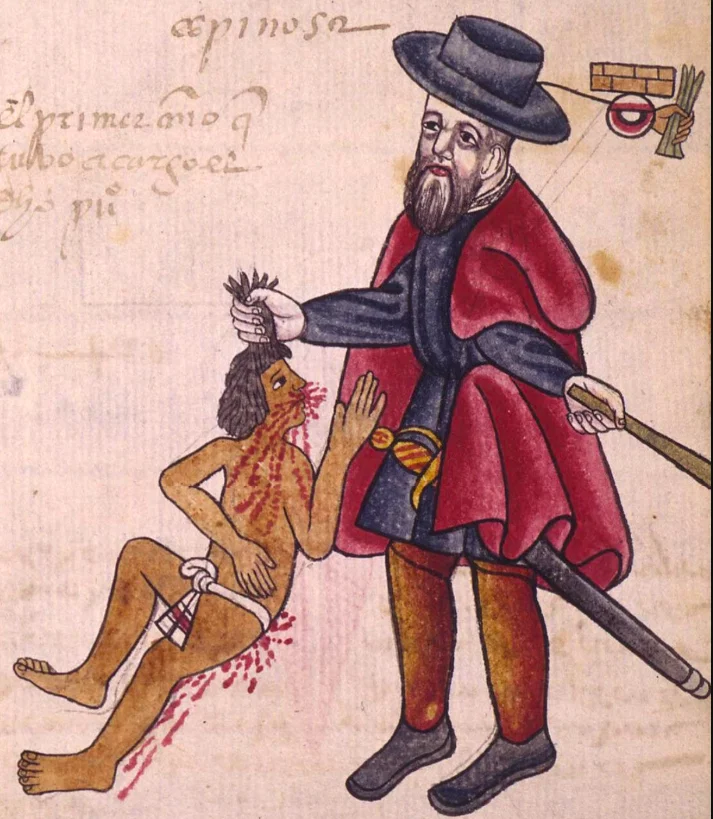
This codex illustration shows Spanish officials overseeing and abusing Indigenous people under the encomienda system in New Spain. It highlights how forced labor and physical coercion were central to extracting tribute, despite official claims of protection and Christianization. The image includes more specific scenes of violence than the AP syllabus requires, but these details deepen students’ understanding of why contemporaries denounced encomienda as abusive. Source.
These conditions played a major role in demographic collapse.
Key Components of Encomienda Operation
Tribute obligations: Indigenous communities owed agricultural goods, precious metals, textiles, or other resources.
Labor service: Encomenderos could demand rotational or full-time labor, especially in regions tied to mining and large-scale agriculture.
Religious oversight: Priests were supposed to provide instruction, though this rarely mitigated exploitation.
Local hierarchy: Traditional Native leaders were sometimes used to organize labor, creating layered pressures within Indigenous societies.
This combination of economic control and religious justification allowed Spanish settlers to build local power bases. Many became wealthy through Indigenous labor long before institutional reforms began challenging the system.
Economic Consequences for Spanish Colonies
The encomienda system played a foundational role in constructing the economic framework of Spain’s early American empire. By channeling coerced labor into productive enterprises, encomenderos generated substantial wealth, reinforcing Spain’s global economic influence during the sixteenth century.
Major Economic Sectors Supported by Encomienda Labor
Mining: Precious metals, particularly silver, formed the backbone of Spanish imperial finances. Indigenous laborers, compelled through encomienda demands, toiled in dangerous mines such as those at Potosí and Zacatecas.
Plantation agriculture: In areas conducive to large-scale farming, Indigenous workers produced crops like sugar and later cash-grain products for regional and transatlantic markets.
Infrastructure and local industry: Encomienda labor supported road-building, construction, and artisanal production essential to colonial expansion.
These sectors allowed Spain to centralize wealth, accumulate bullion, and strengthen its imperial bureaucracy. The system thus directly advanced Spanish political and economic goals while devastating Indigenous populations.
Social and Cultural Impacts on Indigenous Communities
Encomienda obligations accelerated the transformation of Native social structures. The demands of colonial labor undermined longstanding economic networks, disrupted agricultural cycles, and weakened the authority of traditional leaders who were sometimes co-opted into Spanish administrative roles.
Disruption and Demographic Decline
Population loss from overwork and disease intensified because communities already weakened by epidemics faced new labor burdens.
Gender roles shifted as men were often separated from their communities to work in mines or distant fields, forcing women to undertake both domestic and agricultural responsibilities at home.
Cultural erosion followed as Indigenous religious practices and leadership structures were systematically suppressed, partly through missionary efforts attached to encomienda obligations.
Although some Indigenous groups resisted or fled, the profound demographic decline severely limited the ability of many communities to oppose Spanish demands.
Imperial Debates and Attempts at Reform
Growing concerns about abuse led to debates within Spain over the morality and legality of encomienda practices.
Accounts by figures such as Bartolomé de las Casas helped expose mistreatment and influenced legislative responses.
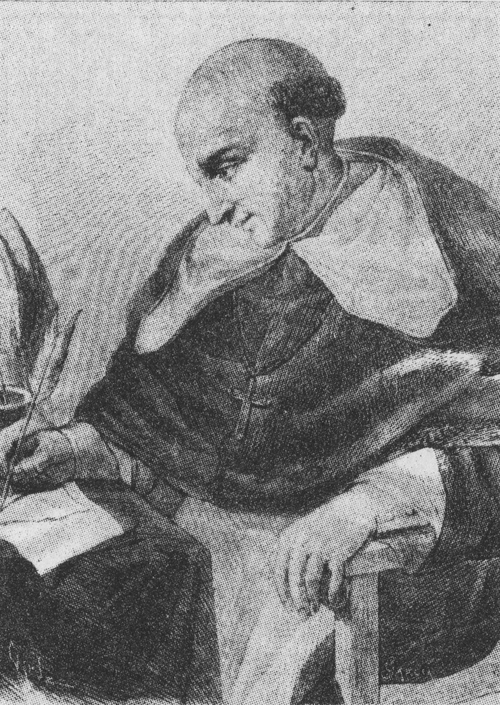
This portrait shows Bartolomé de las Casas, a Dominican friar and former encomendero who became a leading critic of Indigenous exploitation in the Spanish Empire. His writings and advocacy helped push the Crown toward reforms such as the New Laws of 1542, which attempted to curb abuses within the encomienda system. The portrait itself contains no additional historical information beyond his identity, so it serves mainly to humanize the debates your notes describe. Source.
The Laws of Burgos and the New Laws
The Laws of Burgos (1512) marked the first attempt to regulate labor conditions, though enforcement remained weak.
The New Laws (1542) sought to limit inheritance of encomiendas and reduce exploitation. These reforms signaled the crown’s desire to reassert control over colonial administration and protect Indigenous subjects, at least nominally.
Despite reforms, resistance from colonists ensured that exploitation persisted in various forms. The decline of the encomienda system did not end coerced labor; instead, it paved the way for the repartimiento system and increased reliance on enslaved Africans as demographic collapse reduced the availability of Indigenous workers.
Long-Term Significance for Spanish Colonial Development
The encomienda system shaped the earliest colonial institutions, embedding patterns of forced labor, economic extraction, and social hierarchy that would endure throughout Spanish America. It linked economic growth to coercion and resource exploitation, directly aligning with the AP focus on how Spanish colonial economies used Native American labor to support plantation agriculture and extract precious metals.
Practice Questions
Question 1 (1–3 marks)
Explain one way in which the encomienda system shaped Spanish colonial economies in the early sixteenth century.
Mark scheme (maximum 3 marks)
1 mark for identifying a valid economic impact (e.g., increased production of agricultural goods or precious metals).
1 mark for describing how Indigenous coerced labour contributed to that impact.
1 mark for explaining the significance of this impact for Spain’s broader imperial economy (e.g., supporting imperial revenues, funding further expansion).
Question 2 (4–6 marks)
Evaluate the extent to which the encomienda system affected Indigenous communities in the Americas during the early period of Spanish colonisation.
Mark scheme (maximum 6 marks)
1 mark for a clear thesis or line of argument addressing the extent of the impact.
1–2 marks for describing specific effects on Indigenous labour, autonomy, or daily life.
1–2 marks for explaining wider social or cultural consequences (e.g., demographic decline, disruption of gender roles, erosion of traditional authority).
1 mark for using historically accurate evidence drawn from the early colonial period to support the argument.
FAQ
Responses varied depending on region and the degree of Spanish military pressure.
Some Indigenous elites attempted negotiation, seeking to preserve local authority by cooperating with encomenderos in demanding tribute from their communities. Others resisted through flight, withholding labour, or limited armed conflict, especially when Spanish demands disrupted traditional governance.
In several areas, existing tribute structures were repurposed by the Spanish, meaning leaders had to navigate both Spanish expectations and community welfare, often under extreme strain.
In theory, encomenderos were required to provide protection, ensure religious instruction, and maintain the wellbeing of assigned Indigenous communities.
In practice, these obligations were rarely fulfilled. Encomenderos frequently prioritised economic extraction, and enforcement from the Crown was inconsistent due to distance and limited oversight mechanisms.
Clergy occasionally reported abuses, but local power dynamics often shielded encomenderos from consequences.
Encomienda did not legally grant ownership of people; instead, it granted rights to labour and tribute.
However, distinctions blurred in practice:
Labour was coerced, often violently.
Indigenous people had limited freedom to refuse demands.
Conditions in mines and plantations resembled, and sometimes exceeded, the brutality of slavery.
The system was framed as temporary and supposedly protective, but exploitation made it functionally similar to enslavement in many regions.
Christianisation was used to legitimise the system by portraying Spanish control as morally necessary for Indigenous conversion.
Missionaries sometimes worked alongside encomenderos, teaching doctrine while communities laboured. This reinforced Spanish authority by linking coercive labour demands with claims of religious duty.
Some clergy, however, used Christian arguments to denounce abuses, helping fuel reform debates in Spain.
The Crown grew concerned that encomenderos were becoming semi-autonomous local elites capable of challenging royal authority.
By limiting inheritance of encomiendas and increasing oversight, the monarchy aimed to:
Centralise control over colonial revenues.
Reduce violent abuses that generated criticism from missionaries.
Shift labour systems toward those more directly managed by royal officials.
These reforms reflected long-term imperial strategies rather than immediate humanitarian concerns.