AP Syllabus focus: ‘Chinese cultural traditions persisted and strongly influenced neighboring regions in East Asia over time.’
Chinese culture from c. 1200 to c. 1450 remained remarkably continuous while also serving as East Asia’s primary prestige model.
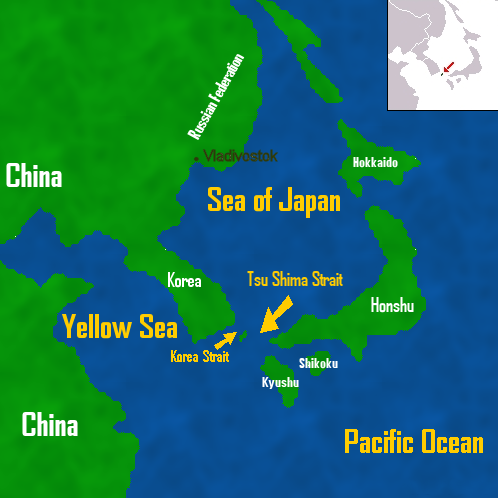
A labeled map of East Asia highlighting China, Korea, and Japan. Use it to situate the “prestige model” relationship geographically—China’s proximity to the Korean peninsula and the Japanese archipelago made sustained contact (diplomatic, commercial, and intellectual) easier to maintain over time. Source
Neighboring states adopted, adapted, or resisted Chinese practices to strengthen rule, education, and elite identity.
Cultural continuity within China (c. 1200–1450)
Chinese influence abroad mattered because core traditions at home stayed stable and widely admired.
Enduring cultural “toolkit”
Classical learning and literacy rooted in Confucian texts and commentary traditions
Chinese writing (characters) as the dominant medium for scholarship, record-keeping, and high culture
Family and lineage structures, including ancestor veneration and strong emphasis on hierarchy in social relationships
Elite cultural ideals (scholar-official refinement, calligraphy, poetry, and historically grounded moral exemplars)
Material culture and aesthetics that traveled well—especially porcelain, silk, and elite tastes in design and decor
How Chinese culture spread influence across East Asia
Chinese cultural influence was not simply “copied”; it moved through institutions, people, and incentives.
Prestige, practicality, and proximity
Geographic proximity and ongoing contact made Chinese norms familiar and accessible
Trade and diplomatic missions carried texts, luxury goods, artistic styles, and educated specialists
Education functioned as a transmission system: mastering classical Chinese opened access to widely respected knowledge and administrative techniques
Court-centred diplomacy and legitimacy
Participation in Chinese-style court ritual and formal relations with Chinese dynasties often conferred status on foreign rulers
Chinese cultural forms (titles, calendars, ceremonies, written records) served as visible markers of “civilised” rule in elite political culture
Sinicization: The process by which non-Chinese societies adopt and adapt Chinese cultural practices (language, education, rituals, institutions) while often retaining distinct local traditions.
Sinicization was typically strongest among elites, who benefited most from Chinese-linked literacy and prestige.
Regional patterns of influence and adaptation
Chinese influence was widespread, but each society selected what fit its needs and traditions.
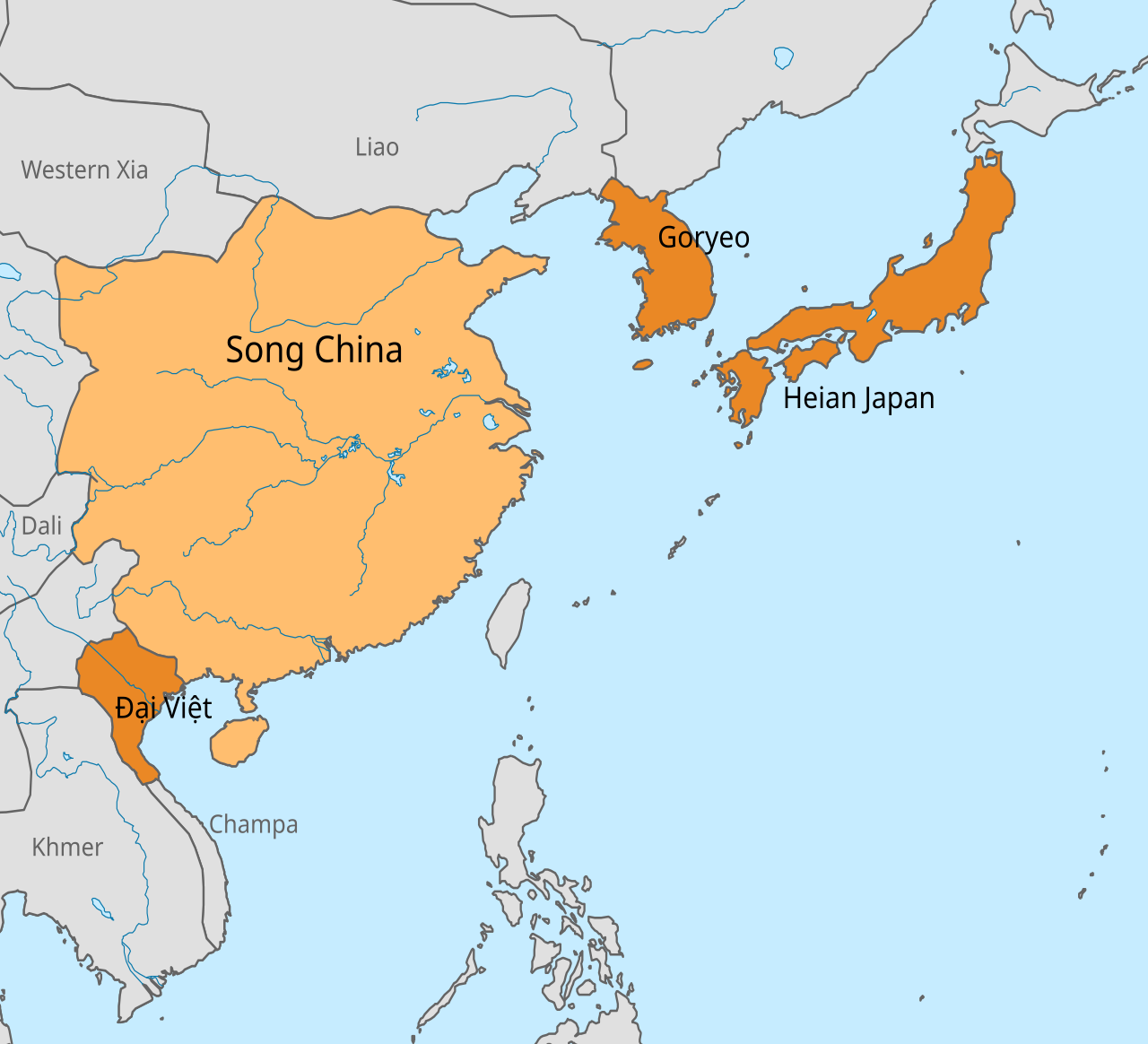
A labeled political map of East Asia around 1100 CE showing China, Korea, Japan, and Vietnam among other states. Even though it is slightly earlier than 1200–1450, it helps visualize the enduring regional layout in which Sinicization operated: multiple neighboring polities interacting with a powerful Chinese cultural center while retaining separate political identities. Source
Korea: elite learning and state culture
Korean elites used Classical Chinese for government documents and scholarship, reinforcing ties to broader East Asian intellectual life
Confucian educational values shaped elite formation (schools, text study, moral cultivation), helping states promote disciplined governance
Chinese-influenced ritual life and family norms reinforced hierarchy and social order, even as distinctly Korean identities persisted
Cultural borrowing often aimed to strengthen central authority by standardising elite norms and administrative culture
Japan: selective adoption without full bureaucratic imitation
Japanese elites employed Chinese characters (kanji) in writing and statecraft, embedding Chinese literary culture in court and temple circles
Chinese artistic and intellectual fashions influenced elite tastes, while local warrior-led politics encouraged selective rather than comprehensive institutional copying
Chinese ideas circulated widely, but Japan often preferred adaptation through existing social structures rather than replacing them with fully Chinese-style models
Vietnam: deep borrowing alongside cultural boundary-making
Vietnamese rulers drew heavily on Chinese writing, scholarship, and court practices to bolster governance and elite cohesion
Confucian learning supported state efforts to train officials and justify authority using broadly recognised moral-political language
At the same time, Vietnamese society maintained strong local customs and periodically emphasised cultural distinctiveness, showing that Chinese influence coexisted with persistent regional identity
What “influence” looked like in daily governance and culture
Language and texts: Classical Chinese enabled shared elite discourse across East Asia, especially in diplomacy and scholarship
Education and social hierarchy: Confucian-oriented learning reinforced elite status, gender and family expectations, and ideals of moral rule
Ritual and representation: Court ceremony, titles, and written law codes signaled legitimacy and order, even when locally modified
Practice Questions
(2 marks) Identify one example of Chinese cultural influence on either Korea, Japan, or Vietnam from c. 1200–1450 and explain its purpose.
1 mark: Identifies a valid example (e.g., use of Classical Chinese; Confucian education; court ritual).
1 mark: Explains a purpose (e.g., legitimacy, administration, elite training, diplomacy).
(5 marks) Compare the ways Chinese culture influenced TWO East Asian societies (excluding China) in the period c. 1200–1450, using specific evidence.
1 mark: States a defensible comparison (similarity and/or difference).
2 marks: Provides one piece of specific evidence for Society A and links it to Chinese influence.
2 marks: Provides one piece of specific evidence for Society B and links it to Chinese influence.
FAQ
They provided a ready-made scholarly script for government, diplomacy, and classics, creating a shared elite written culture across East Asia.
Mostly elites (officials, scholars, courts). Indirect effects reached wider society through law, schooling priorities, and family/ritual norms promoted by states.
Through selective adoption: keeping local languages, customs, and power structures while using Chinese forms (writing, ritual, learning) for prestige and state capacity.
Scale, wealth, and long historical tradition; access to Chinese recognition and goods elevated a ruler’s standing in regional diplomatic hierarchies.
Each society filtered Chinese models through its own politics and social structures, adopting what strengthened local rule and rejecting what threatened existing authority.