AP Syllabus focus: ‘Song China’s economy flourished due to higher productive capacity, expanding trade networks, and innovations in agriculture and manufacturing.’
Song China (c. 960–1279) experienced sustained economic dynamism as rising output supported denser populations, broader markets, and intensified regional exchange.
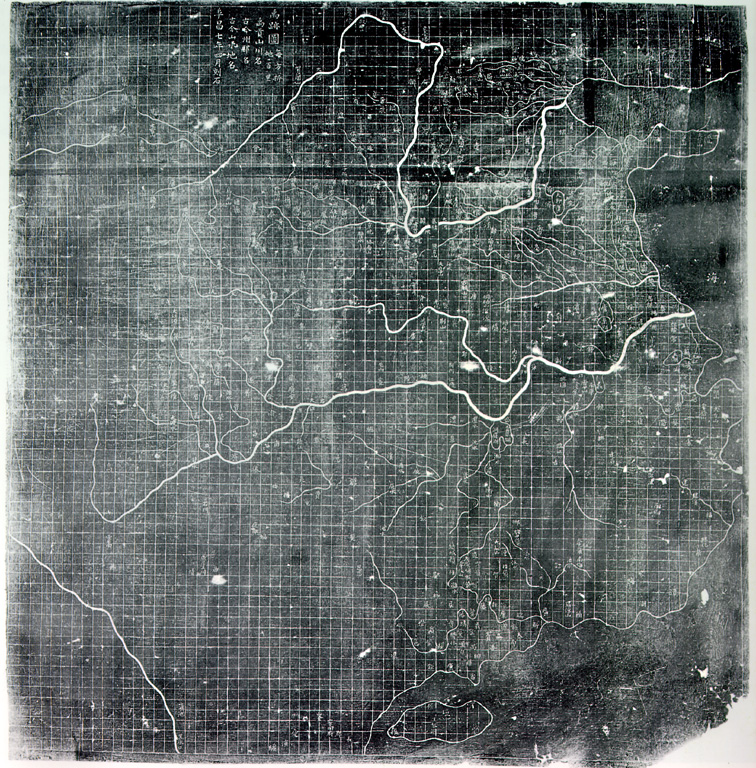
Political-territorial map of the Song dynasty, providing geographic context for where economic integration occurred across interior regions and along the coast. Seeing the empire’s scale and regional layout makes it easier to connect productivity gains and transport links to the growth of cities and interregional exchange. Source
Productivity gains and wider trade networks reinforced each other, accelerating growth across cities and countryside.
Core idea: why the Song economy expanded
Economic growth rested on three mutually reinforcing developments:
Higher productive capacity (more output per worker and per unit of land)
Expanding trade networks linking interior regions to coastal ports and foreign markets
Innovations in agriculture and manufacturing that lowered costs and increased supply
Productive capacity: The ability of an economy to produce goods and services, shaped by labour, land, capital, technology, and organisation.
Higher productive capacity
Agricultural expansion and intensification
Song-era growth depended on raising food supply to support urbanisation and a larger non-farming workforce.
Intensified cultivation increased yields through improved farming practices and more effective land use.
Cropping flexibility (including multiple harvest patterns in suitable climates) increased total annual output.
Improved water management and local infrastructure supported more stable production and reduced risk of shortfalls.
As food supplies became more reliable, labour could shift into craft production, transport, and trade-linked services.
Manufacturing and specialised production
Song manufacturing expanded in scale and regional specialisation, helping markets grow beyond local exchange.
Greater division of labour concentrated particular crafts in specific districts, improving efficiency and consistency.
Producers increasingly made goods for commercial sale rather than household consumption, strengthening interregional dependence.
Manufacturing growth encouraged demand for raw materials and transport, multiplying economic activity across supply chains.
Expanding trade networks
Internal trade: integrating the empire’s regions
Trade networks tied together diverse ecological zones and production centres, enabling regional specialisation.
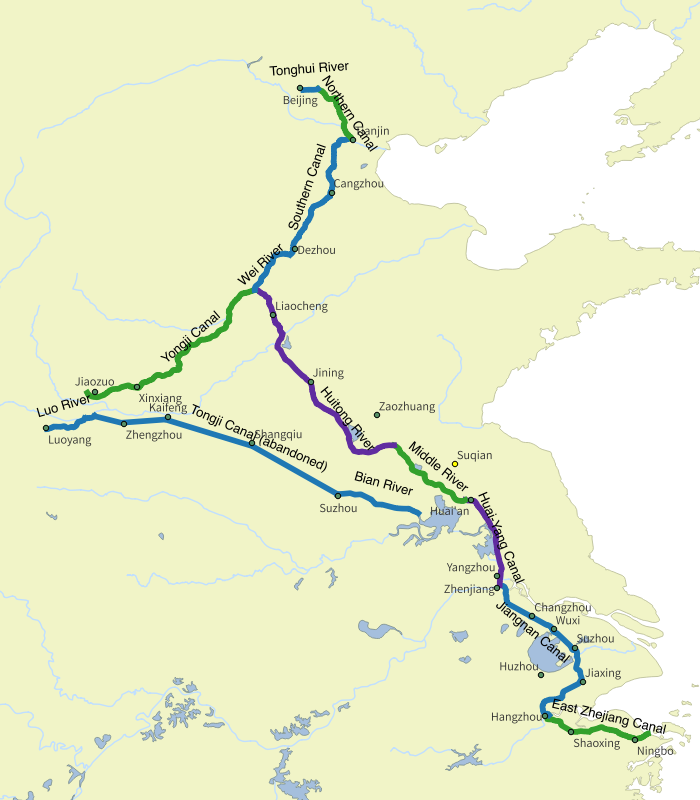
Map of the Grand Canal’s main courses, illustrating how north–south waterways linked river systems and major cities into a single transport corridor. For the Song economy, this kind of infrastructure helps explain how grain, raw materials, and manufactured goods could circulate at scale, supporting regional specialization and larger urban markets. Source
Staples and cash crops moved from surplus regions to deficit regions, smoothing local shortages and supporting population growth.
Larger, more regular flows of goods supported market towns and major cities as collection, distribution, and consumption hubs.
Increased circulation of goods deepened price awareness and competition, encouraging further productivity improvements.
Maritime and overland connections: linking Song China to Afro-Eurasia
Song participation in long-distance trade expanded both the volume and variety of exchange.
Maritime commerce through coastal ports connected China to networks across the South China Sea and beyond, stimulating demand for Chinese manufactured goods and bringing in foreign commodities.
Overland routes continued to move high-value items, linking interior markets to broader Eurasian exchange.
Long-distance trade promoted standardisation in commercial practices (weights, measures, contracts), lowering transaction frictions and making trade more predictable.
How productivity and trade produced economic growth
Economic flourishing emerged from feedback loops:
Productivity gains increased surpluses, making more goods available for market exchange.
Trade expansion widened consumer demand, incentivising farmers and artisans to raise output and specialise.
Urban growth increased concentrated demand for food, textiles, tools, and everyday goods, strengthening both agricultural intensification and manufacturing.
Wider trade and higher output increased state revenues from commercial activity, helping sustain public order and the conditions under which markets could operate.
Key evidence students should be ready to use
The Song economy flourished because output rose and markets widened simultaneously.
Growth reflected the combination of:
Higher productive capacity
Expanding trade networks
Innovations in agriculture and manufacturing
Economic change was empire-wide, visible in stronger links between rural production, craft manufacture, and regional/long-distance trade.
Practice Questions
Explain one way expanding trade networks contributed to economic growth in Song China. (2 marks)
1 mark for identifying a valid way (e.g., connected surplus and deficit regions; increased demand for goods; enabled specialisation).
1 mark for explaining how that mechanism increased output, exchange, or urban growth.
Using historical evidence, explain how higher productive capacity and trade networks together drove Song China’s economic flourishing. (5 marks)
1 mark for a clear claim linking productivity and trade.
Up to 2 marks for evidence of higher productive capacity (agricultural intensification; manufacturing expansion; specialisation).
Up to 2 marks for evidence of expanding trade networks (internal integration; maritime and/or overland links; growth of cities/markets).
Responses must explicitly connect at least one productivity factor to at least one trade effect for full credit.
FAQ
Coastal and riverine regions typically gained earlier because transport costs were lower.
Interior regions also benefited when staple flows and craft specialisation connected them to major corridors, increasing market access and encouraging regional niches.
Merchants relied on partnerships, reputation networks, and locally enforced contracts.
In some areas, merchant associations helped coordinate shipping schedules, resolve disputes, and share information about prices and dangers.
Harvest timings influenced when grain entered markets and when transport demand peaked.
Weather and monsoon patterns affected sailing windows, concentrating maritime departures and arrivals into predictable commercial seasons.
Growing cities increased demand for processed foods, textiles, household wares, and construction materials.
That demand encouraged workshops to standardise products and increase volume, reinforcing regional craft specialisation.
Key vulnerabilities included transport chokepoints, local crop failures, and disruptions to major trade corridors.
Political instability or insecurity along routes could raise costs, reduce trade volume, and weaken the productivity–trade feedback loop.