AP Syllabus focus: ‘East Asian cultural traditions included filial piety, Neo-Confucian and Buddhist influences, and Confucian gender expectations for women.’
Song-era East Asia blended long-standing Confucian family ethics with revived, more systematic Neo-Confucian thought, while continuing to engage Buddhist ideas. These traditions shaped social hierarchy, ideal behaviour, and expectations for women’s roles.
Neo-Confucianism: a revival and reworking of Confucian ethics
Neo-Confucianism developed as scholars responded to the prominence of Buddhism and Daoism by reaffirming Confucian moral order while adding new philosophical depth.
Neo-Confucianism: A Song-era intellectual movement that reasserted Confucian moral teachings and social hierarchy while incorporating metaphysical and ethical frameworks to explain the universe and proper human conduct.
Key emphases that mattered socially
Moral cultivation: self-discipline and education were portrayed as paths to becoming a virtuous person within an ordered society.
Social hierarchy as natural: proper relationships (ruler–subject, parent–child, husband–wife) were treated as stabilising foundations of good government and daily life.
Orthodoxy and social pressure: elite endorsement made Neo-Confucian standards influential beyond courts and schools, shaping community norms and family expectations.
Neo-Confucian ideas did not eliminate other beliefs; instead, they competed with and selectively absorbed concepts circulating in a culturally plural East Asia.
Filial piety: the family as the training ground for order
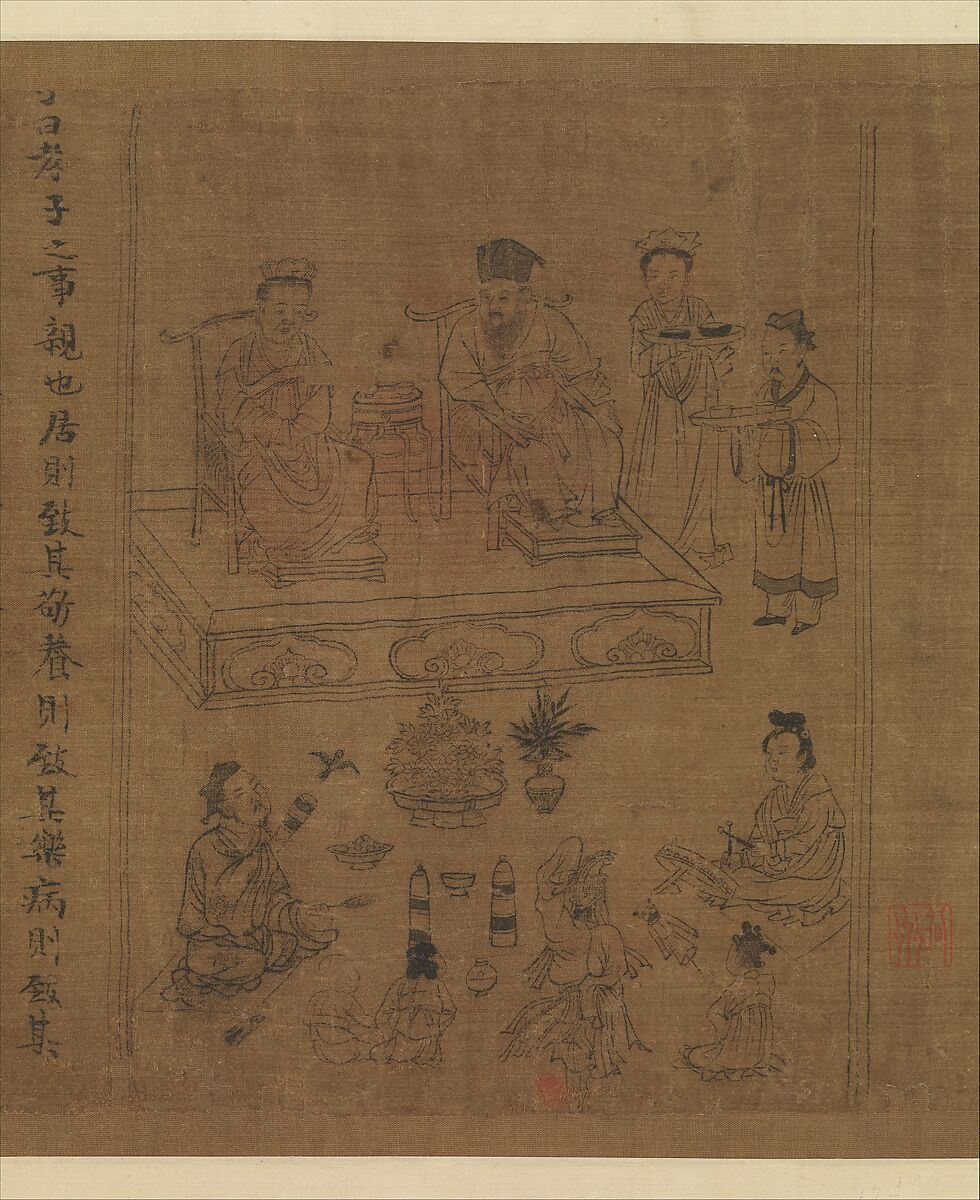
Handscroll painting panels from The Classic of Filial Piety (ca. 1085, Northern Song) visualize idealized parent–child relations and the moral pedagogy of obedience and care. As a Song-era artwork tied to a Confucian classic, it reinforces how filial behavior was presented as the foundation for household hierarchy and, by extension, social stability. Source
Filial piety linked private life to public stability by insisting that obedience and care within the household produced harmony in society at large.
Filial piety: A Confucian ethic requiring respect, obedience, and care for parents and ancestors, reinforcing family hierarchy and the authority of elders.
How filial piety structured daily life
Patriarchal household authority: elders (especially senior men) held decision-making power over marriage choices, property management, and ritual obligations.
Ancestor veneration: remembrance and ritual reinforced lineage identity and expectations of loyalty to family reputation.
Intergenerational duty: children were expected to provide labour, support, and honour, with moral judgement tied to family performance rather than individual preference.
Because filial piety emphasised continuity, it strengthened the social importance of marriage, heirs, and lineage survival, intensifying scrutiny of women’s roles within the household.
Confucian gender expectations: hierarchy within marriage and the household
Confucian norms framed gender relations as complementary but unequal, defining virtue through obedience, chastity, and devotion to household responsibilities.
Core expectations for women
Domestic centrality: women were expected to manage the inner household—childrearing, textile work, food preparation, and family ritual support—while men represented the family publicly.
Obedience as virtue: ideal femininity stressed deference to fathers, husbands, and senior kin, aligning personal morality with household hierarchy.
Sexual fidelity and reputation: female chastity became closely tied to family honour, encouraging surveillance of women’s movement, speech, and social contact.
Social consequences
Stratified application: elite women often faced stronger behavioural constraints because lineage reputation and inheritance politics were more visible, while poorer families might prioritise labour needs over strict seclusion.
Marriage as alliance: women’s marriages frequently served lineage strategy, linking households through dowry exchange and kin networks.
Cultural reinforcement through customs: practices that emphasised modesty and control of women’s bodies and mobility could spread as markers of respectability, especially among status-conscious families.
These gender norms were not merely “private” expectations; they helped define what a stable community looked like, making household order a moral and social priority.
Buddhist influence alongside Confucian and Neo-Confucian norms
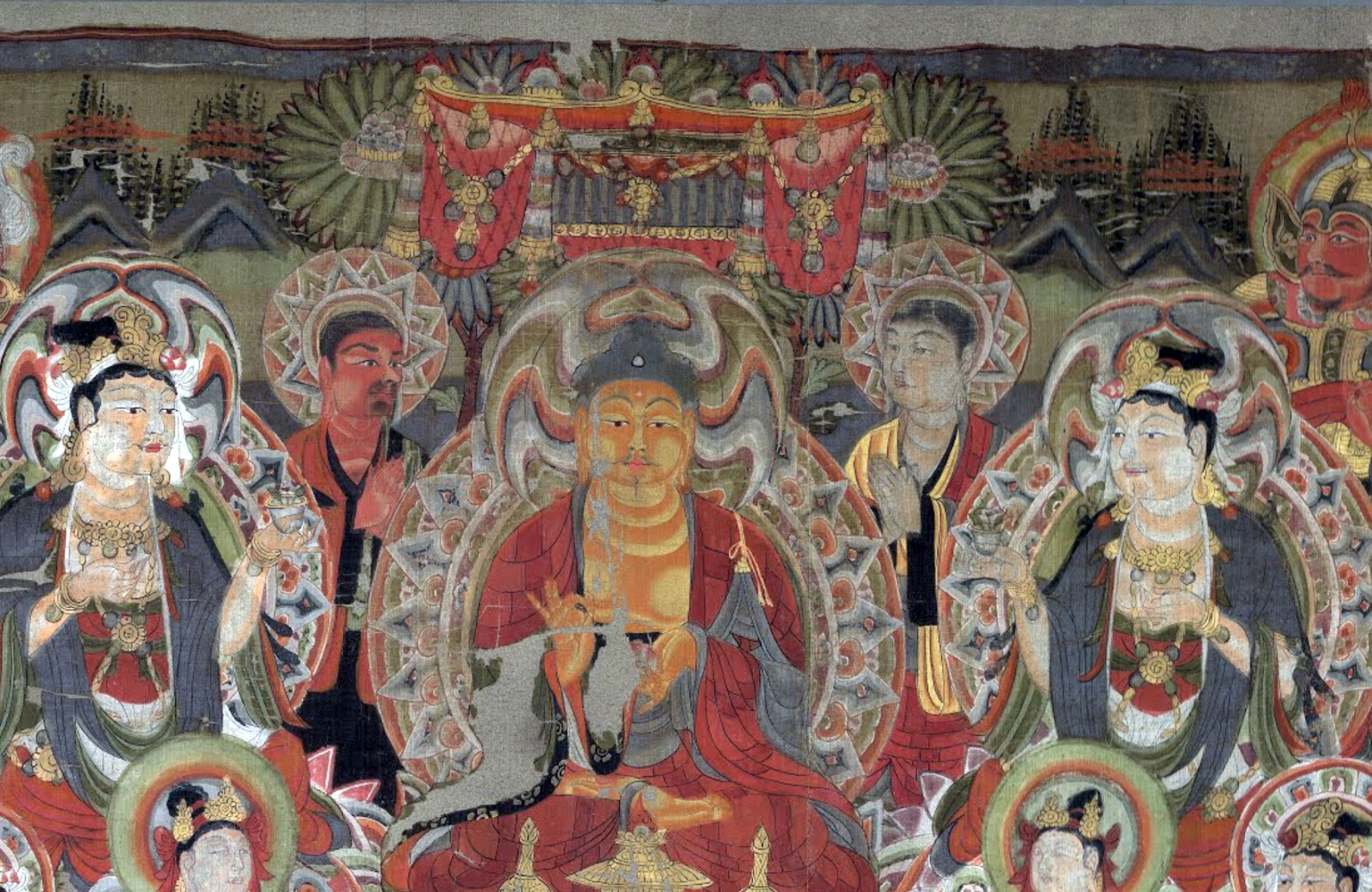
This Northern Song-period silk painting from Dunhuang pairs a central Buddhist assembly (Buddha, monks, bodhisattvas, and guardian figures) with narrative scenes drawn from a popular sutra. The composition helps students see how Buddhist moral teaching was communicated visually and how Buddhist devotional life could operate alongside Confucian household norms. Source
Buddhism remained significant across East Asia, offering alternative sources of meaning—monastic communities, teachings on compassion, and visions of salvation—that sometimes challenged strict family-centred ethics.
Points of tension and accommodation
Monastic life vs. family duty: celibacy and withdrawal could conflict with filial expectations to marry and continue the lineage.
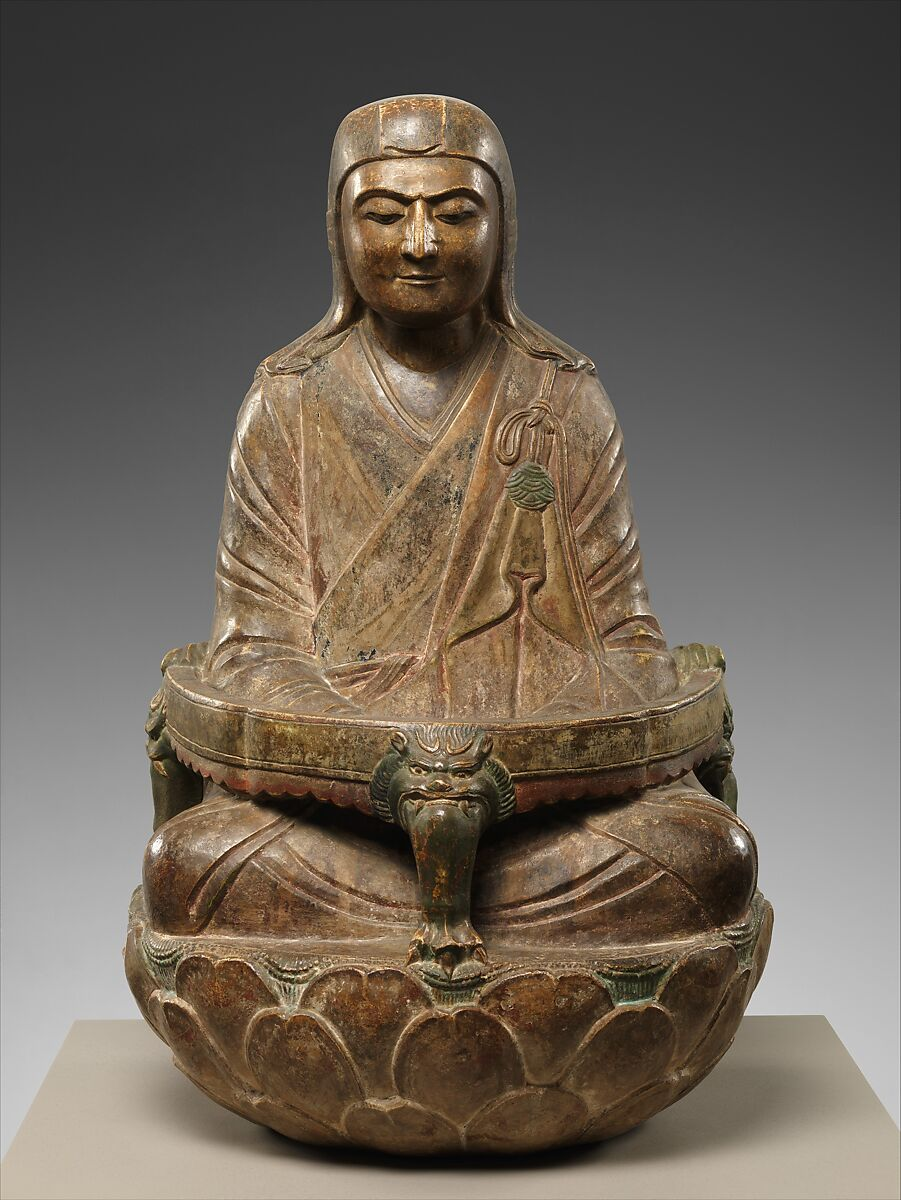
This late 11th–12th century (Northern Song) sculpture depicts the monk Sengqie, revered as an incarnation of Guanyin in Song China. It gives a concrete example of Buddhist monastic veneration and public religious culture, helping explain why renunciation and celibacy could sit uneasily beside Confucian expectations to marry and extend the lineage. Source
Merit and compassion: Buddhist moral language could broaden ethical concern beyond kin, even as many laypeople practised Buddhism within family ritual life.
Everyday blending: families might participate in Buddhist rites while still judging social behaviour through Confucian/Neo-Confucian standards, producing a layered moral world rather than a single uniform code.
In practice, East Asian cultural traditions in this period often combined filial piety, Neo-Confucian moral hierarchy, and ongoing Buddhist presence, with especially strong effects on how communities defined proper womanhood and family order.
Practice Questions
Explain one way Neo-Confucian ideas reinforced Confucian gender expectations for women in East Asia (2 marks).
1 mark: Identifies a relevant Neo-Confucian emphasis (e.g., hierarchy in key relationships, moral cultivation, social order rooted in the family).
1 mark: Explains a linked gender expectation (e.g., obedience to husband/elders, domestic roles, chastity as family honour).
“Family ethics were the foundation of social stability in East Asia c. 1200–1450.” Assess this view using evidence about filial piety, Neo-Confucian influences, and Buddhist influences (6 marks).
1–2 marks: Describes filial piety and connects it to hierarchy/social order.
1–2 marks: Uses Neo-Confucian influence as evidence (e.g., reinforced moral hierarchy, shaped ideals of behaviour, strengthened gender norms).
1–2 marks: Incorporates Buddhist influence with a clear link (e.g., tension with monastic withdrawal vs family duty, or accommodation through lay practice).
To reach 5–6 marks: Sustained judgement (agreement/qualification) with accurate, connected evidence across all three elements.
FAQ
$li$ (principle) and $qi$ (material force) were used to explain how a moral order could be universal yet expressed differently in the world.
It mattered because ethics were presented as grounded in the structure of reality, not just tradition.
Lineages could fund schools, compile genealogies, and sponsor ancestral rites.
These activities rewarded conformity, elevated elder authority, and made family reputation a public concern.
Yes, often through seniority.
Older women (e.g., mothers-in-law) could exercise substantial household power, especially in managing younger women and domestic labour.
Many families supported monasteries, commissioned rituals, or pursued merit-making while remaining household-based.
This allowed spiritual goals to be pursued through family-sponsored acts rather than personal withdrawal.
No. Local law, class structure, and inherited customs shaped how ideals were applied.
Shared vocabulary of hierarchy existed, but everyday enforcement varied by region and community.