CIE Syllabus focus:
'Understand the principles of just in time management of inventory and evaluate related information for business decision-making.'
Just in time inventory management reduces inventory held while aiming to keep production and sales running smoothly. For CIE Accounting, you need to understand its principles, advantages, risks, and when it supports sound business decisions.
Meaning and purpose
Just in time (JIT) inventory management is a system that keeps inventory levels very low by arranging for materials or goods to arrive only when they are needed.
Just in time inventory management: A method of controlling inventory so that materials and goods are received shortly before they are required for production or sale, minimizing stock held.
The main aim of JIT is to avoid holding unnecessary inventory. Instead of buying large quantities and storing them for long periods, a business orders smaller quantities more frequently. This can reduce waste and save money, but it also increases the importance of good planning.
JIT is based on a pull approach.
This means inventory is ordered in response to expected or actual demand, rather than building up large stocks in advance. The system therefore depends on accurate information and smooth operations.
Core principles
The main principles of JIT include:
Low inventory levels of raw materials, goods in production, and finished goods
Frequent small deliveries instead of occasional large deliveries
Reliable suppliers who can deliver on time and at the right quality
Short lead times, so inventory arrives quickly after being ordered
Accurate production scheduling to match demand closely
High quality standards, because poor-quality materials can stop production when no spare inventory is available
Efficient use of storage space, since little inventory is kept on site
A business using JIT is trying to reduce waste in many forms, including excess storage, unnecessary handling, damaged inventory, and obsolete goods.
How JIT operates in practice
A JIT system works best when there is close coordination between purchasing, production, sales, and suppliers.
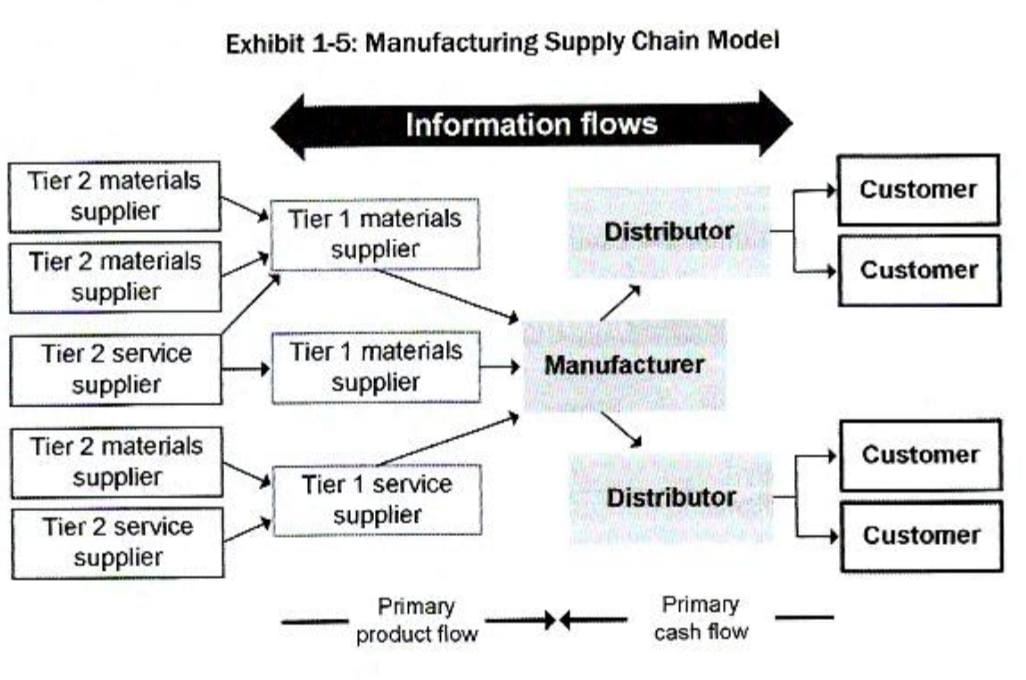
A simplified manufacturing supply chain showing the flow from sourcing raw materials through production and distribution to the final customer/retail stage. It helps illustrate why JIT depends on smooth, well-timed links between each stage, because delays or quality issues upstream quickly affect production and sales downstream. Source
Information must move quickly and accurately through the business.
In practice, JIT often involves the following process:
demand is monitored carefully
production is scheduled to meet that demand
orders are placed in small quantities
suppliers deliver at the required time
materials move quickly into production or sale
inventory is not stored for long periods
Because inventory levels are low, problems become visible faster. If materials are defective or late, the effect is noticed immediately. This can help management identify weaknesses in suppliers or internal processes, but it also means there is very little protection against disruption.
Advantages of JIT
JIT can provide important benefits for business performance and decision-making.
One major advantage is lower inventory holding cost. When less inventory is stored, the business spends less on:
storage space
insurance
security
handling
deterioration and damage
JIT can also improve cash flow because less money is tied up in inventory. Funds can then be used for other purposes, such as paying liabilities, investing in equipment, or supporting expansion.
Another benefit is reduced risk of obsolescence. This is especially important for goods that may go out of date, become unfashionable, or lose value quickly. Holding less inventory lowers the chance of being left with unsold items.
JIT may also support better efficiency and quality control. Because materials arrive in smaller batches and are used quickly, faults may be spotted sooner. This encourages careful supplier selection and better internal control.
For management, these benefits can make JIT attractive where the business wants to operate with leaner costs and less waste.
Limitations and risks of JIT
Despite its benefits, JIT is not suitable for every business.
The most serious risk is running out of inventory. If a supplier fails to deliver on time, production may stop or customer orders may be delayed. Since little extra inventory is held, even a small problem can have a large effect.
A JIT system also creates greater dependence on suppliers. The business must trust suppliers to deliver:
the correct quantity
on the correct date
at the correct quality standard
Transport delays, strikes, weather problems, or supply shortages may therefore cause serious disruption.
Frequent ordering may also increase some costs, such as administration, transport, and receiving costs.
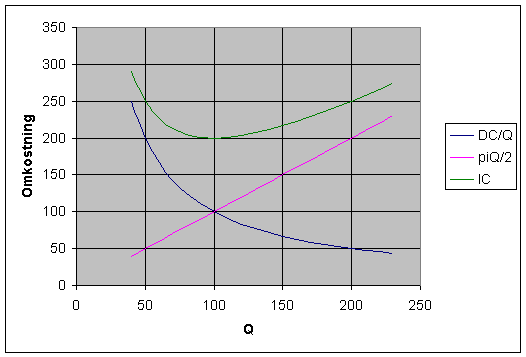
A standard inventory cost trade-off diagram showing how holding costs typically rise with larger order quantities, while ordering costs fall, producing a U-shaped total cost curve. It provides a visual rationale for evaluating whether the extra ordering/administration costs under JIT are outweighed by savings from reduced holding costs. Source
A business must decide whether these extra costs are outweighed by the savings in holding inventory.
JIT is less effective where demand is unpredictable. If customer demand rises suddenly, the business may not be able to obtain inventory fast enough. It may also be unsuitable when suppliers are far away, lead times are long, or supply chains are unstable.
Evaluating information for business decision-making
The syllabus requires not only knowledge of JIT principles, but also the ability to evaluate related information before deciding whether JIT should be used.
Information managers should assess
Management should consider:
supplier performance records such as reliability, delivery speed, and quality
lead times and the likelihood of delays
demand patterns, including whether sales are stable or unpredictable
holding cost data, to measure the savings from lower inventory levels
ordering and delivery costs, which may rise under JIT
risk of production stoppages and the cost of lost output or lost sales
nature of the inventory, such as whether it is perishable, valuable, or easily outdated
internal systems, including scheduling, communication, and inventory monitoring
A good decision compares the expected savings with the possible risks. JIT may appear attractive because average inventory falls, but this alone is not enough. Management must judge whether the business can maintain continuity of supply.
When JIT is more likely to be appropriate
JIT is more likely to work well when:
demand is reasonably stable
suppliers are dependable and nearby
quality standards are high
the business has strong planning systems
inventory is expensive to store or likely to become obsolete
It is less likely to be suitable when:
demand changes sharply
supply is uncertain
transport problems are common
delays would seriously damage production or customer service
the business needs buffer inventory for protection
Practice Questions
State two principles of just in time inventory management. [2]
1 mark for each valid principle stated, up to 2 marks.
Accept any two of:
inventory is kept at low levels
materials are received only when needed
small quantities are ordered frequently
strong supplier reliability is required
production is closely matched to demand
high quality is essential
Evaluate whether a business should adopt just in time inventory management. [6]
1 mark for each valid advantage explained, up to 2 marks:
lower storage/insurance/handling costs
less cash tied up in inventory
less risk of obsolete or damaged inventory
improved efficiency or faster detection of problems
1 mark for each valid limitation explained, up to 2 marks:
risk of inventory shortages
dependence on supplier reliability
possible production delays
higher ordering/transport/administration costs
unsuitable with unstable demand
1 mark for relevant evaluation, up to 2 marks:
decision depends on supplier reliability, lead times, and demand stability
should compare savings in holding costs with risks and disruption costs
justified recommendation consistent with points made
FAQ
Technology improves speed and accuracy, which are essential in JIT.
Useful tools include:
barcode or RFID systems for real-time inventory tracking
automated reorder systems
integrated accounting and purchasing software
shared supplier portals for delivery scheduling
Without reliable data, JIT can fail because orders may be late, inaccurate, or based on outdated demand information.
Yes. Service businesses can use JIT when they hold materials or supplies.
Examples include:
restaurants ordering fresh ingredients frequently
hospitals controlling medical supplies carefully
repair businesses receiving parts only for booked jobs
The challenge is that service demand can change suddenly, so service businesses may need very accurate scheduling or limited emergency reserves.
JIT often requires a more cooperative supplier relationship than a traditional buying system.
Common changes include:
longer-term agreements
agreed delivery schedules
tighter quality standards
faster communication
shared demand forecasts
A business may also reduce the number of suppliers so it can build stronger, more dependable partnerships.
A business can still protect itself while keeping the main JIT approach.
Possible safeguards include:
approved backup suppliers
emergency transport options
limited reserve inventory of critical items
regular supplier performance reviews
contingency procedures for sudden demand increases
These measures do not remove risk completely, but they can reduce the chance of serious disruption.
Small businesses may face several disadvantages:
less bargaining power with suppliers
higher delivery charges on small orders
fewer staff to manage scheduling closely
weaker technology systems
greater vulnerability if one supplier fails
A small business may still use JIT, but it often needs careful planning and dependable local suppliers to make the system practical.