

Edexcel Syllabus focus:
'Know how genetics, diet, age, gender, high blood pressure, smoking and inactivity can increase cardiovascular disease risk.'
Cardiovascular disease risk is shaped by both inherited characteristics and lifestyle choices. These factors often interact, changing how likely a person is to develop damage to the heart or blood vessels.
Understanding cardiovascular risk
Cardiovascular disease (CVD) covers conditions affecting the heart and blood vessels, including coronary heart disease and stroke. A risk factor is any feature that increases the chance of developing disease, but it does not mean disease is certain.
Cardiovascular disease (CVD): A group of diseases affecting the heart and blood vessels.
Risk increases when factors damage artery walls, encourage fatty deposits to form, or make the heart work harder over long periods.
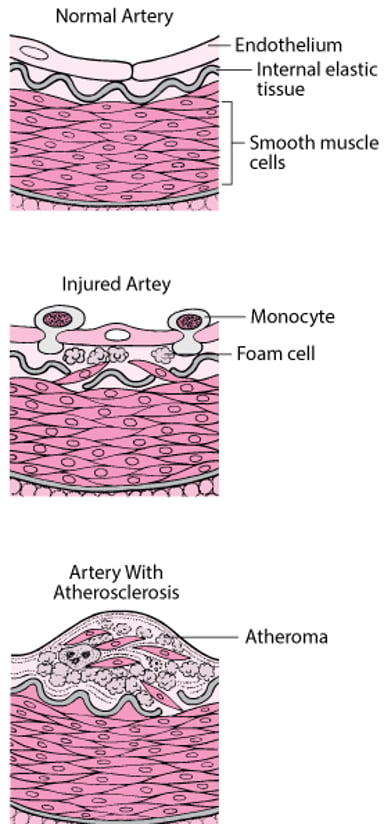
This diagram shows how atherosclerosis develops from an initially intact endothelium to an injured artery where immune cells enter the vessel wall and form foam cells, eventually producing a plaque (atheroma). The growing plaque thickens the arterial wall and narrows the lumen, reducing blood flow and increasing the risk of blockage. Source
Biological risk factors
Genetics
Some people inherit gene variants that increase CVD risk. These may affect:
blood cholesterol levels
blood pressure regulation
the tendency of blood to clot
how easily artery walls become damaged
This means a person may be more likely to develop cardiovascular disease even if they do not show symptoms when young. A family history of CVD can therefore suggest increased risk. However, family members often share diets and habits as well as genes, so genetics increases susceptibility rather than guaranteeing disease.
Age
CVD risk usually rises with age. This is partly because artery walls experience wear and tear over many years. Older people have also had longer exposure to other risks such as poor diet, smoking, or high blood pressure.
As people age:
arteries may become less elastic
damage to the endothelium can accumulate
the chances of developing raised blood pressure increase
The longer these changes continue, the greater the chance of serious cardiovascular problems.
Gender
In this topic, gender is usually discussed as biological sex differences. Men often have a higher risk of CVD earlier in life than women. Before menopause, women may have some protection because estrogen tends to support a more favorable blood lipid profile and may help maintain blood vessel health.
After menopause, this protective effect falls, so CVD risk in women increases. This does not mean all men are high risk or all women are low risk; it means sex is one factor that influences overall probability.
Lifestyle risk factors
Diet
A poor diet can increase CVD risk in several ways:
Diets high in saturated fat can raise LDL cholesterol, increasing the chance of fatty deposits in arteries.
Too much salt can raise blood pressure.
Frequent intake of energy-dense foods can promote weight gain, which is often linked with poorer cardiovascular health.
Low intake of fruit, vegetables, and fiber may reduce protective effects in the diet.
Long-term diet patterns matter more than a single meal. The main effect is that poor diet can gradually create conditions that damage blood vessels and increase strain on the heart.
Smoking
Smoking is a major modifiable risk factor. Chemicals in tobacco smoke damage the endothelium, the thin lining of blood vessels. This makes it easier for fatty deposits to build up.
Smoking also increases risk because:
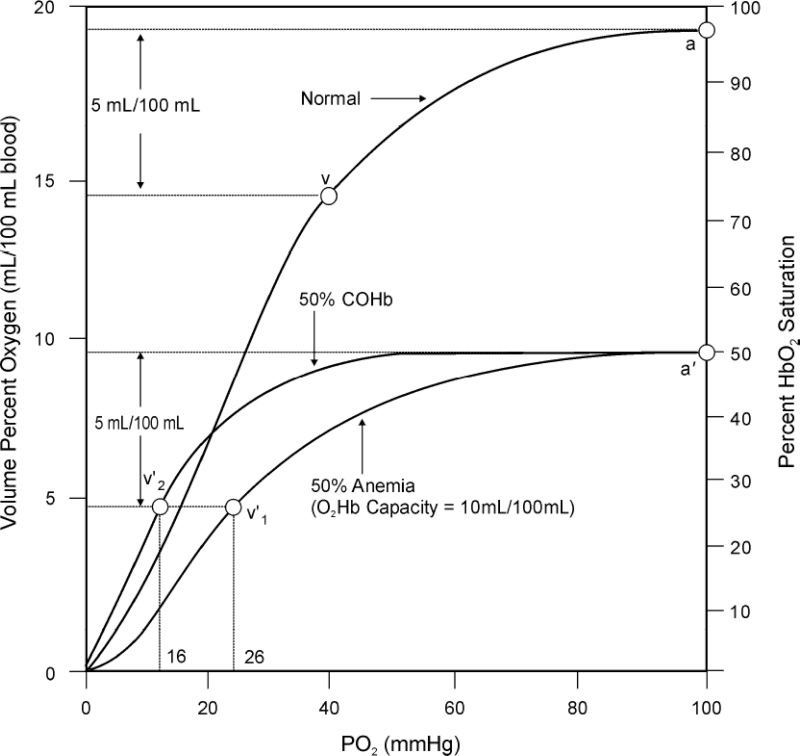
This graph compares normal oxygen–hemoglobin behavior with blood containing high carboxyhemoglobin (COHb), showing a marked reduction in oxygen content for a given . It helps explain why carbon monoxide exposure from smoking lowers the blood’s oxygen-carrying capacity, forcing the cardiovascular system to compensate by increasing workload. Source
nicotine raises heart rate and can raise blood pressure
carbon monoxide binds to hemoglobin, reducing oxygen transport
the heart may need to work harder to meet the body’s oxygen demands
blood becomes more likely to clot
These effects make blockage of blood vessels more likely and increase the chance of heart attack or stroke.
Inactivity
A lack of regular exercise, or inactivity, increases CVD risk. Physically active people usually have better cardiovascular fitness and healthier blood vessels. By contrast, inactivity is associated with:
poorer control of body mass
higher blood pressure
less favorable blood lipid levels
reduced efficiency of the heart and circulation
An inactive lifestyle therefore increases long-term strain on the cardiovascular system, especially when combined with other risk factors such as poor diet.
High blood pressure
High blood pressure is a risk factor in its own right and may also result from other factors such as age, diet, inactivity, and inherited tendency.
Hypertension: Persistently raised arterial blood pressure.
When blood pressure stays high, blood pushes against artery walls with greater force. This can damage the endothelium and make fatty deposits more likely to form. The heart must also generate more force to pump blood, which increases its workload.
Over time, hypertension can:
increase damage to arteries
make the heart work less efficiently
raise the chance of cardiovascular disease developing
How risk factors interact
Risk factors rarely act alone. A person who smokes, eats a poor diet, and is physically inactive may also develop high blood pressure, so their overall risk becomes much greater than from one factor by itself.
It is useful to divide risk factors into two groups:
non-modifiable factors: genetics, age, and gender
modifiable factors: diet, smoking, inactivity, and some causes of high blood pressure
Even though non-modifiable factors cannot be changed, they help identify people who may need earlier monitoring or stronger lifestyle management. Modifiable factors are important because changing them can reduce overall cardiovascular risk. Assessing risk therefore requires these factors to be considered together rather than one at a time.
Practice Questions
State three factors that can increase the risk of cardiovascular disease. (3)
1 mark for each correct factor, up to a maximum of 3
Accept any three from:
genetics
diet
age
gender
high blood pressure
smoking
inactivity
Explain how smoking and high blood pressure increase the risk of cardiovascular disease. (6)
Smoking damages the endothelium / artery lining (1)
This makes fatty deposits / plaques more likely to form (1)
Smoking increases blood clotting tendency / chance of vessel blockage (1)
Nicotine raises heart rate and/or blood pressure, increasing strain on the heart (1)
High blood pressure damages artery walls because blood exerts greater force on them (1)
High blood pressure increases the workload of the heart / makes the heart pump harder (1)
Accept equivalent wording.
FAQ
If a parent or sibling develops cardiovascular disease at a relatively young age, there has been less time for aging alone to explain the disease.
That can suggest a stronger inherited tendency, such as genes affecting cholesterol handling or blood pressure control. It is still not proof of future disease, but it is a useful warning sign.
Yes. Repeated exposure to secondhand smoke can still affect blood vessels and the cardiovascular system.
It may damage the endothelium, increase clotting tendency, and place extra strain on the heart over time. The risk is usually lower than for active smokers, but it is not zero, especially with frequent exposure at home or work.
Yes. Good fitness lowers risk, but it does not completely remove inherited susceptibility.
For example, some people inherit a strong tendency toward very high LDL cholesterol or high blood pressure. A physically active lifestyle is still beneficial, but people with a strong family history should not assume that exercise alone cancels out genetic risk.
It can. A person may meet exercise targets but still spend most of the day sitting, and that pattern may still be harmful.
Breaking up long sedentary periods with light movement can help support circulation and blood pressure control. So both total exercise and the amount of uninterrupted sitting are relevant when thinking about inactivity.
Blood pressure changes during the day and can be affected by stress, caffeine, recent activity, and even being in a medical setting.
Because of this, one reading may not show a person’s usual blood pressure. Repeated measurements, especially at home or with ambulatory monitoring, give a more reliable picture of whether hypertension is truly present.
