

IB Syllabus focus: 'Micronutrients play specific roles in energy transfer and tissue synthesis. Iron supports haemoglobin and myoglobin in oxygen transport, while calcium supports bone, connective tissue and muscle contraction.'
Micronutrients do not provide energy directly, but they are essential for the processes that allow oxygen delivery, tissue formation, and repeated muscle contractions during exercise and recovery.
Why these micronutrients matter
Although needed in small amounts, micronutrients are crucial because they support larger physiological systems. In this subsubtopic, the key examples are iron and calcium. They do not act as major fuel sources, but they help make oxygen delivery, tissue maintenance, and force production possible.
For IB SEHS, the important idea is that performance depends not only on having enough carbohydrate, fat, or protein, but also on having the micronutrients that allow those fuels to be used effectively. Iron is closely linked to oxygen transport and energy transfer, while calcium is closely linked to tissue synthesis, structural support, and muscle contraction.
Iron and oxygen transport
Iron is essential for moving oxygen through the body. A large proportion of body iron is found in hemoglobin, the protein in red blood cells that carries oxygen. In the lungs, oxygen binds to hemoglobin. In working tissues, hemoglobin releases oxygen so that active muscles can continue aerobic metabolism.
Iron is also a key part of myoglobin, a protein found mainly inside muscle fibers. Myoglobin stores a small amount of oxygen within muscle and helps move oxygen from the blood to the mitochondria. This is especially useful when muscles need a rapid local supply of oxygen during exercise.
Because both hemoglobin and myoglobin depend on iron, iron contributes at two different points in the oxygen pathway:
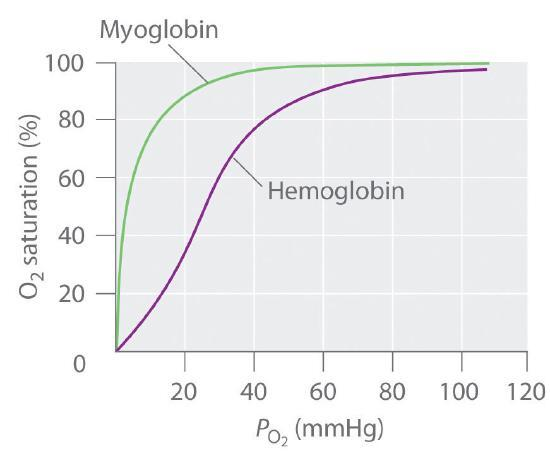
Oxygen–binding curves for hemoglobin and myoglobin showing percent O2 saturation versus (mmHg). The graph highlights hemoglobin’s cooperative binding (S‑shaped curve) for efficient loading in the lungs and unloading in tissues, versus myoglobin’s higher affinity (left‑shifted curve) that supports intramuscular O2 storage and transfer to mitochondria. Source
transport of oxygen in the blood
short-term storage and movement of oxygen inside muscle
This dual role means iron supports both whole-body oxygen delivery and oxygen availability at the exact site where aerobic metabolism occurs. If iron availability is reduced, the body may be less effective at transporting oxygen to active tissues and less effective at making that oxygen available inside the muscle itself.
Iron and energy transfer
Iron also supports energy transfer because it is part of proteins involved in aerobic ATP production. These proteins help transfer electrons during metabolic reactions, allowing the body to use oxygen to release energy from nutrients. In other words, iron helps with both getting oxygen to the muscle and using that oxygen once it arrives.
This is why iron is strongly linked with sustained exercise performance. Even if an athlete has enough fuel stored, aerobic activity will be limited if oxygen delivery and oxygen use are less efficient. A common mistake is to think of iron only as a blood-related nutrient; in reality, it also supports the cellular processes that help produce usable energy.
Calcium in bone and connective tissue
Calcium is best known for its role in bone, but the syllabus statement is broader than that. Calcium supports bone, connective tissue, and muscle contraction, so it is important for both structure and movement.
Most body calcium is stored in the skeleton.
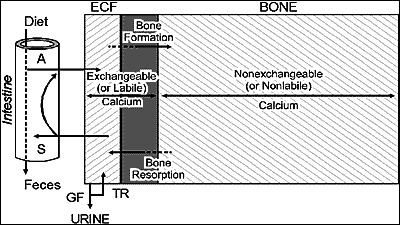
Schematic of calcium and skeletal metabolism illustrating how calcium moves between diet (intestinal absorption), extracellular fluid, and bone via formation and resorption, with additional regulation through renal filtration and reabsorption. The figure emphasizes that bone is not just structural tissue but also a regulated calcium reservoir that is continually remodeled. Source
In physically active people, bone must tolerate impact, resist bending, and handle repeated muscular pull. Calcium supports the mineralized structure of bone, helping the body build, maintain, and remodel tissue that can cope with training loads.
Calcium also supports tissue synthesis in structures that help stabilize and transmit force. Connective tissue includes tissues such as tendons and ligaments. These tissues connect parts of the musculoskeletal system and help transfer force between muscle and bone. Adequate calcium supports the normal function of cells involved in maintaining and repairing these tissues, which is important when the body is adapting to regular training.
In sport, this structural role matters because training places mechanical stress on the musculoskeletal system. Bone and connective tissue must recover from loading and adapt over time. Calcium supports tissues that allow force to be produced safely and transmitted efficiently from muscle to skeleton.
Calcium and muscle contraction
Calcium has a direct role in muscle contraction. When a muscle fiber is stimulated, calcium is released inside the cell. It binds to regulatory proteins, allowing actin and myosin to interact and produce force.
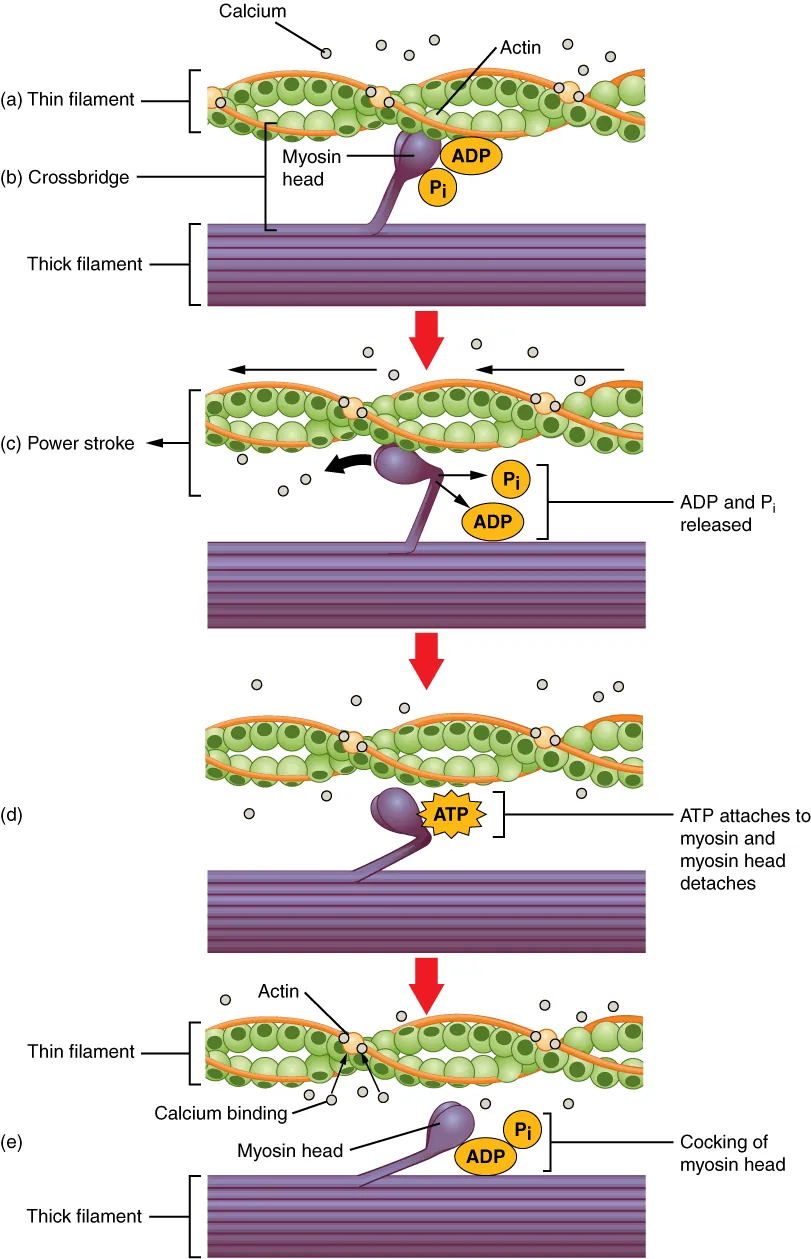
Diagram of the cross‑bridge cycle in skeletal muscle, showing how calcium exposure permits myosin to bind actin and generate a power stroke, and how ATP binding resets the myosin head. This visual links the calcium signal to the mechanical steps that produce force and to the ongoing ATP demand during repeated contractions. Source
Without this calcium signal, the interactions needed for contraction cannot occur normally.
Calcium is therefore not just a structural nutrient. It is part of the immediate process that turns a nerve signal into movement. After contraction, calcium is moved away again so the muscle can relax. This repeated release and reuptake of calcium allows muscles to contract and relax in a controlled way during exercise.
Because of this role, calcium is important in all physical activity, from low-intensity posture control to repeated powerful contractions. It helps determine whether muscle action is coordinated, efficient, and mechanically effective.
Distinguishing iron from calcium
A common IB SEHS error is to group micronutrients together without identifying their specific functions. In this subsubtopic, the roles should be kept distinct:
Iron supports hemoglobin and myoglobin, so it is central to oxygen transport and aerobic energy transfer.
Calcium supports bone and connective tissue, and it directly enables muscle contraction.
The functions are different, but they interact in practice. Strong bones and effective contractions are not enough if oxygen delivery is limited, and excellent oxygen transport is not enough if tissues cannot tolerate load or generate force properly.
These roles are complementary. Iron helps supply and use oxygen for ongoing activity, while calcium helps maintain the tissues that produce movement and enables the contraction itself. In exercise, efficient performance depends on both functions operating together rather than on either micronutrient acting alone.
Practice Questions
Identify two ways iron supports exercise performance.
1 mark for stating that iron is part of hemoglobin and helps transport oxygen in the blood.
1 mark for stating that iron is part of myoglobin and helps store or move oxygen within muscle.
Accept aerobic energy transfer as an alternative valid point.
Explain how calcium supports physical activity through its roles in bone, connective tissue, and muscle contraction.
1 mark for stating that calcium supports the structure or mineralization of bone.
1 mark for explaining that bone supported by calcium can better tolerate impact, loading, or muscular pull during activity.
1 mark for stating that calcium supports connective tissue maintenance, repair, or tissue synthesis.
1 mark for linking connective tissue to stability or force transmission between muscle and bone.
1 mark for stating that calcium is released inside the muscle cell during contraction.
1 mark for explaining that calcium allows actin and myosin interaction or enables force production.
FAQ
Heme iron comes mainly from animal tissues and is usually absorbed more efficiently by the body.
Non-heme iron comes mainly from plant foods and fortified foods. Its absorption is more affected by what else is eaten in the same meal, so athletes relying mostly on plant sources often need to pay closer attention to overall iron intake and meal composition.
Iron absorption can be affected by other parts of the diet.
Increase absorption: vitamin C-rich foods, meat, fish, and poultry eaten in the same meal
Decrease absorption: tea, coffee, phytates in some grains and legumes, and large calcium intakes consumed at the same time
This matters most for non-heme iron, which is more sensitive to meal composition than heme iron.
Several factors can increase iron risk in endurance sports:
high training volume
repeated foot-strike and red blood cell damage
menstrual blood loss
growth in adolescents
restrictive eating patterns
Because iron affects oxygen transport and aerobic energy use, small reductions in iron status can have a noticeable effect on training quality and perceived effort.
Muscle contraction depends on tightly regulated calcium movement inside muscle cells, not simply on how much calcium was eaten in the previous hour.
Blood calcium is kept within a narrow range by hormones and body regulation. Because of that, acute extra calcium intake does not usually produce an immediate boost in muscle function. Long-term adequate intake is more important for bone support, tissue health, and normal contraction processes.
Adolescence is a major period for building peak bone mass. During this stage, the body is growing quickly and adapting to training loads at the same time.
If calcium intake is too low during these years, bone development may be less than optimal. For young athletes, that can matter both immediately and later, because stronger bone development during adolescence helps create a better structural base for future training and long-term skeletal health.
