

IB Syllabus focus: 'Sodium and potassium are essential electrolytes for water balance and proper muscle and nerve function. Vitamins support tissue synthesis and regulate metabolic reactions that release energy.'
Electrolytes and vitamins do not supply energy themselves, but they are essential for fluid control, neuromuscular function, tissue repair, and the enzyme-driven reactions that allow energy to be released from food.
Electrolytes in body fluids and metabolism
An electrolyte is a mineral that forms electrically charged particles when dissolved in body fluids.
Electrolyte: A mineral that dissociates into ions in solution and helps regulate fluid balance, electrical activity, and cellular function.
Electrolytes are distributed unequally between the intracellular fluid inside cells and the extracellular fluid outside cells. This uneven distribution is essential because water moves in response to ion concentration, and excitable tissues depend on electrical gradients across cell membranes. Sodium is the main positive ion in extracellular fluid, while potassium is the main positive ion in intracellular fluid.
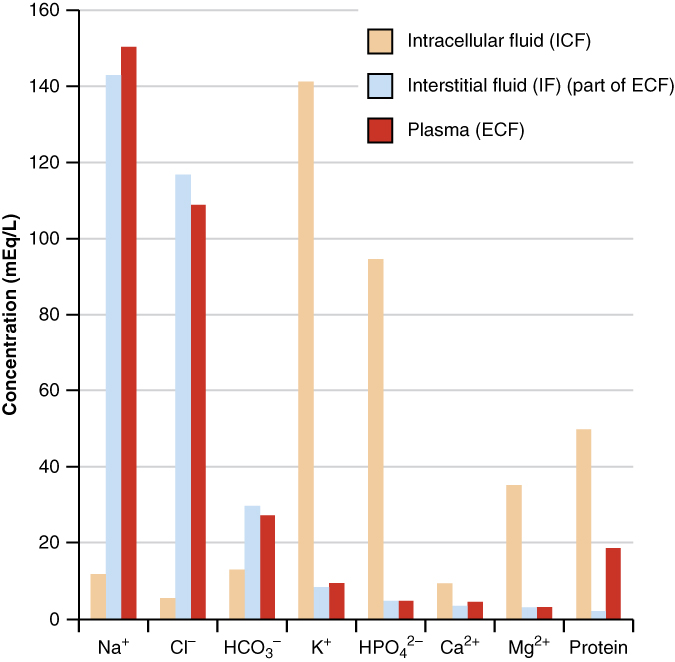
These figures summarize how body water is partitioned (intracellular vs extracellular) and compare electrolyte concentrations across compartments. The bar graph makes the key pattern explicit: Na⁺ is highest in extracellular fluids (plasma/interstitial), while K⁺ is highest in intracellular fluid, which underpins osmotic water shifts and membrane excitability. Source
Sodium: water balance and nerve-muscle activity
Because sodium is the dominant extracellular electrolyte, it has a major effect on water balance. Water tends to follow sodium, so sodium helps determine plasma volume, blood volume, and the amount of fluid surrounding cells. Stable sodium levels therefore help maintain normal body function during rest and exercise.
Sodium is also central to nerve impulse transmission and muscle contraction. When a nerve or muscle cell is stimulated, sodium moves into the cell.
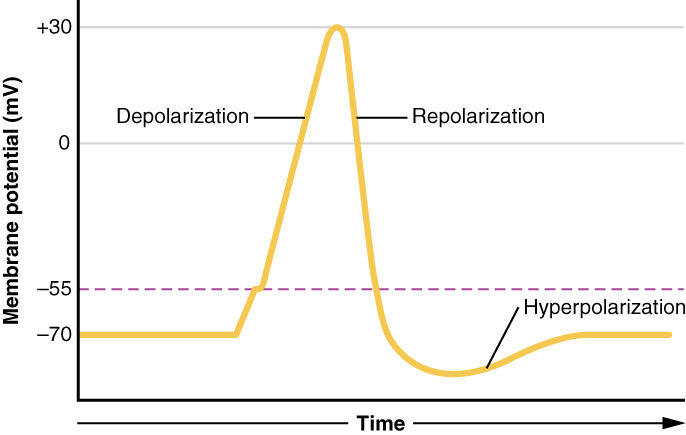
This diagram plots membrane potential over time and labels the major phases of an action potential (resting potential, rapid depolarization, repolarization, and hyperpolarization). It provides a clear visual link between ion channel behavior (Na⁺ entry vs K⁺ exit) and the voltage changes that allow impulses to propagate in nerves and trigger muscle activation. Source
This rapid movement changes the electrical charge across the membrane, initiating depolarization and allowing an action potential to travel. In practical terms, this is one reason sodium is necessary for communication between the brain, nerves, and working muscles.
Because sodium is lost in sweat, its role becomes especially important during prolonged exercise or exercise in hot environments. If sodium replacement is inadequate, fluid regulation and neuromuscular efficiency may both be affected.
Potassium: intracellular control and membrane recovery
Potassium has different but equally important functions. As the main intracellular electrolyte, it helps maintain the fluid environment inside cells and contributes to the resting membrane potential of nerve and muscle fibers. After a cell depolarizes, potassium movement out of the cell helps restore the original electrical state, a process called repolarization.
This means potassium is essential for repeated nerve firing, coordinated skeletal muscle contraction, and normal heart rhythm. Sodium and potassium work together through the sodium-potassium pump, which uses ATP to move sodium out of cells and potassium into cells. By maintaining these ion gradients, the pump supports both cellular homeostasis and the ability of muscles and nerves to keep functioning during activity.
Electrolytes mainly control fluid movement and electrical signaling. Vitamins support metabolism in a different way: they help tissues grow and repair, and they allow many enzyme-controlled reactions to proceed efficiently.
Vitamin: An organic micronutrient needed in small amounts for normal growth, tissue function, and metabolic regulation.
Vitamins and metabolic reactions
Vitamins do not provide calories, so they are not direct energy sources. Instead, they enable the body to release energy from carbohydrate, fat, and protein and to use that energy in cells. Their importance is therefore metabolic rather than caloric.
Vitamins in tissue synthesis
Some vitamins are necessary for tissue synthesis, growth, and repair. Vitamin C is required for collagen formation, making it important for connective tissue strength and wound healing. Folate and vitamin B12 support DNA synthesis and the formation of new cells, which is especially important in tissues that renew frequently. Vitamin A also supports normal cell differentiation and the maintenance of epithelial tissues.
When vitamin intake is too low, tissue repair may be slower and adaptation to training may be less effective. The effect may not be obvious immediately, but over time inadequate intake can reduce the body’s ability to maintain healthy tissues.
Vitamins in energy release
Many vitamins support metabolism by acting as coenzymes in enzyme-controlled pathways.
Coenzyme: A non-protein helper molecule, often derived from a vitamin, that is required for certain enzyme reactions to occur.
This is especially true of the B-group vitamins, which are heavily involved in reactions that release energy from food.
Thiamin, riboflavin, and niacin are important in carbohydrate metabolism and in transferring energy through cellular pathways. Vitamin B6 contributes to amino acid metabolism and also supports glycogen-related reactions. Pantothenic acid and biotin are involved in metabolic steps linked to fat utilization and energy transfer.
The key idea is that vitamins regulate the reactions that make ATP production possible. A person may consume enough carbohydrate, lipid, or protein, but without sufficient vitamin support, the enzymes that process these nutrients work less effectively. This can reduce metabolic efficiency and contribute to fatigue during training or competition.
Relevance to sport and health
For active individuals, both electrolyte status and vitamin intake matter because performance depends on more than energy intake alone. During exercise, muscles need accurate nerve signals, effective contraction, and continuous ATP resynthesis. Sodium and potassium support the electrical and fluid conditions required for muscle and nerve function, while vitamins support the metabolic pathways and tissue maintenance that allow the body to sustain activity.
A varied diet usually supplies enough of these micronutrients, but problems are more likely when food intake is restricted, food variety is poor, or sweat losses are high. In those situations, attention to electrolyte-rich and vitamin-rich foods becomes more important.
Practice Questions
Outline one role of sodium and one role of potassium in the body during exercise.
1 mark for sodium: regulates extracellular water balance, or helps nerve impulse transmission, or helps initiate muscle action potentials.
1 mark for potassium: regulates intracellular fluid balance, or helps repolarization, or supports muscle contraction and normal heart rhythm.
Explain how sodium, potassium, and vitamins support metabolism and exercise performance.
Sodium helps regulate extracellular fluid balance and blood/plasma volume.
Potassium helps regulate intracellular fluid balance.
Sodium and potassium are needed for nerve impulse transmission.
Sodium and potassium are needed for muscle contraction and normal cardiac function.
Vitamins do not provide energy directly but regulate metabolic reactions that release energy.
B-group vitamins act as coenzymes in carbohydrate, fat, and protein metabolism.
Some vitamins support tissue synthesis and repair, for example vitamin C in collagen synthesis or folate/B12 in new cell production.
FAQ
Sweat contains more sodium than potassium, so sodium is usually the main electrolyte replaced during exercise drinks.
Sodium also helps maintain extracellular fluid volume and can improve fluid retention after drinking. Potassium is still important, but it is usually lost in smaller amounts and is often easier to replace through normal foods.
Water-soluble vitamins include the B vitamins and vitamin C. They are not stored in large amounts, so regular intake is important.
Fat-soluble vitamins include vitamins A, D, E, and K. They can be stored in body tissues, which means deficiencies may take longer to appear, but excessive supplementation can also create a greater risk of toxicity.
Usually, no. B vitamins help enzymes release energy from food, but they do not provide energy themselves.
If a person already has adequate intake, taking more generally does not make those metabolic pathways work beyond normal levels. Supplements are most useful when there is a true deficiency, poor diet, or a medically identified need.
Some vitamins are sensitive to heat, light, and water. For example, vitamin C and several B vitamins can be reduced by prolonged cooking or boiling.
Helpful strategies include:
steaming instead of boiling
cutting foods just before eating or cooking
storing produce properly
using cooking water in soups or sauces when appropriate
Good potassium sources include bananas, potatoes, beans, yogurt, leafy greens, and dried fruit. B vitamins are found in whole grains, meat, eggs, dairy, legumes, and fortified cereals.
Sodium is naturally present in some foods but is especially common in processed foods, breads, cheeses, sauces, and sports drinks. For active people, the goal is not just high intake, but appropriate intake from a varied diet that matches sweat loss and training demands.
