AP Syllabus focus:
'Renaissance ideas influenced visual arts and supported personal, political, and religious ambitions.'
Renaissance art transformed European culture by linking new intellectual values to powerful images. Its consequences reached beyond aesthetics, shaping how individuals, rulers, and the Church displayed authority and purpose.
How Renaissance Ideas Reshaped Art
One major consequence of the Renaissance was a new visual language. Artists moved away from the flatter, more symbolic style common in much medieval work and pursued naturalism, balance, and lifelike human form. They studied the body, light, landscape, and the emotional expression of faces.
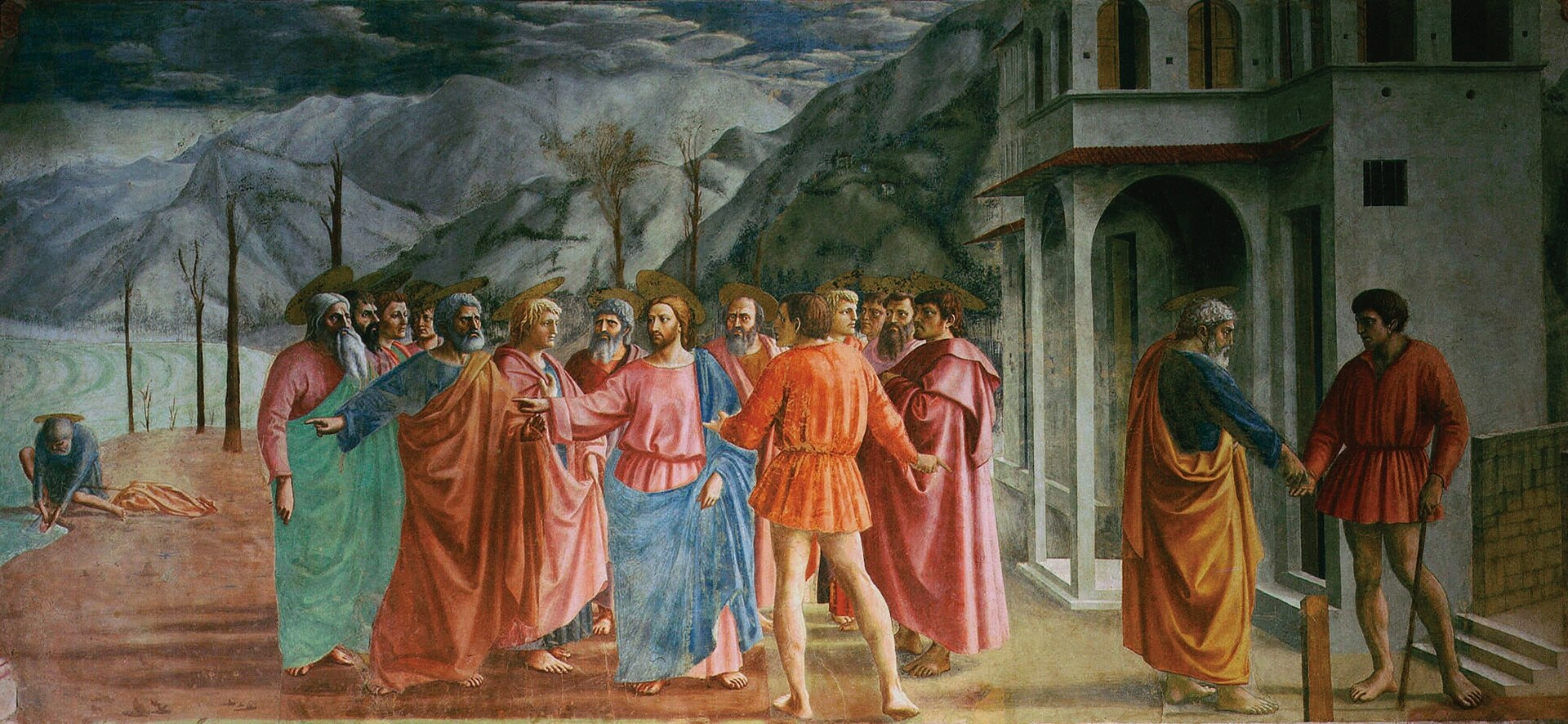
Masaccio’s The Tribute Money (Brancacci Chapel, 1420s) shows an early Renaissance break from flatter medieval conventions through solid, sculptural bodies and coherent light-and-shadow modeling. The composition organizes figures in convincing depth, illustrating how Renaissance artists used observation and perspective to make sacred narratives feel immediate and physically real. Source
This reflected the influence of humanism, which stressed the value of human beings, classical learning, and the capacities of this world as well as the next. Art therefore became a way to present human dignity, intelligence, and action more vividly.
Humanism: An intellectual movement that emphasized the study of classical texts and the value, potential, and achievements of human beings.
Because of this shift, artists increasingly treated individuals as worthy subjects in their own right, not just as small parts of a religious story.
Classical Models and Artistic Innovation
Renaissance ideas also encouraged artists to imitate and adapt classical antiquity. Greek and Roman sculpture, architecture, and proportion provided models for harmony and order. Painters developed linear perspective to create the illusion of depth, while sculptors revived free-standing nude figures and contrapposto poses. Classical columns, domes, arches, and idealized bodies signaled learning and refinement. These techniques did not simply make art look different; they expressed the belief that reason, observation, and disciplined study could uncover beauty and truth. As a result, visual art became closely tied to intellectual achievement and cultural prestige.
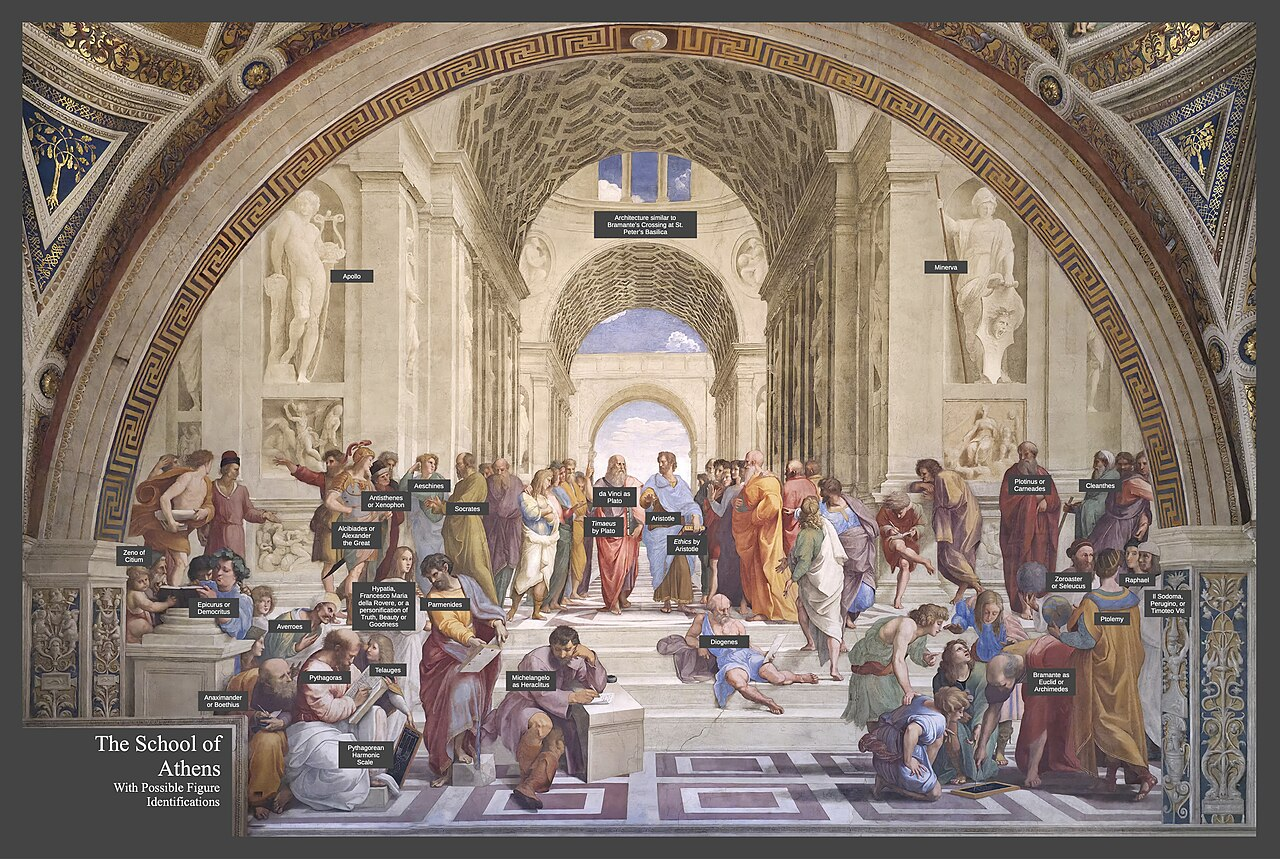
Raphael’s School of Athens (Vatican, early 1500s) stages ancient Greek philosophers in a grand classical architectural setting, visually linking Renaissance culture to antiquity. The carefully organized space and implied linear perspective reinforce the era’s confidence that reason, observation, and learning could structure both knowledge and art. Source
Art as a Tool of Personal Ambition
Renaissance art had important social consequences because it helped patrons build reputation and status. Wealthy merchants, banking families, nobles, and court officials commissioned portraits, family chapels, palaces, and decorative cycles that advertised success. A patron could present himself as pious, educated, generous, and politically connected all at once.
Patronage: Financial support given by rulers, elites, or church officials to artists in order to produce works that served social, political, or religious purposes.
This system gave art a practical role in competition for honor and recognition.
Portraits highlighted clothing, gesture, and setting to communicate rank and individuality.
Classical themes suggested education and familiarity with elite culture.
Private chapels and tombs linked family memory to visible public prestige.
Artists also benefited from this environment. Successful painters and sculptors could win fame, negotiate better contracts, and become associated with powerful households. The growing prestige of the artist was itself a consequence of Renaissance values, especially admiration for talent, invention, and individual achievement.
Political Authority and Civic Power
Renaissance ideas influenced politics because rulers used art to make power visible. In city-states and princely courts, public buildings, statues, frescoes, and ceremonial spaces projected order and legitimacy. Classical styles were especially useful for this purpose. They associated governments with the glory of ancient Rome and with ideals such as civic virtue, stability, and disciplined leadership.
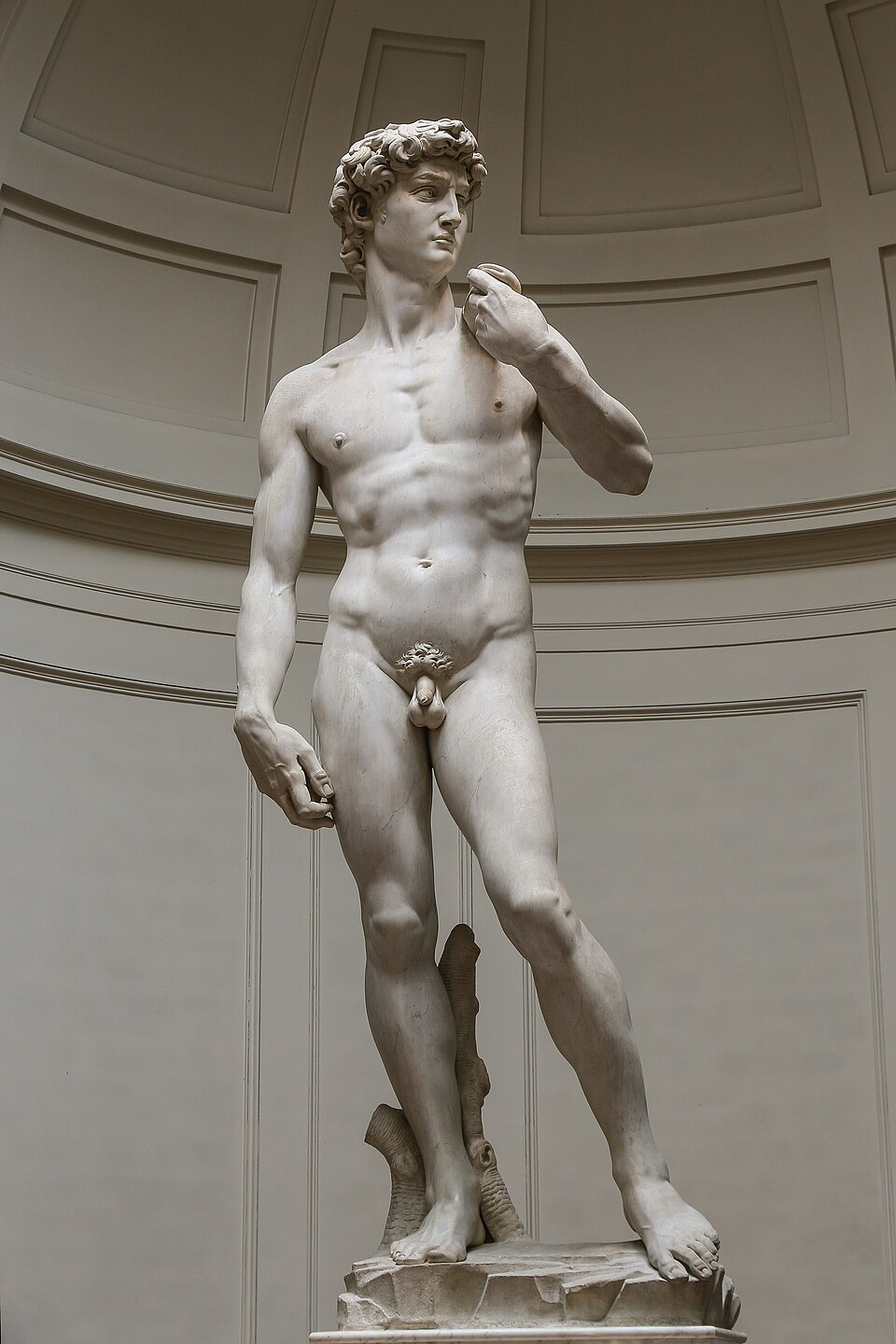
Michelangelo’s marble David (1501–1504) uses an idealized nude body and contrapposto stance to evoke classical sculpture while projecting strength and self-control. In Florence, the statue became a civic symbol—art functioning as political persuasion by embodying communal ideals such as vigilance and liberty. Source
In practice, art could serve both republican and princely ambitions. Urban governments sponsored buildings and images that celebrated the city and its history, while dynastic rulers filled palaces with scenes that linked their families to heroism and wisdom. Art therefore became part of statecraft. It helped persuade viewers that authority was natural, honorable, and beneficial to the community.
Political ambition was not always expressed through military imagery. It could also appear in carefully planned architecture, orderly urban spaces, and images of wise rulers. These works suggested that the patron brought harmony and civilization. The consequence was that visual culture became a normal instrument of government, not merely decoration.
Religious Goals and Sacred Image-Making
Renaissance art also had major consequences for religious life. The Church did not reject Renaissance styles; instead, it often used them to strengthen devotion and reinforce ecclesiastical authority. More realistic sacred scenes, emotionally expressive figures, and monumental architectural spaces could make biblical events seem immediate and powerful. This visual immediacy helped religious institutions teach, inspire, and impress.
Church leaders, especially powerful bishops and popes, commissioned ambitious works to glorify God and to enhance their own institutional standing. A magnificent church or chapel showed that the faith possessed beauty, order, and resources. At the same time, these commissions communicated the prestige of the patron who sponsored them. Religious art thus blended spiritual purpose with worldly ambition. It could encourage prayer, defend orthodoxy, and display the wealth and influence of the Church in one coordinated program.
Renaissance ideas also made religious images more humanly accessible. Saints and biblical figures were often shown with greater physical presence and emotional realism. This did not reduce their religious meaning; it made sacred narratives more compelling to viewers and strengthened the persuasive power of visual religion.
Changing Expectations of Art
The consequences of Renaissance art and ideas extended into everyday assumptions about status and culture. Europeans increasingly expected art to do intellectual and social work: to teach viewers, to honor individuals, to beautify cities, and to shape public memory. The boundary between the sacred and the secular became more flexible, since techniques developed for one setting could serve another. Courts, urban elites, and church officials all treated visual culture as a means of persuasion. This helped establish a lasting connection between artistic achievement and power, making art a central instrument of ambition in early modern Europe.
Practice Questions
Identify ONE way Renaissance ideas changed visual art, and briefly explain why that change mattered. (2 marks)
1 mark for identifying a valid change, such as greater naturalism, use of classical themes, linear perspective, portraiture, or emphasis on the individual.
1 mark for explaining why it mattered, such as reflecting humanism, increasing realism, elevating secular subjects, or helping patrons present themselves as cultured or powerful.
Evaluate the extent to which Renaissance art served personal, political, and religious ambitions in the period c. 1400 to c. 1550. (6 marks)
1 mark for a clear argument that directly addresses the extent to which art served ambition.
1 mark for specific evidence of personal ambition, such as portraits, tombs, family chapels, or elite commissions.
1 mark for explaining how that evidence promoted status, fame, or social prestige.
1 mark for specific evidence of political ambition, such as public buildings, civic art, dynastic imagery, or court commissions.
1 mark for explaining how that evidence projected authority, legitimacy, or civic order.
1 mark for specific evidence and explanation of religious ambition, such as church decoration, papal commissions, or realistic sacred imagery used to inspire devotion and strengthen Church authority.
FAQ
Portraiture grew because elites wanted durable images of themselves for marriage negotiations, diplomacy, family memory, and social display.
It also suited Renaissance values. A portrait could present a sitter as self-controlled, learned, wealthy, or virtuous. In courts and cities, that made portraiture more than likeness; it became a form of reputation management.
Placement shaped who saw the work and what it communicated.
In a chapel, an image could support prayer and memorialise a donor.
In a palace, it might advertise lineage, taste, and power.
In a public square or council hall, it could project civic pride or political authority.
The same style could therefore serve very different ambitions depending on where it appeared.
Mythological scenes allowed patrons to show classical learning without abandoning Christianity. They could present themselves as educated and sophisticated through stories drawn from Greece and Rome.
Such images were often used allegorically. A god or hero might stand for love, virtue, fertility, or wise rule. That made mythology especially useful in marriage furnishings, palace decoration, and courtly gift-giving.
Yes. Many artists still worked within workshops, but the most successful gained unusual prestige. Patrons increasingly valued invention, intellect, and style, not just manual skill.
This helped some artists negotiate better terms, cultivate famous reputations, and move in elite circles. Written biographies and signed works also raised their status. By the later Renaissance, a leading artist could be treated less like a craftsman and more like a cultural authority.
Yes, although they are often less visible in surveys. Elite women could commission portraits, devotional objects, chapels, manuscripts, and palace decoration.
Women’s patronage often supported:
dynastic memory
marriage alliances
piety and charity
cultural prestige within courts
Some women also influenced taste by selecting subjects, artists, or display settings. Their role shows that Renaissance art served ambition through households and family strategy, not only through male rulers or clergy.