AP Syllabus focus:
'Italian humanists such as Petrarch revived classical literature, developed philological methods, and promoted secularism and individualism.'
Italian humanism reshaped Renaissance thought by recovering classical texts and using them as models for language, ethics, and selfhood, helping create a more critical, secular, and individual-centered intellectual culture.
What Humanism Meant
In Renaissance Italy, humanism was an intellectual movement centered on the study of classical antiquity, especially the literature, history, rhetoric, and moral philosophy of ancient Greece and Rome.
Humanism: A Renaissance intellectual approach that emphasized the study of classical texts and human-centered subjects as guides to language, ethics, and public life.
Unlike medieval scholars who often focused on logic and theology, Italian humanists looked to ancient authors for models of eloquence, virtue, and practical wisdom. They believed the classics could improve both individuals and society. This shift did not mean abandoning Christianity. Instead, it meant giving greater value to human experience, moral choice, and life in the world.
Why Italy Led the Movement
Italian cities preserved visible links to Rome, and educated elites could draw on libraries, ruins, and a strong urban culture.
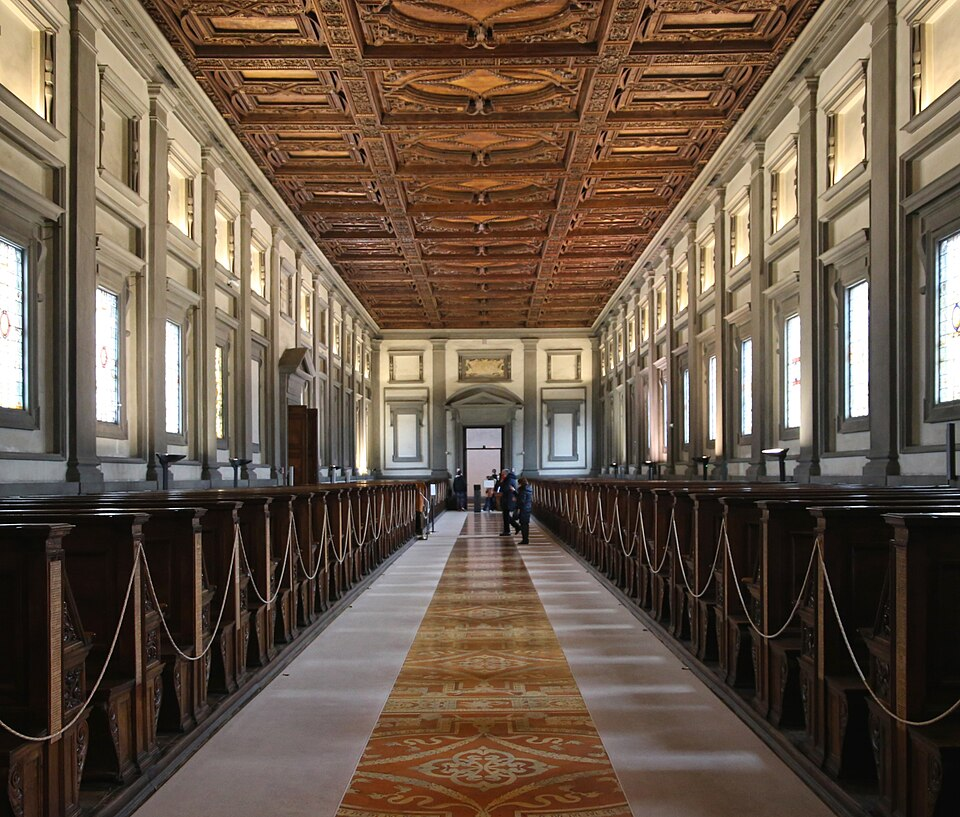
The reading room of the Biblioteca Medicea Laurenziana in Florence, a major Renaissance library designed within the Medici cultural program. The long, orderly arrangement of desks and benches evokes the institutional setting where humanists consulted, copied, and corrected manuscripts as part of a broader effort at cultural renewal. Source
In this setting, admiration for the ancient world became more than antiquarian curiosity. It became a program for cultural renewal. Because manuscripts existed in copied form rather than as fixed editions, recovering and correcting texts required both scholarly skill and social connections.
Petrarch and the Recovery of Classical Literature
Francesco Petrarch is often treated as an early and influential humanist because he actively sought out forgotten Latin manuscripts and celebrated the moral and literary power of classical authors.
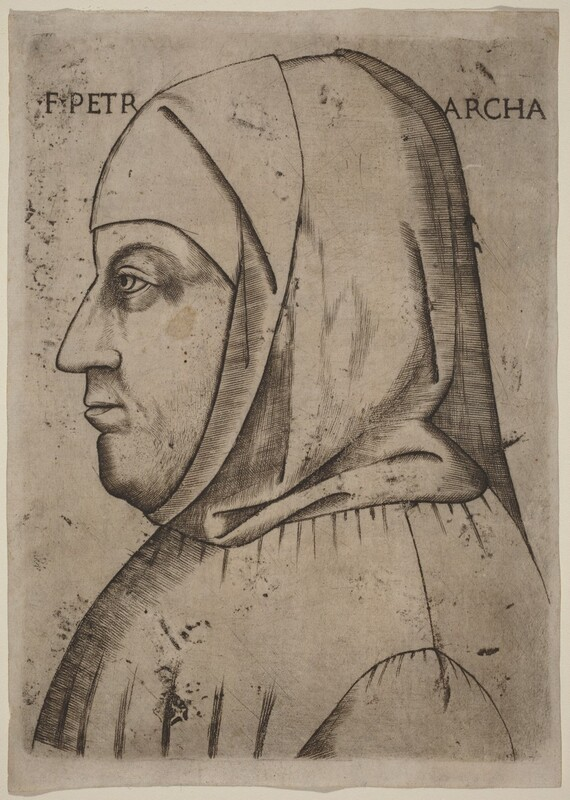
A Renaissance-era engraved portrait of Francesco Petrarch (1304–1374), one of the best-known early Italian humanists in later visual tradition. Using portraits like this in study notes helps connect the abstract themes of manuscript recovery and classical imitation to a recognizable historical individual. Source
He admired writers such as Cicero and Virgil not simply as relics of the past, but as living teachers. For Petrarch, contact with antiquity could awaken intellectual ambition and moral seriousness in the present.
Petrarch helped create the idea that Europe had declined after antiquity and could be renewed through the recovery of classical learning. His letters, poetry, and scholarship encouraged educated Italians to read ancient texts closely and imitate their style. Classical literature offered:
refined Latin expression
examples of civic and personal virtue
insight into human emotion and character
a standard by which contemporary culture could be judged
This revival was both literary and moral. Humanists wanted better texts, but they also wanted better ways of thinking and writing.
Philology and Critical Scholarship
A major innovation of Italian humanism was the use of philology, the close historical and linguistic study of texts.
Philology: The critical analysis of language, grammar, authorship, and manuscript evidence in order to recover a text’s original meaning and most accurate form.
Humanists compared different manuscript copies, noticed copying errors, corrected damaged passages, and paid attention to how words changed over time. This method treated ancient writings as historical documents that had to be studied carefully, not merely accepted through tradition.
Philological work mattered because it made scholarship more precise. Instead of repeating received interpretations, humanists asked when a text was written, whether the language fit the claimed author, and how transmission over centuries might have altered it. That habit of criticism strengthened confidence in evidence, context, and exact wording.
Petrarch himself did not invent all later philological techniques, but he set the pattern by searching for neglected texts, valuing authentic sources, and encouraging direct engagement with antiquity. Humanists increasingly saw errors in language as signs of broader intellectual decline, so restoring good Latin became part of restoring learning itself.
Secularism and a New View of Life
The revival of classical literature also promoted secularism in Renaissance culture.
Secularism: Greater attention to worldly subjects, human affairs, and life outside purely theological concerns.
Italian humanists still lived in a Christian society, and many were personally religious. However, they devoted serious study to history, rhetoric, politics, ethics, and literature that were not strictly theological. They praised fame, public service, friendship, and personal achievement in ways that expanded the range of respectable intellectual interests.
This secular emphasis can be seen in the types of ancient works humanists preferred. They often valued speeches, letters, biographies, and histories because these genres dealt with action in the human world. The classical past became a source of guidance for conduct, leadership, and reputation, not only for abstract speculation.
Individualism in Humanist Thought
Humanism also encouraged individualism, a stronger interest in the distinct character, talents, and inner life of the person.
Individualism: An emphasis on personal achievement, self-expression, and the unique qualities of the individual.
Classical literature supplied models of famous authors and statesmen whose lives seemed worthy of admiration and imitation. Humanists wrote letters in a personal voice, reflected on ambition and moral struggle, and sought lasting glory through their own works. Petrarch’s writing is especially important here because it reveals introspection, self-analysis, and a desire for literary immortality.
This did not mean modern individual rights or complete social independence. Rather, it meant a growing belief that a cultivated person could shape his own reputation and leave a meaningful mark on history. In that sense, the humanist reader was not just learning about the ancients; he was measuring himself against them.
Changes in Scholarship and Selfhood
By reviving classical literature, Italian humanists changed what counted as valuable knowledge. Ancient texts became central to debates about language, morality, and scholarly method. Philology made those texts more reliable and encouraged close, evidence-based reading. At the same time, secularism and individualism broadened intellectual life beyond a narrowly theological framework.
Humanist scholarship linked careful reading with moral formation. Mastery of classical language was seen as a path to clearer thought, stronger expression, and a more deliberate public and private identity. In this way, the recovery of the classics reshaped both learning and the educated person’s sense of self.
Practice Questions
Identify one way Petrarch contributed to the revival of classical literature in Renaissance Italy. (2 marks)
1 mark for identifying one valid contribution, such as searching for, finding, or preserving classical Latin manuscripts.
1 mark for explaining that this helped renew interest in ancient authors and encouraged imitation of classical style and values.
Explain how Italian humanists used classical literature and philological methods to promote secularism and individualism during the Renaissance. (6 marks)
1 mark for identifying that humanists revived classical Greek or Roman literature.
1 mark for explaining the role of Petrarch or another Italian humanist in recovering or valuing ancient texts.
1 mark for explaining philological methods as close textual study, comparison of manuscripts, or correction of errors.
1 mark for linking philology to more critical and accurate scholarship.
1 mark for explaining how classical study encouraged secularism, such as attention to politics, history, rhetoric, or worldly life.
1 mark for explaining how classical models encouraged individualism, such as self-expression, personal reputation, or introspection.
FAQ
Cicero offered more than elegant Latin. His speeches, letters, and philosophical writings combined polished prose with moral reflection and public engagement.
Humanists found him useful because he seemed to unite style, ethics, and civic life. He showed that writing could shape both personal reputation and political culture.
Many scholars searched monastic libraries, cathedral archives, and private collections. They read catalogues, inspected shelves, and relied on contacts who knew where old manuscripts might survive.
If they found a text, they often copied it by hand or paid scribes to do so. Recovery depended on travel, patronage, and networks of learned correspondence.
Early Italian humanism was more Latin-centred than many people assume. Latin texts were easier to find, and more scholars could read them well.
Greek learning expanded later as more teachers, manuscripts, and language instruction became available. That widened access to authors who had been largely out of reach in western Europe.
A small number of elite women took part, usually through wealthy families or courtly settings that could provide tutors and books. Their access remained limited compared with that of men.
Even so, some women studied Latin, wrote letters or poetry, and joined humanist circles. Their presence shows that humanist learning was not entirely confined to male scholars.
For humanists, style was not a superficial ornament. Clear and graceful Latin signalled disciplined thought and fidelity to admired ancient models.
Elegant writing also had practical value. It could win favour from patrons, strengthen persuasion, and raise a scholar’s standing in courts, cities, and learned communities.