AP Syllabus focus:
'New Protestant teachings emphasized salvation by faith alone, the primacy of scripture, and the priesthood of all believers.'
Core Protestant doctrines shifted Christian belief away from dependence on church mediation and toward faith, biblical authority, and shared spiritual standing, changing how Europeans understood salvation, worship, and religious leadership.
A New Basis for Religious Authority
Early Protestant reformers argued that Christians had misunderstood the foundation of religious life. In medieval Catholic practice, salvation was closely tied to the institutional church, its sacraments, and the authority of clergy. Protestants did not reject Christianity; they claimed to restore its original message by grounding religion more directly in Christ, the Bible, and the believer’s faith.
These teachings mattered because they challenged established authority at its deepest level. If salvation came through faith rather than church-controlled rituals, and if scripture outranked church tradition, then the church could no longer claim the same monopoly over truth and access to God. The result was not simply new theology, but a major reordering of religious life.
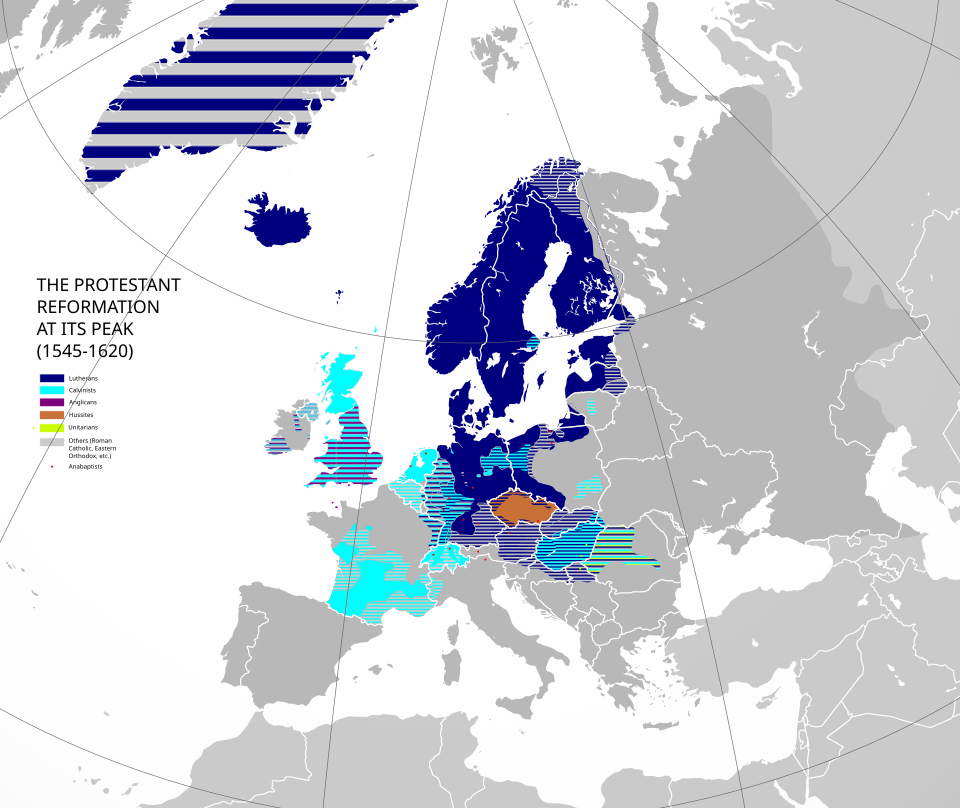
This map depicts the spread and regional diversity of Protestant movements alongside Catholic areas during the Reformation era (mid-16th to early-17th century). By showing confessional variation across Europe, it reinforces how disputes over authority (scripture, clergy, sacraments) produced durable, organized religious communities rather than a single uniform “Protestant” outcome. It is especially helpful for situating doctrinal changes within political borders and regional power structures. Source
The Three Core Doctrines
Salvation by Faith Alone
The idea of sola fide stood at the center of early Protestant teaching.
Sola fide: The Protestant belief that a person is justified before God by faith alone, not by good works, religious rituals, or church mediation.
According to this doctrine, human beings could not earn salvation through pilgrimages, indulgences, or moral effort.
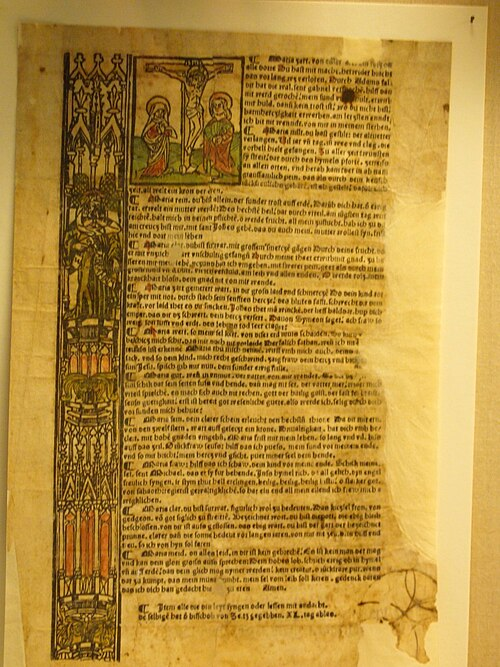
This photographed indulgence letter shows how late-medieval Catholic piety could be expressed through official documents promising spiritual benefits. In the context of the Reformation, indulgences became a flashpoint because they linked salvation-oriented practice to institutional authority and, at times, financial transactions. The image helps explain why reformers argued that saving grace could not be obtained through purchased or church-administered mechanisms, but only through faith. Source
Salvation was a gift of God’s grace, received through trust in Christ. This belief sharply reduced the spiritual importance of practices that had long been promoted as helping the soul.
Protestants did not usually claim that good works were worthless. Instead, they argued that good works followed genuine faith rather than causing salvation. A good Christian life was evidence of faith, not a way to purchase divine favor. This distinction was crucial: it separated inner belief from external performance and made personal trust in God more important than participation in a complex system of religious acts.
The Primacy of Scripture
A second core doctrine was sola scriptura, or the supremacy of the Bible in matters of faith.
Sola scriptura: The Protestant belief that scripture is the highest religious authority and that teachings must be grounded in the Bible.
This doctrine challenged the long-standing authority of church tradition, papal rulings, and many decisions of councils when they seemed unsupported by scripture. Protestants argued that the Bible contained the essential truths needed for salvation and that Christians should measure all doctrine against it.
As a result, preaching and Bible reading became central features of Protestant worship.
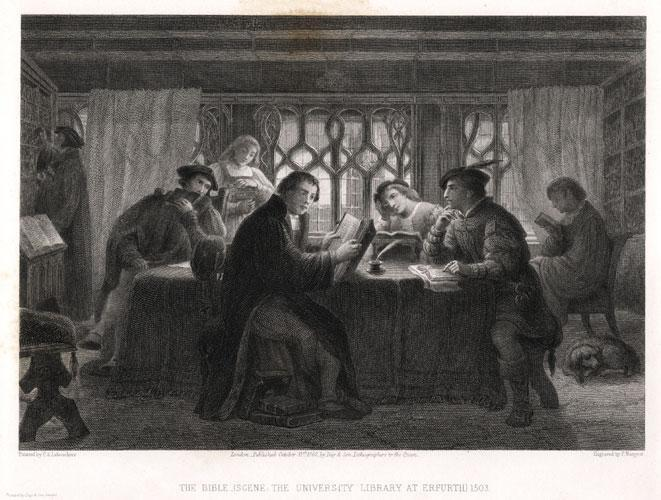
This historical illustration of Bible study at the University Library at Erfurt highlights the scholarly and devotional attention given to scripture in the early 16th century. It pairs well with the idea of sola scriptura by visually reinforcing the Bible as a focal point for teaching, interpretation, and religious formation. The scene also helps students connect doctrinal claims about authority to concrete practices of reading and study. Source
Ministers were expected to teach scripture clearly, and laypeople were encouraged to hear, read, and study the Bible more directly. This emphasis helped elevate the importance of vernacular translations, since believers needed access to God’s word in a language they understood.
The primacy of scripture did not eliminate interpretation. Different reformers could still disagree about what particular passages meant. Still, the key change was clear: final religious authority now rested in the Bible rather than in an institutional church claiming exclusive power to define truth.
The Priesthood of All Believers
The doctrine of the priesthood of all believers further weakened the traditional distinction between clergy and laity.
Priesthood of all believers: The Protestant belief that all Christians have direct spiritual access to God and share a common religious standing before Him.
This doctrine did not mean that every person became a church leader or that organized ministry disappeared. Protestant churches still had pastors, teachers, and officials. However, ministers were no longer understood as a separate spiritual class with unique power to mediate salvation. Their role was to preach, teach, and guide rather than to stand between believers and God in the same way that Catholic priests did.
The doctrine also gave ordinary Christians greater dignity within religious life. Since all believers stood equally before God, everyday callings and family life gained spiritual importance. Holiness was no longer associated mainly with monasteries, celibacy, or withdrawal from the world. Religious commitment could be lived out in ordinary daily life.
How These Doctrines Worked Together
These three doctrines reinforced one another. Faith alone explained how salvation occurred. Scripture alone explained where religious truth came from. The priesthood of all believers explained who could approach God and participate in the life of faith.
Together, they transferred religious emphasis away from sacramental systems and inherited institutional authority. Protestantism did not reject order, teaching, or churches, but it redefined them. Church structures remained important, yet they were expected to serve the word of God rather than control access to grace.
Effects on Worship and Religious Practice
Simpler Worship and Greater Emphasis on Teaching
Because of these doctrines, Protestant worship often became more focused on the sermon, scripture reading, and instruction. Elaborate ceremonies, the cult of saints, relics, and many traditional devotional practices lost importance. The service was meant to communicate biblical truth and strengthen faith rather than surround believers with sacred intermediaries.
This change also affected the sacraments. While Protestants continued to value baptism and the Lord’s Supper, they generally rejected the broader medieval sacramental system as necessary for salvation. The central religious act became hearing and trusting God’s word.
New Expectations for Believers
Core Protestant doctrines increased the importance of personal conscience, self-examination, and biblical knowledge. Believers were expected to understand their faith more actively. At the same time, these teachings did not create complete equality in society or church government. Protestant communities still maintained discipline, leadership, and social hierarchy.
What changed was the basis of spiritual authority. The believer’s relationship to God no longer depended on the old structure of priestly mediation, but on faith informed by scripture within a community of Christians.
Practice Questions
Briefly explain one way the Protestant doctrine of salvation by faith alone challenged traditional Catholic teaching. (2 marks)
1 mark for identifying that Protestants taught that salvation came through faith alone, or God’s grace received through faith.
1 mark for explaining that this challenged the Catholic emphasis on good works, sacraments, indulgences, or priestly mediation as part of the path to salvation.
Evaluate the extent to which the core Protestant doctrines transformed religious authority in sixteenth-century Europe. (6 marks)
1 mark for a clear thesis that argues that Protestant doctrines significantly shifted authority away from the institutional church and toward scripture and the believer.
1 mark for explaining salvation by faith alone as reducing the importance of works and church-controlled rituals in salvation.
1 mark for explaining the primacy of scripture as making the Bible the highest authority over tradition or papal rulings.
1 mark for explaining the priesthood of all believers as weakening the idea of clergy as a separate spiritual class.
1 mark for connecting these doctrines to changes in worship or practice, such as greater emphasis on preaching, Bible reading, or simpler services.
1 mark for showing qualification or complexity, such as noting that Protestant churches still kept ministers, discipline, and organized religious structures.
FAQ
Most Protestants argued that spiritual equality did not remove the need for order. Ministers remained necessary to preach, administer sacraments, and supervise doctrine.
The difference was in function, not complete abolition. Ministers were seen less as sacred mediators and more as trained teachers and pastors. Their authority came from the word they taught, not from a unique priestly status.
Because the Bible still had to be interpreted. Once reformers rejected a single final earthly authority, disagreements over meaning became harder to settle.
Disputes often arose over:
the Eucharist
church organisation
baptism
discipline and moral law
So, scriptural supremacy created a common principle, but not automatic agreement.
They broadened it. In medieval Christianity, the highest calling was often linked to monastic or clerical life.
Many Protestants taught that ordinary work could also be a God-given calling. A parent, craft worker, magistrate, or farmer could serve God through faithful service in daily duties. This did not erase differences in status, but it gave religious value to everyday labour and household life.
The Eucharist became a major test of how scripture should be read. Reformers agreed that the Bible was supreme, but they differed over whether Christ’s words at the Last Supper should be taken literally, symbolically, or in some middle sense.
This shows that the key dispute was not whether scripture mattered, but how it should govern doctrine when passages seemed open to different interpretations.
It created some openings, but within limits. Since all Christians were spiritually equal, women could be presented as full members of the community of faith rather than as spiritually dependent on priests.
However, most Protestant churches still restricted formal leadership to men. Women’s influence often expanded most in:
family devotion
teaching children
shaping household piety
So the doctrine could raise women’s religious importance without producing broad institutional equality.