

AP Syllabus focus:
'John Calvin established influential doctrines, especially predestination, that reshaped Protestant belief and church discipline.'
John Calvin became one of the most influential thinkers of the Reformation, developing a disciplined Protestant system that stressed God’s power, human weakness, and a morally ordered Christian community.
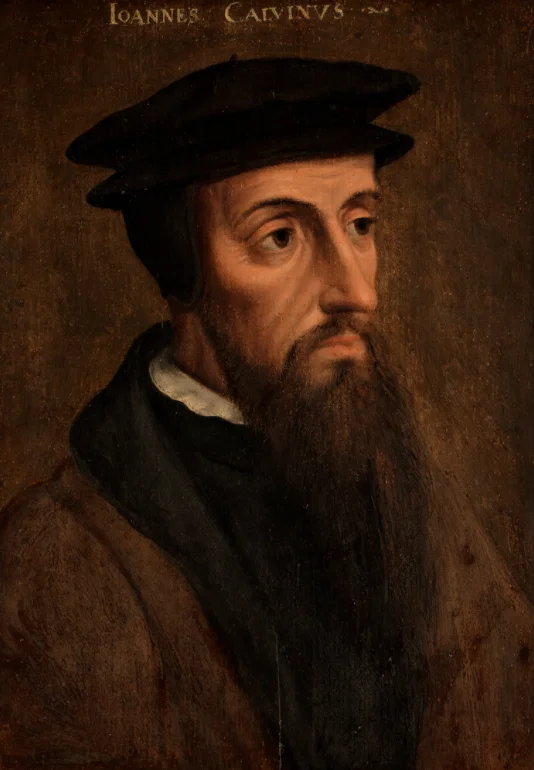
This museum-attributed portrait of John Calvin (c. 1550) reinforces Calvin’s centrality to the Reformation as an individual whose ideas shaped religious communities. Seeing Calvin depicted in a formal painted portrait also helps students understand how theological leadership and public reputation worked in early modern Europe. The image supports the notes’ framing of Calvin as both a thinker and an organizer of disciplined Protestant life. Source
Calvin’s Religious Vision
Calvin was a French reformer who worked mainly in Geneva and gave Protestantism a more systematic structure.
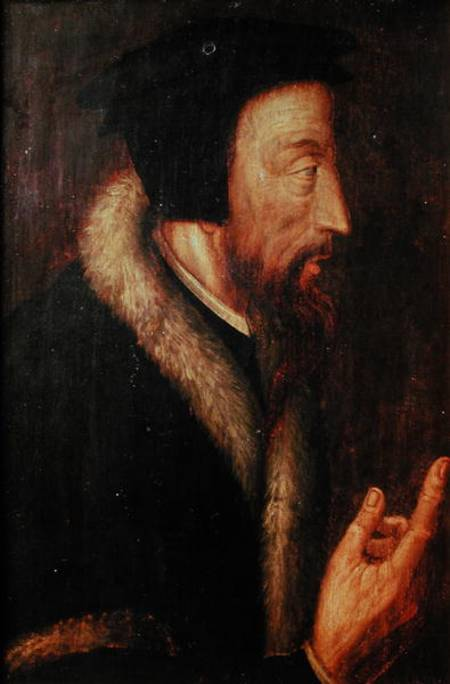
This sixteenth-century portrait of John Calvin visually situates the Reformation’s theological debates in the life of a specific historical actor. Using a period portrait helps reinforce Calvin’s role as a French reformer associated with Geneva and the wider Reformed tradition. It also cues students to connect Calvin’s personal authority to the institutional and doctrinal system described in the notes. Source
In his Institutes of the Christian Religion, he organized major teachings about God, salvation, scripture, and the church. His writing helped turn reform from a protest against abuse into a coherent body of doctrine.
At the center of Calvin’s thought was the absolute sovereignty of God. Calvin argued that God’s will governed everything and that human beings, corrupted by sin, could not save themselves. Salvation did not come through rituals, good works, or the authority of priests. Instead, it came entirely from God’s grace. This made Calvinist theology especially rigorous and gave believers a strong sense of dependence on divine power.
Predestination and Salvation
The meaning of predestination
Predestination was Calvin’s best-known doctrine.
Predestination: The belief that God has eternally chosen who will be saved and who will be damned, independent of human merit or effort.
For Calvin, this teaching followed from God’s complete authority. If God was truly all-powerful, then salvation had to depend on God alone. Human beings could not earn heaven, bargain with God, or rely on the church to secure redemption. This gave Calvinism a very sharp understanding of grace: salvation was a gift entirely outside human control.
Predestination did not mean that behavior was unimportant. Calvin taught that the saved, often called the elect, would show signs of God’s grace in their lives. Faith, repentance, obedience, and moral seriousness did not create salvation, but they could indicate that a person belonged to God’s chosen people. As a result, believers were encouraged to examine themselves closely.
How predestination reshaped Protestant belief
Calvin’s doctrine changed Protestant belief in several major ways:
It emphasized that God alone controlled salvation.
It reduced any remaining confidence in human effort as a path to redemption.
It encouraged intense self-examination for signs of election.
It made doctrine and moral behavior closely connected.
It gave Protestant communities a stronger sense of being spiritually distinct from the wider world.
This theology could be psychologically demanding. Believers could not know God’s hidden judgment with complete certainty, so many sought assurance through piety, discipline, and faithful participation in the church. In this way, predestination encouraged inward seriousness and a highly ordered religious life.
Church Discipline and Community
Geneva as a model of reform
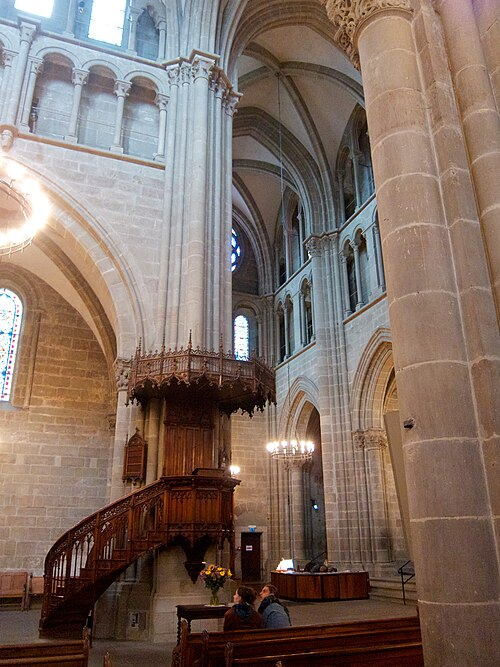
This photograph shows the interior of Saint-Pierre Cathedral in Geneva, the city’s principal church during the Reformation era. The relatively restrained interior helps students visualize the Reformed preference for simpler church spaces and a stronger focus on preaching and scripture rather than elaborate devotional imagery. It therefore complements the notes’ emphasis on Geneva as a model of reform and on worship becoming more sermon-centered. Source
Calvin believed that a reformed church had to shape the moral life of the entire community. In Geneva, he helped build a church structure that included pastors, teachers, elders, and deacons. This system was designed to preserve sound doctrine and enforce proper conduct.
One important institution was the consistory.
Consistory: A church court in Calvinist communities that supervised morals and discipline, often summoning people accused of misconduct or religious negligence.
The consistory examined cases involving adultery, drunkenness, blasphemy, domestic conflict, and absence from worship. Its purpose was not only punishment. Calvin believed that discipline corrected sin, protected the church, and preserved the purity of the Christian community. Church membership therefore carried clear moral expectations.
Discipline as a core principle
Church discipline was central to Calvin’s reforms, not a minor addition. Calvin argued that a true church required:
Right preaching of the Word of God
Proper administration of the sacraments
Active correction of moral and religious disorder
This reshaped Protestant practice. Worship became more focused on sermons and scripture, while church leaders paid closer attention to everyday behavior. Calvinism therefore combined belief with oversight. It aimed to create a godly society in which public and private conduct reflected divine law.
Why Calvin’s Doctrines Were Influential
Calvin’s teachings proved influential because they joined theological clarity to institutional order. Protestants drawn to Calvinism found not only a doctrine of salvation but also a disciplined model of church life. His theology answered major religious questions while his church structure offered a practical way to organize reform.
Predestination also gave meaning to uncertainty. In a century of upheaval, Calvin’s insistence that God controlled history and salvation could be reassuring as well as demanding. At the same time, his model of discipline gave Protestant communities durable institutions that outlasted individual preachers or local crises.
The Distinctive Character of Calvinist Communities
Calvinism tied doctrine and discipline together more tightly than many other forms of Protestantism. Communities shaped by Calvin often emphasized:
God’s total authority over salvation
careful self-examination for signs of grace
close study of scripture and regular preaching
moral supervision by church institutions
the idea of the church as a purified, disciplined community
These features made Calvinism especially powerful for Protestants who wanted both intellectual rigor and moral order in religious life.
Practice Questions
Identify ONE central feature of Calvin’s doctrine of predestination and briefly explain its significance for believers. (2 marks)
1 mark for identifying a valid feature, such as salvation depending entirely on God’s choice, not human merit or church rituals.
1 mark for explaining its significance, such as encouraging self-examination, stressing God’s sovereignty, or shaping the idea of the elect.
Explain how John Calvin reshaped both Protestant belief and church discipline in the sixteenth century. (6 marks)
Up to 2 marks for explaining changes in belief, such as the emphasis on God’s sovereignty, predestination, or the rejection of human effort in salvation.
Up to 2 marks for explaining the effect on believers, such as self-scrutiny, the search for signs of election, or a more morally serious religious life.
Up to 2 marks for explaining changes in church discipline, such as the role of the consistory, moral supervision, or the organization of a more regulated religious community.
FAQ
Calvin had training in law, and that helped shape the way he thought and wrote.
His theology often appears highly ordered, precise, and systematic. He liked clear definitions, structured arguments, and carefully organised institutions. That legal cast of mind also suited his concern for discipline, procedure, and the proper governance of the church.
Catechisms were short teaching manuals, usually in question-and-answer form, used to teach doctrine clearly and consistently.
They helped children and adults memorise key beliefs about God, sin, salvation, the sacraments, and Christian duty. In Calvinist settings, catechisms also linked church life to the household, because parents were expected to take part in religious instruction.
Calvinists preferred worship that seemed closely rooted in scripture, and the Psalms offered biblical language for prayer and praise.
Singing metrical psalms allowed the whole congregation to participate without relying on elaborate choirs or complex ceremonial music. This suited Calvinist ideas about simplicity, reverence, and the central place of God’s word in worship.
Elders were lay leaders who helped supervise the moral and spiritual life of the community.
They did more than attend services. They could visit households, observe behaviour, report concerns, and take part in disciplinary hearings. Their presence meant that discipline was not only the work of ministers; it involved respected members of the wider congregation as well.
No. Predestination remained a core teaching, but different Calvinist writers and churches sometimes stressed it differently.
Some placed stronger emphasis on assurance, pastoral care, and signs of grace in daily life. Others presented predestination in a more abstract and sharply defined theological form. Over time, later Calvinists could be more rigid or technical than Calvin himself had been.


_(2).jpg)