AP Syllabus focus:
'Groups such as Huguenots, Puritans, and nobles in Poland used religious conflict to contest political and religious authority.'
In several parts of early modern Europe, religious identity became a political weapon, allowing minority groups and local elites to resist royal control, defend privileges, and redefine the relationship between faith and power.
Religion as a Language of Resistance
Post-Reformation Europe no longer had a single religious authority. This fragmentation gave opponents of rulers a powerful new argument: if a king, bishop, or established church promoted false religion, resistance could appear not only justified but necessary. In France, England, and Poland, religious minorities and reform-minded elites used confessional conflict to defend privileges, restrain monarchs, and challenge institutions that claimed to speak for both church and state.
Huguenots in France
Calvinism and noble opposition
The Huguenots were French Protestants, most of them influenced by Calvinist teaching.
Huguenots: French Protestants, largely Calvinist, who became a significant religious and political minority in sixteenth-century France.
Huguenot strength was especially important among sections of the nobility and in some towns. For many supporters, conversion was religiously sincere, but it also had clear political consequences. Huguenot nobles could use Protestant identity to resist the growing power of the French crown and to oppose powerful Catholic factions at court. Because France was not yet fully centralized, leading nobles still expected to defend regional influence, military followings, and local rights.
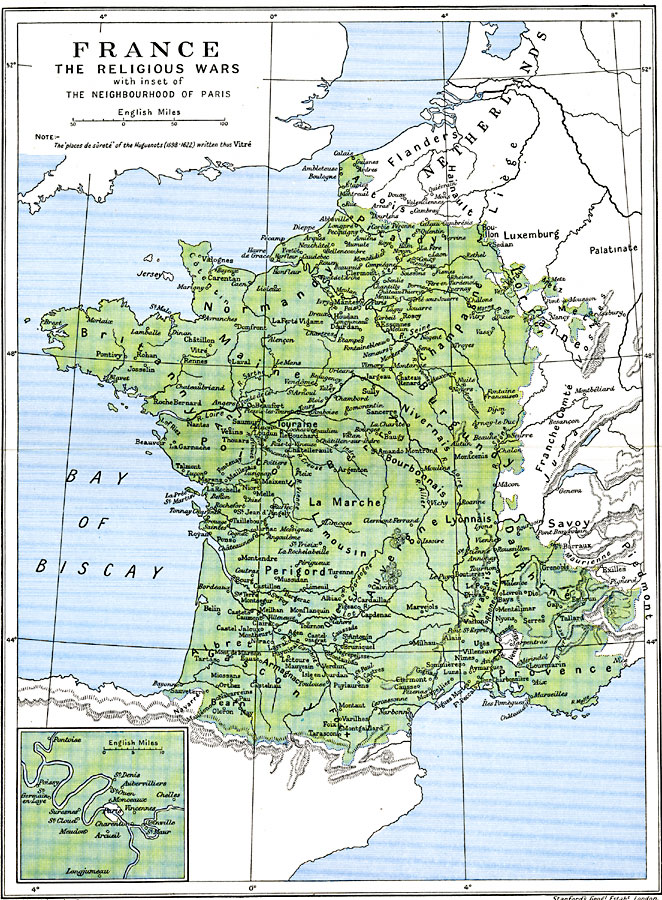
This historical atlas map of France during the Religious Wars highlights major cities and regions involved in Catholic–Huguenot conflict, including the Huguenot-held fortified “places de sûreté.” Seeing these strongholds on a national map helps explain how Protestant identity could translate into concrete political leverage, military coordination, and bargaining power against the crown. Source
During periods of crisis, Huguenots organized armed resistance, political alliances, and representative assemblies. Their challenge was therefore aimed at both religious authority—the dominance of the Catholic Church—and political authority—the monarchy’s effort to impose order from above. Religious conflict became a way to argue that rulers who endangered true religion could be opposed, negotiated with, or forced to compromise.
Puritans in England
Reforming church and monarchy
The Puritans were English Protestants who believed the Reformation in England had not gone far enough.
Puritans: English Protestants who sought to remove remaining Catholic elements from the Church of England and create a more thoroughly reformed church.
Unlike Huguenots, most Puritans did not initially seek to leave the national church. Instead, they wanted to purify it by removing ceremonies, vestments, and church structures they viewed as too Catholic. This immediately raised a political issue, because the monarch governed the Church of England. To challenge bishops, liturgy, or royal religious policy was also to challenge royal authority.
Puritans used sermons, pamphlets, Parliament, and local congregations to press for further reform. Many disliked the authority of bishops, partly because bishops acted as agents of the crown. Some Puritans favored a more Presbyterian structure, in which church government would rest less on royal control and more on assemblies of clergy and elders. As a result, disputes over worship and doctrine became disputes about who should rule the church and how far the monarch’s power should reach.
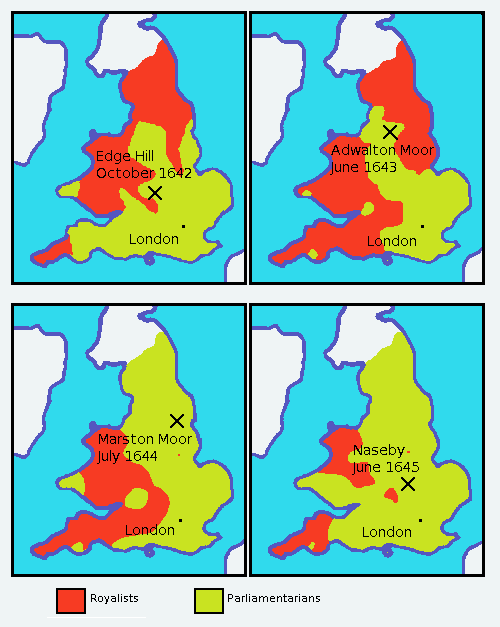
This map shows areas controlled by Parliamentarians and Royalists during the English Civil War (1642–1645). It helps students connect Puritan-driven disputes over church governance to the larger struggle over political sovereignty, since religious and constitutional conflicts often tracked onto geography, garrisons, and regional power bases. Source
Puritanism therefore linked religious conviction to political resistance. If a ruler defended ceremonies or church practices seen as unbiblical, many Puritans argued that obedience had limits. Their movement did not automatically reject monarchy, but it narrowed the space in which rulers could claim unquestioned control over religion.
Nobles in Poland
Religious plurality and noble liberty
In Poland-Lithuania, religious conflict took a different form because the monarchy was weaker and the nobility enjoyed unusual political power. The szlachta were the legally privileged noble class who dominated the political life of the Polish-Lithuanian Commonwealth.
Szlachta: The noble class of Poland-Lithuania, possessing extensive legal and political privileges and major influence over the monarchy.
Many nobles were attracted to Protestant ideas, especially Calvinism, not only for theological reasons but also because reform weakened the influence of the Catholic hierarchy and supported noble independence. In this system, kings were elected, and noble assemblies had major power. That made religion a useful tool for limiting both royal authority and clerical interference.
Polish nobles often defended religious toleration because toleration protected their political freedoms.
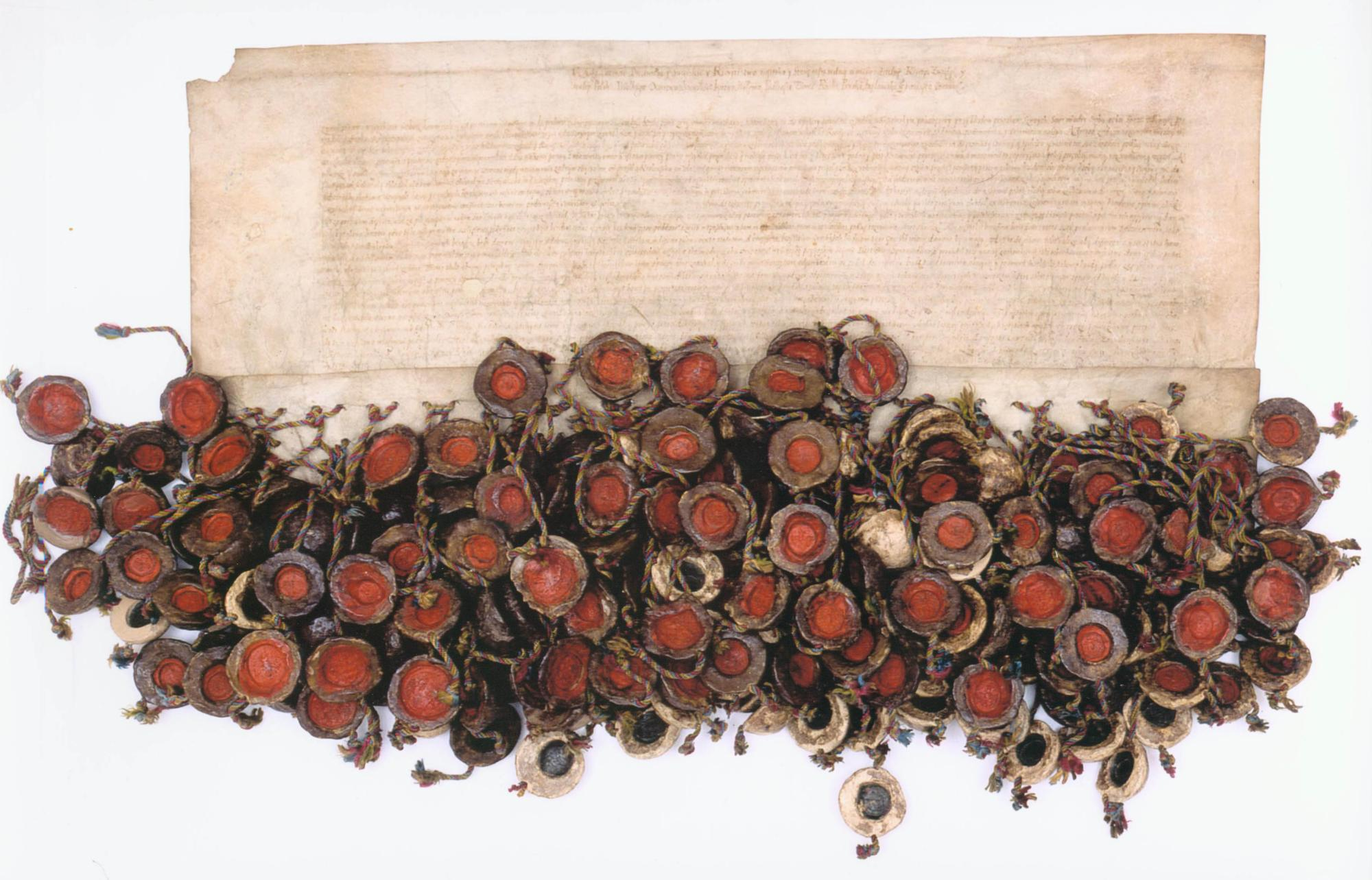
This UNESCO-hosted image accompanies documentation on the Warsaw Confederation (1573), a landmark agreement associated with legally protected religious toleration in the Polish-Lithuanian Commonwealth. Placing the document in view underscores how “toleration” could be an elite political project—designed to secure noble liberties and prevent any single confession from becoming a tool of centralization. Source
Allowing different confessions reduced the chance that any ruler could use religion to centralize power. In practice, this meant that some nobles supported Protestant causes while also resisting attempts by either the monarchy or the Catholic Church to dominate public life. Their goal was often less a fully Protestant state than a political order in which noble rights remained secure.
This made Poland distinctive. Religious pluralism there was not simply a sign of harmony; it was also a strategy by which elites preserved their authority. Nobles used confessional division to check kings, defend local autonomy, and restrict the reach of religious uniformity.
Common Patterns Across the Three Cases
Although these groups differed greatly, they shared several important features:
Religion offered legitimacy: resistance could be framed as obedience to God rather than rebellion.
Political grievances and religious grievances overlapped: conflicts about doctrine often concealed struggles over taxation, officeholding, local privilege, or church governance.
Elites played a major role: Huguenot nobles, Puritan members of Parliament and ministers, and Polish nobles all used religion to strengthen their bargaining position.
Authority was divided: once Europe no longer accepted a single religious truth under a single church, rulers found it harder to demand unquestioned obedience.
These cases show that Reformation conflict did more than divide Christians. It gave organized groups new language, institutions, and allies for challenging those who claimed the right to rule both souls and states.
Practice Questions
Identify one way Puritans challenged political authority in England. (2 marks)
1 mark for identifying a valid way, such as attacking bishops, using Parliament to demand reform, criticizing royal religious policy, or promoting Presbyterian church government.
1 mark for briefly explaining how that action challenged the monarch’s control over the Church of England.
Evaluate the extent to which religious conflict strengthened the political position of elites in France, England, and Poland during the sixteenth and early seventeenth centuries. (5 marks)
1 mark for a defensible claim that addresses the extent of elite advantage.
1 mark for accurate evidence about the Huguenots, such as noble use of Calvinism to resist the crown or Catholic factions.
1 mark for accurate evidence about the Puritans, such as use of Parliament, preaching, or anti-bishop arguments to limit royal control.
1 mark for accurate evidence about Polish nobles, such as use of Protestantism or toleration to defend noble liberties against monarchy or clergy.
1 mark for analysis that compares the cases or explains that religion was both sincere belief and a political tool.
FAQ
Huguenot growth depended heavily on local conditions. It often spread where noble patrons protected Protestant preachers, where towns had active commercial networks, and where royal power felt more distant.
In parts of the south and west, urban elites and provincial nobles could use Protestantism to express both religious conviction and dissatisfaction with central control. Geography, patronage, and local politics therefore mattered as much as doctrine.
Both groups wanted a more thoroughly reformed English church, but they disagreed about church government. Presbyterians wanted a national system run by assemblies of ministers and elders rather than bishops.
Independents, sometimes called Congregationalists, believed each gathered church should govern itself with much less outside control. That difference mattered politically, because it shaped how far Puritans wanted the state to supervise religion.
Because kings were elected, Polish nobles had repeated chances to bargain with candidates before they took the throne. A new king could not simply inherit unquestioned authority.
This encouraged a political culture in which nobles guarded their liberties closely. Religious policy became part of that bargaining, since nobles feared that a strong monarch might use religious uniformity to increase central power.
The Warsaw Confederation of 1573 was an agreement among the Polish nobility promising religious peace after the death of the last Jagiellonian king. It aimed to prevent confessional violence during a dangerous succession crisis.
It was unusual because it offered a legal basis for coexistence at a time when many European states were moving towards sharper confessional division. Its toleration was not modern equality, but it was still strikingly broad for its age.
Several forces weakened it. Jesuit education was highly effective, Catholic reform gained momentum, and Protestant groups in Poland often remained divided among themselves.
Over time, Catholicism also became more closely associated with elite culture and political loyalty. As that happened, some noble families returned to Catholicism without giving up their traditional liberties, reducing the political usefulness of Protestant identity.