AP Syllabus focus:
'The Protestant and Catholic Reformations transformed theology, institutions, culture, and attitudes toward wealth and prosperity.'
Across the sixteenth and seventeenth centuries, religious reform did more than divide churches. It reshaped belief, reorganized institutions, altered everyday culture, and changed how many Europeans understood work, discipline, and prosperity.
Transforming Christian Theology
The Protestant Reformation challenged central teachings of medieval Catholicism and offered new ways to understand salvation and religious authority. Reformers such as Martin Luther argued that salvation came through faith alone, not through a combination of faith, sacraments, and good works administered by the church.
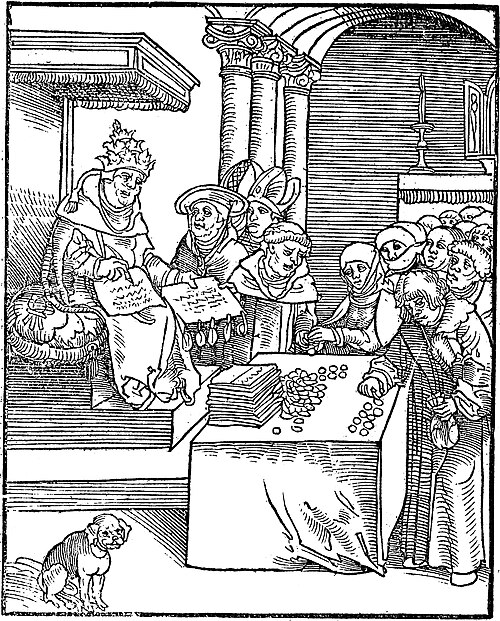
This Reformation-era woodcut depicts the pope selling indulgences, a practice that became a flashpoint for Protestant critiques of corruption and misplaced spiritual authority. As an example of polemical print culture, it also illustrates how images and mass-produced prints helped spread reform messages quickly across Europe. Source
They also stressed scripture alone as the highest religious authority, reducing the importance of papal rulings and church tradition.
These ideas changed the relationship between believers and the church:
Priests were no longer seen by Protestants as a necessary spiritual hierarchy standing between God and ordinary Christians.
The Bible became the key source of truth, encouraging translation into vernacular languages.
Preaching became more important than elaborate ritual in many Protestant churches.
Other Protestants, especially Calvinists, emphasized God’s absolute power and the doctrine of predestination, which taught that God had already determined who would be saved. This created a more disciplined and morally demanding religious outlook.
The Catholic Reformation did not accept Protestant theology, but it also brought major religious change. Catholic leaders reaffirmed traditional teachings such as the seven sacraments, the value of good works, and the authority of both scripture and tradition. At the same time, Catholic reformers tried to correct corruption and strengthen spiritual seriousness within the church. Theology therefore became clearer, more sharply defined, and more confessional on both sides.
Rebuilding Religious Institutions
Religious reform transformed the institutions through which Europeans practiced Christianity. In Protestant lands, rulers and city councils often took charge of church organization. This weakened the independent authority of the papacy and created new territorial churches. Church services were simplified, clergy were often allowed to marry, and monasteries were closed or reduced in many areas.
Institutional change in Protestant regions often included:
reorganized parish structures
sermons and liturgy in the vernacular
state-supervised churches
new systems of religious instruction for ordinary believers
The Catholic Church also underwent major institutional reform.
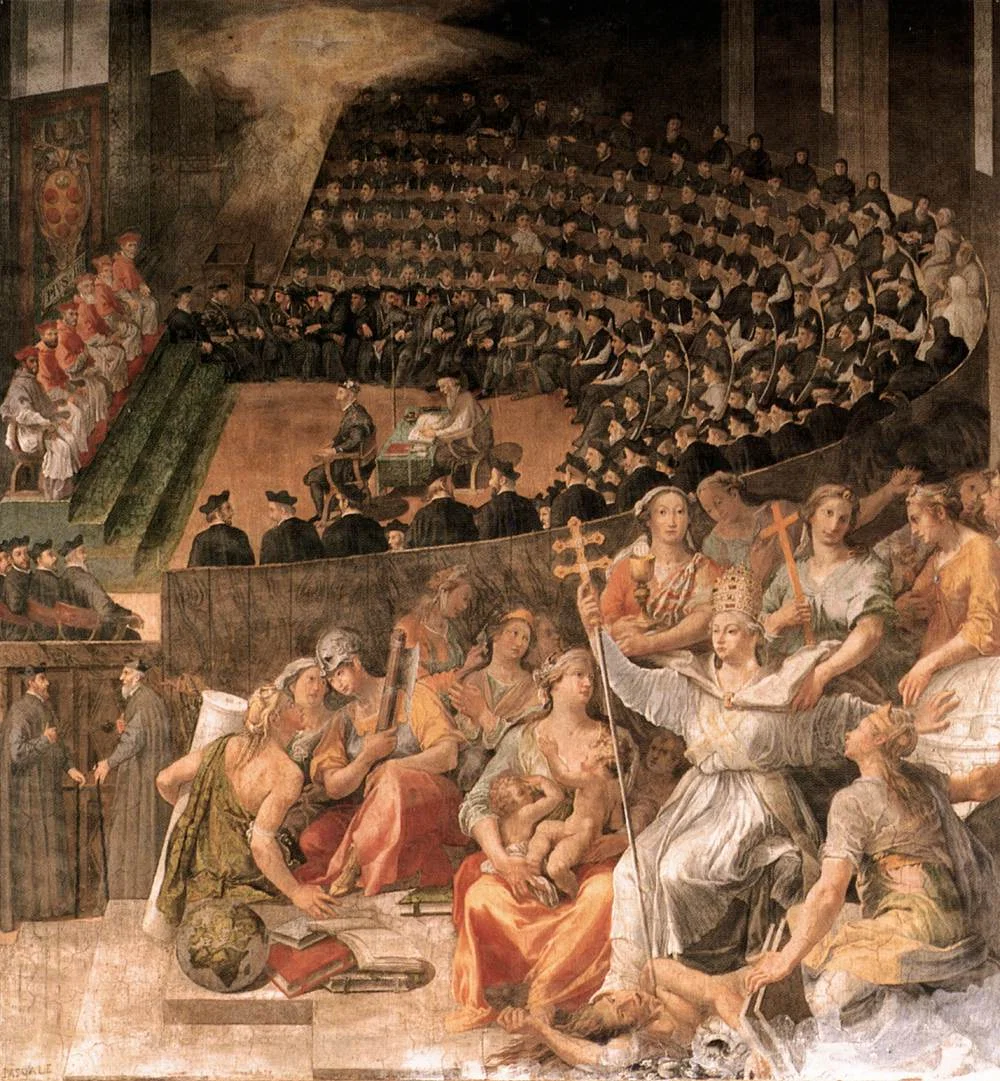
This fresco portrays a session of the Council of Trent (1545–1563), the Catholic Church’s major reform council in response to Protestant challenges. It visually underscores how Catholic reform worked through formal institutions—bishops, theologians, and councils—to clarify doctrine and strengthen oversight and discipline. Source
Church leaders sought to improve the education and moral conduct of clergy, strengthen episcopal oversight, and renew religious orders. New and reformed institutions made Catholicism more disciplined and better organized than it had been before the Reformation crisis.
This meant that both Protestant and Catholic reformations produced stronger religious structures, even though they moved in different directions. Europe did not become less religious; instead, religion became more structured, supervised, and clearly divided into competing confessions.
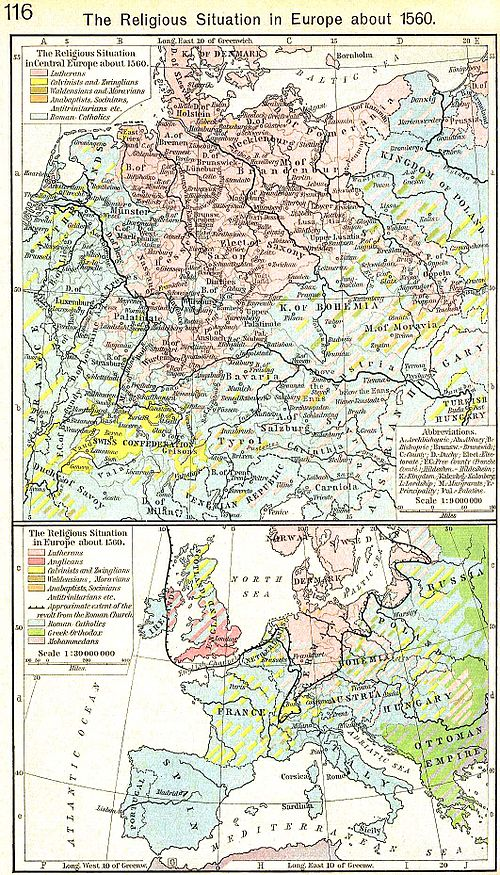
This historical atlas map visualizes the religious divisions of Europe around 1560, distinguishing major Protestant groupings (e.g., Lutheran and Reformed/Calvinist) from Roman Catholic regions. It helps explain how confessional identity became tied to territory and state authority in the decades after the initial Reformation break. Source
Cultural Change in Everyday Life
The Reformations changed culture as much as doctrine. Religion became more deeply rooted in daily habits, education, family life, and artistic expression. Protestants promoted literacy so that believers could read scripture and learn catechisms. As a result, schooling and Bible reading gained greater importance in many communities.
Cultural changes included:
wider use of vernacular languages in worship and religious texts
increased emphasis on catechisms, sermons, and religious instruction
greater focus on the household as a center of moral and religious life
new expectations of discipline, sobriety, and regular worship
In Protestant areas, some churches rejected or reduced the use of religious images, relics, and elaborate ceremonial practices. This shifted religious culture toward preaching, reading, and congregational participation. In Catholic regions, reform took a different form. Catholic leaders defended sacred art, ritual, and devotional practices, but aimed to make them more emotionally powerful, doctrinally clear, and spiritually serious.
Both reformations therefore reshaped culture rather than simply replacing one faith with another. People experienced religion through different books, prayers, music, church interiors, and patterns of worship. The result was a more divided but also more intensely religious Europe.
Wealth, Work, and Prosperity
The Reformations also affected attitudes toward wealth and prosperity. Medieval Christianity had often treated wealth with suspicion when it encouraged greed, pride, or luxury. Reformers did not simply celebrate riches, but some Protestant groups, especially Calvinists, gave new moral importance to disciplined labor, thrift, and productive activity.
In this view:
hard work could be understood as part of a believer’s calling
economic success might be interpreted by some as a possible sign of God’s favor
idleness, waste, and luxury remained sinful
This did not mean all Protestants believed wealth guaranteed salvation. Rather, prosperity could be seen as evidence of a godly, orderly life when combined with self-control and moral behavior. That outlook contributed to a more favorable view of commerce and economic diligence in some Protestant communities.
Catholic reform did not embrace prosperity in quite the same way, but it also valued discipline, charity, and responsible stewardship. Wealth was still judged by how it was used: for selfish excess or for religious and social good. In both confessions, economic life became more morally scrutinized.
The broader effect was a cultural shift in how Europeans connected religion to everyday labor, household management, and material success. Theology no longer remained separate from economic behavior; it helped shape how people judged ambition, effort, and prosperity.
Practice Questions
Identify ONE way the Protestant Reformation changed Christian theology and ONE way the Catholic Reformation changed church institutions. (2 marks)
1 mark for identifying one Protestant theological change, such as salvation by faith alone, scripture as the highest authority, or predestination.
1 mark for identifying one Catholic institutional change, such as improved clerical training, stronger episcopal oversight, or renewed religious orders.
Evaluate the extent to which the Protestant and Catholic Reformations changed European attitudes toward wealth and prosperity in the sixteenth and early seventeenth centuries. (5 marks)
1 mark for a clear argument that directly addresses change in attitudes toward wealth and prosperity.
1 mark for specific Protestant evidence, such as Calvinist emphasis on calling, discipline, thrift, or the idea that success might suggest God’s favor.
1 mark for specific Catholic evidence, such as continued stress on charity, moral limits on wealth, and responsible stewardship.
1 mark for analysis explaining how these attitudes affected culture or behavior, not just belief.
1 mark for complexity or qualification, such as noting that neither side simply praised wealth and both condemned greed, luxury, and idleness.
FAQ
Congregational singing helped turn worship into a more collective and participatory experience.
In many Protestant settings:
hymns taught doctrine in memorable form
singing in the vernacular involved the whole congregation
music reinforced the idea that believers should engage directly with worship, not merely observe it
This gave religious culture a more communal and educational character.
Post-Reformation Catholicism promoted saints who embodied discipline, charity, missionary zeal, and obedience.
These figures mattered because they:
offered living or recent examples of renewed holiness
gave the faithful models of active devotion
showed that Catholic reform meant spiritual renewal, not only defence against Protestants
Saints therefore became part of Catholic cultural self-definition.
Not all Protestants treated sacred images in the same way.
Some believed images encouraged idolatry and should be destroyed. Others accepted limited visual decoration if it did not become an object of worship.
Differences often depended on:
local theology
the views of magistrates or clergy
how strongly a community associated images with Catholic practice
So iconoclasm was important, but not uniform.
Girls did not receive equal education with boys, but confessional reform could still widen basic instruction.
In some Protestant areas, girls were taught:
reading for Bible study
catechism knowledge
household piety
Catholic reform also supported female education through convent schools and teaching orders in certain regions.
The aim was usually moral and religious formation rather than intellectual equality.
No. Many historians think the idea is useful but too simple if applied broadly.
Critics note that:
not all Protestants shared the same economic outlook
Catholic merchants and bankers were also active and successful
prosperity depended on trade, politics, geography, and institutions as well as religion
The concept can explain part of a cultural shift, but it should not be treated as the sole cause of economic change.