

AP Syllabus focus: ‘As the Abbasid Caliphate fragmented, new Islamic political entities emerged, often dominated by Turkic peoples, showing continuity, innovation, and diversity.’
Abbasid political unity weakened after 1200 as provincial rulers and military elites took power. Turkic commanders and dynasties became especially influential, reshaping governance while preserving key Islamic institutions and sources of legitimacy.
Abbasid Fragmentation: What Changed and Why
The Abbasid Caliphate struggled to maintain direct control across a vast, diverse territory, leading to fragmentation (the splintering of central authority into competing regional powers).
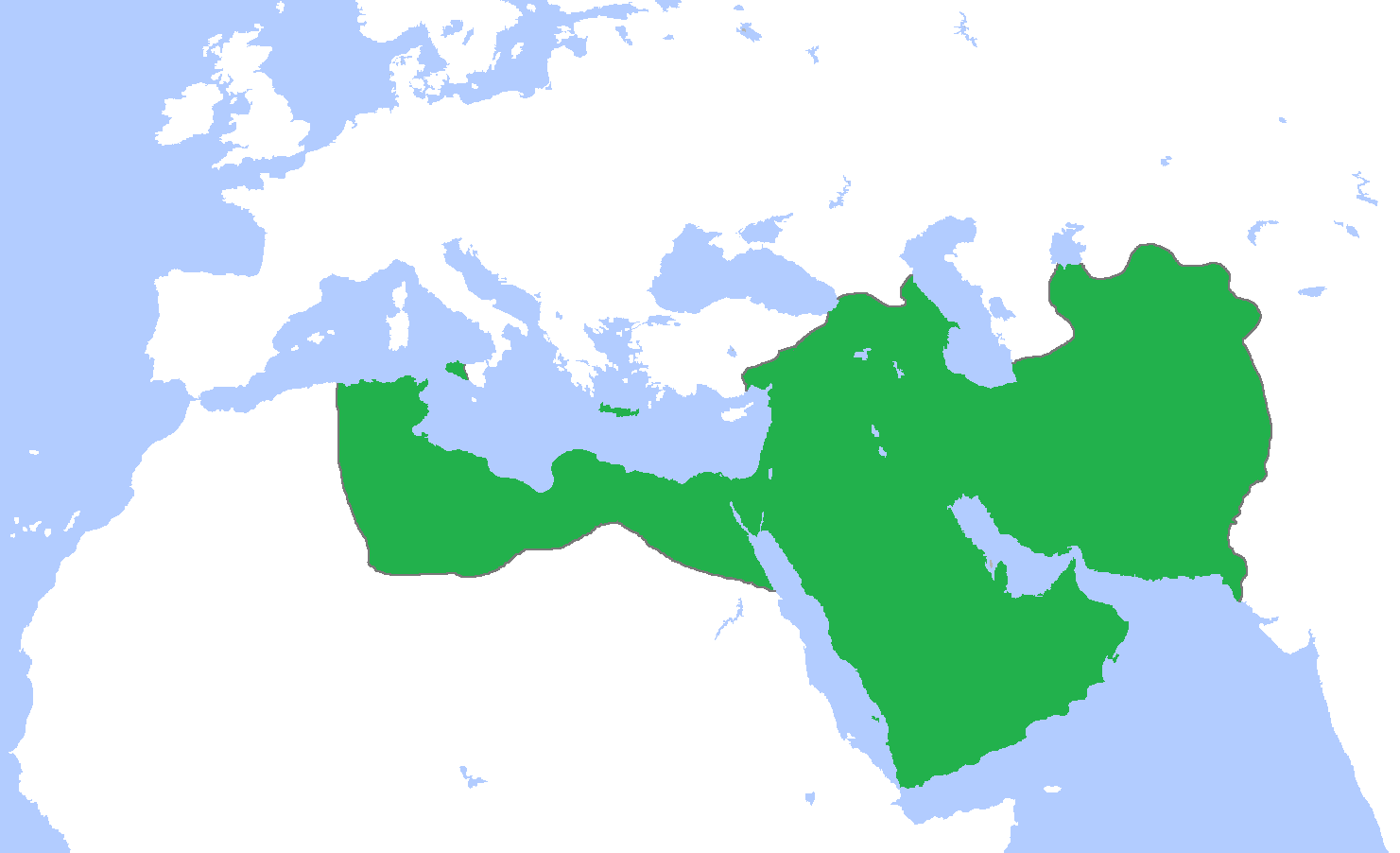
Political map of the Abbasid Caliphate at its greatest extent (c. 850 CE). It situates Baghdad and the empire’s core regions, making clear why distance and regional diversity created persistent challenges for centralized rule. Source
Pressures undermining central rule
Provincial autonomy increased as governors, local elites, and military leaders collected revenues and raised forces with less oversight.
Court factionalism and succession disputes weakened confidence in Baghdad’s ability to govern.
Military influence expanded as commanders gained leverage over appointments and taxation.
Regional competition intensified, as rival dynasties and city-based power centers asserted independence in practice, even when they claimed loyalty in name.
What persisted despite fragmentation (continuity)
The caliph remained a potent symbol of religious and historical legitimacy, even when lacking real coercive power.
Islamic law (sharia) and the authority of the ulama continued to structure courts, education, and public morality.
Long-distance commerce across Afro-Eurasia still depended on relatively shared legal ideas and mercantile norms in many Muslim-majority cities.
Turkic Influence: Military Power to Political Authority
Turkic peoples from the Central Asian steppe entered Islamic realms through migration, service, and conquest.
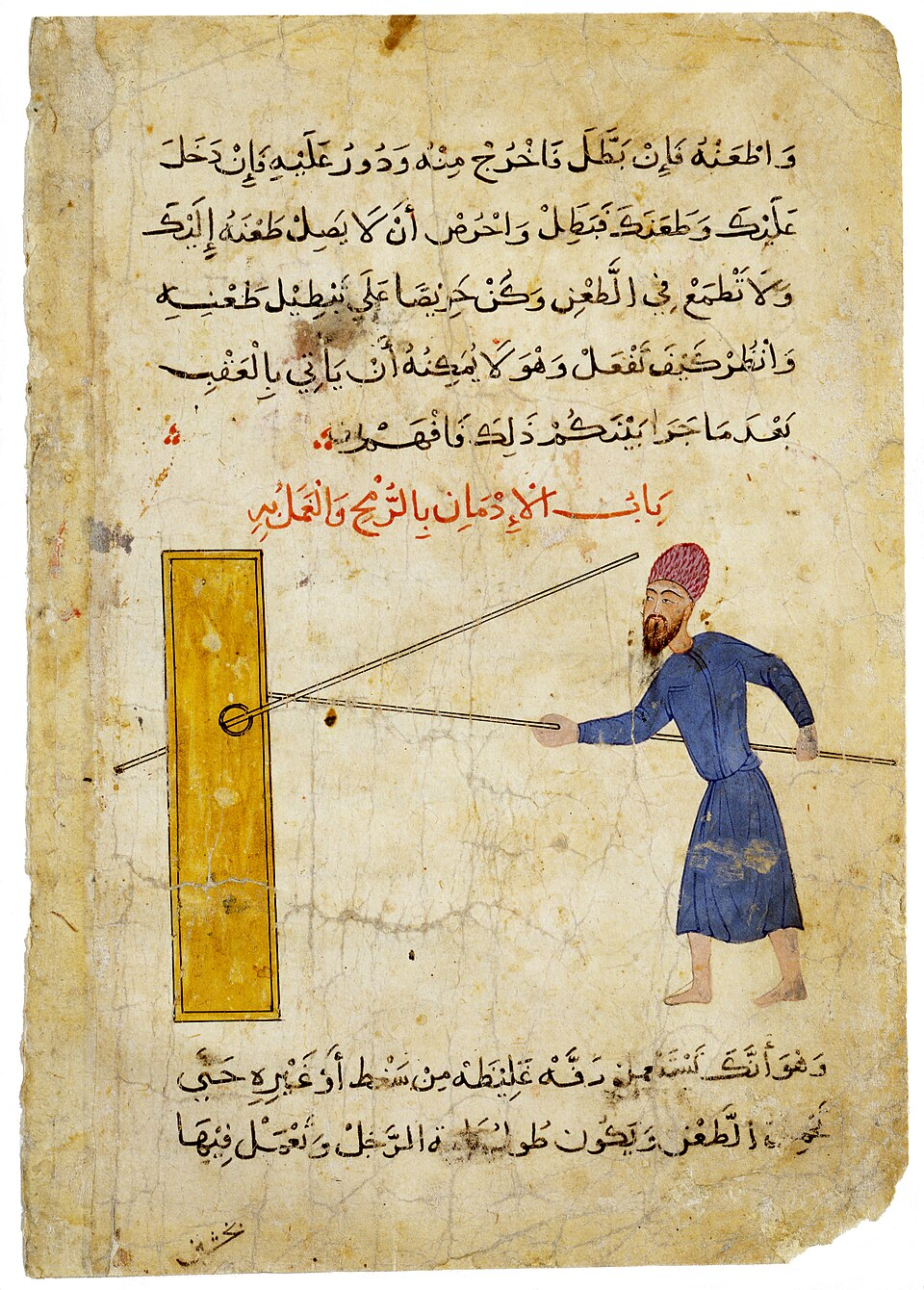
Miniature painting of a Mamluk practicing with a lance from a furusiyya (horsemanship/military arts) manuscript, c. 1500 (Egypt or Syria). Although later than the Abbasids, it vividly illustrates the professional cavalry training culture associated with slave-soldier institutions (parallel to ghulams) that helped military elites convert battlefield skill into political leverage. Source
Their military skills (especially mounted warfare) made them central to state security, and in many regions they became the core of ruling coalitions.
Ghulam — a military slave-soldier (often of Turkic origin) trained for elite service; such troops could become kingmakers and sometimes founders of new dynasties.
Pathways to dominance
Recruitment into armies: Turkic soldiers were valued as disciplined cavalry and household troops tied to commanders rather than local society.
Patronage networks: military leaders rewarded followers with offices and revenue rights, building durable power bases.
Political brokerage: Turkic commanders often presented themselves as protectors of order, defending cities, trade routes, and Sunni institutions (in many regions), while negotiating legitimacy from caliphs or religious scholars.
New Islamic Political Entities: Continuity, Innovation, and Diversity
As Abbasid authority fragmented, new states emerged that blended inherited Islamic governance with new political realities—often under Turkic leadership.
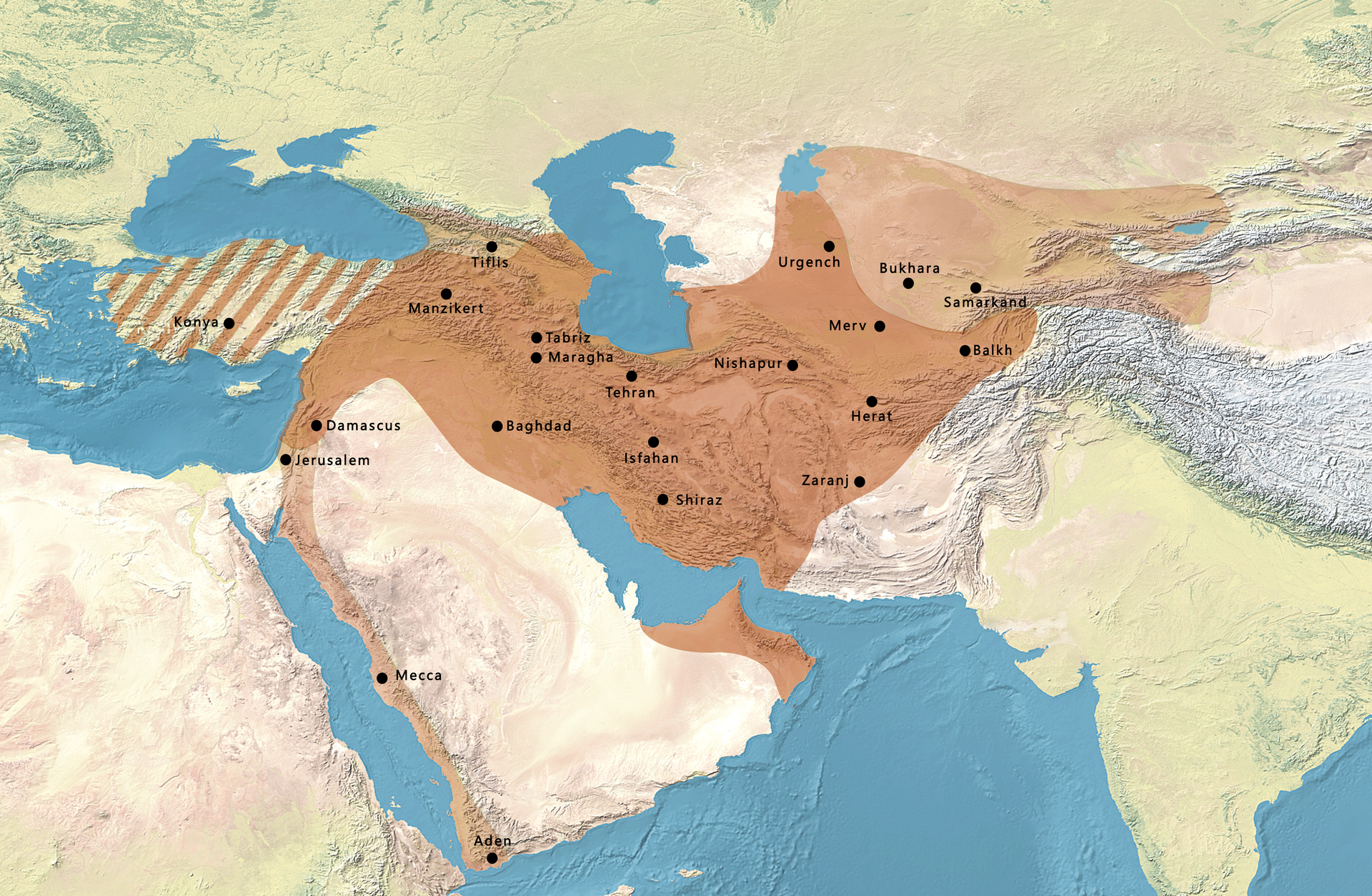
Map of the Seljuk Empire (1092), showing the spatial scale of a Turkic-led Islamic political order across the Middle East and Central Asia. The map is useful for connecting the notes’ themes of fragmentation and innovation—regional military power could coexist with (and seek legitimacy from) older Islamic institutions. Source
Continuity: legitimacy and administration
Many rulers upheld the caliphal ideal by seeking formal recognition or by ruling “in the caliph’s name.”
Bureaucratic practices persisted, including reliance on scribes, taxation offices, and urban administrators.
Public piety and patronage of religious learning reinforced political credibility, especially in major cities.
Innovation: new ruling models and titles
Power increasingly rested with sultans and military strongmen who exercised real authority while leaving symbolic roles to caliphs or figurehead officials.
Sultan — a ruler claiming political and military authority, often governing alongside (or under the nominal legitimacy of) a caliph.
Governance often centered on military households and commander-led regimes rather than kin-based Arab tribal politics.
Regional rulers developed distinct courts and administrative cultures, adapting to local demographics, economies, and strategic threats.
Diversity: political forms across regions
Some regimes were strongly urban and bureaucratic, anchored in old imperial cities; others were more frontier-oriented, built around campaigning and mobile militaries.
Religious and cultural orientations varied by place and time, producing multiple “Islamic” political expressions rather than a single unified model.
Practice Questions
Explain one way Turkic military influence contributed to Abbasid fragmentation. (2 marks)
1 mark: Identifies a valid way (e.g., Turkic commanders/ghulams gained control over appointments, taxation, or succession).
1 mark: Explains how this weakened central Abbasid authority and empowered regional rulers.
“After 1200, political change in the Abbasid world was marked by both continuity and innovation.” Explain this claim using evidence. (6 marks)
1 mark: Makes a defensible claim about continuity and innovation.
2 marks: Evidence for continuity (e.g., caliphal legitimacy remained symbolically important; sharia/ulama persisted).
2 marks: Evidence for innovation (e.g., rise of sultans and military-led regimes; Turkic-dominated power structures).
1 mark: Explains how the evidence supports the argument (links fragmentation to new state forms while noting what endured).
FAQ
In many areas, the caliph shifted from a direct governor to a source of symbolic legitimacy.
This allowed rulers to claim lawful authority without restoring a unified empire.
Their training, cohesion, and proximity to rulers gave them leverage in crises.
When central institutions weakened, commanders could convert military control into fiscal and administrative power.
Many regimes retained Persianate bureaucratic skills in record-keeping, taxation, and court culture.
This helped Turkic military elites govern settled, urban populations effectively.
Not necessarily; ruling elites could be Turkic while administration and high culture remained Persian or Arabic.
Outcomes depended on local demographics, court patronage, and settlement patterns.
It increased alliance-making, marriage politics, and short-term coalitions.
Rival courts often balanced legitimacy claims with pragmatic military and commercial interests.



.png)