AP Syllabus focus: ‘Muslim states encouraged major intellectual innovations and exchanges, including advances in mathematics, literature, and medicine.’
Intellectual life in the Muslim world (c. 1200–1450) thrived through state patronage, urban institutions, and long-distance connectivity. Scholars built shared methods and texts that circulated widely, advancing mathematics, literature, and medicine.
How Muslim States Encouraged Innovation and Exchange
Muslim-ruled states supported learning because it strengthened administration, religious legitimacy, and prestige.
Patronage and Scholarly Networks
Rulers and elites funded scholars through courts, stipends, and endowed institutions, making scholarship a respected career.
Common scholarly languages (especially Arabic, alongside Persian) helped ideas move across regions.
Travel by scholars, merchants, and pilgrims facilitated intellectual exchange between major cities.
Institutions that Sustained Learning
Formal spaces anchored scholarship in urban life.
Madrasa: An institution of higher learning that trained scholars, especially in Islamic law and related fields, often supported by charitable endowments.
Madrasas helped standardise curricula and produced literate officials and jurists, while libraries and study circles promoted copying, commentary, and debate.
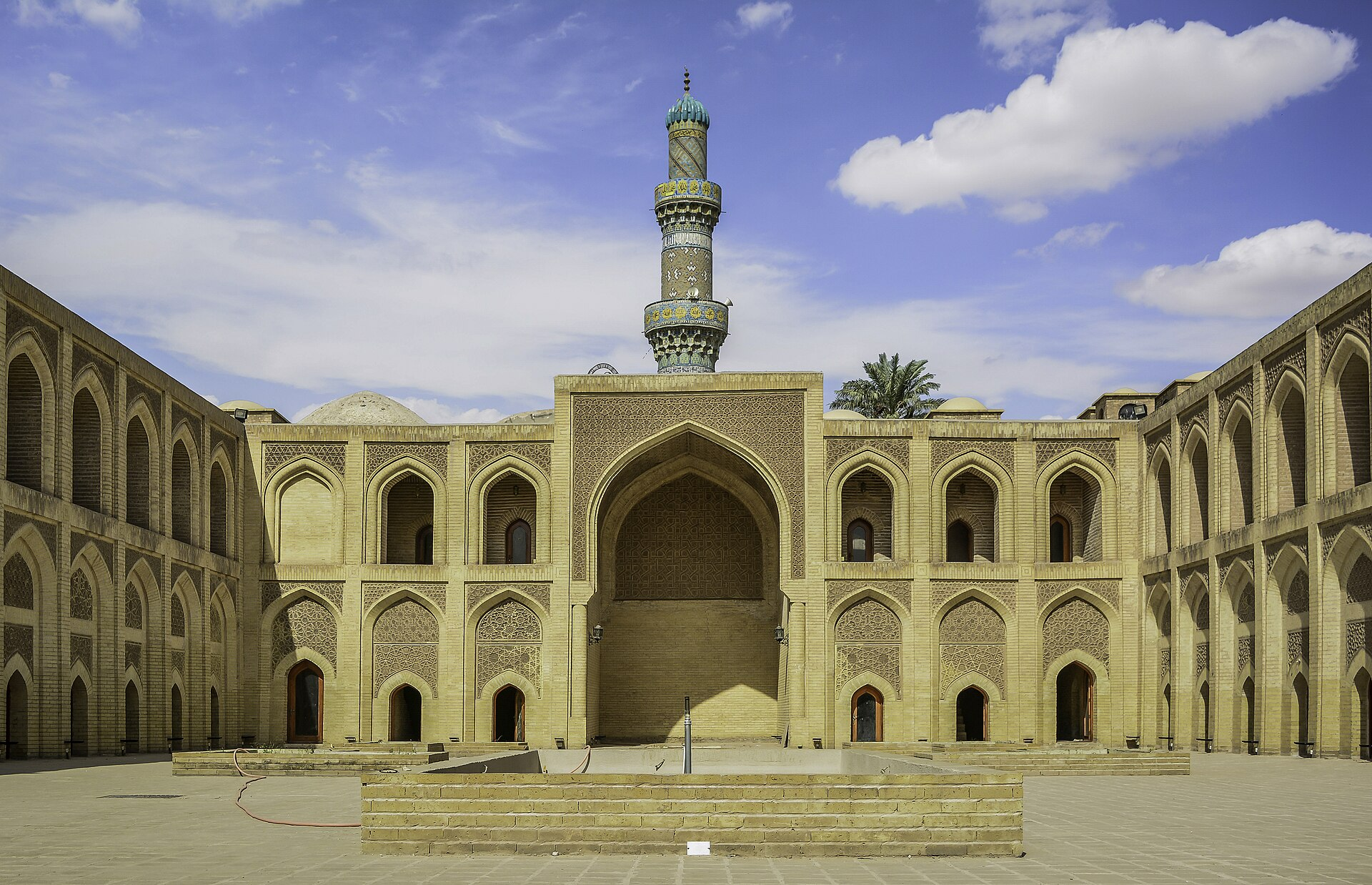
Interior courtyard of the Mustansiriyya Madrasa (Baghdad), a prominent Abbasid-era educational complex organized around a central open court with surrounding arcades. The layout illustrates how madrasas functioned as durable urban institutions—providing space for teaching, residence, and scholarly interaction supported by elite patronage. Source
Advances in Mathematics (and Related Sciences)
Mathematics was valued for practical governance and scholarly problem-solving, including calculation, inheritance law, architecture, and astronomy.
Key Developments
Continued refinement of algebraic methods and geometry for solving complex problems.
Growth in trigonometry and astronomical computation used for calendars and observation.
Construction of observatories and production of updated tables by court-supported scholars in parts of Central and Southwest Asia.
Even when discoveries were incremental, the wider achievement was the creation of shared techniques that could be taught, replicated, and transmitted across the Muslim world.
Literature: Courtly Culture, Ethics, and Social Analysis
Literary production expanded in both Arabic and Persian, shaped by elite patronage and broad reading publics in cities.
Major Literary Forms
Poetry and mystically themed verse flourished in Persianate cultural spheres, often exploring devotion, ethics, and love.
Adab (broadly, cultured writing on proper conduct and learning) reinforced elite norms and administrative values.
Historical writing and biographical dictionaries preserved memory, legitimacy, and models of governance.
Analytical prose also grew; for example, Ibn Khaldun’s work linked politics, economics, and social cohesion, reflecting sophisticated approaches to understanding human societies.
Medicine: Hospitals, Training, and New Observations
Medical learning combined theory with clinical practice, supported by institutions that served both public welfare and state image.
Bimaristan: A hospital in the Islamic world that provided organised medical care and could function as a centre for medical training.
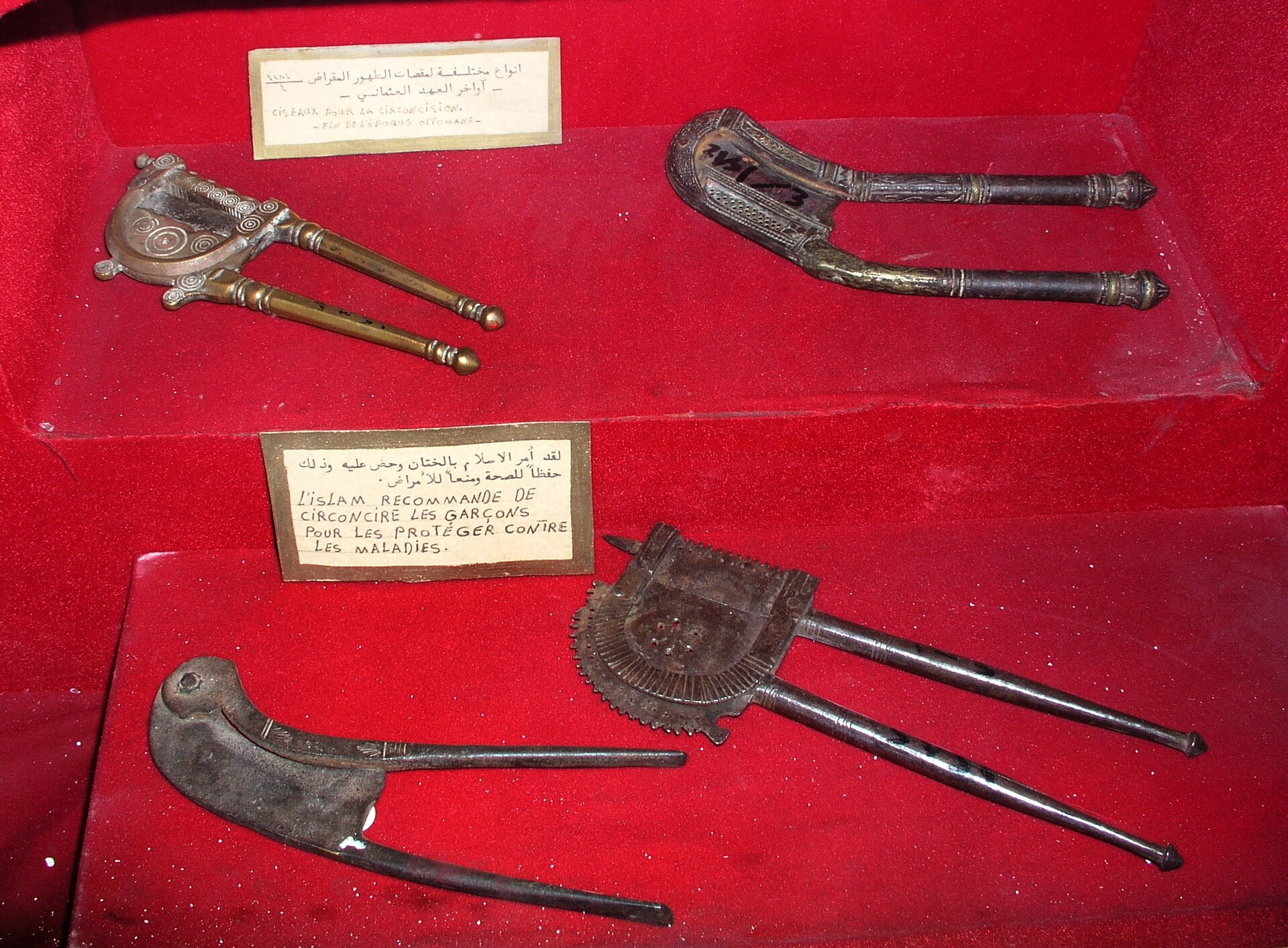
Photograph from the Nur al-Din Bimaristan (Damascus), a major medieval Islamic hospital complex later preserved as a museum. The material setting helps illustrate how bimaristans were institutional spaces where care, training, and the transmission of medical knowledge could be organized under state and elite support. Source
Medical Innovation and Exchange
Hospitals in major cities supported training, pharmacy, and the compilation of medical reference works.
Physicians built on established traditions while making new observations; a notable example is Ibn al-Nafis (13th century), associated with improved understanding of blood flow through the lungs.
Medical texts and practitioners circulated across regions, encouraging shared standards of diagnosis and treatment.
Why These Innovations Mattered (AP Emphasis)
Muslim states encouraged learning through funding, institutions, and prestige.
Advances appeared in mathematics, literature, and medicine, and spread through exchange across interconnected regions.
The result was a durable, transregional scholarly culture that supported governance and urban life.
Practice Questions
Question 1 (3 marks) Identify one way Muslim states encouraged intellectual activity c. 1200–1450 and briefly explain how it supported advances in either mathematics, literature, or medicine.
1 mark: Identifies a valid method of encouragement (e.g., patronage, endowments, madrasas, hospitals, court support).
1 mark: Links that method to a named field (mathematics/literature/medicine).
1 mark: Explains the link (e.g., training, standardising texts, funding observation, enabling copying and circulation).
Question 2 (6 marks) Explain how Muslim states and institutions facilitated intellectual innovations and exchanges in TWO different fields (mathematics, literature, medicine) in the period c. 1200–1450, using specific evidence.
1 mark: Describes state or elite patronage as a driver of scholarship.
1 mark: Describes an institution enabling exchange (e.g., madrasa, library, bimaristan).
2 marks: Field 1—specific evidence + explanation (e.g., trigonometry/astronomical tables/observatories; poetry/adab/Ibn Khaldun; hospitals/training/Ibn al-Nafis).
2 marks: Field 2—specific evidence + explanation (must be a different field from Field 1; credit only with clear linkage to exchange or dissemination).
FAQ
Many were supported through charitable endowments and elite gifts, which could stabilise funding across generations.
Access varied: some training was formal, while much learning still depended on personal connections and reputations.
Wider availability of paper encouraged copying, commentary, and the circulation of textbooks.
Book markets and scribal labour made texts more portable and helped standardise what students read.
Yes, exchange linked Arabic and Persian scholarly worlds with South Asia through mobile scholars and courts.
Multilingual environments encouraged translation and adaptation, especially for administration and elite literary culture.
In some contexts, women served as healers, midwives, or providers of care, particularly in gender-segregated settings.
Their contributions are often less visible in elite-written sources, but references appear in legal and biographical material.
Instruments such as astrolabes supported observation, timekeeping, and teaching.
They also helped transmit practical mathematical skills by embedding computation in tools used by students and specialists.