AP Syllabus focus: ‘Muslim rule expanded through military campaigns, while Islam spread further via merchants, missionaries, and Sufi networks across Afro-Eurasia.’
From 1200–1450, Islamic political authority widened in parts of Africa and Asia, while Islam as a religion spread even farther through trade, teaching, and devotional networks that often outpaced direct state control.
Expansion of Muslim Rule (c. 1200–1450)
Military conquest and frontier politics
Muslim-ruled states expanded by conquering territory, absorbing rivals, and holding frontier zones where political legitimacy was tied to defending and governing diverse populations.
Anatolia and the eastern Mediterranean: Turkic Muslim powers advanced into Byzantine lands, blending military aristocracies with settled administrations to secure routes and cities.
South Asia: The Delhi sultanates used cavalry-based warfare, alliances, and garrison towns to extend rule across North India, often governing large non-Muslim majorities.
North Africa and the Sahel: Control of key oases and caravan cities helped Muslim rulers tax commerce and project power inland, linking political expansion to trade corridors.
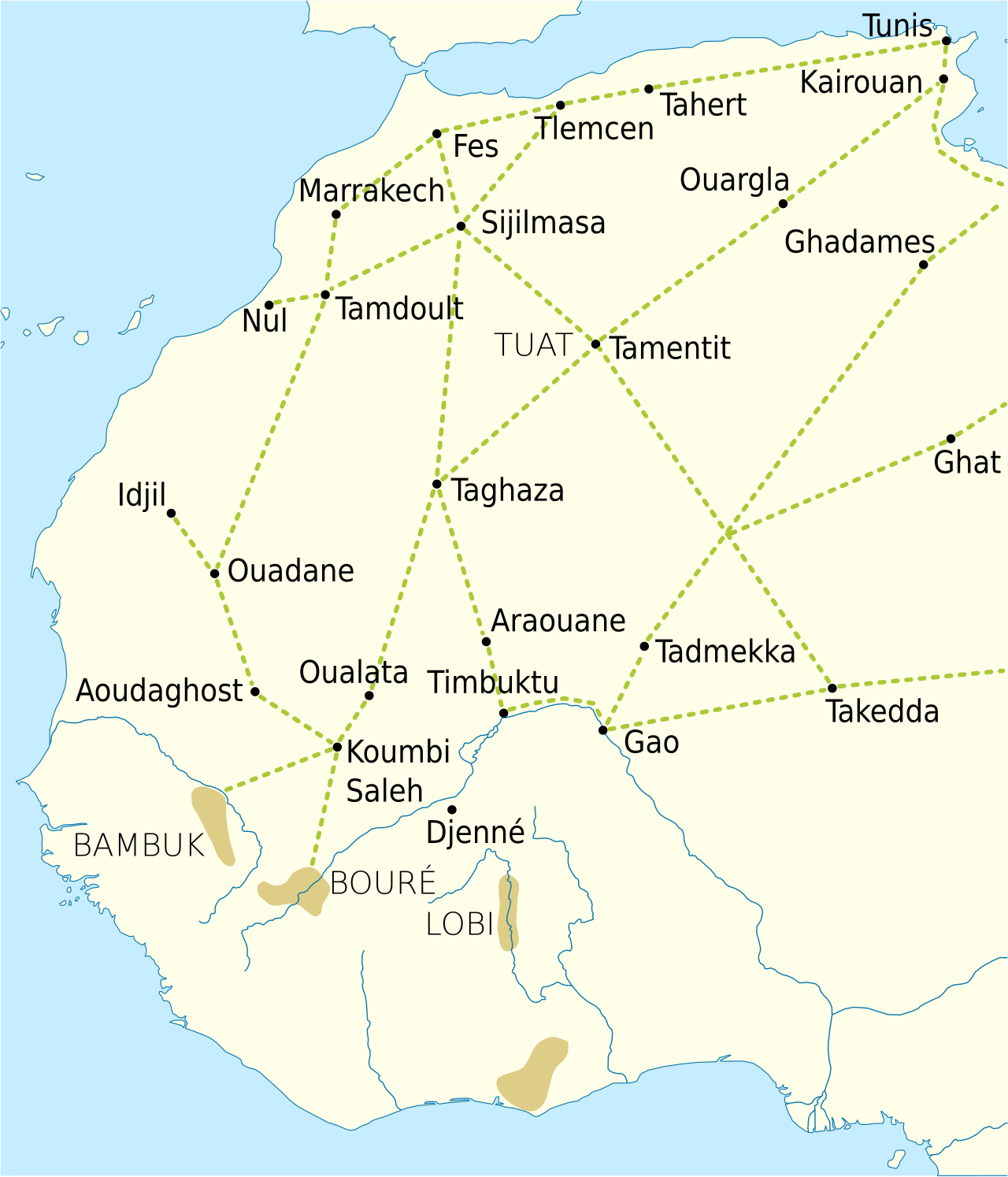
Map of trans-Saharan trade routes in the Western Sahara (c. 1000–1500), emphasizing the overland corridors that connected North African markets to Sahelian and West African exchange zones. By making routes and resource regions visible, the map clarifies how control of oases and caravan cities translated into revenue, state expansion, and the movement of Islamic scholars and merchant communities. Source
Governance after conquest
Expansion required institutions that could turn conquest into durable rule.
Taxation and law: Officials used Islamic legal norms alongside local practice to regulate property, commerce, and public order.
Religious pluralism as strategy: Many regimes tolerated “People of the Book” communities and pragmatic local customs to reduce resistance and stabilise revenue.
Urban networks: Holding cities (ports, caravan hubs, and administrative capitals) mattered more than uniformly controlling every rural area.
The Spread of Islam Beyond Direct Rule
Trade: merchants as carriers of belief and practice
Islam spread widely through merchant activity across trans-Saharan, Indian Ocean, and overland networks, where conversion could lower transaction costs and build trust.
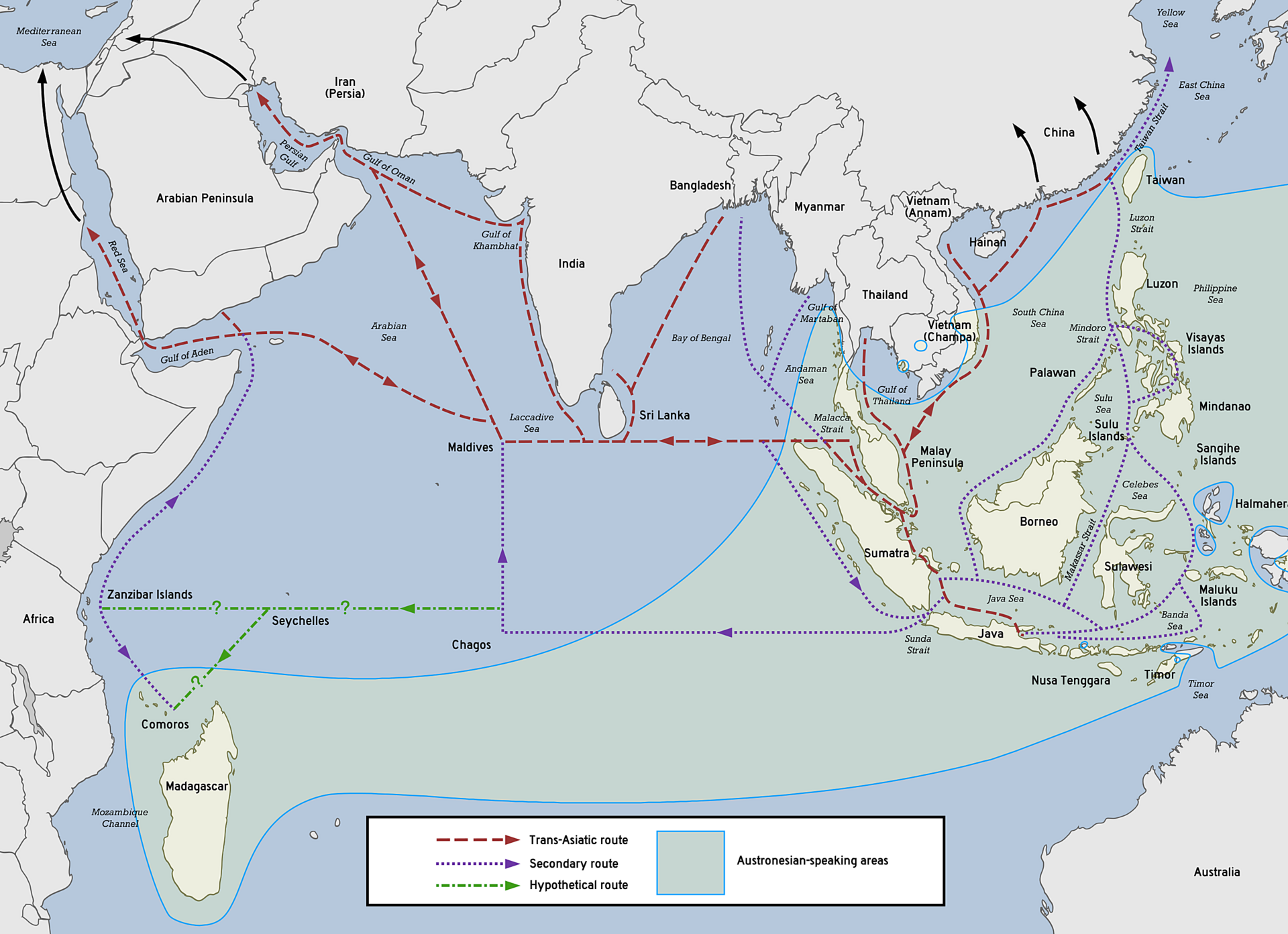
Map of a major Indian Ocean maritime trading network, showing how coastal hubs and sea routes linked East Africa, the Middle East, South Asia, and maritime Southeast Asia. It helps explain why Muslim merchant communities could embed religious practice in port cities—where trade, law, and shared commercial norms made Islamic affiliation socially and economically advantageous. Source
Diaspora communities: Muslim traders formed neighbourhoods with mosques, judges, and teachers, making Islam visible and socially useful to local elites.
Commercial ethics: Shared norms (contracts, credit, charity) made Islamic affiliation attractive for partners seeking reliable long-distance exchange.
Maritime Southeast Asia: Port cities became early centres of conversion, as rulers and merchants adopted Islam to connect to prosperous Muslim trading worlds.
Missionaries and scholars
Religious specialists spread Islam through teaching, advising rulers, and building institutions.
Scholars and jurists promoted literacy, Qur’anic study, and legal education, often supported by rulers seeking legitimacy.
Court influence: Conversions at the top—rulers, nobles, and officials—could accelerate wider adoption through patronage of mosques and schools.
Sufi networks: flexible, relational Islam
Sufi teachers and communities were especially influential in regions where Islam arrived without mass conquest.
Sufism: A devotional and mystical tradition within Islam that emphasises disciplined spirituality, guidance by a teacher, and networks of followers who spread practice through travel, lodges, and preaching.
Sufi approaches often adapted to local conditions while maintaining Islamic core beliefs.
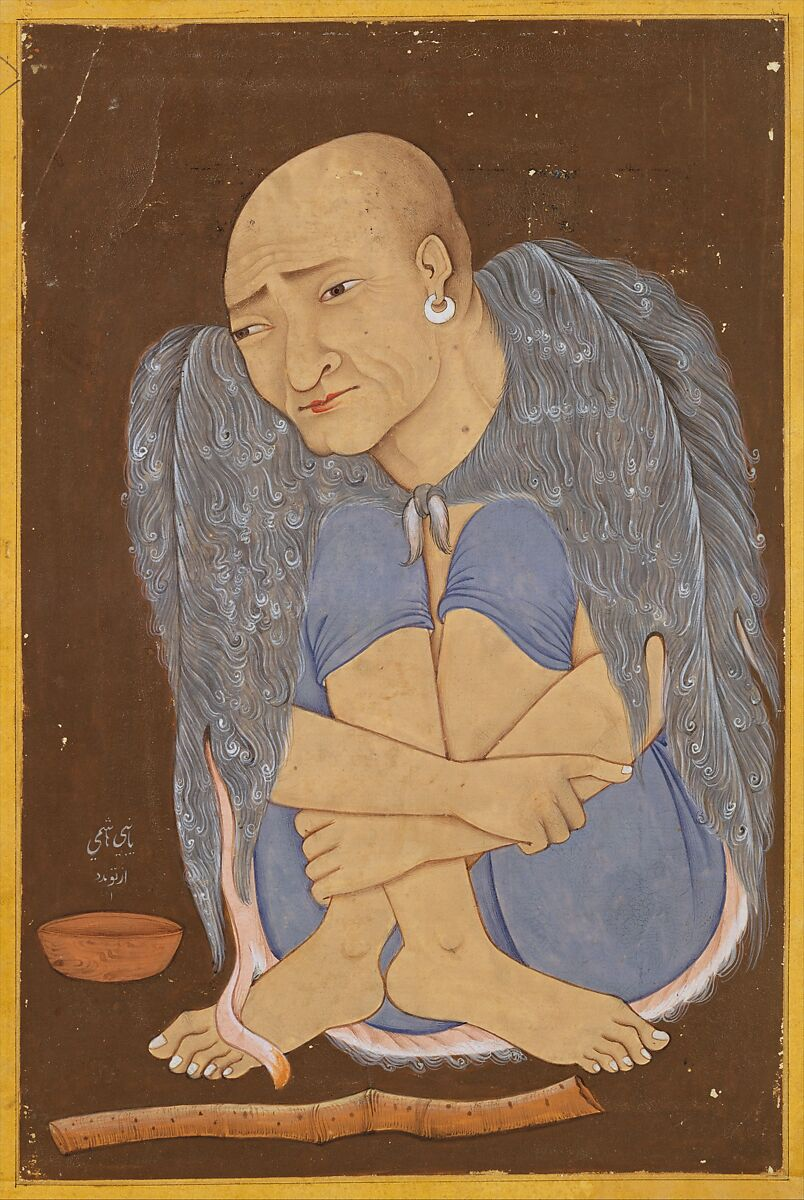
A figurative painting of a Sufi (dervish) identified through characteristic devotional markers such as the cloak associated with ascetic practice and a meditative, inward-focused posture. Although produced after the 1200–1450 period, it provides a concrete visual anchor for how Sufi piety could be embodied, recognizable, and portable—supporting the notes’ emphasis on relational networks of teachers and followers rather than state-led conversion. Source
Personal ties: Travelling holy men, teachers, and their students built trust through healing, mediation, and moral instruction.
Institutional hubs: Lodges and shrines anchored communities, supported hospitality, and trained new teachers.
Cultural translation: Poetic preaching and vernacular teaching helped communicate Islamic ideas across linguistic and cultural boundaries.
Patterns and Limits of Islamisation
Gradual conversion and syncretism
Islamisation was usually uneven: commercial towns and courts converted earlier than rural interiors.
Layered adoption: Individuals might adopt Islamic practices (prayer, dietary rules, charity) before full doctrinal alignment.
Blended customs: Local rituals and social structures often persisted, producing regionally distinctive Islamic cultures.
Distinguishing political control from religious spread
A key AP distinction is that Muslim rule (state power) and the spread of Islam (religious affiliation) did not always move together.
Some regions experienced Islam without conquest (trade- and Sufi-led conversion).
Other regions experienced Muslim rule without mass conversion, where non-Muslim subjects remained majorities for long periods.
Practice Questions
Explain one way Islam spread across Afro-Eurasia between c. 1200 and 1450 without direct military conquest. (2 marks)
1 mark: Identifies a non-military mechanism (e.g., merchants, missionaries, Sufi networks).
1 mark: Explains how it promoted conversion (e.g., trust in trade, teaching, lodges/shrines, court patronage).
“Between c. 1200 and 1450, trade networks were more important than military conquest in the spread of Islam.” Assess the extent to which this statement is accurate. (5 marks)
1 mark: Takes a clear line of argument (extent) addressing both trade and conquest.
1 mark: Uses specific evidence for trade-driven spread (e.g., Indian Ocean port cities, diaspora merchant communities).
1 mark: Uses specific evidence for conquest-driven expansion of Muslim rule (e.g., Delhi sultanates; Anatolian advances).
1 mark: Explains why one factor outweighed or complemented the other (e.g., trade reaches beyond borders; states consolidate).
1 mark: Shows nuance by distinguishing political rule from religious conversion or by noting uneven/gradual Islamisation.
FAQ
Conversion could standardise contracts and credit through shared norms, and it often linked rulers to Muslim merchant diasporas.
It also encouraged investment in mosques and schools that made ports attractive to travelling traders.
They acted as spiritual centres and practical institutions: hospitality for travellers, mediation in disputes, and training for disciples.
Over time, shrine patronage by local elites could tie political legitimacy to Islamic piety.
States often prioritised stability and revenue over forced conversion, especially where non-Muslim agricultural populations were large.
Conversion was typically gradual and shaped by social advantage, intermarriage, and urban influence.
Caravan zones often spread Islam through oasis towns and scholarly lineages tied to trans-Saharan routes.
Coastal hubs spread it through maritime merchant communities and ruler-to-ruler diplomatic and commercial connections.
Missionaries could offer literacy, legal expertise, and diplomatic ties to wider Muslim networks.
For rulers, patronising Islamic institutions could strengthen authority and integrate their states into profitable exchange systems.