AP Syllabus focus: ‘New Islamic political entities included the Seljuk Empire, the Mamluk Sultanate of Egypt, and the Delhi sultanates.’
These three case studies show how Muslim rulers built durable states after earlier imperial fragmentation. Each blended military power with religious legitimacy, adapted to local societies, and shaped politics from Anatolia and Egypt to northern India.
Seljuk Empire
Origins and political structure
The Seljuks were Turkic Sunni Muslim rulers who expanded into Iran, Iraq, and Anatolia.

This map depicts the Seljuk Empire around 1092, showing the broad geographic arc of Seljuk power across Iran, Iraq, and Anatolia. The labeled regions help clarify why the Seljuks could project authority through a sultanate that relied on military elites while governing diverse populations over long distances. Source
They ruled through a sultanate (a state led by a sultan, a political-military ruler) that often maintained the symbolic authority of the Abbasid caliph while exercising real power themselves.
Governance depended on:
Military elites and mounted forces
Administrators trained in Persianate bureaucratic traditions
Delegation to regional governors to manage a large, diverse territory
Legitimacy and religion
Seljuk rulers strengthened Sunni institutions to unify subjects and counter rivals.
They patronised Islamic learning and religious scholars to reinforce orthodox practice and public order.
Regional impact
Seljuk expansion into Anatolia shifted the balance of power in the eastern Mediterranean and helped set conditions for later Turkish-speaking Muslim polities in the region.
Mamluk Sultanate of Egypt
Who were the Mamluks?
The Mamluks created a state in Egypt and Syria built around an elite military class and control of strategic trade routes.
Mamluk: a military slave (often of Turkic or Caucasian origin) purchased, trained as a soldier, converted to Islam, and incorporated into an elite cavalry corps that could dominate government.
Their military background shaped politics: rulers emerged from the mamluk officer class, and succession often depended on alliances rather than heredity.
Power, economy, and strategic geography
The Mamluk Sultanate leveraged Egypt’s position linking:
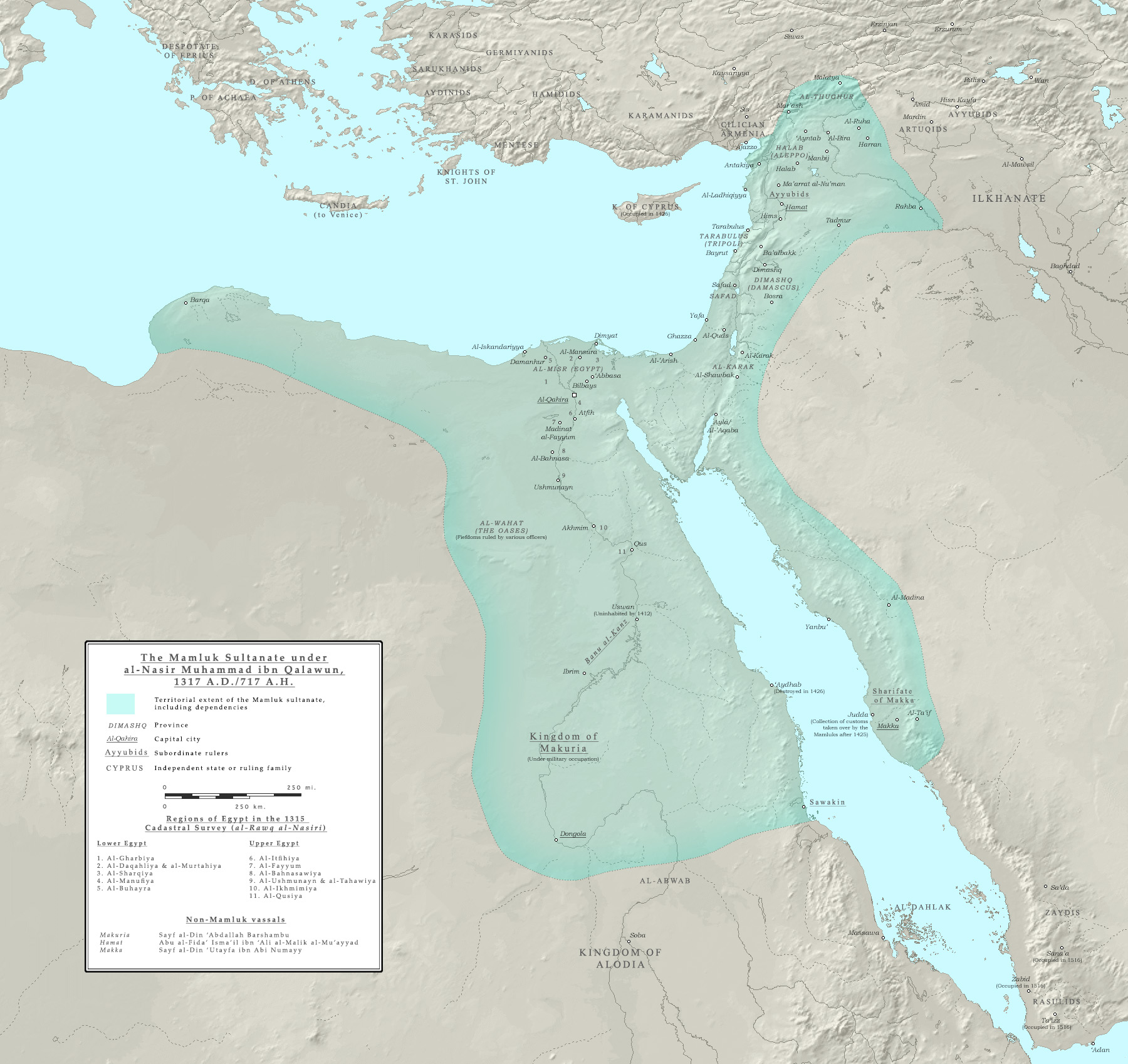
This map shows the territorial extent of the Mamluk Sultanate in 1317, emphasizing Egypt, the Levant, and major cities that anchored Mamluk administration and military control. By situating Cairo and surrounding regions, it helps explain how geography and chokepoints supported trade taxation and state finance. Source
Red Sea and Indian Ocean commerce
Mediterranean markets
Overland routes through the Levant
Control of key cities and ports allowed taxation of trade, funding armies and monumental building.
Legitimacy and culture
Mamluk rulers cultivated legitimacy through:
Patronage of mosques, schools, and public works
Promotion of Sunni scholarship and law
Public displays of military protection and order in major urban centres (especially Cairo)
Delhi Sultanates
Establishment in South Asia
The Delhi sultanates were Muslim-ruled states in northern India that expanded through military conquest and the incorporation of regional elites.
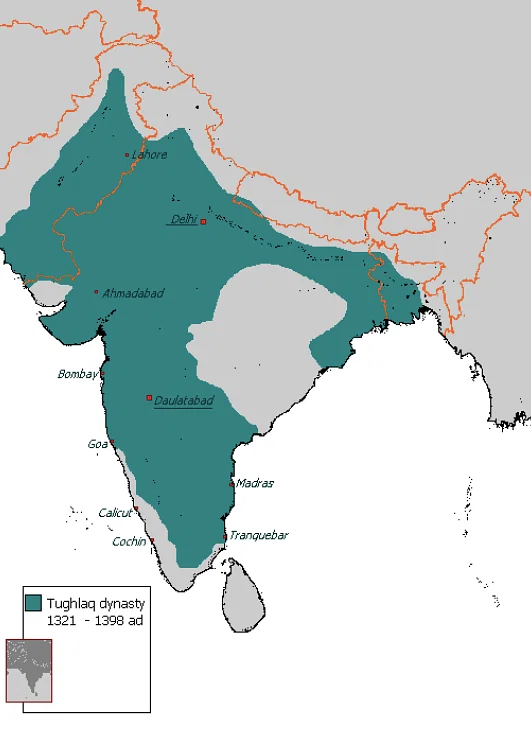
This map illustrates the Delhi Sultanate’s extent under the Tughlaq dynasty in the 14th century, highlighting the scale of rule across northern and parts of peninsular India. The city labels and shaded boundary make it easier to connect territorial expansion with the administrative and military pressures of governing a religiously diverse population. Source
They governed a largely non-Muslim population, making state-building dependent on both coercion and pragmatic accommodation.
Administration and military rule
Delhi rulers relied on:
Professional soldiers and cavalry
Fortified urban centres that projected authority into surrounding countryside
Revenue collection systems that tied agrarian production to the needs of the court and army
Managing diversity and legitimacy
Political stability required balancing:
Islamic claims to rule with the realities of Indian social and religious diversity
Cooperation with local powerholders to secure taxes and manpower
Over time, these sultanates helped embed Islamic political institutions and cultural influences in South Asia while remaining shaped by regional conditions.
Connections and comparisons across the three cases
Shared patterns of state formation
All three illustrate new Islamic political entities emerging with strong military foundations.
Common strategies for maintaining rule included:
Alliances with religious scholars to bolster legitimacy
Bureaucratic adaptation to manage diverse populations
Revenue extraction (land taxes and trade taxation) to fund armies
Key differences
Seljuks: expansive Turkic-led empire that often ruled alongside older Persianate administrative traditions.
Mamluks: a distinctive military-slave elite regime centred on Egypt/Syria and trade chokepoints.
Delhi sultanates: long-term governance of a religiously diverse society requiring continuous negotiation with local elites.
Practice Questions
Describe two ways the Mamluk Sultanate maintained political power. (2 marks)
Mark scheme:
1 mark: Identifies reliance on an elite mamluk military class/cavalry to control the state.
1 mark: Identifies control/taxation of major trade routes and cities (e.g., Cairo, Levantine routes) to finance rule.
Compare the methods of political legitimacy used by the Seljuk Empire and the Delhi sultanates in the period c.1200–1450. (5 marks)
Mark scheme:
1 mark: Seljuks bolstered legitimacy through promotion of Sunni institutions/scholars.
1 mark: Seljuks maintained or referenced symbolic caliphal authority while holding real power as sultans.
1 mark: Delhi sultans used Islamic rulership claims while governing a majority non-Muslim population.
1 mark: Delhi legitimacy also depended on pragmatic accommodation/co-operation with regional elites.
1 mark: Makes a clear comparative statement (similarity and/or difference) supported by accurate evidence.
FAQ
Seljuk settlement and administration helped normalise Turkish-speaking Muslim elites in Anatolia.
This eased the later rise of successor states that drew on similar military traditions and patterns of regional governance.
Power often shifted within the mamluk elite rather than passing by heredity.
Coalition-building among officers mattered.
Military reputation and patronage networks could elevate new rulers.
They frequently used negotiated arrangements with regional powerholders.
Recognition of local elites in return for taxes
Military support and garrisoning to enforce agreements
Egypt sat near key maritime and overland junctions linking the Red Sea to the Mediterranean.
Revenue from customs, port activity, and protected caravan routes could be channelled into armies and building programmes.
Seljuk governance often employed Persianate court culture and bureaucratic practices.
This included administrative record-keeping and elite norms that blended Turkic military leadership with established Iranian political traditions.