

AP Syllabus focus: ‘Islam, Judaism, Christianity, and their core beliefs and practices continued to shape societies in Africa and Asia.’
Religion in Dar al-Islam (c. 1200–1450) structured daily life, law, learning, and community boundaries across Afro-Eurasia. Muslims, Jews, and Christians interacted in cities and trade hubs, balancing coexistence, hierarchy, and periodic conflict.
Islam: Core Beliefs and Social Practice
Foundations that shaped society
Monotheism: belief in one God (Allah) reinforced a shared moral order and communal identity.
Qur’an and Hadith traditions informed expectations for worship, family life, and ethical conduct.
The idea of the ummah (community of believers) encouraged mutual obligation, charity, and a sense of belonging that could cross ethnic and linguistic lines.
Five Pillars as social institutions
Shahada (profession of faith) marked religious identity and social belonging.
Salat (daily prayers) reinforced routine and community visibility, especially through congregational prayer.
Zakat (almsgiving) functioned as a moral and often locally organised welfare expectation.
Sawm (fasting in Ramadan) shaped public rhythms (work, markets, night prayer, hospitality).
Hajj (pilgrimage) created transregional connections through travel, learning, and commerce.
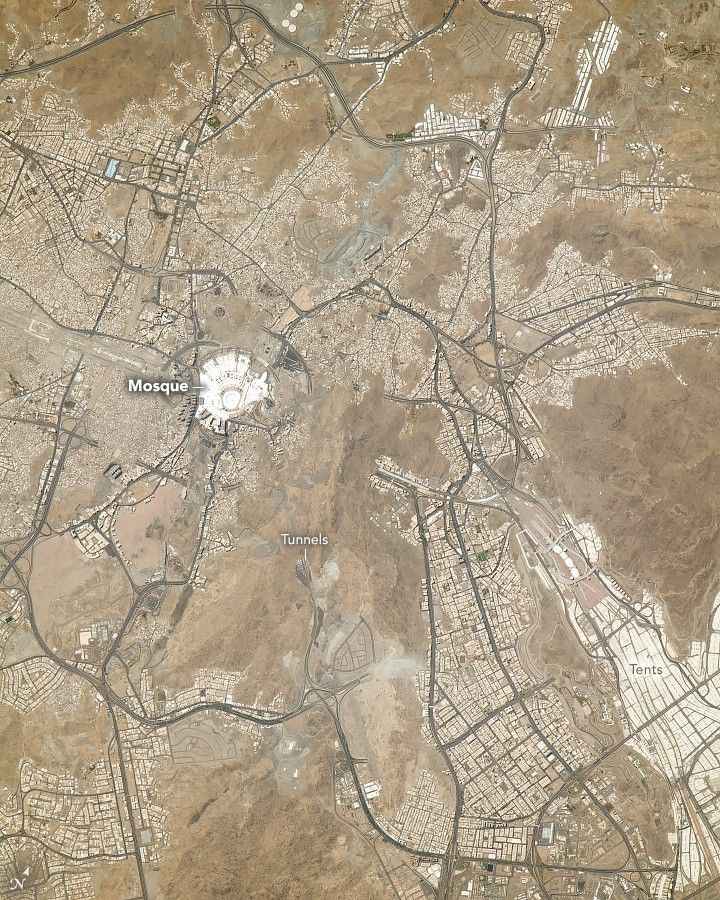
This astronaut photograph shows Mecca from above, with the white complex of Masjid al-Haram standing out at the city’s center. Seeing the pilgrimage site in its urban and transportation context helps explain how the Hajj functioned not only as a religious obligation but also as a generator of mobility, exchange, and connection across Afro-Eurasia. Source
Islamic Law, Governance, and Learning
Law and social order
Sharia: Islamic law derived from the Qur’an and Prophetic tradition, guiding personal conduct and many aspects of family, social, and commercial life.
Sharia’s influence was most visible in:
Family law: marriage contracts, inheritance rules, and kinship obligations.
Commercial norms: expectations of honest weights/measures and contractual fairness in marketplaces.
Public morality: encouragement of modesty, charity, and communal responsibility.
Religious scholars and institutions
Ulama (religious scholars) interpreted legal and ethical norms, supporting continuity in religious practice across diverse regions.
Mosques served as worship spaces and community centres.
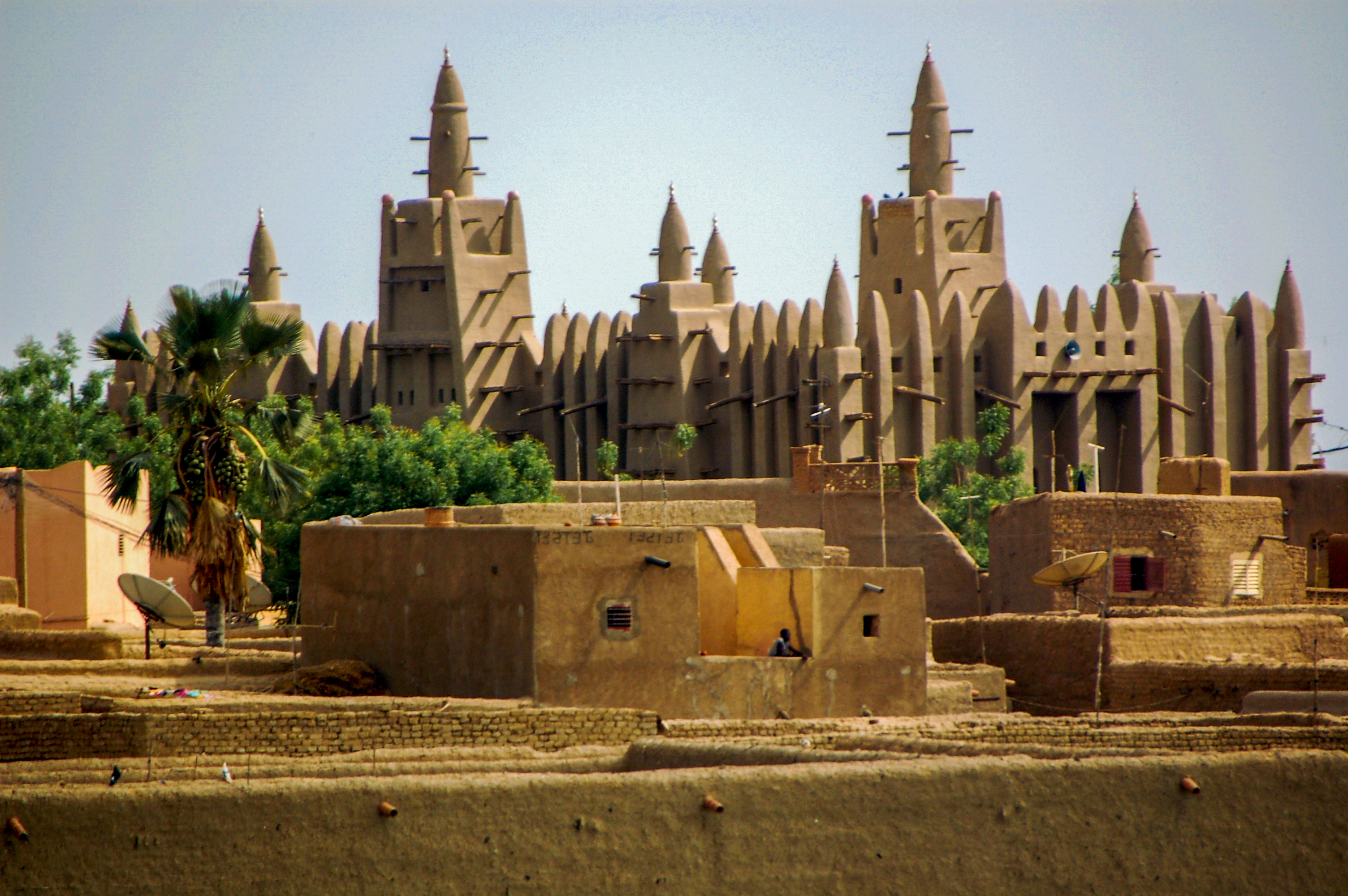
The Great Mosque of Djenné (Mali) illustrates the mosque as a civic-religious anchor in a West African Islamic city. Its monumental earthen architecture also highlights how Islamic institutions adapted to local materials and building traditions while remaining central to worship and communal life. Source
Madrasas supported literacy and advanced study, reinforcing the social status of scholars and administrators.
“People of the Book”: Jews and Christians in Muslim-Majority Societies
Protected status and hierarchy
Dhimmi: a legally protected non-Muslim (typically Jewish or Christian) living under Muslim rule, allowed to practise their religion under specific restrictions and obligations.
A key feature of dhimmi status was that it combined toleration with inequality:
Communal worship and many internal affairs were often permitted.
Public life could include legal and social limits, varying by time and place.
A special tax obligation was commonly associated with this status.
Daily life for Jewish and Christian communities often revolved around:
Houses of worship, clergy leadership, and religious education.
Distinctive community networks that aided trade, credit, and communication.
Negotiation with local authorities to protect communal autonomy.
Religion and Social Hierarchies
Gender expectations and family life
Religious norms shaped ideals of proper behaviour and household structure.
Emphasis on marriage and family stability encouraged regulated sexual and domestic conduct.
In many settings, patriarchal assumptions were reinforced through customary practice and legal interpretation, affecting women’s access to property, divorce, and public authority (though rights and enforcement varied widely).
Slavery and incorporation
Religious societies in Dar al-Islam included enslaved people in households, armies, and administrations.
Conversion could reshape social standing in some contexts, but did not automatically erase enslaved status.
Religious law and custom provided vocabularies for manumission and humane treatment ideals, alongside ongoing exploitation.
Interreligious Contact in Africa and Asia
Cities, trade, and shared spaces
Across Afro-Eurasian trade corridors and port cities, religious communities interacted in practical ways:
Shared commercial languages and documentation practices supported long-distance trade.
Markets and neighbourhoods could be religiously mixed, creating everyday exchange alongside communal boundaries.
Minority communities often contributed to artisan production, finance, translation, and administration, depending on local conditions.
Conflict and coexistence
While many areas saw long periods of coexistence, tensions emerged from:
Competition for political influence and access to office.
Disputes over taxation, public worship, or religious symbols.
Periodic outbreaks of violence shaped by local politics as much as theology.
Practice Questions
Describe one way Islamic practice shaped social life in Dar al-Islam between c. 1200 and 1450. (2 marks)
1 mark for identifying a relevant Islamic practice (e.g., Ramadan fasting, zakat, Friday prayer, hajj).
1 mark for explaining a concrete social effect (e.g., altered daily routines, welfare expectations, community cohesion, travel links).
Compare how Judaism and Christianity were positioned within Muslim-majority societies in Africa and Asia in the period c. 1200–1450. In your answer, explain one similarity and one difference. (5 marks)
1 mark for a valid similarity (e.g., both were “People of the Book” communities allowed to practise under Muslim rule in many regions).
1 mark for explaining that similarity with accurate detail (e.g., communal autonomy, worship, community leadership).
1 mark for a valid difference (e.g., regional variations in status, offices held, or intensity of restrictions; differing community structures or connections).
1 mark for explaining the difference with accurate detail tied to society.
1 mark for using appropriate historical vocabulary (e.g., dhimmi, Sharia, ulama) accurately.
FAQ
It often acted as a social and economic network.
Pilgrims exchanged news, books, and contacts, and some combined pilgrimage with trade or study, strengthening shared norms across distant Muslim communities.
Enforcement varied with local politics and economics.
Factors included the priorities of rulers, urban tensions, fiscal needs, and whether minority communities were economically valuable or politically suspect at a given moment.
They could create pathways into respected roles.
Training in law and Arabic literacy supported work as judges, administrators, teachers, and scribes, raising the status of educated families and patrons who funded institutions.
Not entirely.
Local custom, class, and regional traditions interacted with religious ideals, producing a gap between prescriptive rules and lived practice, especially in family matters and marketplace conduct.
Towns offered protection and opportunity.
Urban density supported communal institutions, while trade and specialised crafts provided livelihoods that benefited from minority networks and cross-cultural skills like translation and credit handling.

.jpg)