AP Syllabus focus: ‘As the Abbasid Caliphate fragmented, new Islamic political entities emerged, often Turkic-led, showing continuity, innovation, and diversity.’
Between 1200 and 1450, the Islamic world was politically decentralized.
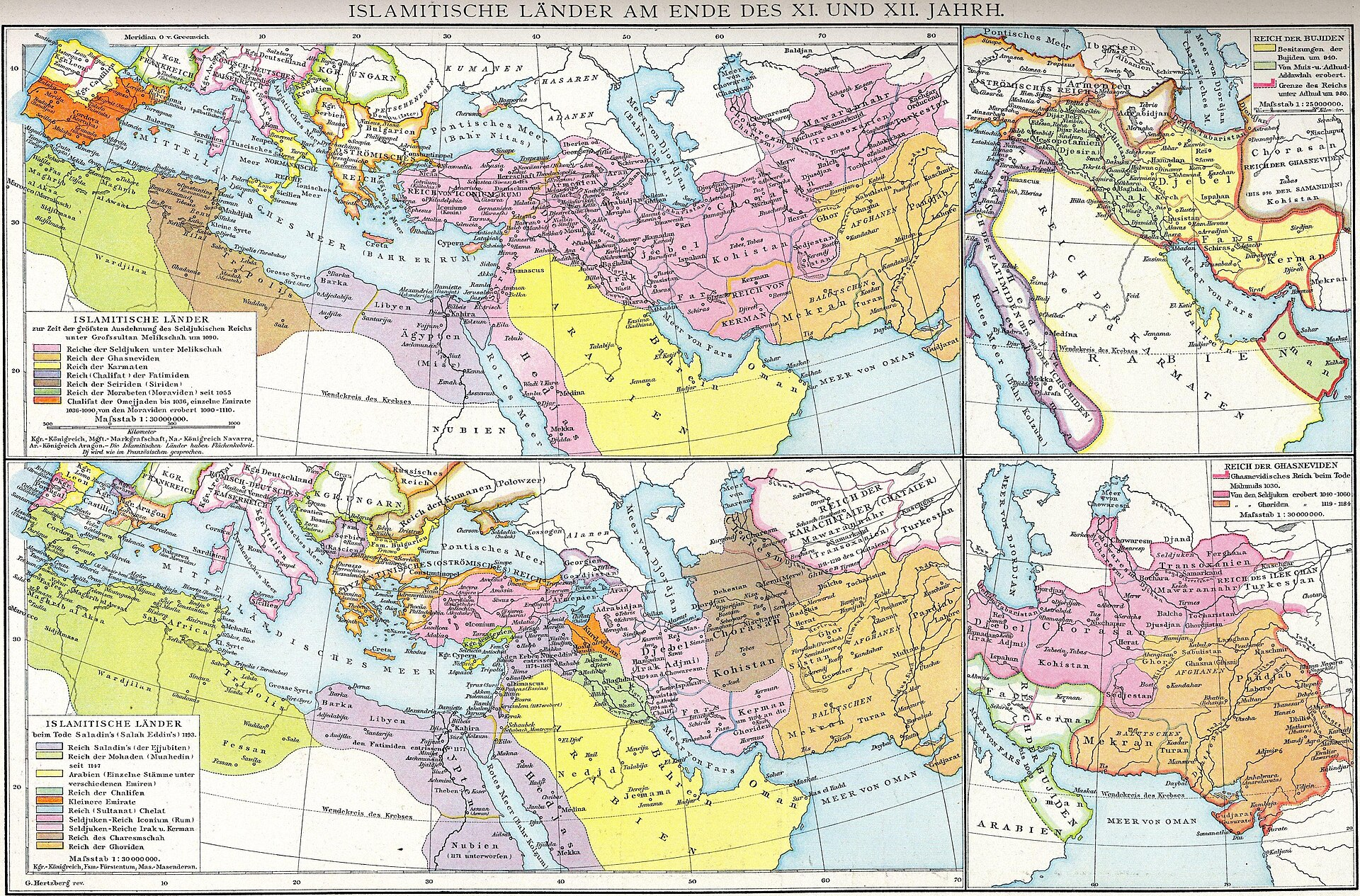
This historical atlas map visualizes the Islamic world’s political fragmentation by showing multiple regional powers across North Africa, the Middle East, and Central/Southwest Asia alongside the reduced Abbasid core. Reading it as a spatial snapshot helps explain why authority became negotiated and regional: control of territory, cities, and routes was dispersed rather than monopolized by a single center. The map is especially useful for connecting “decentralization” to geography (distance, frontiers, and competing zones of power). Source
As Abbasid authority weakened, new states—frequently led by Turkic elites—claimed power while selectively preserving older institutions and developing new military, fiscal, and legitimacy practices.
Abbasid Fragmentation: What Changed and What Endured
The Abbasid Caliphate lost effective control over distant provinces as military commanders, regional governors, and rival dynasties asserted autonomy, producing a patchwork of states with varying relationships to Baghdad.
Caliphate: A polity claiming leadership of the Muslim community under a caliph, ideally combining political authority with religious legitimacy.
Even when the caliph’s direct rule shrank, Islamic law (sharia), scholarly authority, and administrative habits provided common cultural and governmental “grammar” across regions.
Key Drivers of Fragmentation (c. 1200–1450)
Military decentralization: Armies increasingly tied loyalty to commanders and paymasters rather than a single universal ruler.
Regional fiscal control: Local rulers kept tax revenues to fund courts and armies, reducing the center’s leverage.
Competing legitimacy claims: Rulers could govern as sultans or emirs while acknowledging (or sidelining) a caliph’s symbolic standing.
External shocks and power vacuums: Major invasions and civil conflicts accelerated the breakup of centralized authority.
New Islamic Political Entities (Often Turkic-Led)
As the Abbasid realm fractured, new states formed that were politically innovative yet often culturally continuous with earlier Islamic governance.
Why Turkic Peoples Frequently Dominated Leadership
Turkic groups from Central Eurasia were deeply integrated into Islamic military and political life by this era. Their prominence reflected:
Steppe military traditions (highly mobile cavalry warfare) valued by rulers competing in fragmented landscapes.
Recruitment into military-slave and professional soldier systems that could elevate outsiders into elite command.
The ability of Turkic dynasts to adopt Islamic and Persianate court traditions to govern diverse populations.
Mamluk: A military slave trained as a soldier; mamluk elites could gain high office and, in some cases, found or dominate states.
These political orders were not “non-Islamic”; rather, Turkic rulers typically reinforced Islamic institutions to strengthen legitimacy and administration.
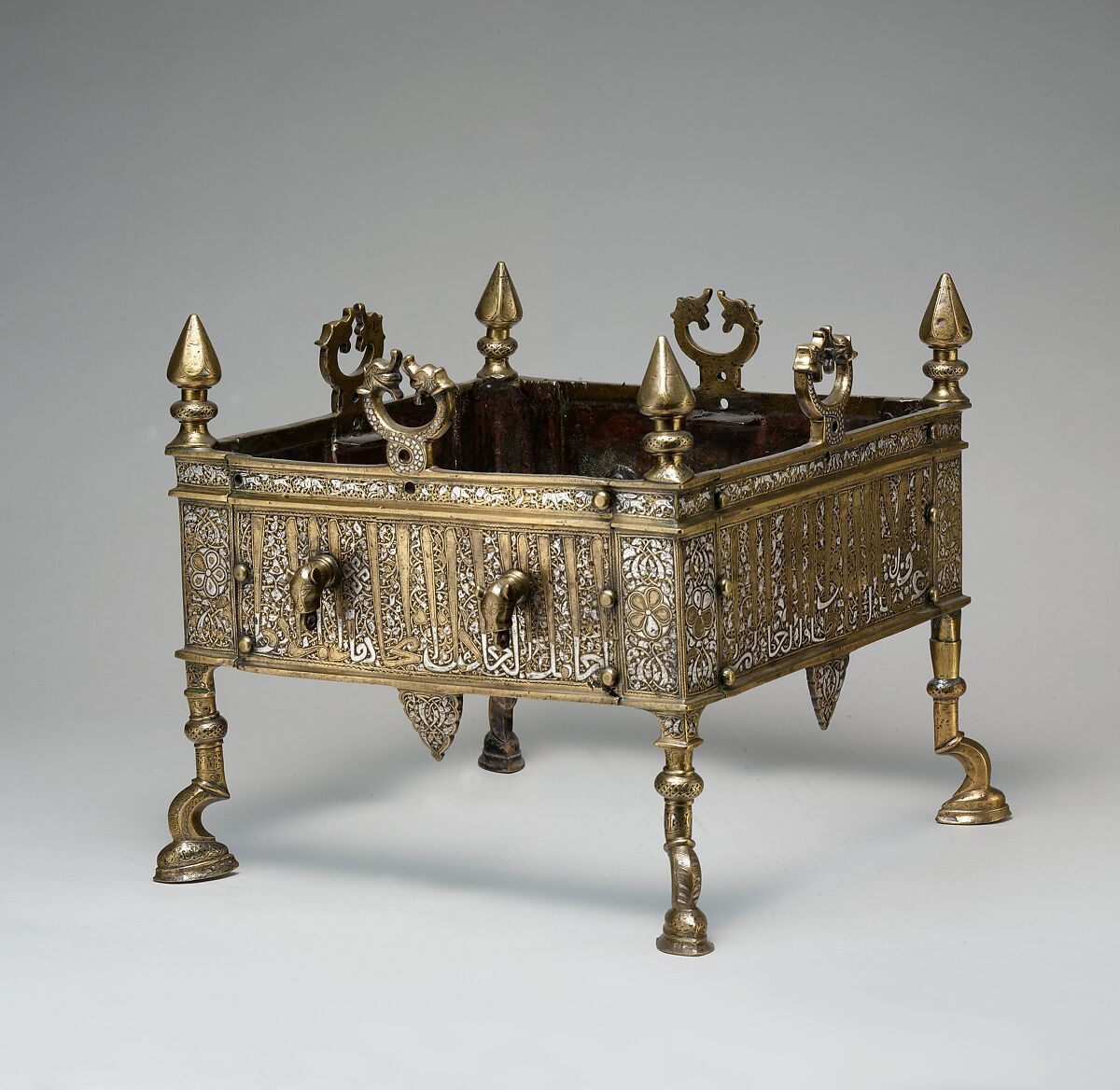
This Metropolitan Museum of Art essay on the Mamluk period pairs a concise historical overview with labeled images of Mamluk-era art and architecture-related objects (e.g., mosque furnishings and inlaid metalwork). The visuals highlight how ruling elites projected authority through Islamic institutional settings and courtly culture rather than rejecting them. Used alongside the text, the images help students link political legitimacy to material patronage and bureaucratic-urban society. Source
Common Political Forms and Governing Strategies
Sultanates and emirates: Rulers exercised practical sovereignty, sometimes treating caliphal recognition as optional or symbolic.
Military patronage states: Power depended on paying troops and managing elite households and factions.
Land-revenue arrangements: Grants of revenue rights supported soldiers and officials, linking military service to local taxation.
Court cultures and bureaucracy: Many states retained or expanded bureaucratic record-keeping, tax administration, and elite education traditions.
Continuity, Innovation, and Diversity: How to Describe the Era
This period is best understood as a blend rather than a clean break.
Continuity
Islam as a unifying framework: Shared religious norms and legal concepts shaped governance and social order.
Administrative inheritance: Tax collection practices and bureaucratic roles continued, even under new dynasties.
Elite cultural patterns: Courts often promoted learned culture, patronage, and cosmopolitan languages of administration.
Innovation
New bases of legitimacy: Authority increasingly rested on military success, effective taxation, and public order more than on universal caliphal rule.
Professionalized military systems: Expanded reliance on trained soldiery and elite military households.
Flexible sovereignty: Multiple rulers could claim legitimacy simultaneously, producing overlapping and negotiated political authority.
Diversity
Regional variation: Different areas developed distinct mixtures of tribal politics, urban administration, and dynastic rule.
Variable caliphal role: Some states highlighted caliphal symbolism; others governed with minimal reference to it.
Different state capacities: Some polities built strong central administrations; others remained looser coalitions around military elites.
Practice Questions
Identify two factors that contributed to the fragmentation of Abbasid political authority between c. 1200 and c. 1450. (2 marks)
1 mark for identifying a relevant factor (e.g., military decentralisation; regional control of taxation; competing legitimacy claims; external invasions).
1 mark for a second, distinct relevant factor.
Explain how the emergence of Turkic-led Islamic states after Abbasid fragmentation demonstrated both continuity and innovation in governance between c. 1200 and c. 1450. (6 marks)
1 mark: A clear overall claim addressing both continuity and innovation.
2 marks: Continuity explained with accurate evidence (e.g., use of Islamic law/scholars; continuation of bureaucratic taxation; retention of court/administrative traditions).
2 marks: Innovation explained with accurate evidence (e.g., new military bases of power; professional soldier systems such as mamluks; flexible sovereignty beyond caliphal central rule).
1 mark: Links developments explicitly to fragmentation of Abbasid authority (showing why these changes became possible/necessary).
FAQ
They often used public symbols of authority such as having their name proclaimed in communal worship or placed on coinage, alongside patronage of judges and scholars to present themselves as rightful Islamic rulers.
Not necessarily. Many Turkic dynasts adopted local administrative languages and court customs, creating hybrid ruling cultures that prioritised governability and legitimacy over ethnic identity.
Because rulers needed reliable, trained forces in unstable conditions. Military slaves were bound by training and patronage networks, which could strengthen a regime but also empower military elites to dominate politics.
Political unity weakened, but shared legal norms, scholarly networks, and administrative habits often continued to connect regions, even when rulers competed and borders shifted.
Different regions balanced power differently—some centralised taxation and administration tightly, while others relied more on negotiated control with local elites—producing varied state structures under a broadly shared Islamic framework.