AP Syllabus focus: ‘State formation and development showed continuity, innovation, and diversity in multiple regions during c. 1200 to c. 1450.’
Across 1200–1450, states expanded and consolidated in different ways. Comparing them means tracking what persisted from earlier eras, what changed in response to new pressures, and why political forms varied across regions.
What to Compare in State Formation
State formation: The processes by which rulers build and maintain political authority over territory and people through institutions, coercion, legitimacy, and resource extraction.
When comparing regions, focus on recurring building blocks:
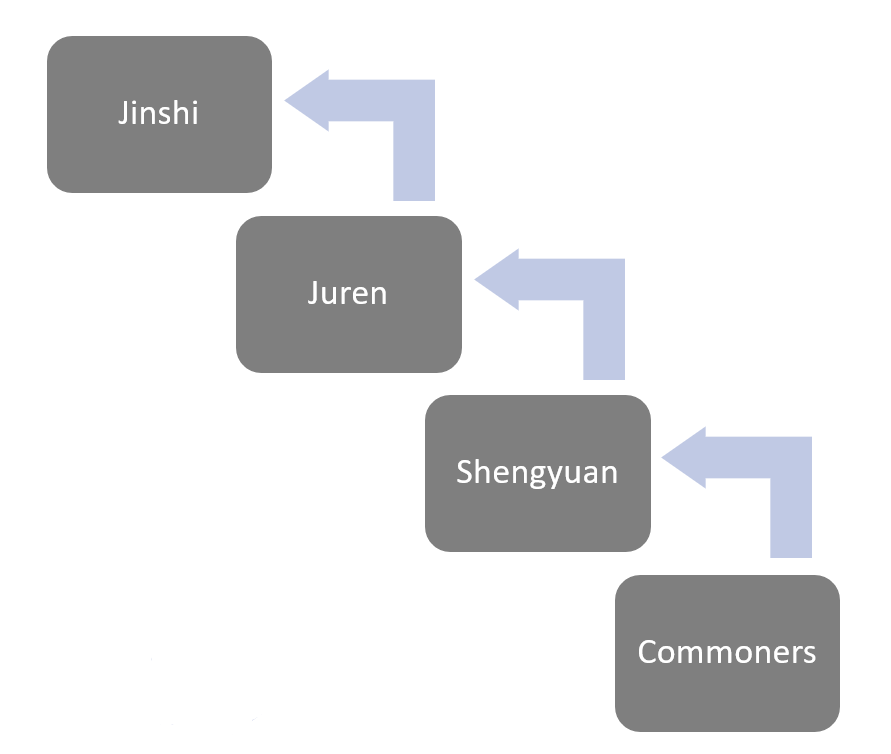
This flowchart diagrams the rank structure within China’s imperial civil service examination system, showing how exam success could funnel candidates into different official statuses. It supports comparative analysis by making “administrative capacity”. Source
Sources of legitimacy (why people accept rule): sacred authority, tradition, law, or performance (order/prosperity)
Administrative capacity: officials, records, courts, taxation, local intermediaries
Coercion and security: armies, fortifications, policing, elite warrior classes
Economic foundations: land revenue, trade taxes, tribute, labor systems
Integration strategies: infrastructure, standardised culture, religious institutions, alliances/marriages
Continuity: What Stayed Familiar (c. 1200–1450)
Older institutions adapted rather than disappearing
Many states relied on established tools that long predated 1200:
Bureaucratic governance and written law where literate administration was strong
Land-based taxation and agrarian surplus as a fiscal base
Elite hierarchies (nobles, warrior aristocracies, priestly classes) to staff rule locally
Legitimacy through religion and tradition remained central
Rulers across regions tied authority to enduring belief systems and moral orders:
Religious institutions provided education, record-keeping, and social discipline
Sacred kingship and ritual reinforced hierarchy
Appeals to tradition framed new dynasties as restorers, not radicals
Innovation: New Solutions to New Problems
Managing larger, more diverse territories
States pursued innovations to extend reach and reduce rebellion:
Delegating power to regional governors or military commanders while demanding loyalty and revenue
Creating new capitals, administrative districts, or frontier zones
Using standardised procedures (audits, censuses, land surveys) where feasible
Military and manpower changes shaped political structures
Shifts in warfare and recruitment encouraged new ruling coalitions:
Greater reliance on professional soldiers or bonded military elites in some states
Fortification and logistical planning to secure trade routes and borders
Strategic incorporation of conquered elites to stabilise rule
Trade and urban growth affected state power
Where commerce expanded, rulers increasingly targeted revenue beyond farms:
Taxing markets, caravans, ports, and craft production
Sponsoring infrastructure (roads, canals, waystations) to channel trade and project authority
Promoting currencies, credit practices, or state monopolies in some settings
Diversity: Why States Looked Different Across Regions
Political centralisation varied widely
In parts of East Asia, strong central institutions encouraged more direct rule by officials.
In much of Europe, power often fragmented among lords, towns, and monarchs, producing layered sovereignty.
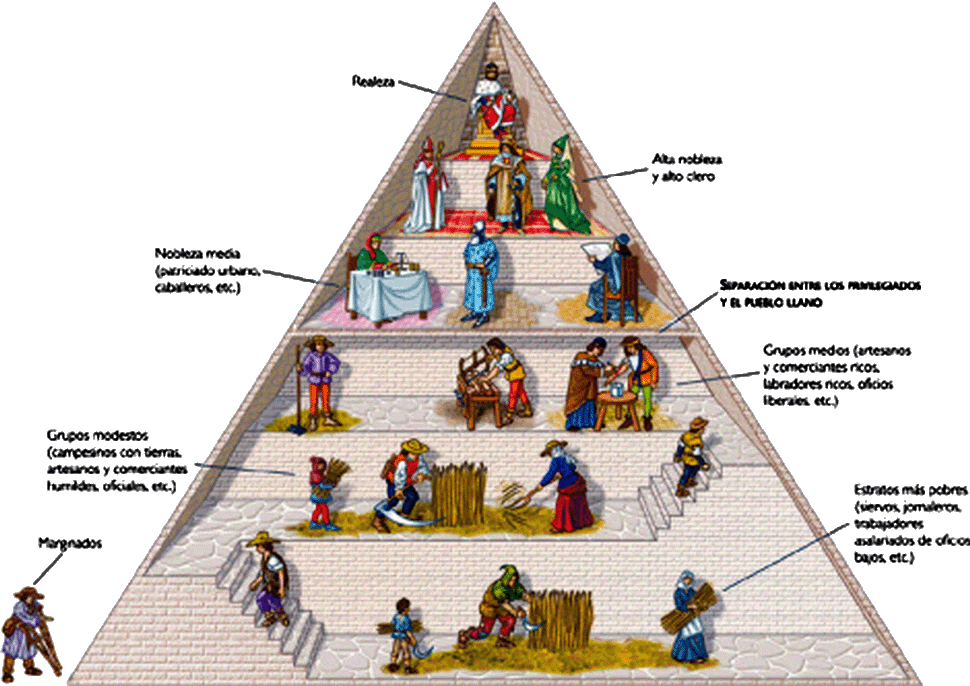
This pyramid diagram summarizes a classic (simplified) model of medieval European feudal hierarchy, placing the king at the top and peasants/serfs at the base. It helps illustrate how political authority and obligations could be distributed through. Source
Across Africa and Southeast Asia, states could be powerful yet operate through networks of cities, kinship ties, or tributary relationships rather than uniform administration.
Different ecologies and geographies produced different state strategies
Mountain, desert, jungle, and steppe zones raised the costs of direct control, encouraging indirect rule and alliance-building.
River valleys and densely farmed plains more often supported tax-based bureaucracies.
Regional cultural expectations shaped governance
Where scholarship and written administration were prestigious, rulers invested more in education and officials.
Where warrior status carried social authority, states more often elevated military elites and negotiated with landed magnates.
In the Americas, integration often relied heavily on labour obligations, road systems, and state-directed redistribution suited to local environments.
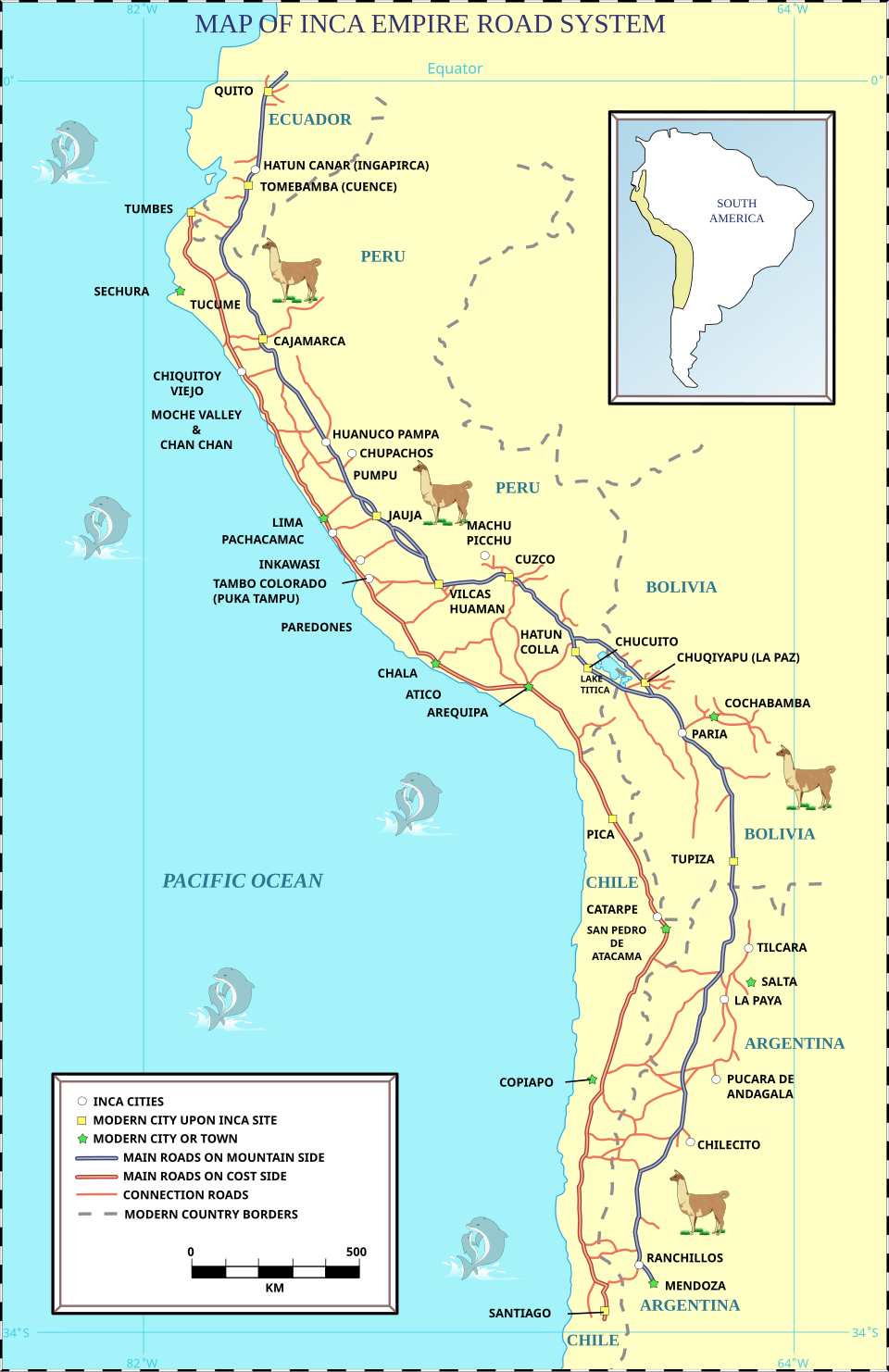
This map shows the geographic extent and major routes of the Inca road system (Qhapaq Ñan) across the Andes and adjacent regions. It visualizes how large states could integrate distant provinces through infrastructure that supported administration, logistics, and the movement of labor, goods, and armies. Source
Making Comparisons (AP Skills)
Organise comparisons by categories, not by storytelling
Use a consistent set of lenses across at least two regions:
Legitimacy (religion, tradition, law)
Administration (bureaucracy vs local intermediaries)
Military (professional forces, elite warriors, conscription)
Economy (agrarian taxes, trade revenue, tribute/labour)
Write defensible claims
A strong comparative claim:
States a clear similarity and/or difference
Explains why (causation) using context (geography, economy, cultural norms)
Uses specific evidence (institutions, policies, practices) without drifting into unrelated detail
Practice Questions
(1–3 marks) Identify one similarity in state formation between two regions from c. 1200 to c. 1450.
1 mark: States a valid similarity (e.g., rulers used religion to legitimise authority).
+1 mark: Correctly ties it to two regions (names both).
+1 mark: Adds a supporting piece of evidence (institution/practice).
(4–6 marks) Compare and contrast state formation in two regions from c. 1200 to c. 1450, explaining one reason for a similarity and one reason for a difference.
1 mark: Provides one accurate similarity.
1 mark: Explains a reason for that similarity (causation).
1 mark: Provides one accurate difference.
1 mark: Explains a reason for that difference (causation).
+1 mark: Uses specific evidence for similarity (institution/policy/practice).
+1 mark: Uses specific evidence for difference (institution/policy/practice).
FAQ
They triangulate indirect indicators.
Administrative traces: records, standard weights/measures, court routines
Fiscal reach: regular taxation, storehouses, toll points
Coercive reach: garrisons, patrols, fortifications
Compliance signals: fewer local power centres acting independently
When written archives are scarce, archaeology (roads, granaries, planned cities) becomes more important.
Tributary rule keeps local authorities in place while requiring periodic payments and loyalty.
Direct rule replaces or tightly supervises local power through appointed officials, standardised law, and routine taxation.
Many states combined both: direct control in core zones, tributary arrangements on frontiers.
Common drivers include:
Geography (ease/cost of communication and transport)
Density of agriculture (reliable surplus to fund officials)
Elite bargaining (power of nobles/warriors versus monarch)
Cultural prestige of literate administration
Fragmentation can be stable when local elites provide security and revenue without a strong centre.
In agrarian cores, cities often served as administrative hubs for taxing and governing countryside.
In trade-heavy zones, cities could become semi-autonomous power bases; rulers competed to control ports, markets, and caravan routes, sometimes prioritising customs revenues over land taxes.
A defensible claim includes:
A clear, testable similarity/difference
Evidence that matches the claim (institutions, policies, practices)
An explanation of cause (why the pattern emerged)
Awareness of scale (core vs frontier; ideal law vs actual practice)
It should be arguable, not merely a list of facts.