

CIE Syllabus focus:
'Candidates should understand how to prepare ledger accounts and the purpose of preparing a trial balance.'
Ledger accounts organize transactions by account, while the trial balance checks that double entry has been applied consistently. Both are central to turning individual entries into reliable accounting records and financial statements.
Ledger accounts
What a ledger account is
A ledger is the main accounting record that stores separate accounts for each item in the business, such as cash, sales, rent, inventory, or trade receivables. Instead of viewing transactions in date order only, ledger accounts group them by account name so that the effect on each item can be seen clearly.
Ledger account: A record that collects all debit and credit entries relating to one account so that its movement and balance can be identified.
Each ledger account has two sides:

A T-account is a simplified visual form of a ledger account, split into two sides to reflect double entry. The left side is labeled “Debit” and the right side “Credit,” making it easier to see which side entries belong on when posting transactions. Source
the debit side on the left
the credit side on the right
This layout reflects the double entry system. Every transaction affects at least two accounts, and the total debit entry must equal the total credit entry.
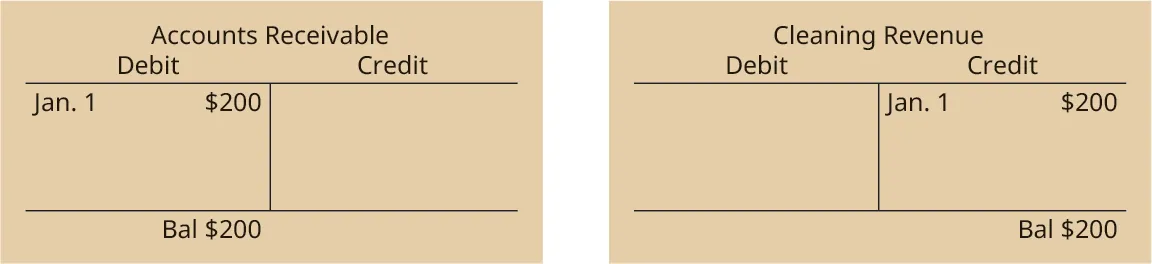
The paired T-accounts demonstrate the dual effect of one transaction: one account is debited while another is credited for the same amount. Seeing the two accounts side by side helps connect the rule “debits must equal credits” to the practical layout used when posting to ledger accounts. Source
How entries are recorded
To prepare a ledger account correctly, a student must know which side of the account to use. A useful guide is the normal balance of each type of account:
assets usually have debit balances
expenses usually have debit balances
capital usually has a credit balance
liabilities usually have credit balances
income usually has credit balances
When a transaction is posted:
one account is debited
another account is credited
the same amount is recorded in both places
The account title and amount must be accurate. In many ledger formats, the details column shows the name of the other account involved or a brief description. This helps create a clear audit trail and makes checking easier.
Why ledger accounts matter
Ledger accounts make accounting information usable. They allow the business to:
identify the balance on each account
see increases and decreases separately
check whether entries have been posted correctly
prepare a trial balance from the closing balances
Without ledger accounts, it would be difficult to know how much is owed, owned, earned, or spent in each category.
Balancing ledger accounts
At the end of a period, or at another chosen date, many ledger accounts are balanced off. This means finding the difference between the total of the debit side and the total of the credit side.
If the debit side is greater:
the difference is entered on the credit side as balance carried down
this creates equal totals on both sides
the same figure is then brought into the next period on the debit side as balance brought down
If the credit side is greater, the same process is used in reverse.
Balancing is important because the figure brought down becomes the opening balance for the next period. This is the amount that will appear in the trial balance, not the total of all entries in the account.
A common mistake is to confuse the balance with the total of an account. The trial balance uses the balance remaining on each ledger account after balancing, because that figure shows the current position of the account.
Trial balance
Meaning of a trial balance
Once the ledger accounts have been prepared and balanced, their balances are listed in a trial balance.
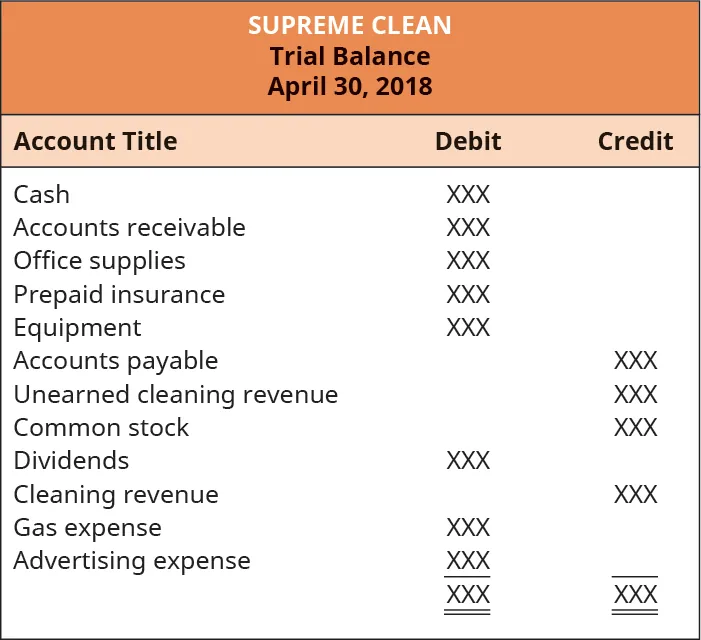
This example trial balance illustrates how ledger account balances are listed in separate debit and credit columns at a particular date. It visually reinforces the checking role of the trial balance by showing that the total of the debit column equals the total of the credit column when postings are arithmetically correct. Source
Trial balance: A statement listing the debit and credit balances from ledger accounts at a particular date to test the arithmetical accuracy of the double entry records.
A trial balance has two money columns:
one for debit balances
one for credit balances
If the bookkeeping has been carried out correctly in arithmetical terms, the two totals should agree.
How to prepare a trial balance
The basic process is:
take each ledger account in turn
identify its closing balance
place debit balances in the debit column
place credit balances in the credit column
total both columns
When preparing a trial balance, it is important to enter:
the account name
the correct balance only once
the balance on the correct side
For example:
an asset balance appears in the debit column
a liability balance appears in the credit column
an expense balance appears in the debit column
an income balance appears in the credit column
Accounts with no balance are usually omitted because they do not affect either total.
Purpose of preparing a trial balance
The main purpose of preparing a trial balance is to test whether the total debits in the ledger equal the total credits. Since double entry requires both sides of every transaction to match, equality in the trial balance provides evidence that the ledger has been prepared arithmetically correctly.
A trial balance is also useful because it:
summarizes all ledger balances in one statement
provides a basis for preparing financial statements
helps confirm that ledger accounts have been balanced
makes it easier to review the bookkeeping records
However, a trial balance is only a check, not absolute proof that every entry is correct. The agreement of the two columns shows that the ledger is arithmetically balanced, but it does not by itself guarantee that every transaction has been recorded in the right account or with the correct description.
Key points for exam success
When answering questions on this topic, students should focus on:
using the correct debit and credit entries
balancing ledger accounts accurately
distinguishing between a balance and a total
transferring only balances to the trial balance
stating the purpose of the trial balance clearly
Precise presentation matters. A ledger account with entries on the wrong side, or a trial balance using totals instead of balances, will not be correct even if some figures are accurate.
Practice Questions
State two purposes of preparing a trial balance. (2 marks)
1 mark for stating that it tests the arithmetical accuracy of the double entry records
1 mark for any one of:
summarizes ledger balances
assists in preparing financial statements
checks that total debit balances equal total credit balances
The following information relates to the bank account of Doran Traders for May:
May 1: balance at bank 6400
May 6: paid rent by bank 900
May 12: received from trade receivables and banked 2500
May 20: paid a supplier by bank 1400
May 27: owner introduced additional capital by bank 3000
Prepare the bank account for May and balance it off at May 31.
(5 marks)
1 mark for correct opening balance on debit side: 6400
1 mark for correct debit entries: trade receivables 2500 and capital 3000
1 mark for correct credit entries: rent 900 and supplier/payables 1400
1 mark for correct balance carried down: 9600 on credit side
1 mark for correct balance brought down: 9600 on debit side
FAQ
Most accounts have a normal balance, but unusual balances can happen.
For example:
a bank account may have a credit balance if the business is overdrawn
a trade receivables account may show a credit balance if a customer has overpaid
a payables account may show a debit balance if the business has paid a supplier in advance
These balances are still transferred to the trial balance on the side where they actually fall.
Yes. A business can extract a trial balance at any date.
This is useful for:
monthly internal checks
management accounting
preparing interim financial information
identifying posting problems early
Regular trial balances improve control because mistakes can be investigated sooner rather than after a long delay.
Balance carried down is the figure inserted to make both sides of the ledger account equal at the end of the period.
Balance brought down is the same figure entered on the opposite side at the start of the next period as the opening balance.
They are not two different amounts. They are the same balance shown at two different stages of the balancing process.
A trial balance shows the position of each account at a specific date, so it must use balances.
Totals would be misleading because:
they include all movements during the period
they do not show the amount still remaining in the account
they would not help prepare accurate financial statements
Using totals instead of balances shows a misunderstanding of what the trial balance is designed to do.
No. Software can produce them automatically, but the accounting logic is the same.
Students still need to understand:
why an entry is debit or credit
how balances are formed
what the trial balance is checking
how to spot when an output looks unreasonable
This understanding is essential for correcting errors and interpreting records properly.
