

CIE Syllabus focus:
'Candidates should understand the advantages and disadvantages of maintaining full accounting records for business decision-making.'
Maintaining full accounting records gives a business dependable financial information for planning, control, and evaluation. It improves decisions, but it also creates costs, time pressures, and administrative demands that may not suit every business.
What maintaining full accounting records means
Meaning
Full accounting records are more than a list of cash received and paid.
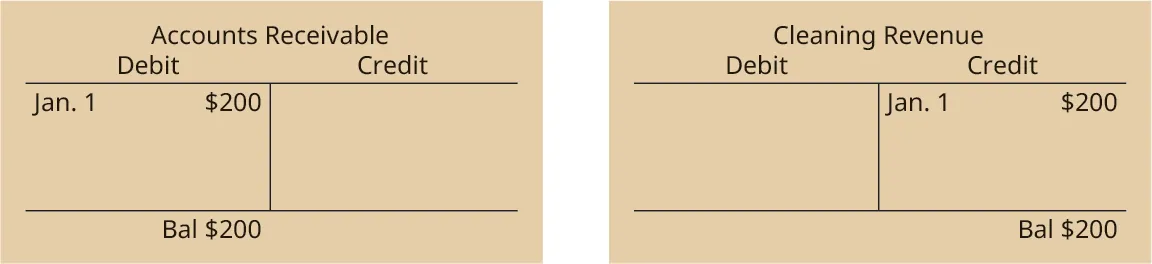
This example shows the flow from a transaction recorded in the journal to its posting into ledger T-accounts (e.g., Accounts Receivable and Revenue). Visually, it reinforces why full records improve accuracy and accountability: each entry can be traced and checked before totals appear in summaries like a trial balance and, eventually, the financial statements. Source

A T-account is the standard visual layout for ledger accounts in double-entry bookkeeping, with debits on the left and credits on the right. This format helps ensure completeness and internal consistency (every transaction has a corresponding double entry), which improves the reliability of information used for decisions. Source
They are a complete, organized system for recording all business transactions and for producing reliable financial information.
Full accounting records: A complete and systematic set of accounting documents and entries used to record all financial transactions and show the financial performance and position of a business.
This normally includes source documents, books or digital records, ledger accounts, and regular financial statements.
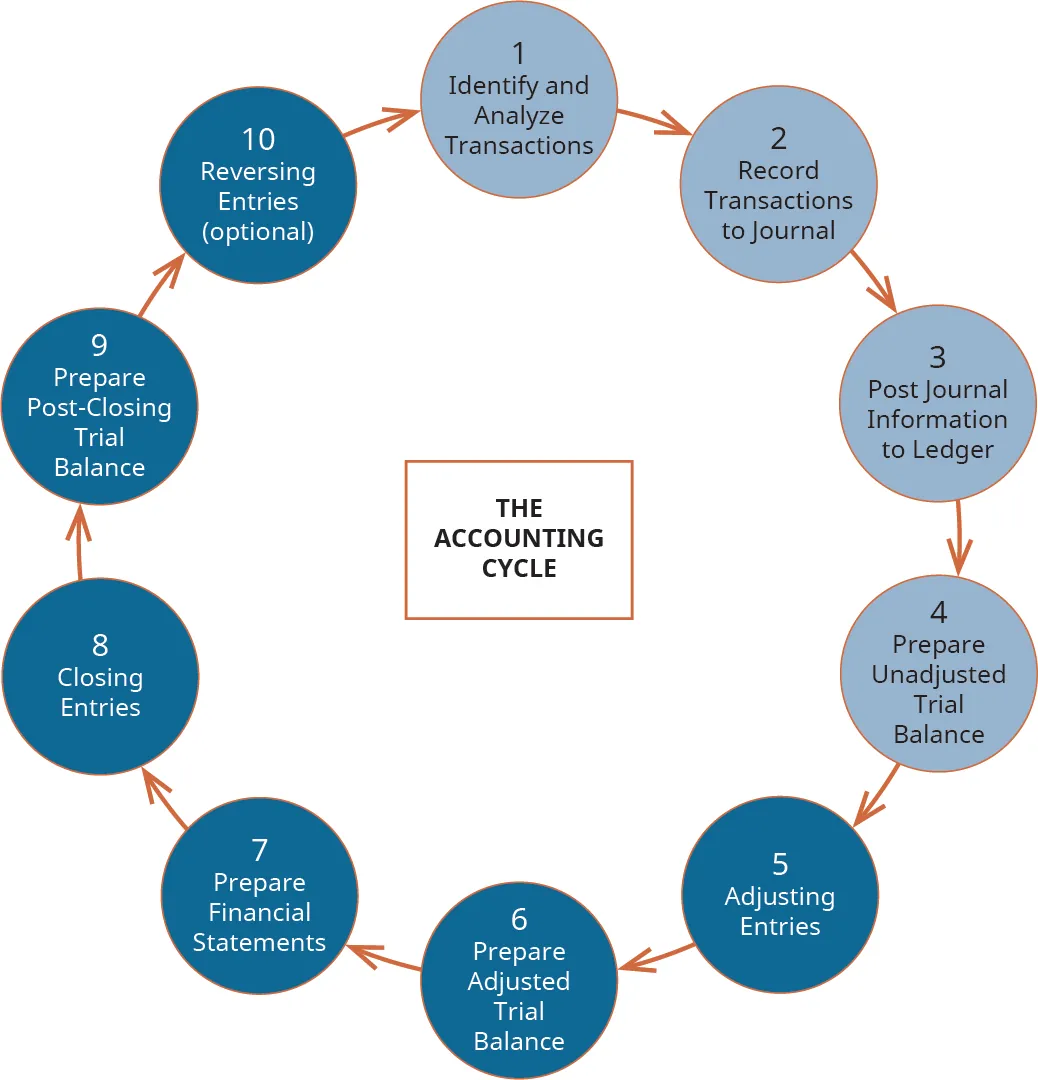
Accounting records form a structured cycle: transactions are identified, recorded in journals, posted to ledgers, checked via trial balances, and then summarized into financial statements. This diagram helps students see how “books/records” connect to the final outputs managers rely on (e.g., income statement and statement of financial position).
The key idea is completeness: transactions are recorded fully, consistently, and in enough detail to support decisions.
Link to decision-making
Managers and owners make decisions about pricing, cost control, credit, purchasing, cash management, and expansion. If records are incomplete, these decisions may be based on estimates or personal judgment rather than evidence. Full records reduce guesswork and allow decisions to be justified.
Advantages of maintaining full accounting records
Better quality information
The main advantage is that full records provide reliable accounting information. A business can identify:
how much profit has been earned
what assets it controls
what liabilities it owes
whether revenue and expenses are changing over time
Because the information is more complete, management can compare actual results with expectations and identify areas that need attention. Decisions are usually stronger when they are based on facts rather than memory.
Full records also improve the accuracy of reporting. If transactions are properly recorded, the business is less likely to overstate profit, ignore expenses, or overlook debts. This matters for decisions such as whether the business can afford new spending or whether costs must be reduced.
Improved planning and control
Full records support planning because they provide past data that can be used to forecast future performance. A manager can review sales patterns, expense levels, and cash movements before deciding on budgets or targets.
They also improve control by making it easier to monitor:
cash balances
amounts owed by customers
amounts owed to suppliers
spending by department or activity
changes in inventory and non-current assets
When records are maintained regularly, problems are detected earlier. For example, rising expenses, slow-paying customers, or falling margins can be noticed before they become serious. Better monitoring leads to quicker and better-informed decisions.
Greater accountability and confidence
Full accounting records make decisions easier to explain to others. Owners can check whether managers are using resources effectively, and managers can support recommendations with evidence. This creates stronger accountability.
Good records may also increase confidence among people connected with the business. A lender, supplier, or potential investor is more likely to trust information that comes from a complete accounting system. This can affect decisions about borrowing, obtaining credit, or attracting additional capital.
Another benefit is that full records help the business meet tax and other reporting requirements more efficiently. Even though compliance is not the same as decision-making, it supports decisions because management can act with clearer knowledge of the business's financial position and obligations.
Disadvantages and limitations
Cost and time
Maintaining full accounting records can be expensive. Costs may include:
accounting staff or bookkeeping labor
software and system maintenance
training
professional advice or checking procedures
For a very small business, these costs may seem high compared with the immediate benefits. Management time is also used in recording, checking, and organizing information. Time spent on administration cannot be spent on sales, production, or customer service.
Complexity
A full accounting system may be complex, especially where there are many transactions. Records must be kept accurately and consistently. If staff are not well trained, the system may produce confusing or poor-quality information despite being detailed.
There is also a risk that managers receive too much information. Large volumes of data do not automatically create better decisions. If important points are hidden in unnecessary detail, decision-making may become slower rather than better.
Information has limits
Full accounting records improve decisions, but they do not guarantee good decisions. Most accounting information is based on past transactions, so it may not fully predict the future. A business may have excellent records and still make poor decisions if market conditions change suddenly.
Accounting records also focus mainly on financial matters. Decisions may depend on non-financial factors such as customer satisfaction, staff morale, product quality, competition, or environmental issues. These may be very important but not shown clearly in the accounting system.
Finally, full records can still contain errors, omissions, or judgments. If the underlying data is wrong, decisions based on it may also be wrong. This means the value of full records depends on both accuracy and timeliness.
Evaluating the advantages and disadvantages
Factors affecting the balance
Whether full accounting records are worthwhile depends on the business context. Important factors include:
the size of the business
the number and complexity of transactions
legal or reporting requirements
whether the business wants to grow
the need for external finance
the ability of staff to maintain and interpret records
In many cases, the advantages are strongest where decisions involve significant amounts of money or where managers need regular performance information. In a very small business with few transactions, the benefits may still exist, but the cost and effort may feel more significant.
How to write a balanced point
A high-quality evaluation should not say that full records are always good or always unnecessary. Strong answers link the benefit of better information to the cost of producing it, then judge whether that balance improves business decision-making in the circumstances given.
Practice Questions
State two advantages of maintaining full accounting records for business decision-making. (2 marks)
1 mark for each valid advantage stated, up to 2 marks.
Acceptable answers include:
more reliable profit information
better cash control
improved planning
earlier identification of problems
stronger evidence for borrowing or credit decisions
better monitoring of assets and liabilities
Explain one advantage and one disadvantage to a small business of maintaining full accounting records for business decision-making. (6 marks)
1 mark for identifying a valid advantage.
2 marks for explaining how that advantage improves decision-making.
1 mark for identifying a valid disadvantage.
2 marks for explaining how that disadvantage may limit or burden the business.
Possible content:
Advantage: more complete and reliable information for planning, control, or monitoring.
Explanation: allows management to make decisions using evidence, identify problems early, or assess profit and cash position more accurately.
Disadvantage: cost, time, or complexity.
Explanation: a small business may need extra staff, software, or training, and the administrative burden may outweigh the benefit if transactions are limited.
FAQ
Common warning signs include:
cash shortages that cannot be explained
uncertainty about how much customers owe
missed supplier payments
difficulty preparing tax information
disagreements about profit figures
If managers are regularly making decisions from memory, rough estimates, or incomplete paperwork, the business usually needs a fuller accounting system.
A gradual approach is often best.
decide what records are missing
choose a simple system or software
train the person responsible
enter opening balances carefully
set regular routines for checking and filing documents
It also helps to run the new system alongside the old method for a short period so errors can be spotted before the change becomes permanent.
Lenders do not look only at profit. They also want confidence in the numbers presented to them.
Full records help lenders assess:
whether cash flow is controlled
whether liabilities are understood
whether management monitors performance properly
whether the business can provide consistent evidence
A business with modest profit but strong records may seem less risky than a business claiming high profit with weak documentation.
Updating should be continuous, but review should happen at planned intervals.
Many businesses review monthly because that is frequent enough to spot trends without creating unnecessary pressure. A fast-moving business may need weekly review of cash, receivables, or key expenses.
The important point is consistency. Records are most useful when management checks them regularly and acts on what they show.
Recording skills matter, but interpretation skills matter just as much.
Useful skills include:
attention to detail
consistency
understanding what figures mean
spotting unusual changes
distinguishing important information from minor detail
A business may keep full records yet still make weak decisions if nobody can analyze the information properly. The system is strongest when accurate record-keeping is matched by clear financial understanding.
