CIE Syllabus focus:
'Candidates should understand the benefits and limitations of reconciliation and verification procedures when assessing accounting records.'
Reconciliation and verification procedures are essential checks on accounting records. They increase confidence in recorded information, but they are not perfect, so accountants must understand both their strengths and their weaknesses.
Understanding the purpose of these procedures
A reconciliation compares one accounting record with another source of information to see whether they agree.
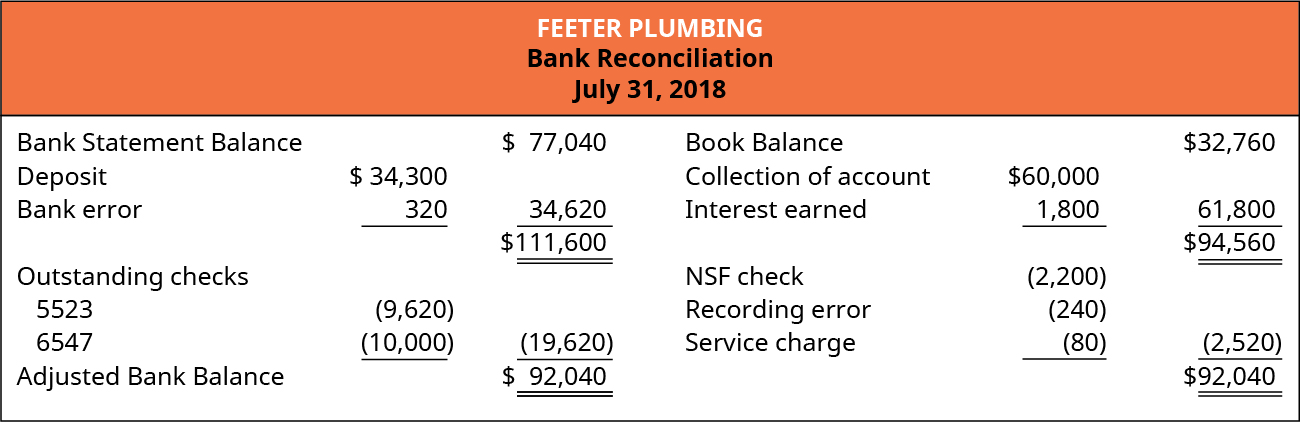
Example bank reconciliation statement (two-sided format) illustrating how differences between the bank statement balance and the cash book/ledger balance are explained by timing differences (e.g., deposits in transit and outstanding cheques) and bank/book-only items (e.g., charges or interest). This concretely shows how reconciliation converts two different recorded balances into one “adjusted” balance that should agree if records are complete and errors are corrected. Source
Reconciliation: The process of comparing two related sets of records and investigating any differences between them.
This helps a business test whether recorded balances are likely to be correct rather than simply assuming that the ledger is accurate.
Verification procedures are broader checking activities used to confirm that accounting information is supported by evidence and has been recorded properly.
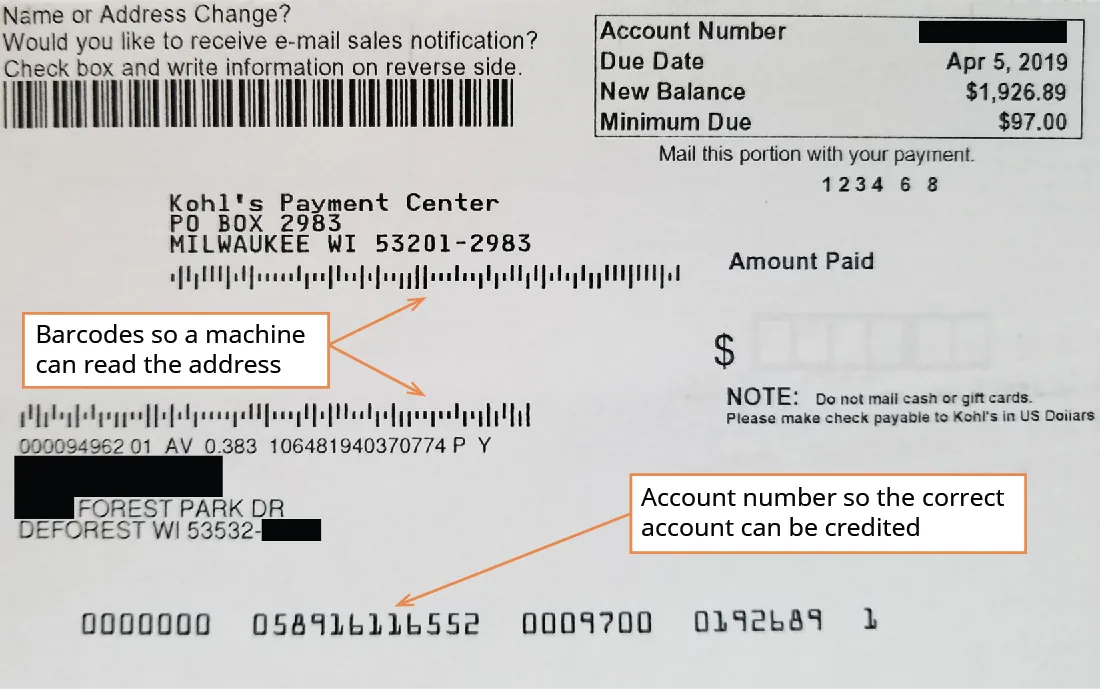
Example of a source document (a remittance advice/turn-around document) that can be matched to accounting entries during verification. In verification work, documents like this provide evidence that a transaction occurred and help trace amounts from source paperwork through journals/ledgers (and back again) when investigating unusual items or discrepancies. Source
Verification procedures: Checks carried out to confirm the accuracy, completeness, and reliability of accounting records by comparing them with supporting evidence.
In practice, these procedures may involve comparing records with documents, checking totals, reviewing balances, and following up unusual items. Their value lies in improving confidence in the accounting system before figures are used for control, reporting, or decision-making.
Benefits of reconciliation and verification procedures
Greater accuracy and reliability
The main benefit is that they help detect errors in the accounting records. Differences may reveal:
entries made in the wrong amount
items recorded twice
transactions entered in the wrong account
balances brought forward incorrectly
items missing from the records
By identifying such problems, the business can correct them before the records are used. This makes the accounting information more reliable, which is important because managers and owners depend on it when reviewing performance or financial position. It also reduces the chance that later reports will contain avoidable misstatements.
Stronger internal control
Reconciliation and verification procedures are an important part of internal control, because they provide a regular check on work already completed.
Staff know that records will be compared and reviewed, so there is more pressure to maintain care and accuracy. This can reduce careless mistakes and may discourage some forms of fraud or unauthorized action. It can also improve confidence in the accounting function.
These procedures also help highlight weak points in the accounting system. If the same type of difference appears repeatedly, management can investigate the cause. The problem may be poor training, unclear procedures, weak supervision, or ineffective division of duties. In this way, reconciliation and verification do more than find individual errors; they can reveal weaknesses in the whole system.
Better decision-making and accountability
Accurate accounting records improve the quality of financial information available to management. If balances have been checked and verified, there is greater confidence in reports used to monitor cash, control expenses, or assess business performance. This supports better planning and more responsible management of resources.
Verification procedures also improve accountability. When balances are supported by evidence, it is easier for a business to explain figures, justify corrections, and show that records have been reviewed properly. This is especially useful where responsibility for recording transactions and responsibility for oversight are separated.
Limitations of reconciliation and verification procedures
They do not detect every problem
A major limitation is that these procedures do not guarantee complete accuracy. Some errors may remain undiscovered even after careful checking. For example, if the same incorrect figure appears in both sets of records being compared, the reconciliation may still appear to agree. Deliberate fraud may also be concealed in ways that make it difficult to detect through routine checks alone.
Verification procedures are also limited when transactions involve judgment. If an amount has been recorded using poor judgment rather than simple calculation error, a check may confirm that documents exist without proving that the amount is fully appropriate. As a result, reconciliation and verification provide evidence of reliability, but not absolute proof that every figure is correct.
Cost, time, and interruption
These procedures use staff time and may increase administrative cost. Records must be reviewed, differences investigated, and corrections authorized. In a busy organization, this can delay other accounting work. If the benefit from the checking is small, the procedure may not be cost-effective.
This means a business must consider the importance of the items involved. Small differences may not justify long investigations, especially when the cost of finding the cause is greater than the significance of the item. Therefore, the usefulness of verification procedures depends partly on whether the time and expense involved are reasonable.
Dependence on people and evidence
The effectiveness of these procedures depends on the quality of the underlying records and supporting documents. If documents are incomplete, late, unclear, or misleading, the checking process becomes less reliable. A procedure is only as strong as the evidence being examined.
There is also a human limitation. Staff may overlook differences, misunderstand documents, or fail to follow up unusual items properly. If the person carrying out the check lacks experience, the procedure may become a routine exercise rather than a meaningful review. Therefore, good verification requires competent staff, clear procedures, and proper supervision.
Using procedures wisely when assessing accounting records
When assessing accounting records, accountants should treat reconciliation and verification procedures as valuable but limited tools. They are most effective when carried out regularly, reviewed by an appropriate person, and followed by prompt investigation of differences. They should form part of ongoing monitoring rather than a one-time check. Their results should be interpreted carefully, with an awareness that agreement between records increases confidence but does not remove the need for professional judgment.
Practice Questions
State two benefits of reconciliation and verification procedures when assessing accounting records. (2 marks)
1 mark for each valid benefit stated, up to 2 marks.
Acceptable answers include:
helps detect errors
improves the reliability of accounting records
strengthens internal control
identifies weaknesses in the accounting system
discourages carelessness or fraud
improves confidence in information used for decision-making
Explain three limitations of reconciliation and verification procedures when assessing accounting records. (6 marks)
Award up to 2 marks per limitation explained, maximum 6 marks.
For each limitation:
1 mark for identifying a valid limitation
1 mark for a linked explanation
Possible answers:
not all errors are found; two records may agree even when both contain the same mistake
fraud may be hidden and not revealed by routine checking
judgment-based amounts may still be inappropriate even where evidence exists
procedures take time and cost money
usefulness depends on the quality of supporting documents
effectiveness depends on the skill and care of the person carrying out the check
FAQ
The frequency should match the level of risk.
A business should consider:
the number of transactions
how much cash is involved
how quickly errors could grow
reporting deadlines
past history of discrepancies
High-volume or cash-based areas usually need more frequent checks than low-risk balances.
An exception report lists items the system could not match or items outside preset limits.
It is useful because it:
directs attention to unusual items
saves time by avoiding review of normal items
creates a record of what still needs investigation
Its value depends on whether staff actually review and clear the exceptions.
Keeping the supporting papers shows:
what records were compared
who performed the check
when it was completed
how differences were resolved
This creates a clear record for later review, staff handover, or external inspection. Without retained evidence, a business may struggle to prove that the procedure was done properly.
Yes, especially where transaction volumes are very high.
Sampling can:
reduce cost
speed up review
reveal patterns of error
However, it also brings risk because unchecked items may still contain problems. Sampling is usually more suitable for lower-risk areas than for sensitive or high-value balances.
A one-time difference may come from a simple mistake or a timing delay.
Recurring differences are more serious because they often suggest an underlying system weakness, such as:
unclear procedures
duplicated posting
poor training
repeated cutoff problems
Patterns help management focus on root causes instead of only correcting individual errors.