

CIE Syllabus focus:
'Candidates should understand errors affecting the trial balance and errors that do not affect it, including omission and commission errors.'
Trial balance errors matter because unequal totals can reveal bookkeeping mistakes, while equal totals can be misleading. Students must distinguish errors exposed by the trial balance from those hidden within apparently balanced records.
Why the trial balance is only a check
A trial balance compares total debit balances with total credit balances after ledger accounts have been balanced.
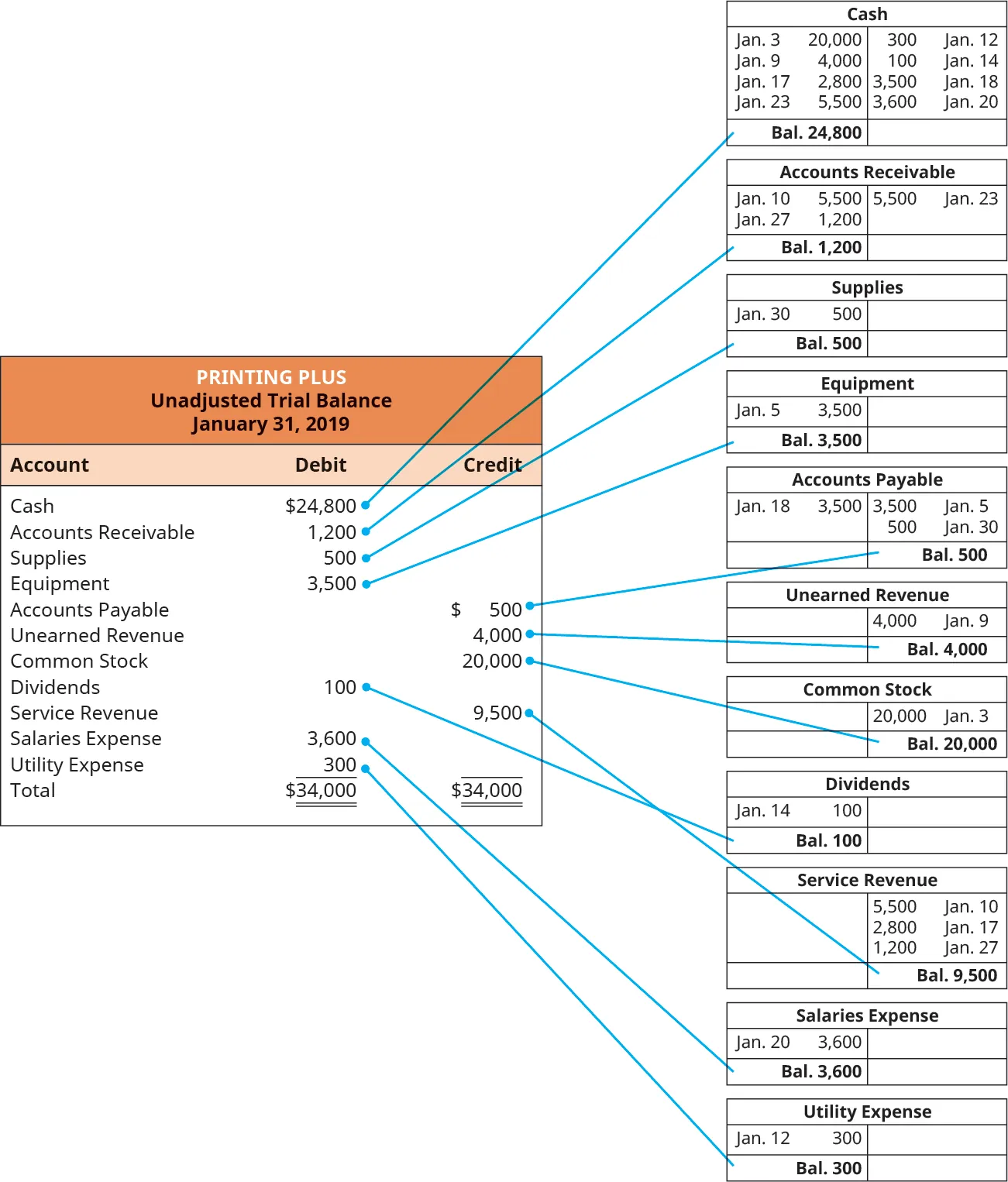
Example of an unadjusted trial balance showing accounts arranged into debit and credit columns with matching totals. This visual reinforces what the trial balance is checking: the arithmetic equality of total debits and total credits, rather than the underlying correctness of classifications or postings. Source
Trial balance: a list of ledger balances at a particular date used to test the arithmetical accuracy of the double-entry records.
If the totals do not agree, there is at least one error somewhere in the bookkeeping. However, if the totals do agree, this does not prove that the accounts are correct. It only suggests that the double-entry system has been applied arithmetically in a balanced way.
This distinction is essential in exams. A trial balance is an aid to finding errors, but it is not a guarantee that no errors remain.
Errors that affect the trial balance
An error affects the trial balance when it causes total debits and total credits to become unequal. These errors usually happen when only one side of a double entry is wrong or when balances are extracted incorrectly.
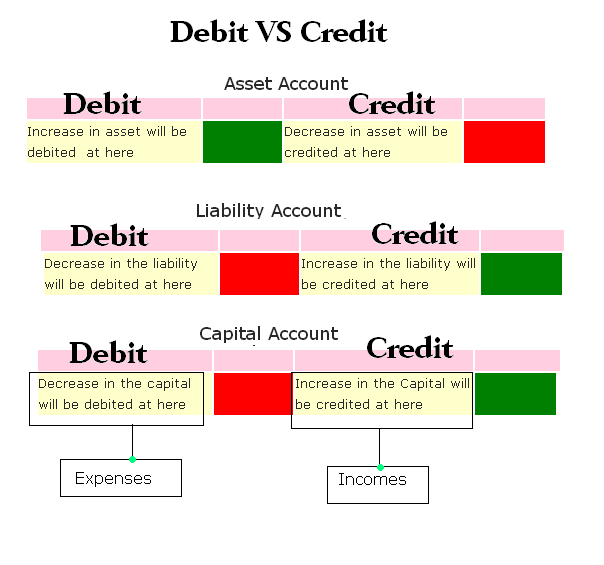
Diagram mapping debits and credits to the main account classes (assets, liabilities, capital/equity, income, and expenses). It helps students see why posting to the wrong side (e.g., crediting an expense) can create or conceal trial balance disagreements depending on whether one or both entries are affected. Source
Common types include:
One-sided entries: only the debit entry or only the credit entry is made.
One-sided amount errors: both sides are intended, but one side is entered with a different amount.
Entry on the wrong side of an account: an amount that should be debited is credited, or the reverse, in one account only.
Incorrect balancing of ledger accounts: an account balance is calculated wrongly.
Errors in extracting balances to the trial balance:
omitting a balance from the trial balance
placing a balance in the wrong column
entering the wrong figure from a ledger account
Arithmetic errors in adding the trial balance columns.
A useful way to test whether an error affects the trial balance is to ask whether the final debit total still has an equal credit total. If one side of the double entry is missing, altered, or misplaced, the trial balance will usually fail to agree.
Students sometimes confuse a complete omission with a one-sided failure to post. If only one part of the entry is missing, the trial balance is affected. If both parts are missing, it is a different type of error and the trial balance may still agree.
Errors that do not affect the trial balance
Some errors leave debits and credits equal, so the trial balance still balances even though the accounting records are wrong. These are often more difficult to detect.
An error of omission is one such error.
Error of omission: a transaction is completely left out of the accounting records, so neither the debit entry nor the credit entry is made.
Because both sides are missing, the totals remain equal. The transaction is absent, but the trial balance does not reveal the problem.
Another important hidden error is an error of commission.
Error of commission: an entry is made in the correct type of account, but in the wrong individual account of the same class.
For example, a receipt from one credit customer may be posted to another customer’s account. The debit and credit entries still exist for the same amount, so the trial balance can still agree.
Other errors that do not affect the trial balance include:
Error of original entry: the wrong amount is recorded in the original record and then posted correctly on both sides using that wrong amount.
Error of principle: the amount is entered on both sides, but one entry is made in the wrong class of account, such as treating a capital item as revenue.
Reversal of entries: the debit and credit entries are both made, but each is posted to the wrong side.
Compensating errors: two or more separate errors cancel each other out numerically, so the trial balance still agrees.
These errors show why the trial balance checks arithmetic rather than full accounting accuracy. A balanced trial balance can still contain serious classification, posting, or recording mistakes.
How to classify an error in an exam
When deciding whether an error affects the trial balance, use a simple line of reasoning:
Check whether both sides of the double entry were made.
Check whether the same amount was entered on both sides.
Check whether each entry was placed on the correct side of the relevant account.
Check whether the final ledger balance was carried correctly into the trial balance.
If the mistake changes only one side, or changes the arithmetic of one balance or one trial balance column, it affects the trial balance.
If the mistake keeps debit and credit entries equal overall, it does not affect the trial balance, even though the accounts are still wrong.
Common misunderstandings
A few misconceptions regularly appear in exam answers:
An agreeing trial balance does not mean there are no errors.
An error of omission means the transaction is missed completely, not that one side was forgotten.
An error of commission is about the wrong account within the correct class, not simply any careless mistake.
A trial balance mainly checks arithmetical accuracy, not whether transactions were classified or interpreted correctly.
More than one error can exist at the same time, so a disagreement in the trial balance may have several causes.
Practice Questions
State two errors that would not affect the agreement of a trial balance. (2 marks)
1 mark for any valid error stated, up to 2 marks.
Acceptable answers include:
error of omission
error of commission
error of original entry
error of principle
reversal of entries
compensating errors
For each of the following errors, state whether it would affect the agreement of the trial balance. Write “affect” or “not affect”.
a) A purchase of equipment is omitted completely from the accounting records. b) The debit entry for a cash sale is made, but the credit entry is not made. c) A payment received from one credit customer is posted to the account of another credit customer. d) A ledger balance is entered in the debit column of the trial balance instead of the credit column. e) A transaction is entered in both accounts with the same incorrect amount.
(5 marks)
1 mark each:
a) not affect
b) affect
c) not affect
d) affect
e) not affect
FAQ
A transposition error happens when digits are reversed, such as writing 64 instead of 46.
The difference between the two numbers is often divisible by 9, so if a trial balance difference can be divided exactly by 9, this gives a useful clue. It does not prove a transposition error, but it suggests where to start looking.
A similar clue can appear with some slide errors, where a decimal point or place value is misread.
A transposition error reverses digits, such as 53 becoming 35.
A slide error moves digits to the left or right, often because place value is misunderstood, such as 450 being recorded as 45 or 4500.
Both may affect the trial balance if they occur on one side only. If the same wrong figure is posted to both sides, the trial balance may still agree.
Yes. If a person deliberately records equal debit and credit entries but uses the wrong accounts, the trial balance may still balance.
Examples include:
posting to the wrong customer or supplier account
deliberately misclassifying an item
recording a false transaction with equal debit and credit entries
This is why the trial balance is only an arithmetical check. It cannot by itself confirm honesty or full accuracy.
Useful clues include:
a difference equal to one ledger balance, suggesting omission from the trial balance
a difference divisible by 9, suggesting a transposition error
a difference divisible by 2, suggesting an amount may have been entered on the wrong side
an unusually large difference, suggesting a one-sided omission or wrong figure
These clues do not guarantee the exact error, but they help narrow the search.
Some are less common, but they do not disappear.
Computerized systems reduce:
addition errors
balancing errors
mistakes in totaling columns
However, they do not prevent:
posting to the wrong account
entering the wrong amount
omitting a transaction completely
classifying a transaction incorrectly
So computers reduce many mechanical errors, but human input errors can still produce trial balance problems or hidden errors.

