

Edexcel Syllabus focus:
'Understand the consequences of energy imbalance, including weight loss, weight gain and development of obesity.'
Body mass depends on the balance between energy intake and energy expenditure. When this balance shifts for long periods, the result can be weight loss, weight gain, or eventually obesity.
Energy Balance and Body Mass
Energy Intake and Expenditure
Energy from food is used for respiration and normal life processes. Body mass tends to stay stable when energy intake matches energy expenditure over time. Expenditure includes basal metabolic rate, physical activity, and maintaining body temperature. A long-term mismatch between intake and expenditure is called energy imbalance.
Energy imbalance: A state in which energy intake and energy expenditure are not equal.
Short-term fluctuations happen, but a sustained imbalance changes body mass. If intake is lower than expenditure, stored fuels are used. If intake is higher, excess energy is stored.
Negative Energy Balance and Weight Loss
If a person remains in negative energy balance, the body needs more energy than the diet supplies. At first, it can use stored glycogen in the liver and muscles. As the deficit continues, triglycerides in adipose tissue are broken down to provide energy. In prolonged or severe energy deficit, proteins from muscle may also be used. Because stored materials are being broken down, body mass decreases.
Weight loss can be useful if a person has excessive fat stores, but large or prolonged losses can be harmful. Consequences of negative energy balance may include:
reduced fat stores
decreased muscle mass
tiredness and weakness
reduced ability to maintain body temperature
lower capacity for normal physical activity
In children and adolescents, long-term energy deficit can also reduce normal growth and development. The rate of weight loss depends on how large the deficit is, how long it lasts, and the person’s starting body composition.
Positive Energy Balance and Weight Gain
If energy intake is greater than energy expenditure, the surplus cannot be used immediately and is stored. Some carbohydrate can be stored as glycogen, but glycogen stores are limited. Much of the excess energy is converted to and stored as fat in adipose tissue.
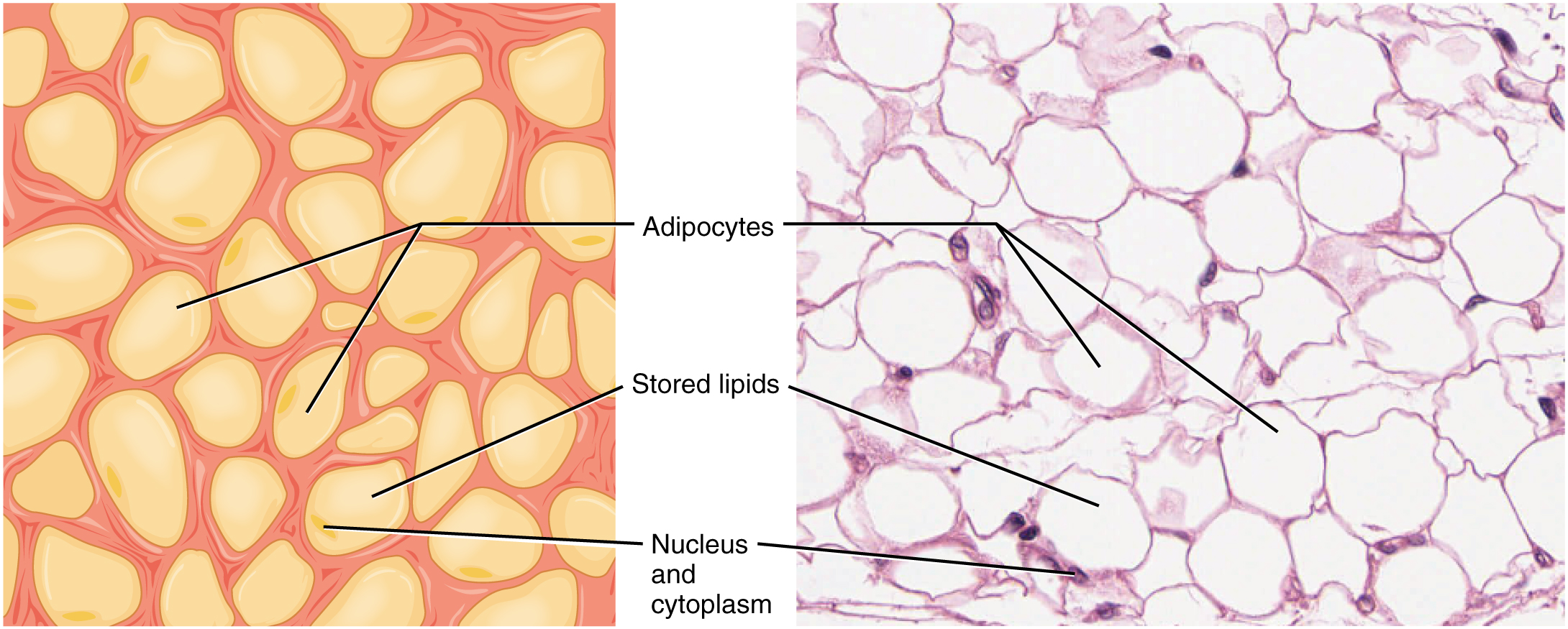
This labeled micrograph shows adipose tissue, where adipocytes are specialized for storing energy as triglyceride in large lipid droplets. The image helps connect ‘fat storage’ to a real tissue structure, making it easier to visualize how increasing triglyceride storage enlarges adipose tissue. This is the tissue-level basis for long-term increases in body fat during persistent positive energy balance. Source
Because fat is an efficient energy store, repeated surpluses over days, weeks, and months lead to increased body mass.
Weight gain does not always mean fat gain alone. Small short-term increases in body mass can also reflect extra water or glycogen. However, persistent positive energy balance usually increases fat stores. This is more likely when a person regularly eats energy-dense foods and has low levels of physical activity.
Even a small daily surplus can cause gradual but substantial weight gain if it continues over a long period. Persistent positive energy balance can eventually lead to obesity.
Obesity: A condition in which there is an excessive accumulation of body fat that may impair health.
Development of Obesity
Obesity develops when excess energy intake over time causes a large increase in body fat. Adipose tissue enlarges as more triglyceride is stored. This usually happens gradually rather than suddenly. A person may not notice the change at first, especially if body mass increases by only a small amount each week.
Modern lifestyles can promote obesity because food is often constantly available, highly processed, and energy dense, while work and transport may involve little movement. If eating behavior is not matched by activity level, energy intake can repeatedly exceed energy expenditure.
The body has mechanisms that influence hunger and fullness, but these do not always prevent weight gain. Large portion sizes, frequent snacking, and low activity can all contribute to a long-term surplus. Once obesity develops, movement may become less comfortable, which can reduce physical activity further and make the imbalance worse.
Biological Effects of Obesity
Obesity is a consequence of long-term positive energy balance, but it can also produce further biological effects. Excess body fat can:
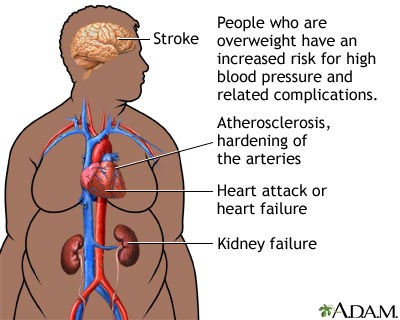
This figure summarizes major health risks that become more likely as excess body fat accumulates, including type 2 diabetes, hypertension, and cardiovascular disease. It reinforces that obesity is not just increased mass but a condition that disrupts normal physiology across multiple organ systems. Use it to support evaluative exam answers about biological consequences. Source
place greater strain on joints
reduce mobility and exercise tolerance
increase the likelihood of high blood pressure
raise the risk of cardiovascular disease
increase the risk of insulin resistance and type 2 diabetes
These effects occur because excess adipose tissue changes normal body function. As body fat increases, organs and tissues may need to work harder to maintain normal conditions. Obesity is therefore not just an increase in mass; it is a condition that can significantly affect health.
Interpreting Changes in Body Mass
Changes in body mass should be understood over time, not from a single meal or one day of activity. A person may remain at a similar mass when intake and expenditure are close overall, even though both vary from day to day.
The key pattern is:
negative energy balance leads to weight loss
positive energy balance leads to weight gain
long-term, substantial positive energy balance can lead to obesity
For exam answers, link the direction of the imbalance to what happens to energy stores. If energy is lacking, stored reserves are used. If energy is in excess, it is stored, mainly as fat.
Practice Questions
Explain what is meant by negative energy balance and state its effect on body mass. (2)
Energy expenditure is greater than energy intake. (1)
Body mass decreases / weight loss occurs because stored energy reserves are used. (1)
Describe how long-term positive energy balance leads to obesity and explain two consequences of obesity for health. (6)
Energy intake is greater than energy expenditure. (1)
Excess energy is stored. (1)
Excess is mainly stored as fat / as triglycerides in adipose tissue. (1)
Over time, fat accumulates and body mass increases, leading to obesity. (1)
One explained health consequence, such as increased risk of high blood pressure, cardiovascular disease, insulin resistance, or reduced mobility. (1)
A second explained health consequence. (1)
FAQ
Energy balance is affected by more than food intake alone.
Differences can include:
resting metabolic rate
muscle mass
age
sex
hormone levels
everyday movement outside formal exercise
Some people also unconsciously move more during the day, which increases energy expenditure. This means the same diet may produce different effects in different individuals.
At the start of a diet, some weight loss may come from:
glycogen depletion
water loss
reduced food in the digestive system
This happens because glycogen is stored with water. When glycogen levels fall, water is lost too.
So a fast drop on the scale does not always mean a large loss of body fat.
Poor sleep can affect both appetite and activity.
It may:
increase hunger signals
increase cravings for energy-dense foods
reduce self-control around food
make a person more tired and less active
Over time, these effects can promote positive energy balance and weight gain.
After weight loss, the body may respond in ways that favor regain.
These can include:
increased appetite
lower energy expenditure
reduced motivation because progress slows
Environmental factors also matter. Easy access to large portions and high-calorie foods can make it hard to maintain a negative or balanced energy state for long periods.
Often, no. Drinks containing sugar can provide a lot of energy without creating the same feeling of fullness as solid foods.
This can make it easier to consume excess energy before the body detects it.
Examples include:
sugary soft drinks
sweetened coffee drinks
milkshakes
energy drinks
Because they may be consumed quickly and in addition to meals, liquid calories can contribute to positive energy balance.
