

Edexcel Syllabus focus:
'Know that a gene is a sequence of bases on a DNA molecule that codes for an amino acid sequence in a polypeptide chain.'
Genes link the information stored in DNA to the proteins that cells build. Understanding a gene as a base sequence helps explain how inherited information can determine cell structure, activity, and biological function.
What a gene is
A gene is a specific section of a DNA molecule. It is important to think of a gene as information stored in a particular order, rather than as just a physical piece of DNA.
Gene: A sequence of bases on a DNA molecule that codes for an amino acid sequence in a polypeptide chain.
A gene is therefore defined by its base order. DNA is present throughout the genome, but only particular stretches of DNA are individual genes. Each gene has its own sequence, and that sequence is what makes it distinct.
The key point is that the information in DNA depends on arrangement. If the order changes, the information can change as well. This means the exact sequence of bases matters.
Base sequence: The order of bases along a section of DNA.
A gene is not the whole DNA molecule. A single DNA molecule can contain many genes, each with its own base sequence. The bases act like a coded language, and the sequence carries the instructions needed to produce a particular amino acid order.
How a base sequence stores biological information
DNA has a repeating overall structure, but the sequence of bases can vary enormously. This variation is what allows different genes to exist.
The base sequence in a gene stores information because it determines the order in which amino acids will be assembled in a polypeptide chain. In other words, the information in DNA is meaningful because it can be used to specify a product.
This is why genes are often described as coding for polypeptides. A gene does not physically contain amino acids. Instead, it contains the base sequence that provides the instructions for their order.
Different genes have different sequences of bases, so they code for different amino acid sequences. As a result, cells can produce many different polypeptides, each with its own structure and role.
A useful way to think about this is:
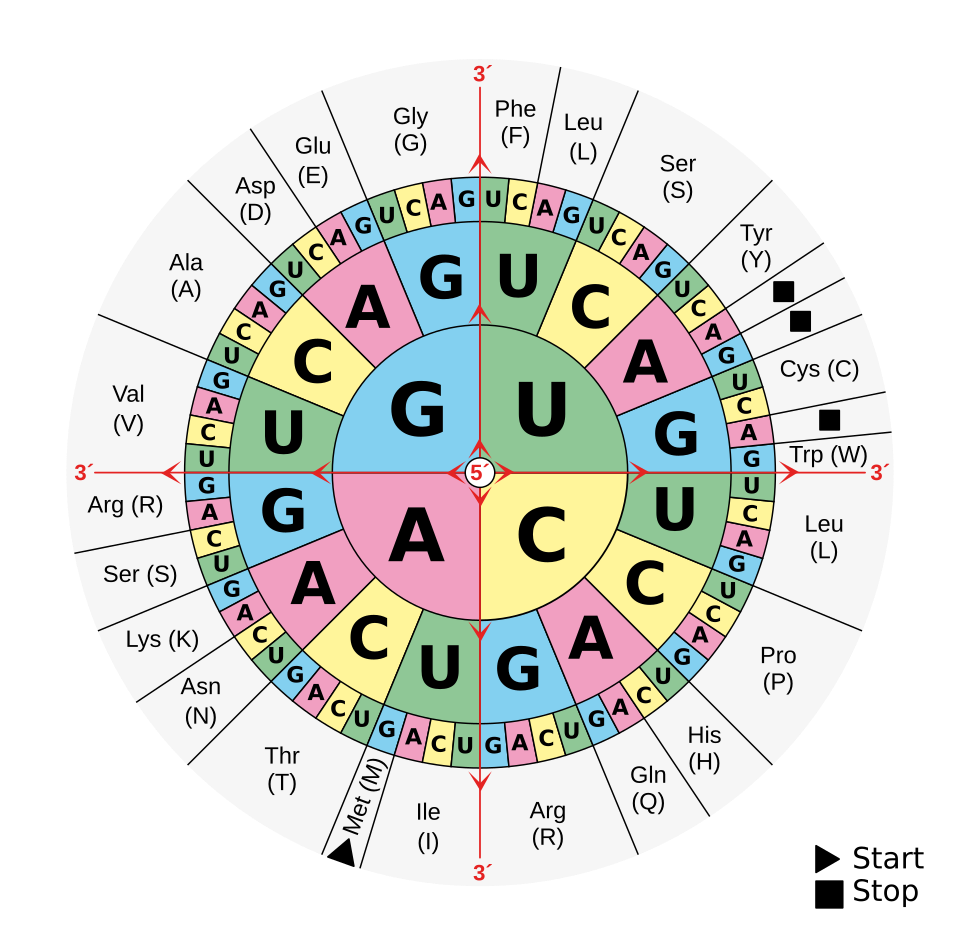
Codon wheel showing how an mRNA base sequence is read in triplets (codons) to specify particular amino acids. This makes the link between nucleotide sequence and polypeptide primary structure explicit: different codons correspond to different amino acids, so sequence changes can alter the polypeptide produced. Source
DNA base sequence stores the information
that information specifies an amino acid sequence
the amino acid sequence forms a polypeptide chain
The sequence is therefore central. It is not enough to know that a gene contains many bases; what matters is the precise order of those bases.
From gene to polypeptide chain
A gene codes for an amino acid sequence in a polypeptide chain.
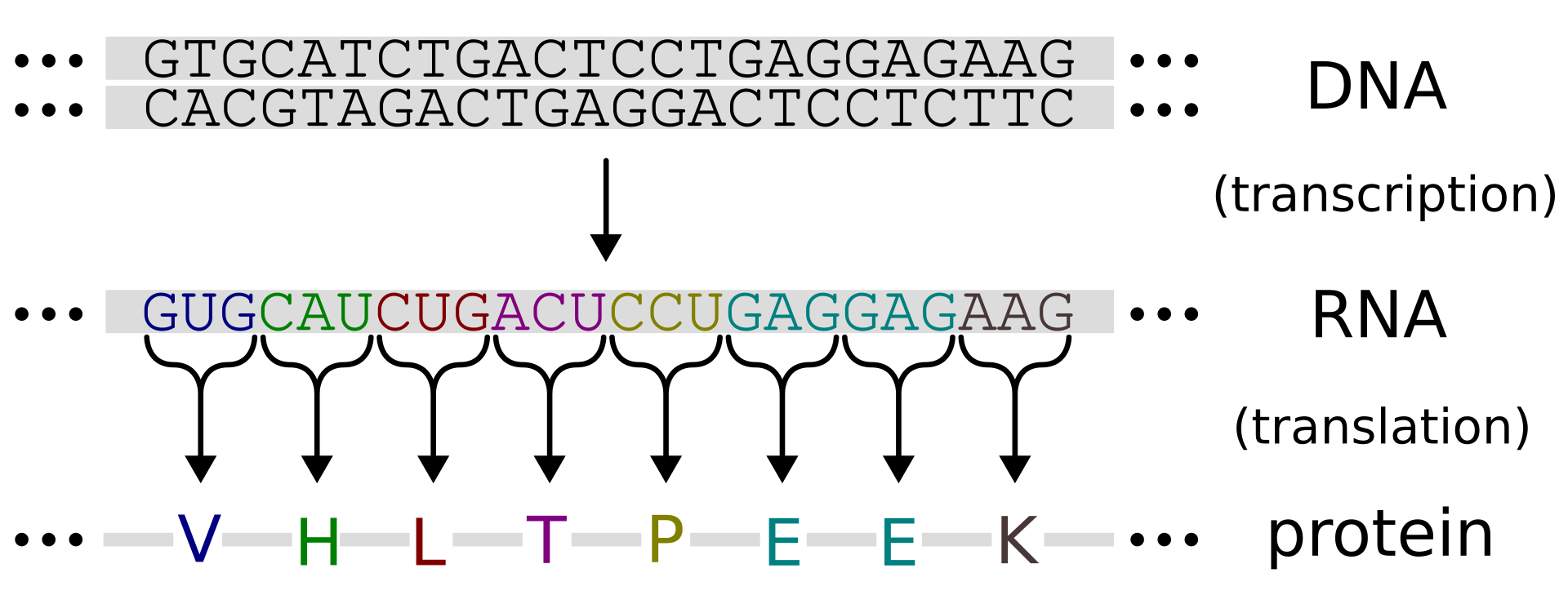
Central-dogma style diagram connecting DNA sequence information to an mRNA sequence and then to an amino acid sequence in a polypeptide. It provides a clear visual summary of how the order of bases is converted into an ordered chain of amino acids during gene expression. Source
This means there is a direct link between the order of bases in DNA and the order of amino acids in the polypeptide produced.
Polypeptide: A chain of amino acids linked together in a specific order.
The order of amino acids in a polypeptide is not random.
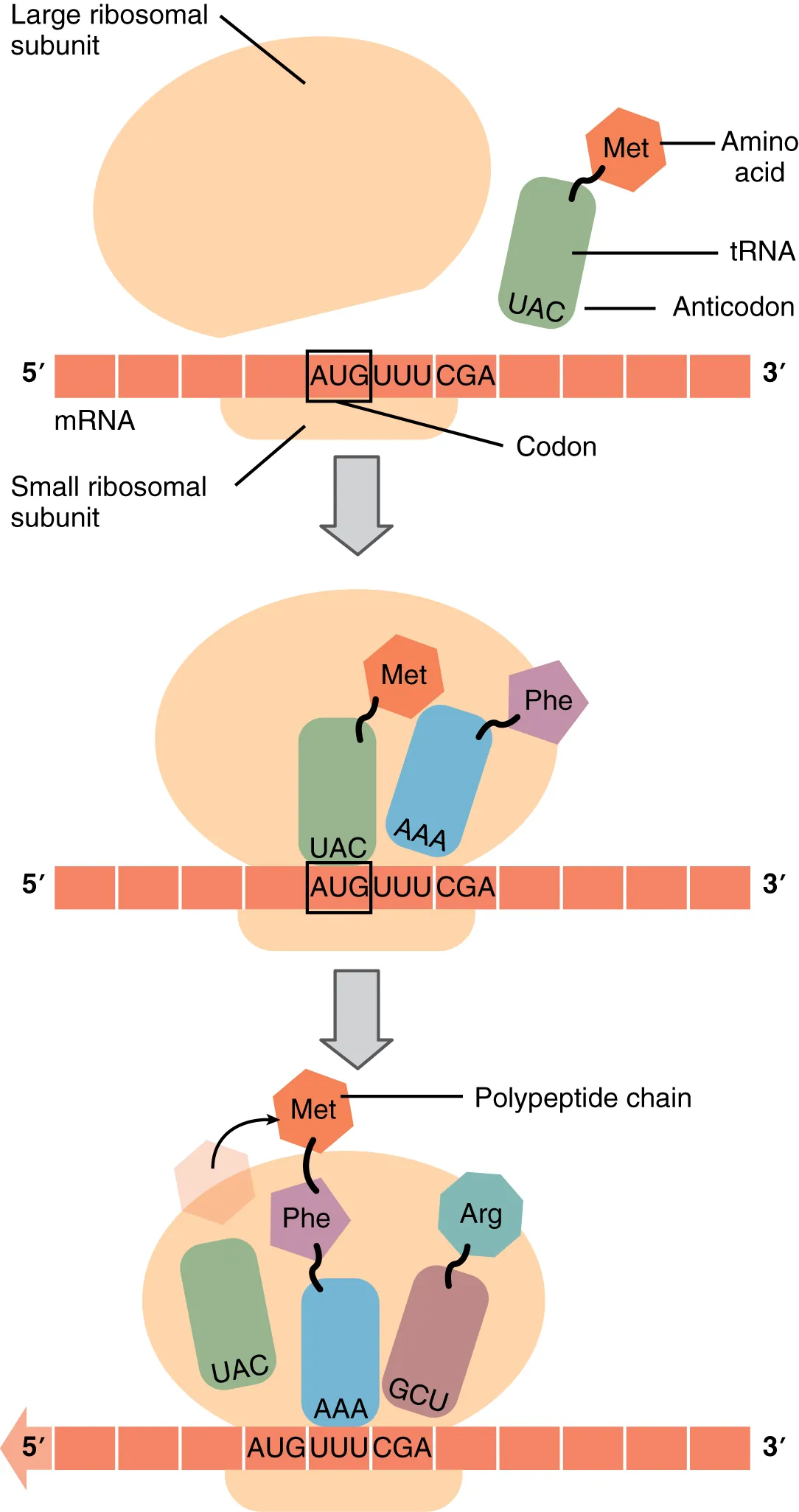
Translation diagram showing an mRNA being read by a ribosome while tRNAs deliver specific amino acids via codon–anticodon pairing. This illustrates how the nucleotide sequence is translated into a polypeptide chain in a strictly ordered, stepwise process. Source
It is determined by the order of bases in the gene. Therefore, if two genes have different base sequences, they will usually code for different polypeptides.
This matters because the amino acid sequence is fundamental to the properties of the final molecule. Different amino acid sequences lead to different chains, and different chains can behave differently in cells.
A gene is therefore best understood as a store of instructions. Its base sequence contains the information needed to produce a particular polypeptide with a particular amino acid order. That order is the first level of protein structure and is essential for what the molecule can do.
Some proteins consist of a single polypeptide chain, while others are made from more than one polypeptide. However, the specification point here is that a gene codes for the amino acid sequence of a polypeptide chain. That is the direct relationship students should know.
Why the sequence matters
The word sequence is crucial in this topic. Biological information depends on order.
A gene with one base sequence codes for one amino acid sequence.
A gene with a different base sequence codes for a different amino acid sequence.
Different amino acid sequences produce different polypeptides.
Different polypeptides can have different structures and functions.
This means that the specific order of bases is what gives genes their biological importance. The DNA molecule is the material that carries the information, but the sequence of bases is the information itself.
Even when two genes are similar in length, they may still code for different polypeptides if their base sequences are different. Length alone does not determine what a gene codes for.
Key distinctions to remember
Students often confuse related terms, so these differences are important:
A gene is a section of DNA, not the whole DNA molecule.
A gene is defined by its sequence of bases.
A gene codes for an amino acid sequence, not directly for a visible feature.
The product named in the specification is a polypeptide chain.
A characteristic in an organism depends on the action of molecules made in cells. The direct role of the gene is to specify the amino acid order in a polypeptide.
Common misunderstandings
A gene is not an amino acid, and it is not a protein. It is a sequence of bases in DNA that contains the instructions for the amino acid order in a polypeptide chain.
It is also incorrect to say that DNA stores information simply because it exists in cells. The information lies specifically in the order of the bases.
Finally, a gene is not defined only by how many bases it contains. The exact arrangement of those bases is what allows one gene to code for one polypeptide sequence and another gene to code for a different one.
Practice Questions
State what is meant by the term gene. (2 marks)
a sequence of bases on a DNA molecule (1)
that codes for an amino acid sequence in a polypeptide chain (1)
Explain how the sequence of bases in a gene is related to the polypeptide produced. (5 marks)
a gene has a specific order/sequence of bases in DNA (1)
the base sequence determines the amino acid sequence/order in the polypeptide (1)
different genes have different base sequences (1)
so different genes can produce different polypeptides / amino acid sequences (1)
the amino acid sequence affects the structure and therefore the function/properties of the polypeptide (1)
FAQ
A gene is a section of DNA at a particular position that codes for a polypeptide chain.
An allele is a different version of the same gene. Alleles have slightly different base sequences, which can sometimes lead to differences in the polypeptide made.
A locus is the fixed position of a gene on a chromosome.
This matters because the same gene is found at the same locus in members of the same species, even if different alleles are present there.
No. Not every DNA sequence is a gene.
Some DNA does not code for amino acid sequences in polypeptides. A gene is specifically a DNA sequence with coding information for a polypeptide chain.
Yes. Gene length alone does not determine what is produced.
If two genes contain the same number of bases but in a different order, they can specify different amino acid sequences and therefore different polypeptides.
Scientists can compare gene sequences between species to see how similar they are.
Very similar base sequences often suggest shared ancestry, because closely related species are more likely to have inherited similar genes from a common ancestor.


