

Edexcel Syllabus focus:
'Know that intracellular enzymes catalyse reactions inside cells, while extracellular enzymes are produced by cells and catalyse reactions outside cells.'
Intracellular and Extracellular Enzymes
Enzymes can be classified not only by what they do, but also by where they work. This matters because location affects substrate access, transport, and how biological reactions are organized.
Intracellular enzymes
Cells rely on intracellular enzymes to carry out internal chemical reactions.
Intracellular enzyme: An enzyme that catalyzes a reaction inside a cell.
Most enzymes in a cell are intracellular. They function within the cell's internal environment and are involved in essential processes such as metabolism, synthesis, and breakdown reactions. These enzymes may be found in the cytoplasm or inside specific organelles, depending on the pathway involved.
Their location is important because reactions only occur efficiently when the correct conditions are present. An intracellular enzyme may need:
a particular substrate already inside the cell
a suitable pH
the right temperature
cofactors or other enzymes nearby
Because intracellular enzymes act within the cell, the products they form can often be used immediately in the next stage of a metabolic pathway. This helps cells keep reactions tightly controlled. It also means that different pathways can occur in different parts of the cell without interfering with one another.
Examples of intracellular roles include:
enzymes involved in respiration
enzymes used in DNA replication
enzymes that build or modify molecules within the cell
A key feature is that intracellular enzymes normally remain where they are needed. If an enzyme is required for an internal pathway, keeping it inside the cell ensures that the reaction happens in the correct place and under controlled conditions.
Extracellular enzymes
Some enzymes are made by cells but are designed to work beyond the cell membrane.
Extracellular enzyme: An enzyme that is produced by a cell but catalyzes a reaction outside that cell.
Extracellular enzymes are synthesized inside cells, but their site of action is outside the cell.
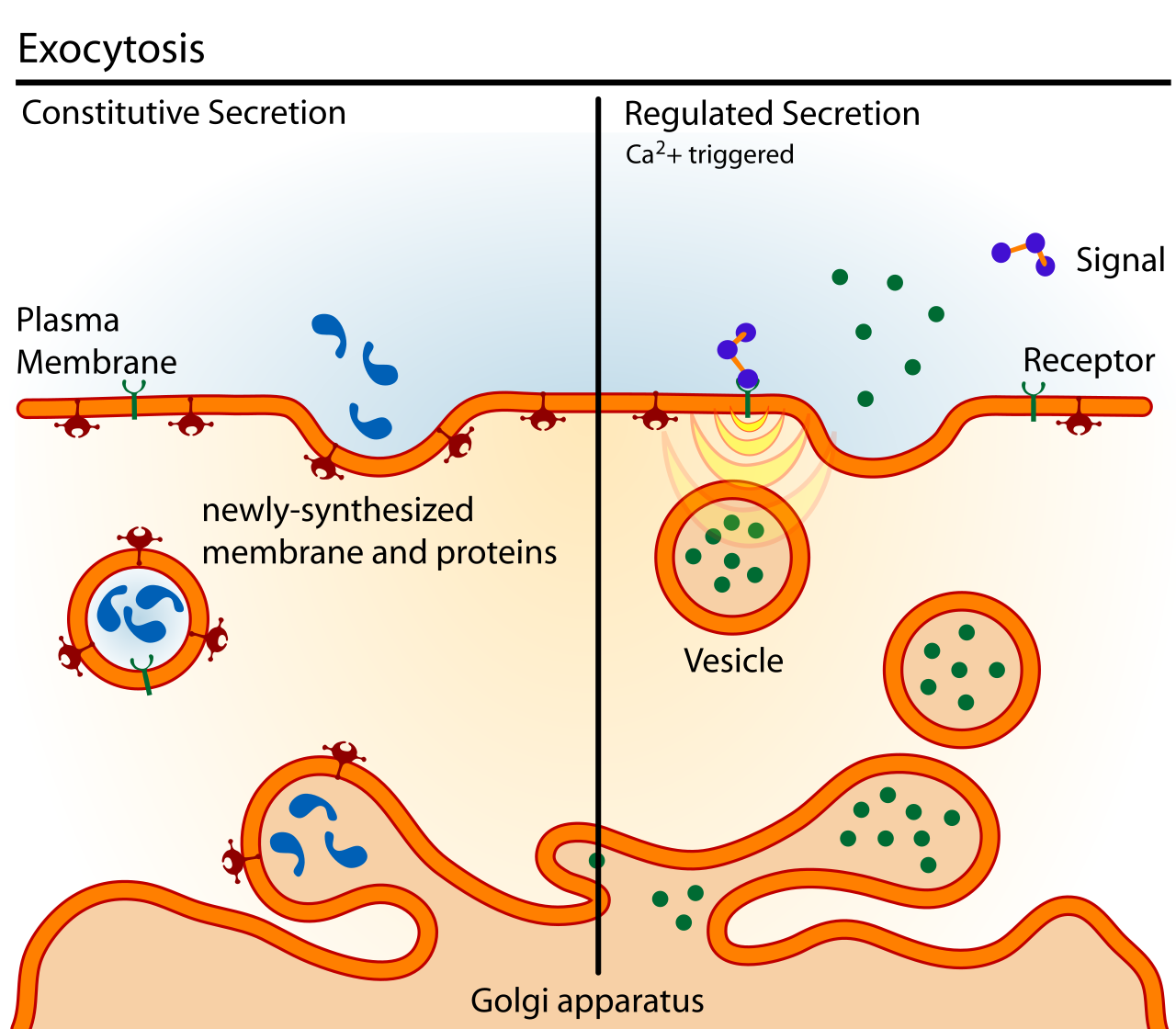
This exocytosis diagram shows secretory vesicles moving to and fusing with the plasma membrane, releasing soluble proteins into the extracellular space. It provides a visual link between where extracellular enzymes are synthesized (inside the cell) and how they reach their site of action (outside the cell). Source
After being made, they are transported out of the cell, often in vesicles, and released so they can reach their substrate.

This illustration summarizes vesicle trafficking within a eukaryotic cell, including protein processing in the rough ER and Golgi apparatus followed by vesicle-mediated export. It supports the idea that extracellular enzymes can be produced inside cells but only become functional after secretion to the extracellular environment. Source
In animals, the best-known extracellular enzymes are digestive enzymes.
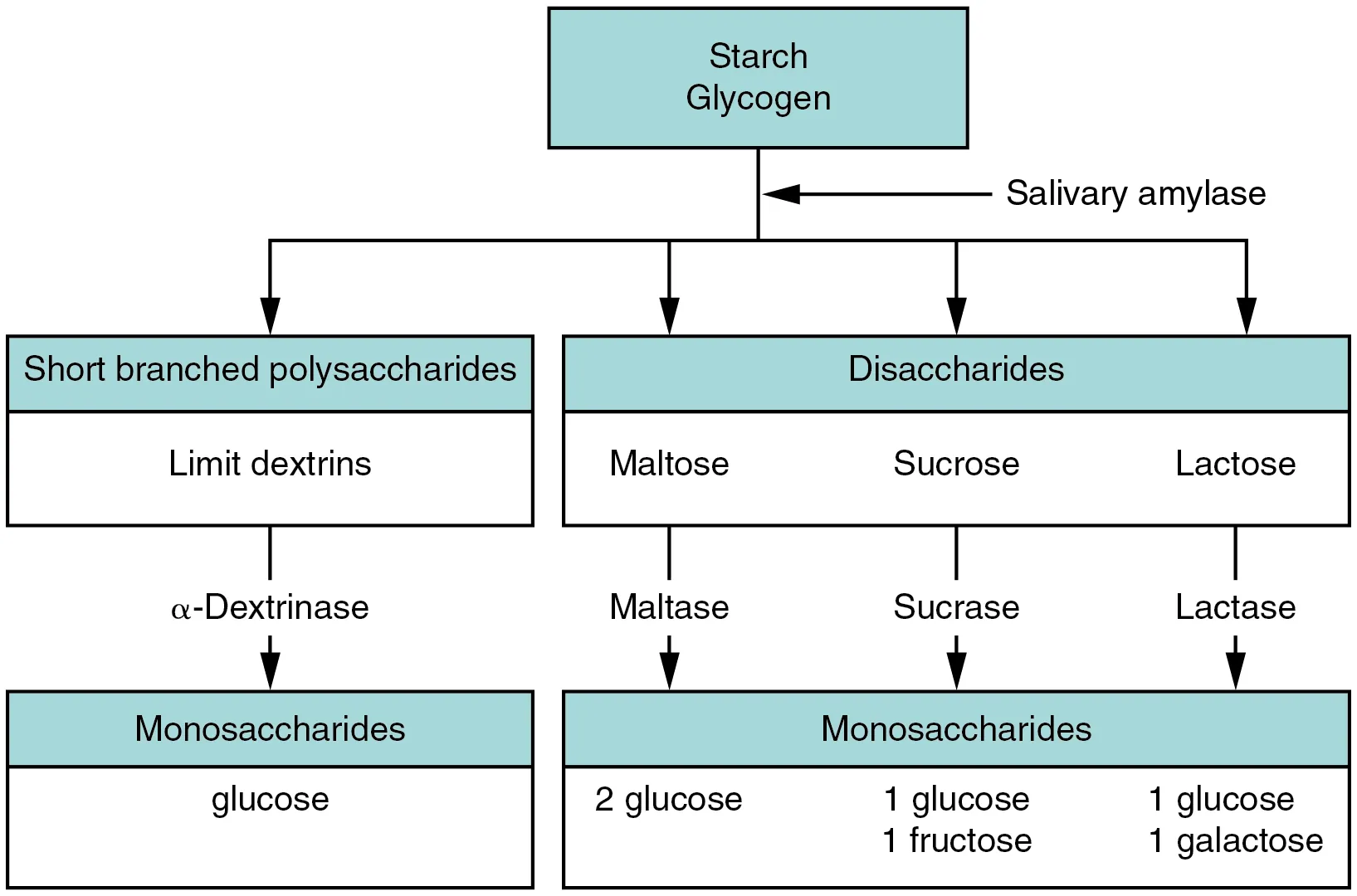
This carbohydrate digestion flow chart shows how enzymes (including amylases and brush border enzymes) break down complex carbohydrates into absorbable monosaccharides. It reinforces that many digestive enzymes act extracellularly within the lumen of the digestive tract, rather than inside the cells that produced or secreted them. Source
Cells in glands and other tissues produce enzymes such as amylases, proteases, and lipases, but these enzymes do not carry out their catalytic role inside the cells that made them. Instead, they act in spaces outside cells, such as the lumen of the digestive tract.
This distinction is very important:
the enzyme is produced inside a cell
the enzyme is released from the cell
the reaction it catalyzes happens outside the cell
Extracellular enzymes are especially useful when the substrate is too large to cross a cell membrane. Large food molecules cannot usually enter cells directly. They must first be broken down outside the cell into smaller molecules, which can then be absorbed.
Cells therefore use extracellular enzymes when external digestion or modification is needed. The enzyme works in the surrounding environment, even though the instructions for making it came from the cell.
Key differences between the two types
The difference between intracellular and extracellular enzymes is based on where the reaction occurs, not simply where the enzyme was made.
Intracellular enzymes act inside cells.
Extracellular enzymes act outside cells.
Intracellular enzymes usually stay within the cell.
Extracellular enzymes are released from the cell before they function.
Intracellular enzymes often take part in internal metabolic pathways.
Extracellular enzymes often break down substances in the cell's surroundings.
A common exam mistake is to classify enzymes only by their point of production. This is incomplete. Since extracellular enzymes are still made by cells, production alone does not decide the category.
Why the distinction matters
Knowing the difference helps explain how organisms organize chemical activity.
For intracellular enzymes, compartmentalization allows the cell to separate different reactions. This makes control more precise and helps maintain efficient pathways inside the cell.
For extracellular enzymes, secretion allows cells to use materials that are outside them. In animals, this is essential for digestion because large molecules must be broken down before cells can absorb useful products. The same principle applies whenever a substance must be changed outside the cell before it can be taken in or used.
It is also important to realize that outside the cell does not always mean outside the organism. An enzyme acting in the gut, in a duct, or in fluid surrounding cells is still extracellular if its catalytic action happens beyond the cell membrane.
When answering questions, identify both parts clearly:
where the enzyme is made
where the enzyme acts
This avoids another common error: assuming that all enzymes made by cells are intracellular. All enzymes are produced by cells, but only those that catalyze reactions within the cell are classed as intracellular.
Practice Questions
State what is meant by an intracellular enzyme and an extracellular enzyme. (2 marks)
1 mark: intracellular enzyme catalyzes reactions inside cells
1 mark: extracellular enzyme is produced by cells but catalyzes reactions outside cells
A gland cell produces protease molecules and releases them into the small intestine.
Explain why this protease is classed as an extracellular enzyme rather than an intracellular enzyme. (5 marks)
1 mark: the enzyme is produced by a cell
1 mark: the enzyme is secreted or released from the cell
1 mark: the enzyme acts outside the cell
1 mark: the lumen of the small intestine is outside the gland cell
1 mark: it catalyzes digestion of substances outside the cell, not within the cell
FAQ
The key point is the position relative to the cell membrane, not the whole body.
The lumen of the gut is a space outside the cells that line it. If an enzyme is released into that lumen and works there, it is acting outside cells, so it is extracellular.
This helps protect the cells and tissues that produce them.
If a powerful digestive enzyme were active immediately, it could damage the secreting cell or nearby tissue. Releasing an inactive precursor means the enzyme can be activated later, often only when it reaches the correct location.
They are normally intracellular.
Even though lysosomes are separate compartments, they are still inside the cell. If an enzyme catalyzes a reaction within a lysosome, its site of action is still inside the cell, so it is classed as intracellular.
Yes, if its active site faces outward and it catalyzes a reaction outside the plasma membrane.
In that case, the enzyme may be membrane-bound, but its catalytic activity is still external to the cell. Classification depends on where the reaction happens.
They compare where enzyme activity is found.
For example:
test the fluid around cells for enzyme activity
break open cells and test the cell contents
compare results before and after secretion is blocked
If activity is mainly in the surrounding medium, the enzyme is likely extracellular. If activity is mainly inside cell extracts, it is likely intracellular.

