

CIE Syllabus focus:
'Define relative isotopic mass and relative atomic mass using the carbon-12 scale, and distinguish between the mass of one isotope and the weighted mean mass of an element.'
The actual masses of atoms are far too small to use conveniently, so chemists compare them with a standard. This gives relative values that make isotope and element masses easier to describe.
The carbon-12 standard
Chemists need a consistent reference point when discussing atomic masses. Instead of writing extremely small masses in kilograms or grams for individual atoms, they compare atomic masses with a standard atom. The chosen standard is carbon-12.
A carbon-12 atom is assigned a mass of exactly 12 on the relative scale. All other atomic masses are then measured relative to one-twelfth of the mass of a carbon-12 atom.
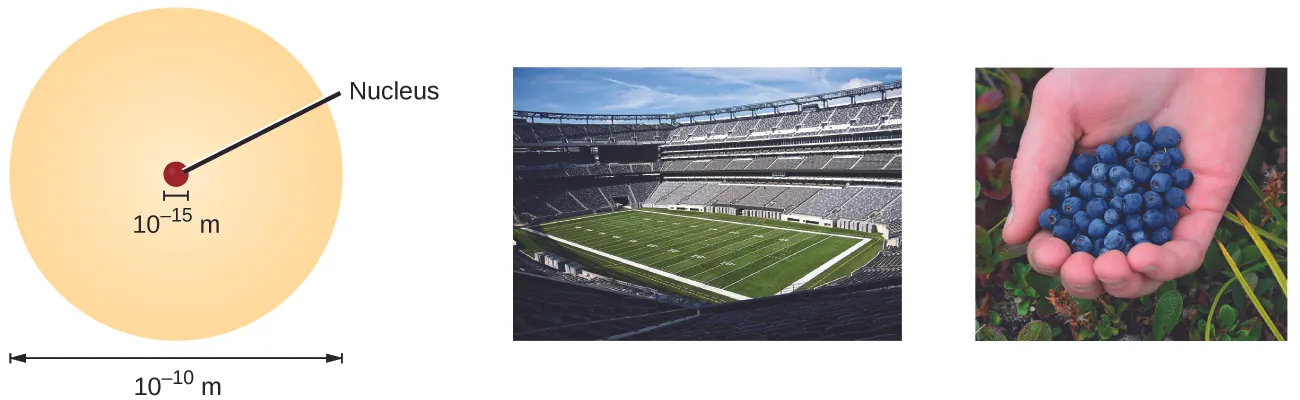
Textbook figure/context explaining the atomic mass unit definition based on carbon-12, i.e., of the mass of one atom. This anchors the “carbon-12 scale” as a consistent reference for comparing isotopic masses and weighted mean atomic masses. Source
This means the scale is based on comparison, not on the direct mass of atoms in everyday units.
Because these values are relative, they do not have units such as g or kg. They are numbers that show how heavy an atom is compared with the carbon-12 reference.
Relative isotopic mass
Relative isotopic mass refers to the mass of a single atom of one particular isotope on this scale. It is important that this term applies to one isotope only, not to an element as a whole.
Relative isotopic mass: The mass of an atom of an isotope compared with one-twelfth of the mass of one atom of carbon-12.
This definition focuses on one specific isotope, such as one isotope of chlorine, magnesium, or copper. Different isotopes of the same element have different relative isotopic masses because they contain different numbers of neutrons.
Relative isotopic mass is often close to the isotope’s mass number, but the two ideas are not identical. Mass number is simply the total number of protons and neutrons, so it is always a whole number. Relative isotopic mass is an experimentally measured comparison on the carbon-12 scale, so it is not always a whole number.
A common mistake is to treat relative isotopic mass as an average value for an element. It is not. It describes the mass of one isotope only.
Relative atomic mass
Most elements exist as a mixture of isotopes. Because of this, the value given for an element on the Periodic Table is usually not the mass of any one atom. Instead, it represents the average mass of the atoms of that element, taking account of the different isotopes present.
Relative atomic mass, : The weighted mean mass of an atom of an element compared with one-twelfth of the mass of one atom of carbon-12.
The phrase weighted mean is essential.
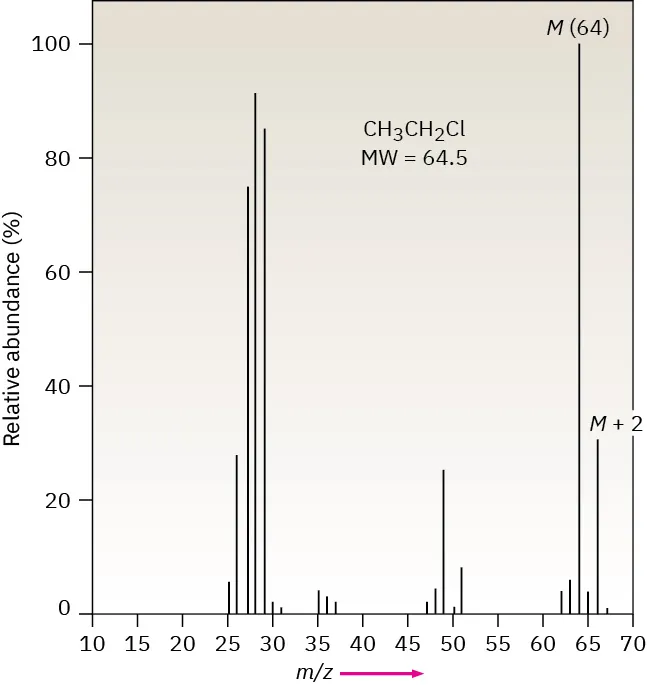
Mass spectrum of a chloroethane sample showing the two molecular-ion peaks produced by and . The \sim3:1 peak-height ratio provides a direct visual cue that isotopes occur in different abundances, which is why the elemental average is weighted rather than a simple mean. Source
It means that each isotope contributes to the final value according to how abundant it is. An isotope present in a larger proportion has a greater effect on the relative atomic mass than an isotope present in a smaller proportion.
This is why relative atomic mass is often not a whole number. It is usually somewhere between the relative isotopic masses of the isotopes of that element. It may be closer to one isotope than another if that isotope is more abundant.
How weighted mean affects
If all isotopes of an element were present in equal amounts, the relative atomic mass would lie halfway between their isotope masses only when there were two isotopes. In real samples, isotopes are rarely present in exactly equal proportions, so the value of depends on their abundances.
= relative atomic mass, no unit
= relative isotopic mass of each isotope
= abundance of each isotope, usually as a percentage or relative amount
You should understand what this equation shows even when no calculation is required. The formula emphasizes that relative atomic mass is an average based on both isotope mass and isotope abundance.
The denominator allows for abundance values to be written as percentages or as other relative amounts. The key idea is that more abundant isotopes affect the final value more strongly.
Distinguishing the two terms
Students often confuse relative isotopic mass and relative atomic mass because both use the carbon-12 scale. The difference is the level being described.
Relative isotopic mass describes one isotope.
Relative atomic mass describes the overall element.
Relative isotopic mass does not consider abundance.
Relative atomic mass does consider abundance.
Relative isotopic mass is linked to a specific atom type within an element.
Relative atomic mass is the weighted mean value usually shown for the element in the Periodic Table.
When answering exam questions, look carefully for the words isotope, element, and weighted mean. These words usually show which term is required.
Practice Questions
State what is meant by relative isotopic mass. (2 marks)
1 mark for stating that it is the mass of an atom of an isotope
1 mark for stating that it is compared with one-twelfth of the mass of one atom of carbon-12
An element exists as a mixture of isotopes.
Explain what is meant by relative atomic mass, and explain why the value shown for an element in the Periodic Table is often not a whole number. (5 marks)
1 mark for stating that it is the weighted mean or average mass of an atom of the element
1 mark for reference to comparison with one-twelfth of the mass of one atom of carbon-12
1 mark for stating that the element contains more than one isotope
1 mark for stating that the isotopes can have different abundances
1 mark for explaining that the value is not the mass of one single isotope and usually lies between isotope masses
FAQ
Carbon-12 is stable, common, and easy to define precisely. Using a single agreed standard makes mass values consistent across chemistry.
Historically, different standards had been used, which caused confusion. Carbon-12 was adopted so chemists and physicists could use the same scale.
Mass number is a simple count of protons and neutrons, so it must be a whole number.
Relative isotopic mass is based on the actual measured mass of the isotope. Protons and neutrons do not each have an exact mass of 1, and nuclear binding effects also slightly change the measured mass.
Yes. If two samples have different isotopic compositions, their weighted mean masses can differ slightly.
The Periodic Table usually gives a standard value based on typical natural samples. A specially enriched sample, however, could have a different relative atomic mass.
In that case, the relative atomic mass is very close to the relative isotopic mass of that isotope.
It still may not be a whole number, because relative isotopic mass itself is an experimentally measured value on the carbon-12 scale, not just a particle count.
Several decimal places are used when measurements are precise enough to justify them. This helps distinguish elements with closely similar values.
Brackets are often used for elements with no stable isotopes. In those cases, the value shown is usually the mass number of the most stable isotope rather than a standard relative atomic mass.
